

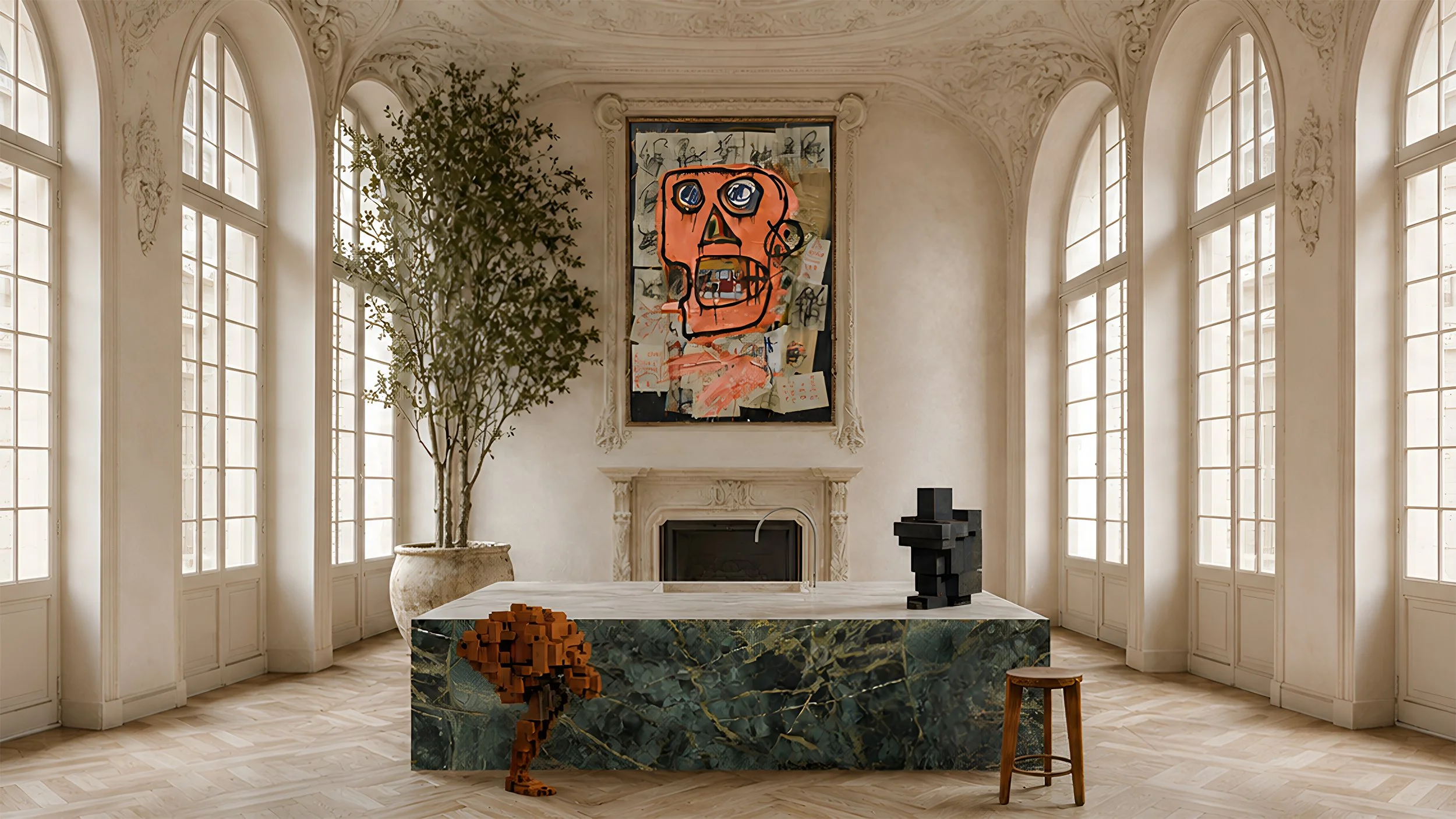
Jean-Michel Basquiat, Untitled (signed and dated 82 on the reverse); Antony Gormley, Clutch II (2008) & Bare IV (2014); Pierre Jeanneret, PJ-SI-22-A Stool (1965–66)
Image © — @studio_brentlee
ART & OBJECTS
When the Room Becomes Part of the Collection
Works by Jean-Michel Basquiat, Antony Gormley, Thomas Houseago, Christopher Wool, Cy Twombly, Kazuo Shiraga and Mark Manders, together with Hellenistic and Roman antiquities, are contextually visualised by interior and furniture designer Brent Lee within interiors where chronology gives way to scale, material and spatial tension
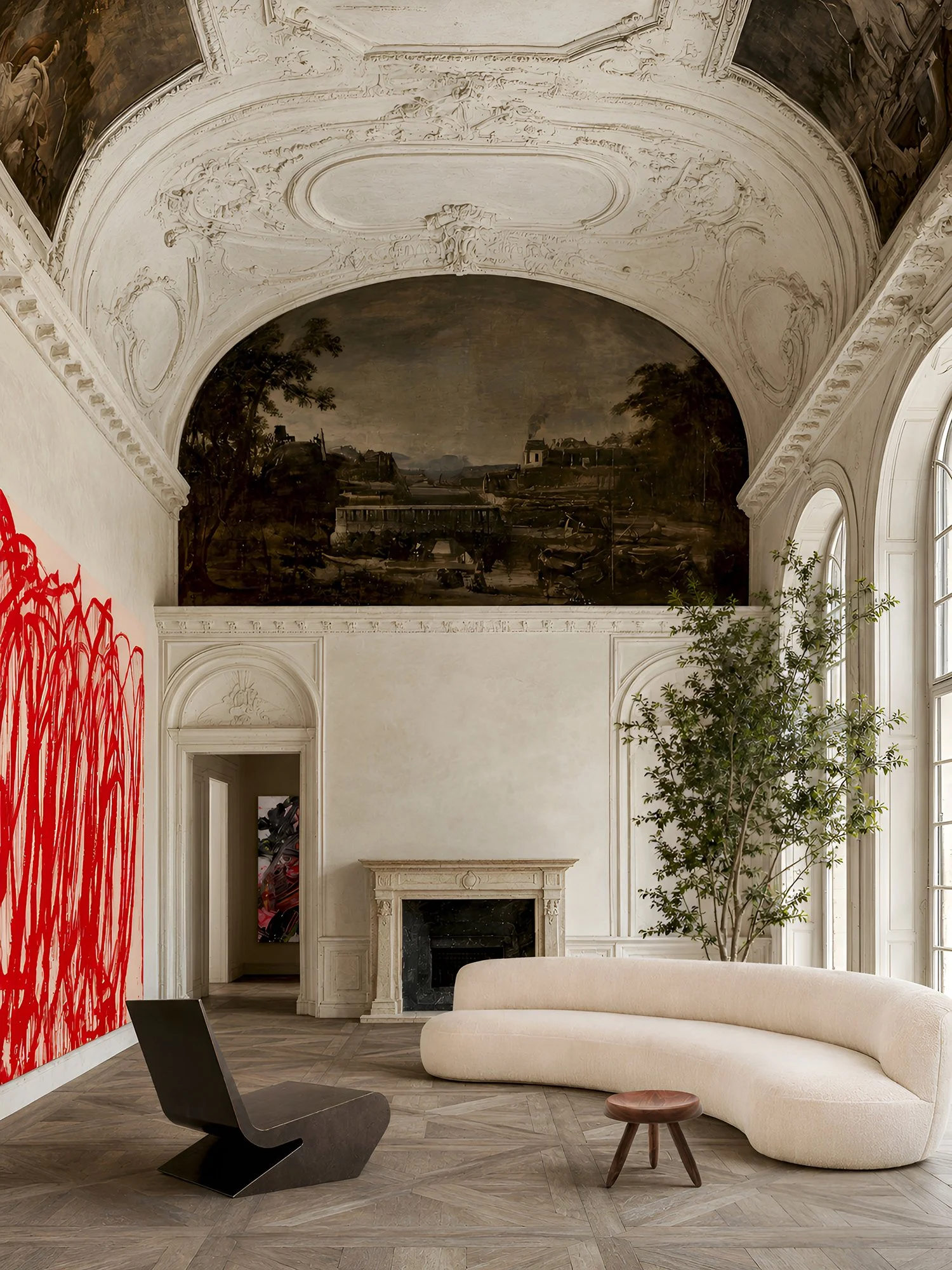
Cy Twombly, Untitled (painted in 2005); Kazuo Shiraga, Onkurodangu Unjaku (1994); Brent Lee, Babliano Lounge Chair (2026); Pierre Augustin Rose, Sofa 320 (2018); Charlotte Perriand, Tabouret Berger (1953)
Image © — @studio_brentlee
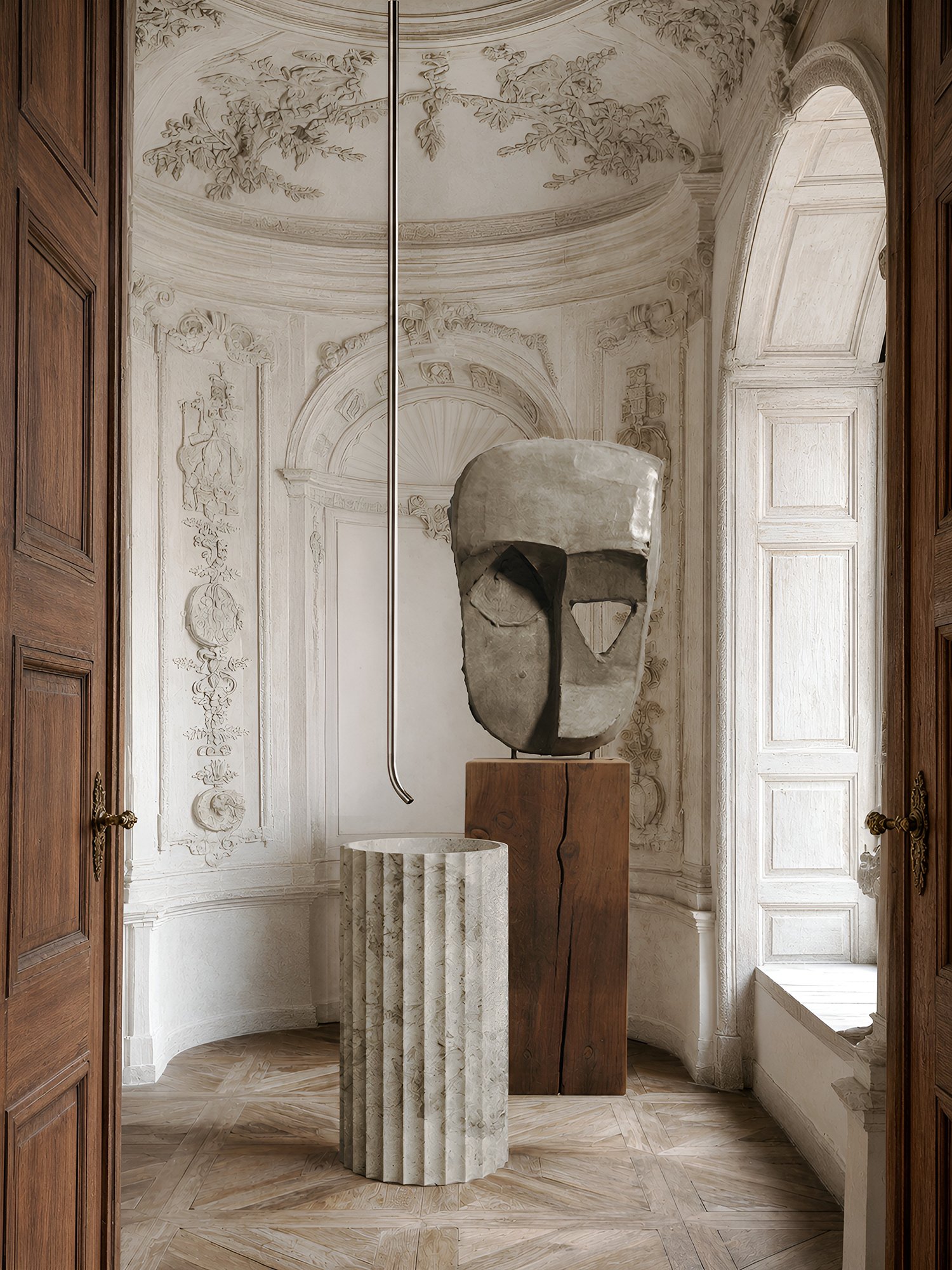
Thomas Houseago, Quake Mask (2008)
Image © — @studio_brentlee
There is a particular freedom that comes from looking at art across centuries without insisting that chronology dictate the conversation. A 2nd-century AD Roman sculpture can sit convincingly beside a piece of contemporary bronze furniture; postwar design can occupy the same room as neo-expressionist painting; a work conceived for the wall can become inseparable from the architecture around it. The connection is found elsewhere—in proportion, mass, gesture, colour and the space left between things
That premise runs through interiors in which Lee’s own interior and furniture designs become settings for an expansive curation of modern and contemporary art, sculpture and design. Basquiat and Gormley appear alongside Pierre Jeanneret; Houseago is paired with Charlotte Perriand and Pierre Augustin Rose; Twombly meets Shiraga; Hellenistic and Roman antiquities are brought into dialogue with Lee’s blackened-bronze Babliano collection. The names span generations, movements and disciplines, yet the rooms make little effort to reconcile those differences. Their strength comes from allowing them to remain visible
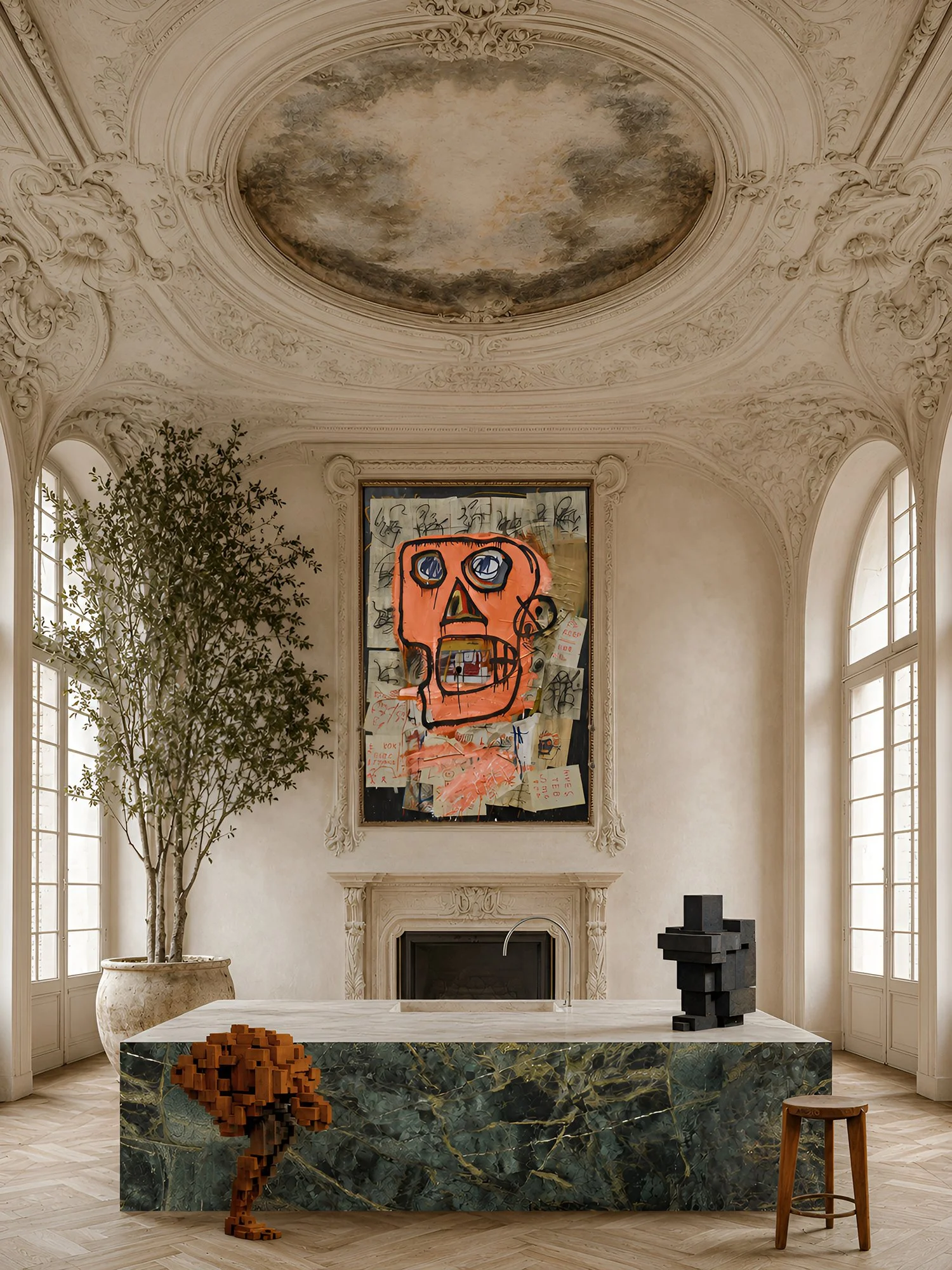
Jean-Michel Basquiat, Untitled, (signed and dated 82 on the reverse); Antony Gormley, Clutch II (2008) & Bare IV (2014); Pierre Jeanneret, PJ-SI-22-A Stool (1965–66)
Image © — @studio_brentlee
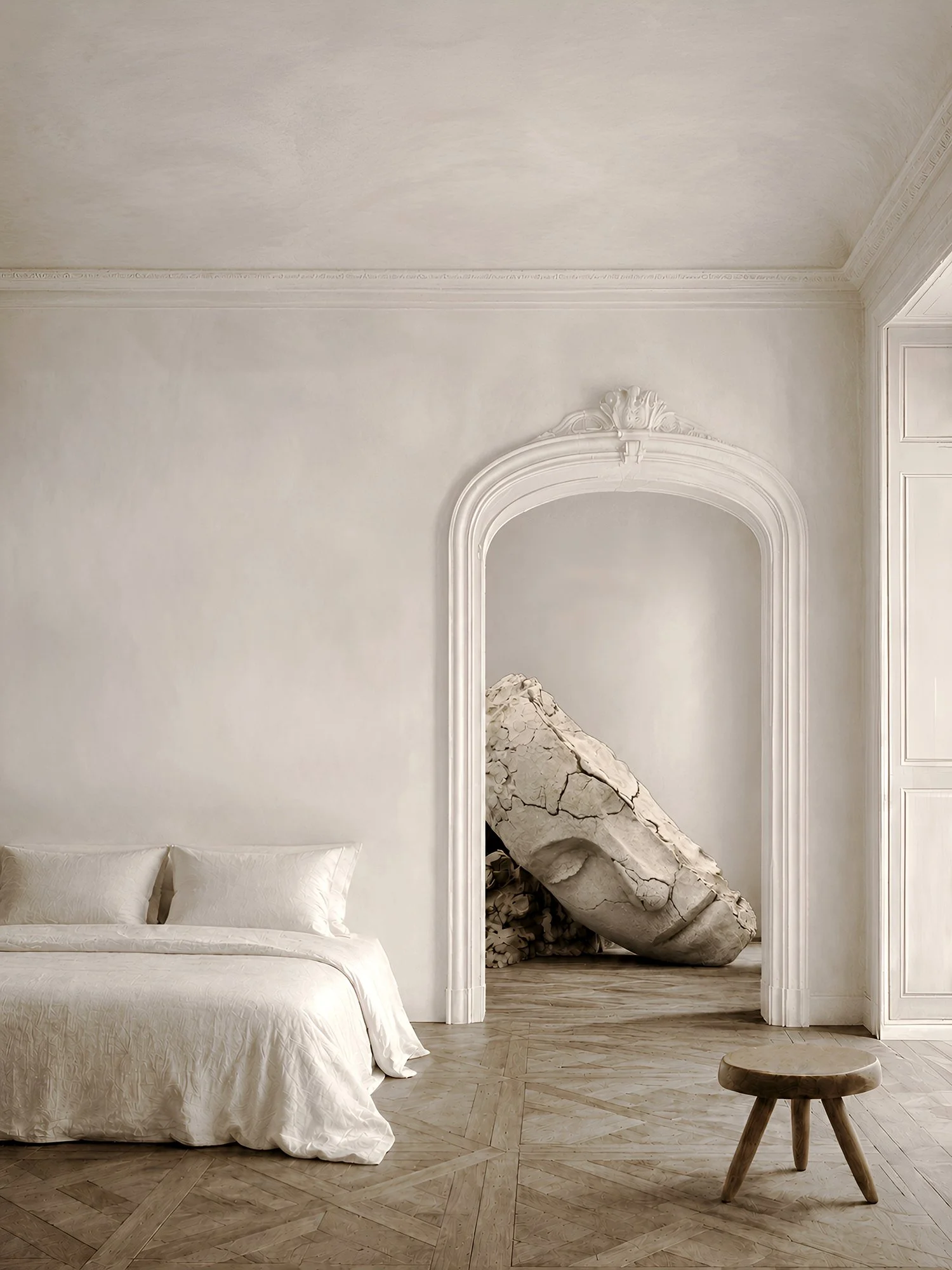
Mark Manders, Dry Clay Head (2015–2016); Charlotte Perriand, Berger (circa 1950)
Image © — @studio_brentlee
One of the clearest examples places Jean-Michel Basquiat’s 1982 Untitled above an intricately carved fireplace beneath a vast rocaille ceiling. The painting’s orange head is almost confrontational against the pale architectural ornament, while Antony Gormley’s Clutch II and Bare IV occupy the monumental stone breakfast bar below. A Pierre Jeanneret stool sits at one end
The placement is significant. Gormley has not been granted a conventional sculpture plinth; the breakfast bar becomes one. Basquiat has not been isolated on an uninterrupted gallery wall; he is forced into dialogue with mouldings, symmetry, a fireplace and the painted ceiling overhead. Domestic architecture is not suppressed to make the art easier to see. It participates
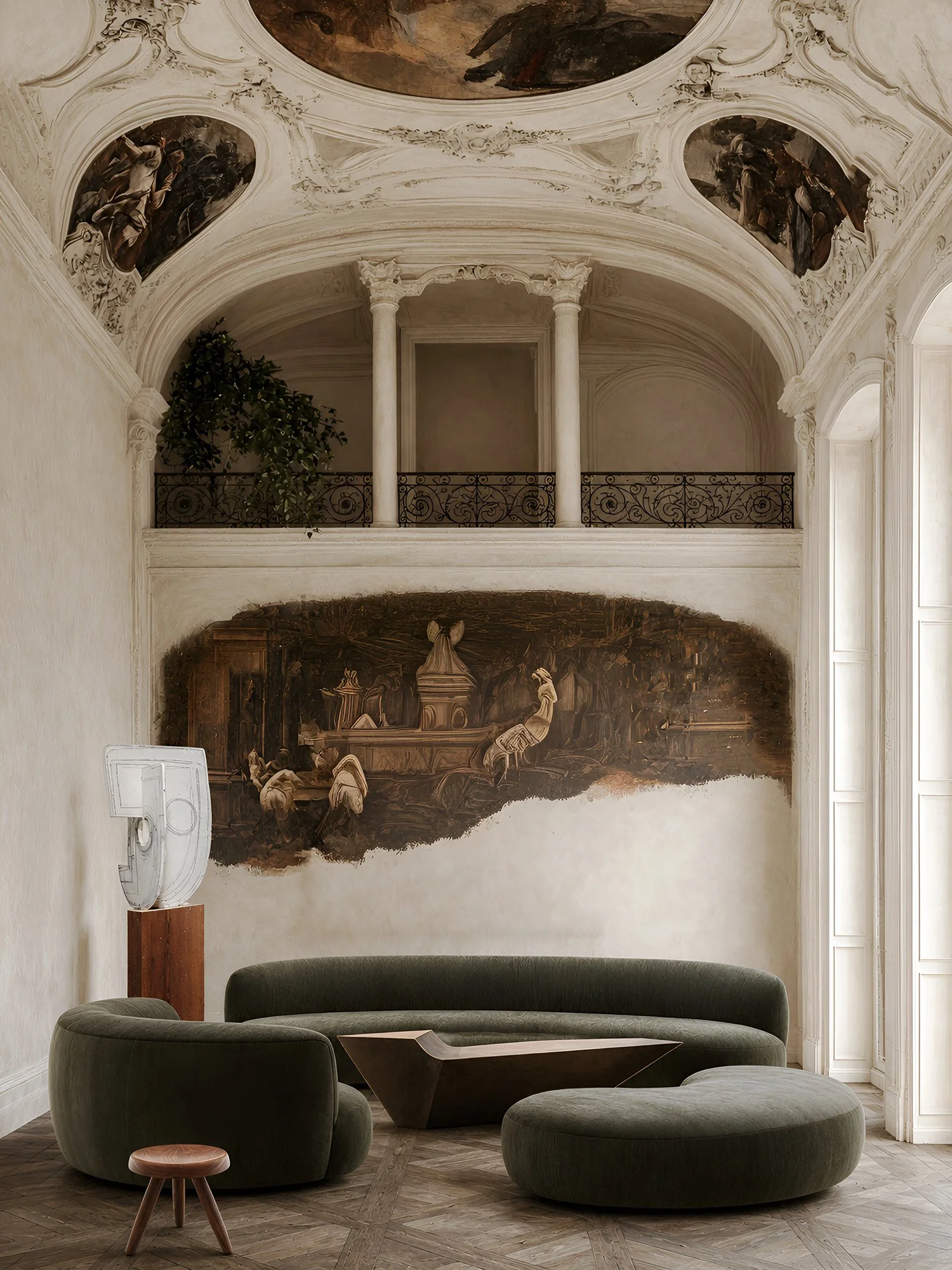
Brent Lee, Coffee Table I, Babliano Collection (2026); Thomas Houseago, Dumb Head (2008); Pierre Augustin Rose, Sofa 320, Sofa 190, Nuage 190 (2018); Charlotte Perriand, Berger (1953)
Image © — @studio_brentlee
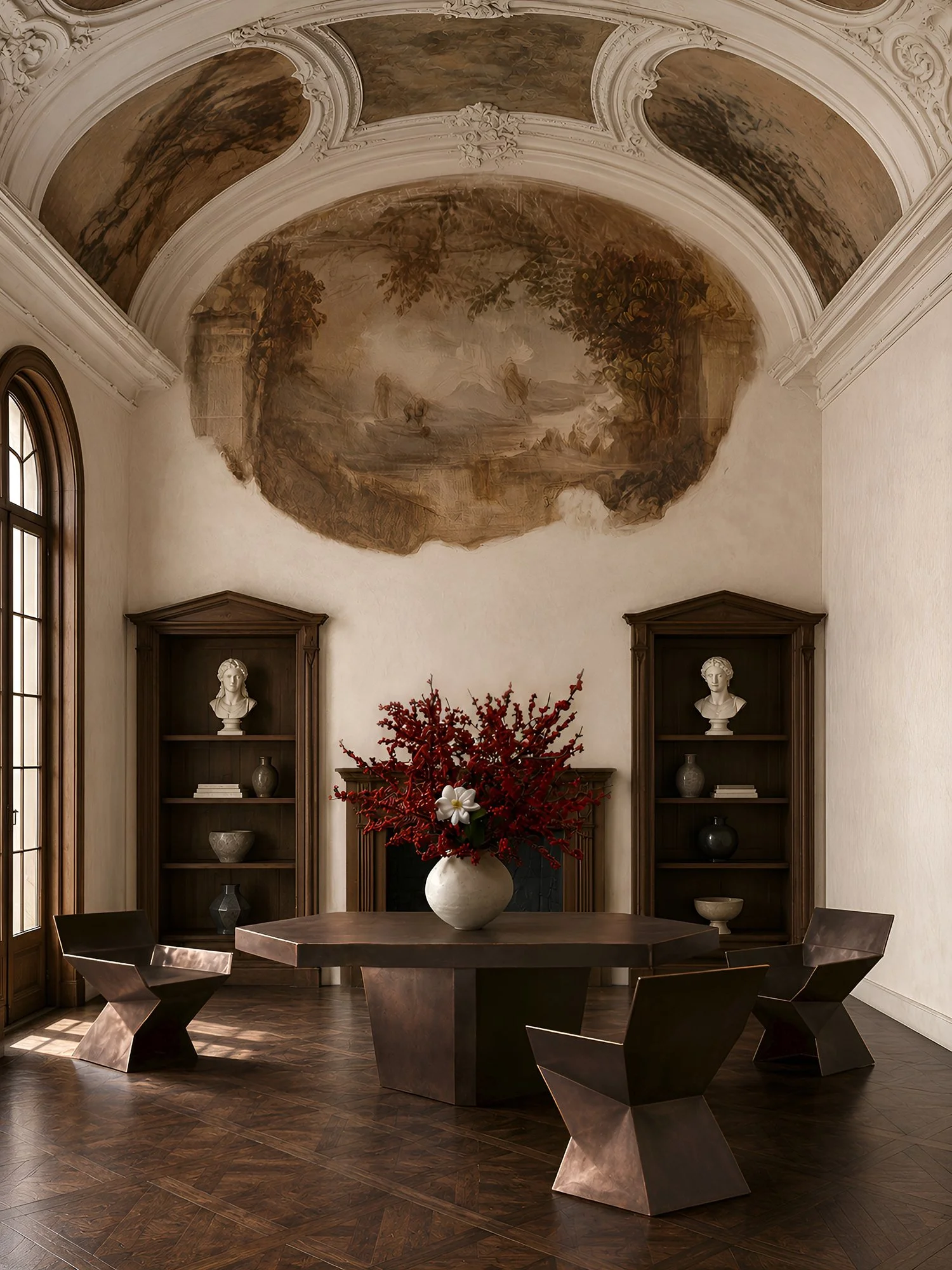
Brent Lee, Babliano Table I (2026)
Image © — @studio_brentlee
That relationship becomes more complicated elsewhere. Beneath a coved vault of rocaille stucco and painted lunettes, a Thomas Houseago Dumb Head stands beside Lee’s Babliano Coffee Table I, seating by Pierre Augustin Rose and a diminutive Perriand Tabouret Berger. Across the wall, a blended painted passage with fanned edges remains visibly distinct from the surrounding pale surface
Here, difference is productive. The architecture is ornate; the contemporary furniture is broad and controlled; Houseago’s sculpture is raw, pale and visibly worked. Nothing attempts to impersonate what came before it. Historical fabric and contemporary intervention are permitted to occupy the same room without being visually collapsed into one period
The same principle appears with greater graphic force in another interior, where a large red Cy Twombly work consumes one wall while Kazuo Shiraga’s Onkurodangu Unjaku appears beyond. Against the room’s ordered plasterwork and aged parquet, their gestures introduce something unstable and bodily. Lee’s Babliano Lounge Chair, a Pierre Augustin Rose Sofa 320 and another Perriand stool sit below them with considerably quieter geometries
It is one of the recurring tensions across the images: expressive art set against architectural discipline. The room provides axis, proportion and repetition; the painting disrupts it
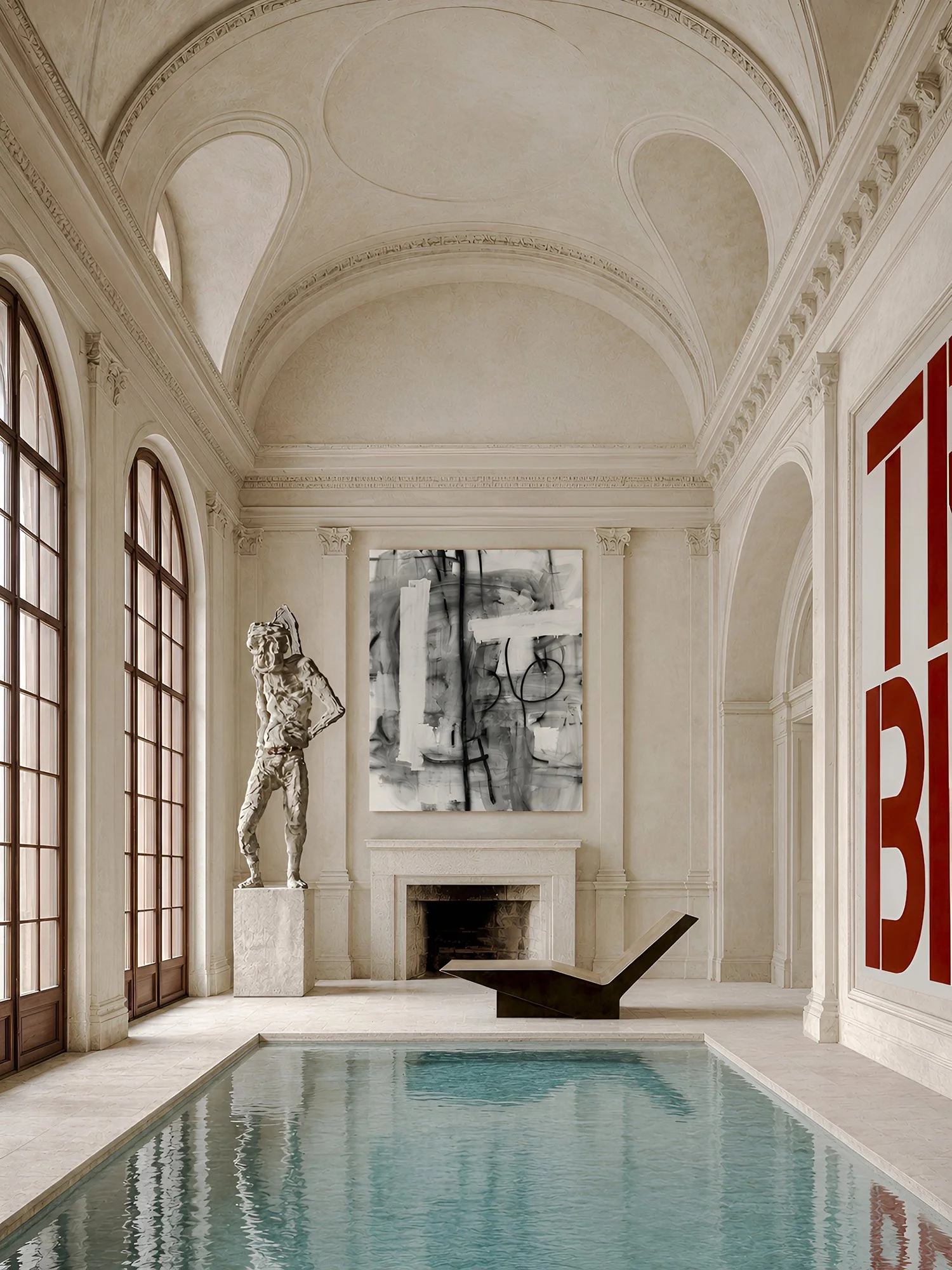
Thomas Houseago, Boy III (2012); Christopher Wool, Untitled (2010); Brent Lee, Babliano Chaise Lounge (2026); Christopher Wool, Trouble (1989)
Image © — @studio_brentlee
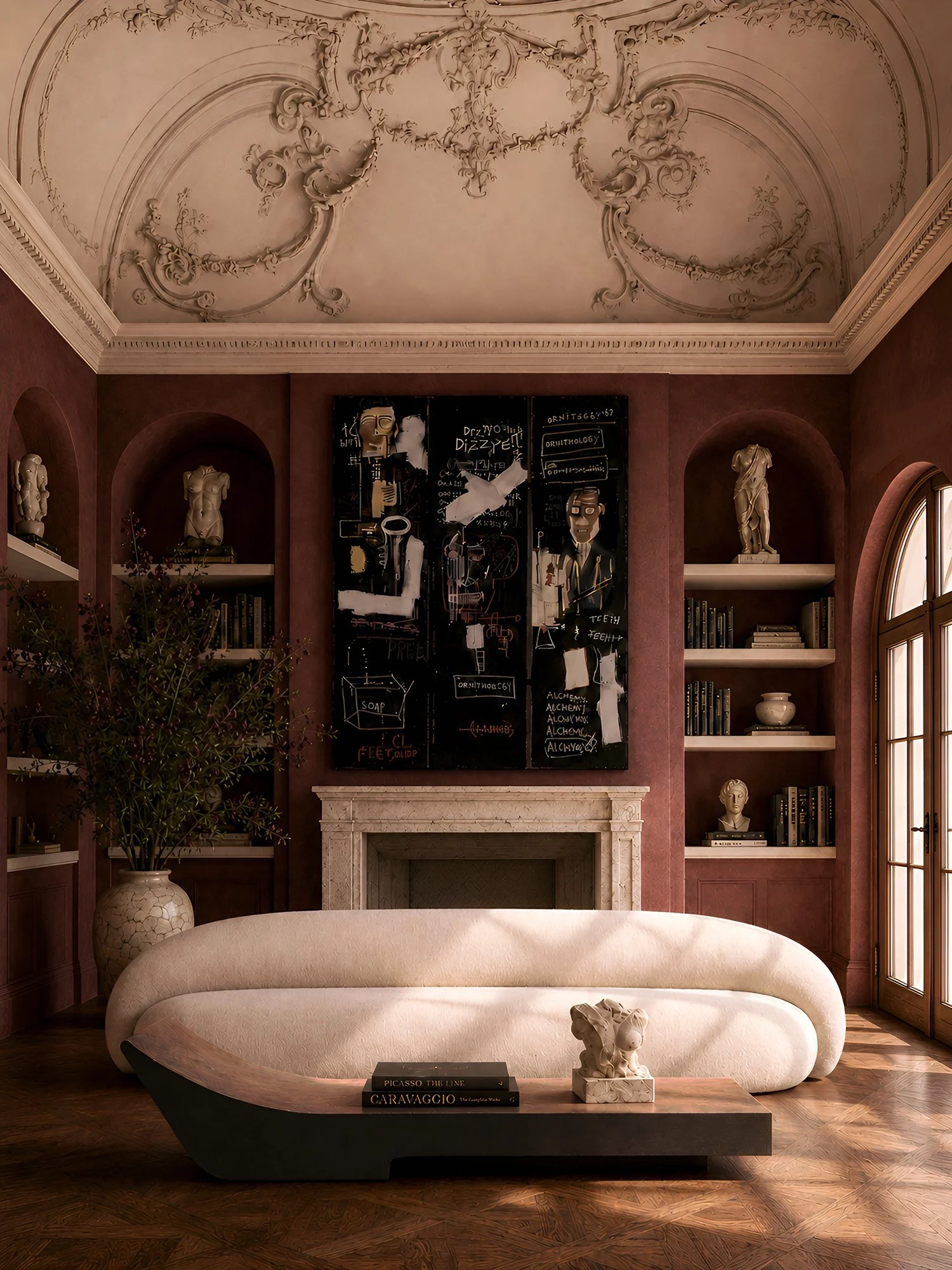
Jean-Michel Basquiat, Horn Players (1983); Brent Lee, Babliano Coffee Table II (2026)
Image © — @studio_brentlee
Basquiat’s Horn Players performs differently. Hung above a marble fireplace in a darker library, the 1983 triptych takes command of the elevation. The furniture—Lee’s Babliano Coffee Table II and Scarf Sofa by Franck Gense behind it—drops back almost completely. Here the artwork is not simply something placed within the architecture; through its scale and position, it begins to determine how the architecture itself is read
Elsewhere, sculpture is encountered less ceremonially. Houseago’s Quake Mask appears within a powder room fitted with a polished nickel ceiling tap, elevated on a rough timber pedestal and seen through open doors. Mark Manders’s Dry Clay Head, 2015–2016, is stranger still: an enormous fractured head appears sleeping, suitable, partly concealed beyond a bedroom threshold, while a small Perriand Berger sits almost casually in the foreground
Those thresholds matter. The works are not presented as objects waiting obediently for inspection. They are approached, glimpsed and discovered. Distance becomes part of their composition
Even in the imagined pool-house gallery, where works by Houseago and Christopher Wool occupy a more overtly exhibition-like setting alongside Lee’s Babliano Chaise Lounge, architecture continues to interfere productively. Paintings, sculpture, furniture, arched openings and the surface of the pool establish competing horizontal and vertical lines; each object alters the apparent scale of the next
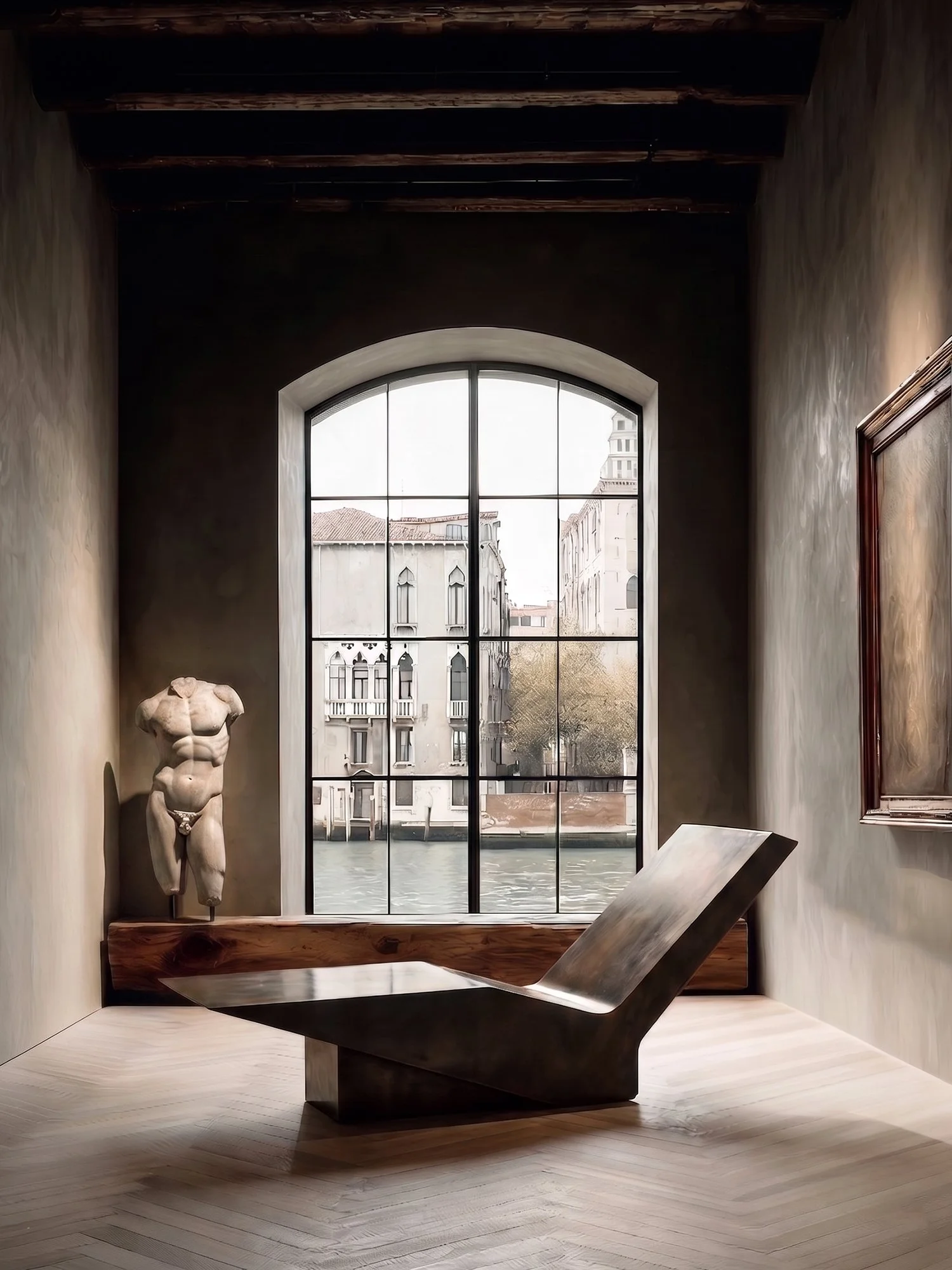
Roman Marble Torso, possibly representing an athlete or youth (2nd century AD); Brent Lee, Babliano Chaise Lounge (2026)
Image © — @studio_brentlee
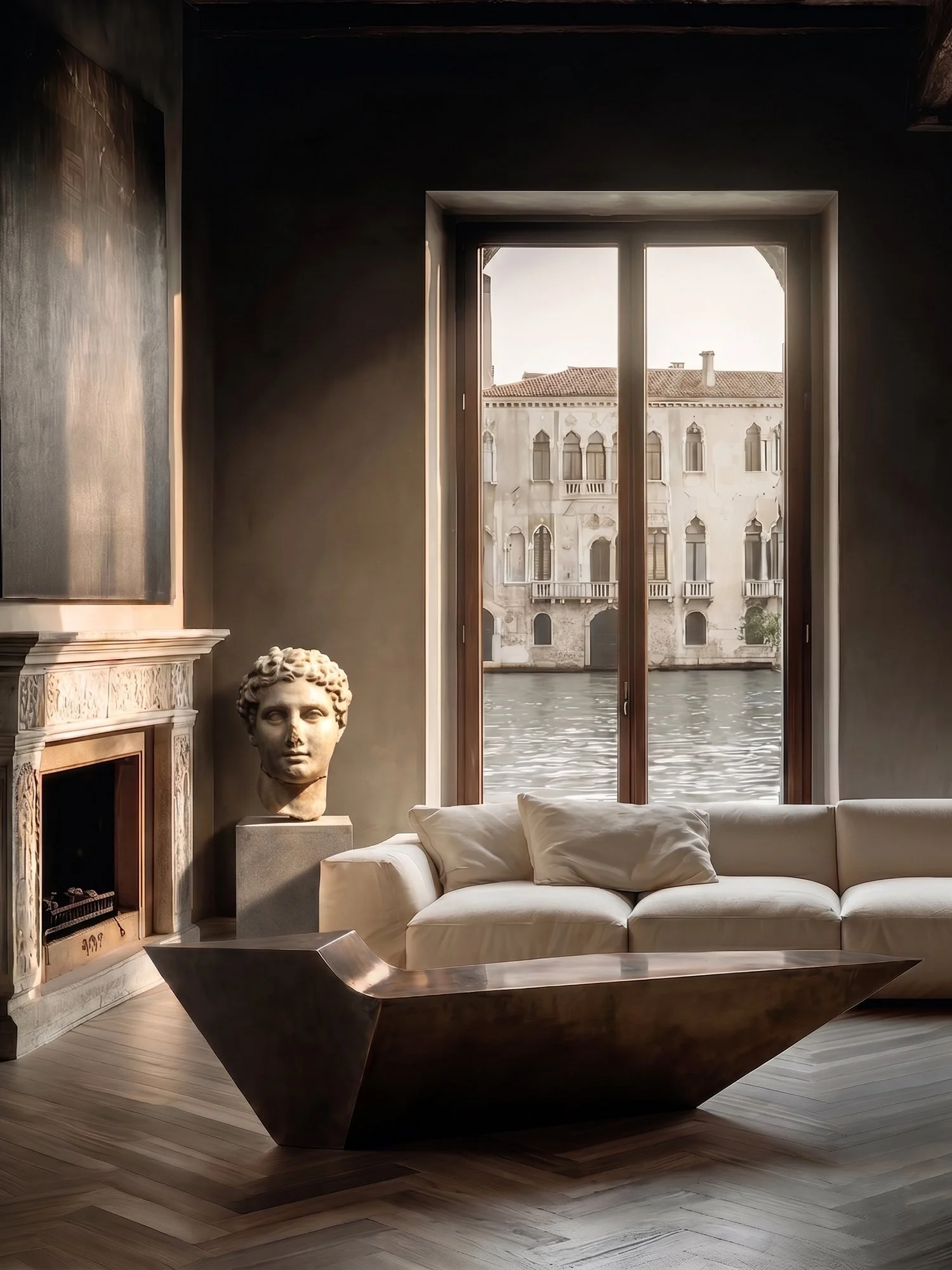
Unknown Greek, Hellenistic Marble Head of Alexander the Great (300–100 BCE); Brent Lee, Babliano Coffee Table I (2026)
Image © — @studio_brentlee
The longest historical distance appears in two quieter pairings. A 2nd-century AD Roman marble torso, possibly representing an athlete or youth, is placed beside the angular blackened-bronze Babliano Chaise Lounge represented exclusively by New York gallery, STUDIOTWENTYSEVEN, while a Hellenistic marble head of Alexander the Great, dated 300–100 BCE, shares a room with Babliano Coffee Table I. More than two millennia separate the antiquities from the furniture, yet the relationship is immediate: fragmented marble bodies are set against broad planes of bronze, allowing weight, silhouette and material presence to override chronology
Taken together, the images make a broader argument about curation. Selecting the work is only the beginning. A Basquiat hung ten centimetres higher becomes a different proposition. A Houseago seen frontally is not the same Houseago discovered through a doorway. Shiraga changes when another object of comparable energy is placed nearby. Gormley placed on a breakfast bar disrupts the conventional distinction between the spaces in which art is displayed and those in which life occurs
The room, in that sense, becomes a curatorial instrument of its own. Architecture, light, distance, neighbouring objects and even the route by which a work is first encountered participate in how it is understood. Across these visualisations, chronology recedes as the primary organising principle; the room becomes the framework through which works separated by decades—or two millennia—are brought into direct visual and spatial conversation
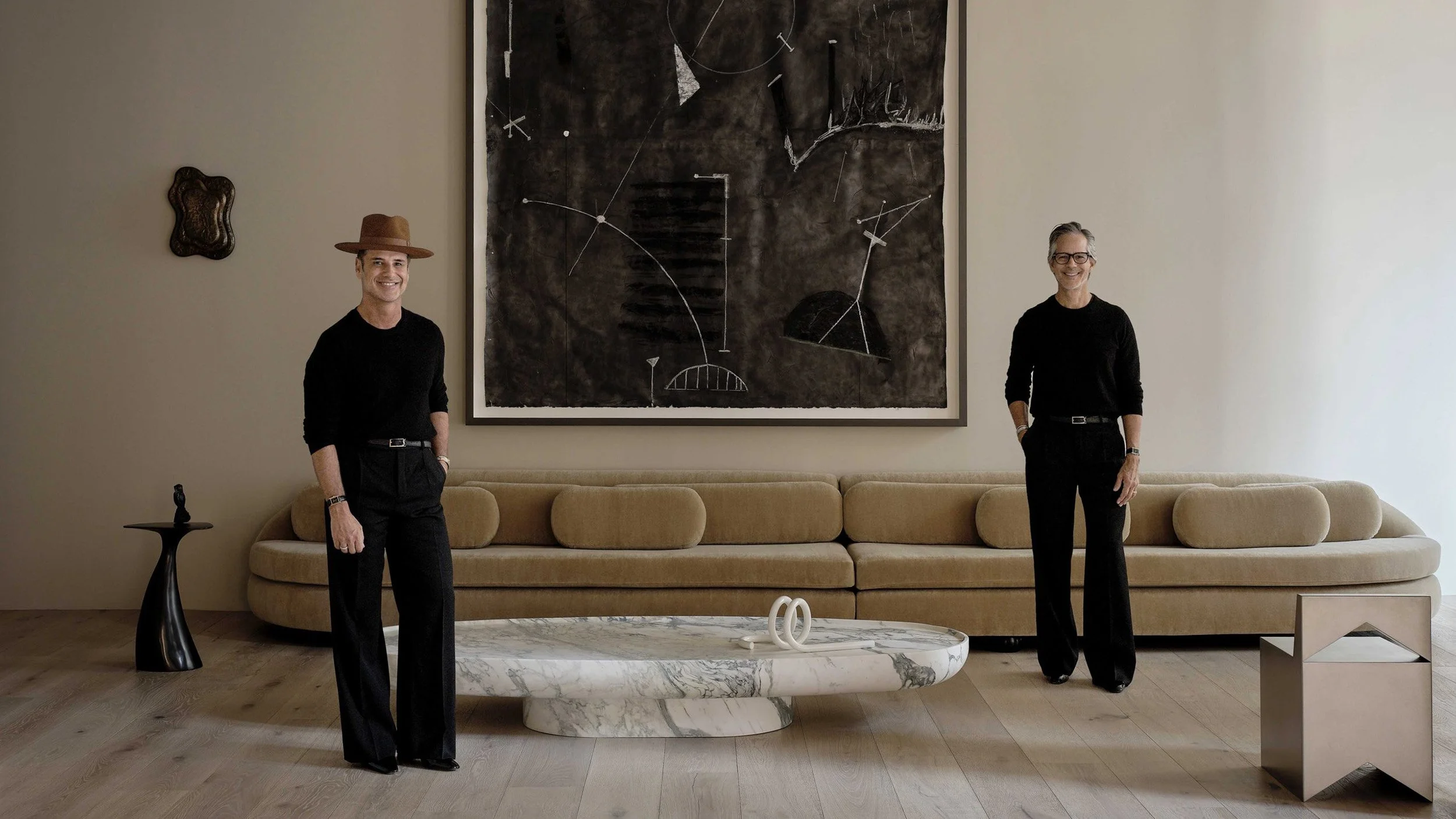
Looking Back at Intuition, Axel Vervoordt’s Defining Palazzo Fortuny Exhibition
—
Curated with Daniela Ferretti for the 2017 Venice Biennale, the exhibition now reads as one of Vervoordt’s clearest statements on art, perception and the knowledge that arrives before language
An Egyptian Relief Preserves a Husband and Wife Across 3,500 Years
—
Offered by London dealer ArtAncient, the painted limestone fragment from Thebes turns a gesture of affection into one of the most intimate surviving images of Egypt’s 18th Dynasty