

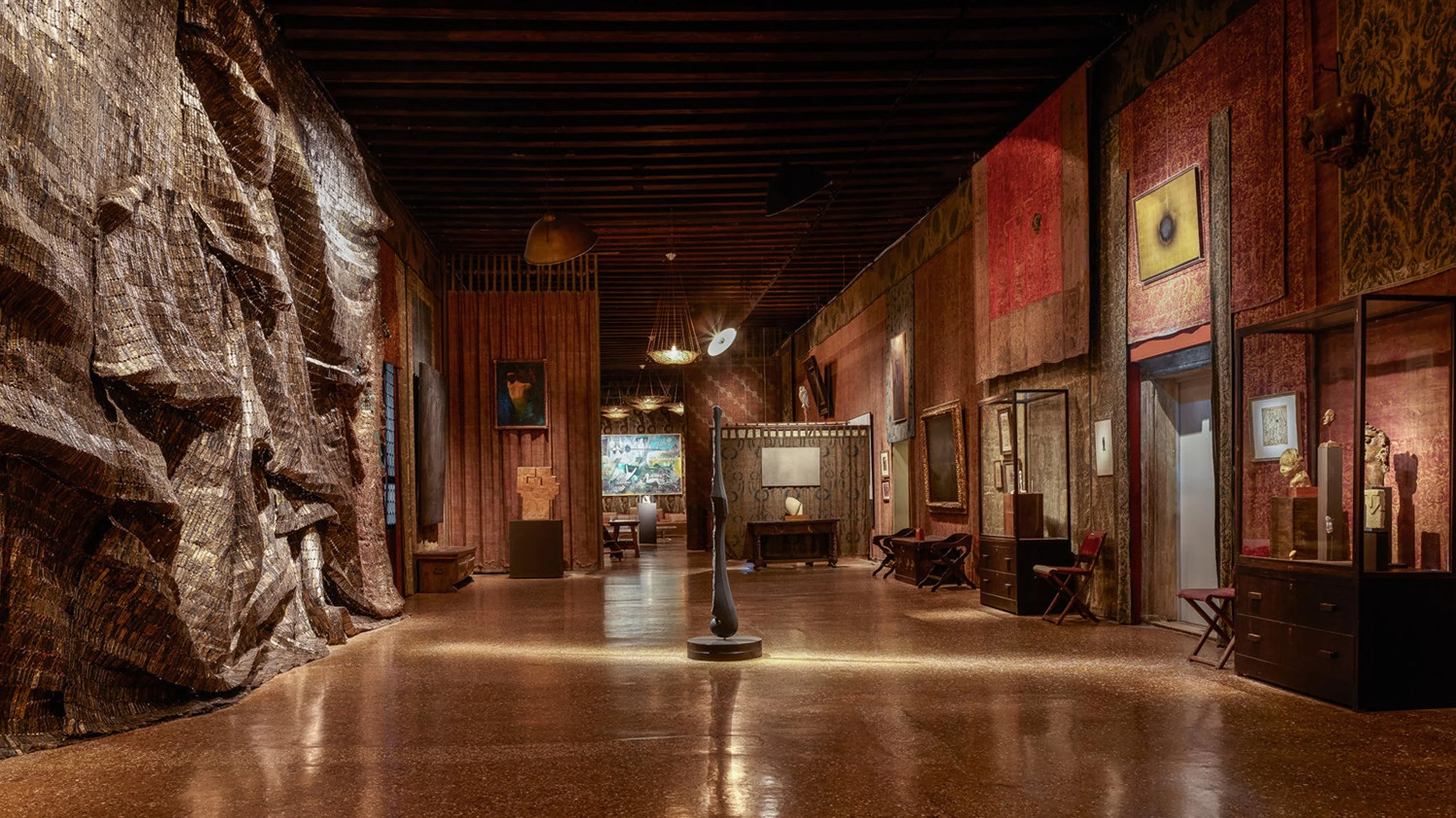
Intuition, Palazzo Fortuny (2017)
Image © — @jeanpierregabriel.cc
MUSEUM – ART & OBJECTS
Looking Back at Intuition, Axel Vervoordt’s Defining Palazzo Fortuny Exhibition
Curated with Daniela Ferretti for the 2017 Venice Biennale, the exhibition now reads as one of Vervoordt’s clearest statements on art, perception and the knowledge that arrives before language
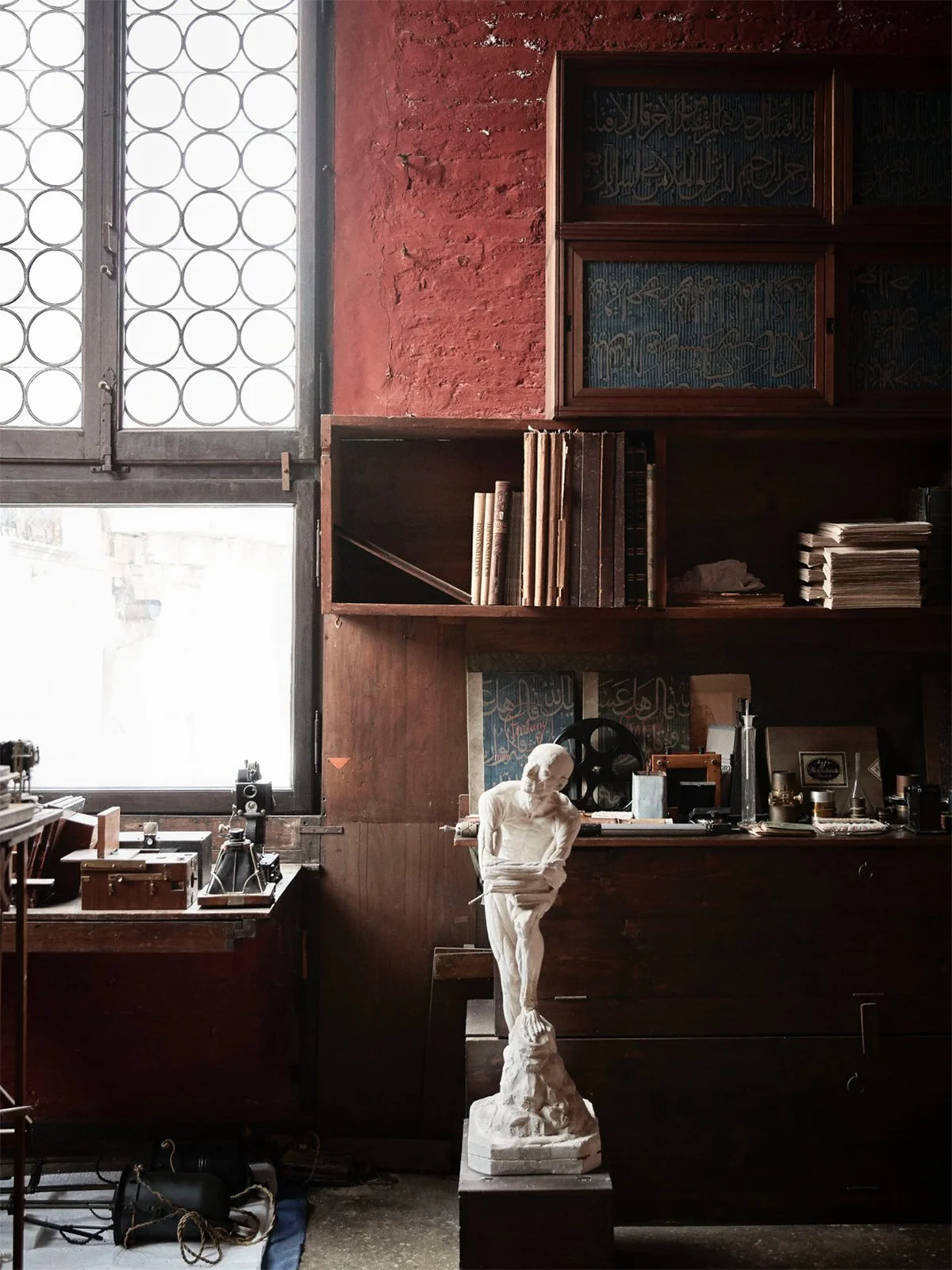
Intuition, Palazzo Fortuny (2017)
Image © — @lazizhamani
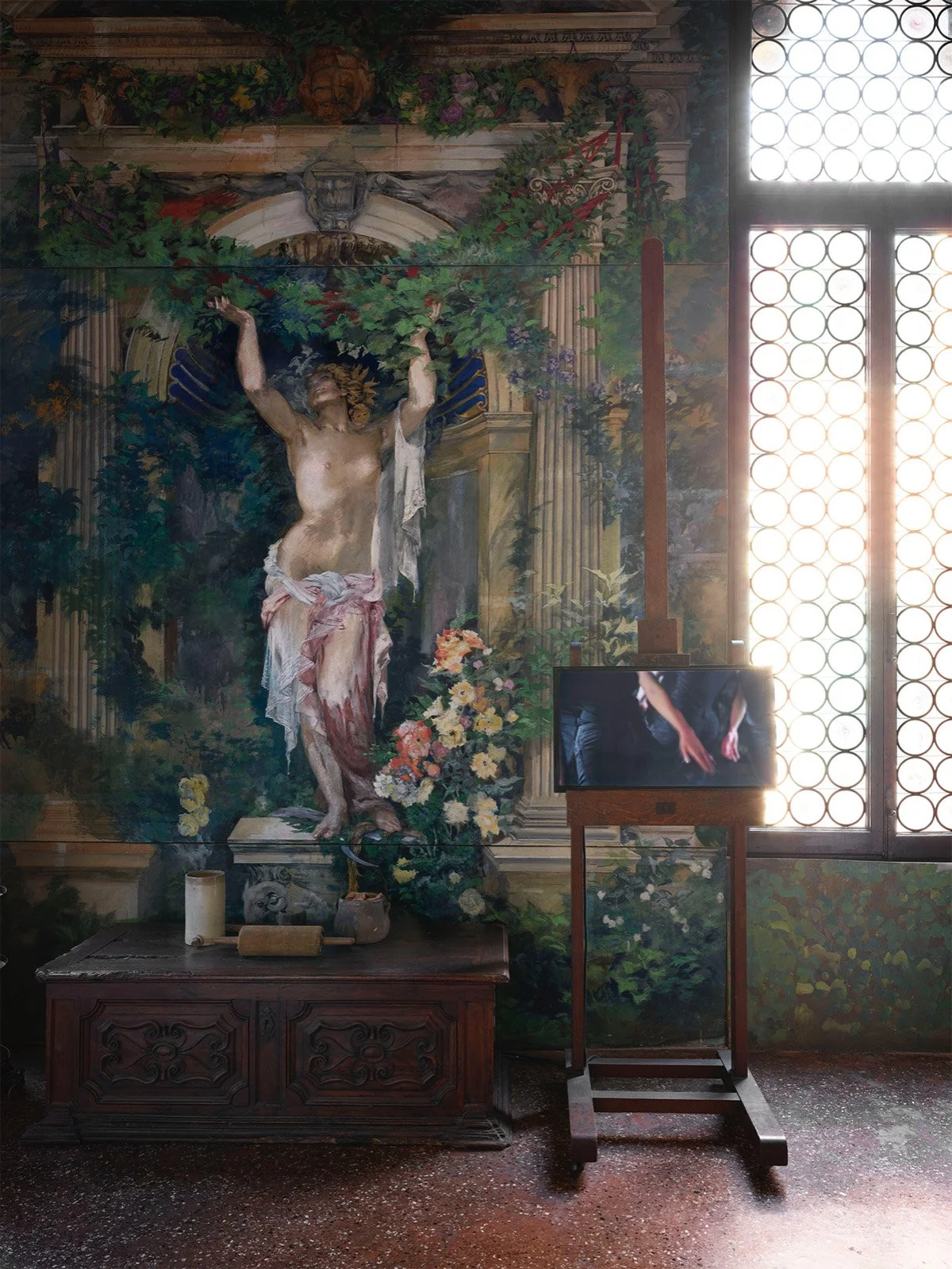
Intuition, Palazzo Fortuny (2017)
Image © — @lazizhamani
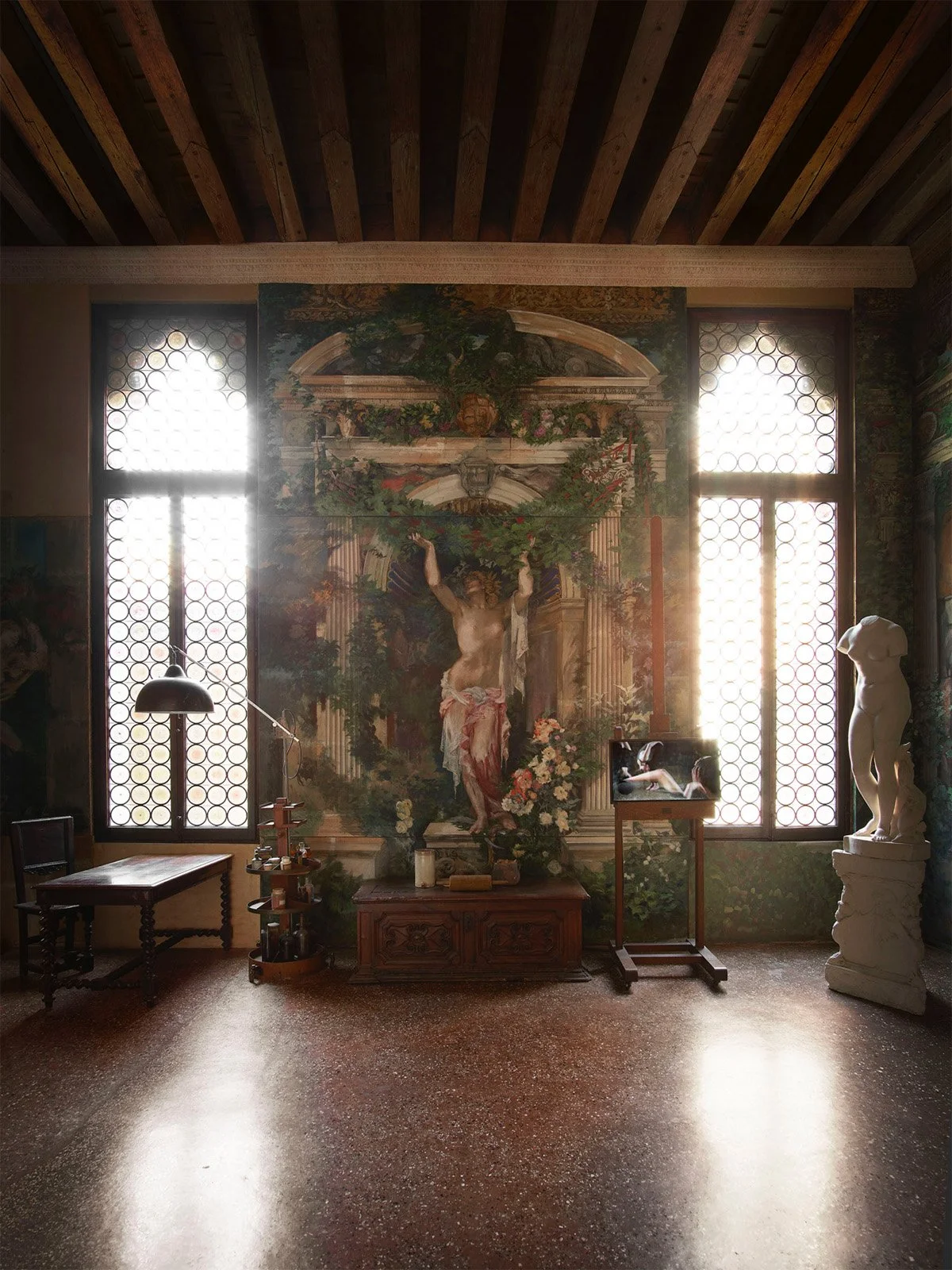
Seen from today, Intuition feels less like a single exhibition than a condensed statement of Axel Vervoordt’s entire curatorial worldview. Presented at Palazzo Fortuny during the 2017 Venice Biennale and co-curated with Daniela Ferretti, the exhibition occupied four floors of Mariano Fortuny’s former studio, bringing together prehistoric sculpture, modern painting, Surrealist experiment, contemporary installation and performance. Its subject was intuition, but its real force lay in the way it allowed objects from different centuries to test one another without needing to be resolved into a single history
The premise was unusually ambitious. Intuition has been pursued across time by artists, scientists, mystics, philosophers and charlatans, appearing in ritual, meditation, music, trance, automatic writing, modern art and even research into rapid decision-making under pressure. Vervoordt and Ferretti did not attempt to define it neatly. Instead, they treated intuition as a form of knowledge that moves beneath explanation, a condition art is especially equipped to reveal because it does not depend entirely on language
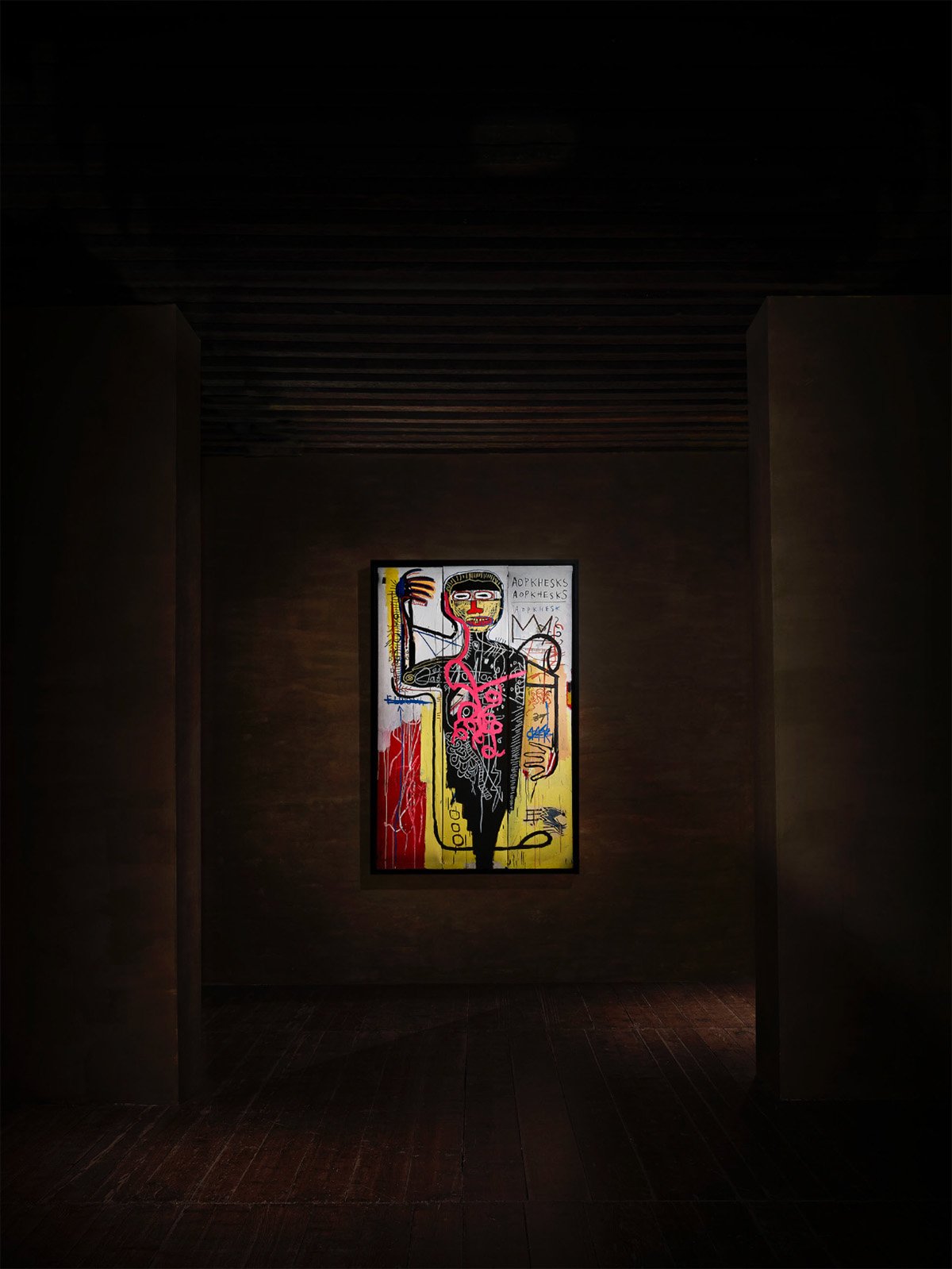
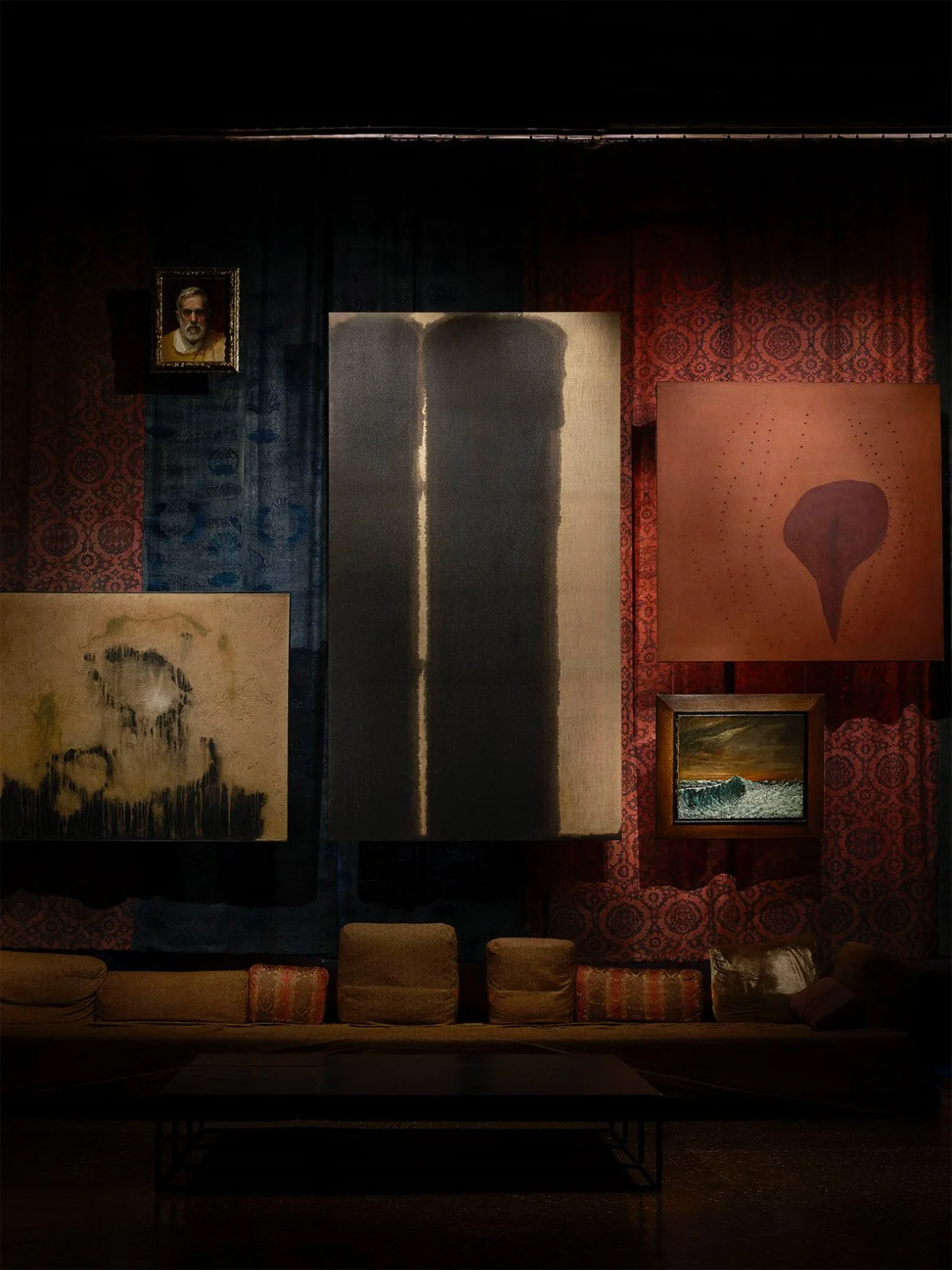
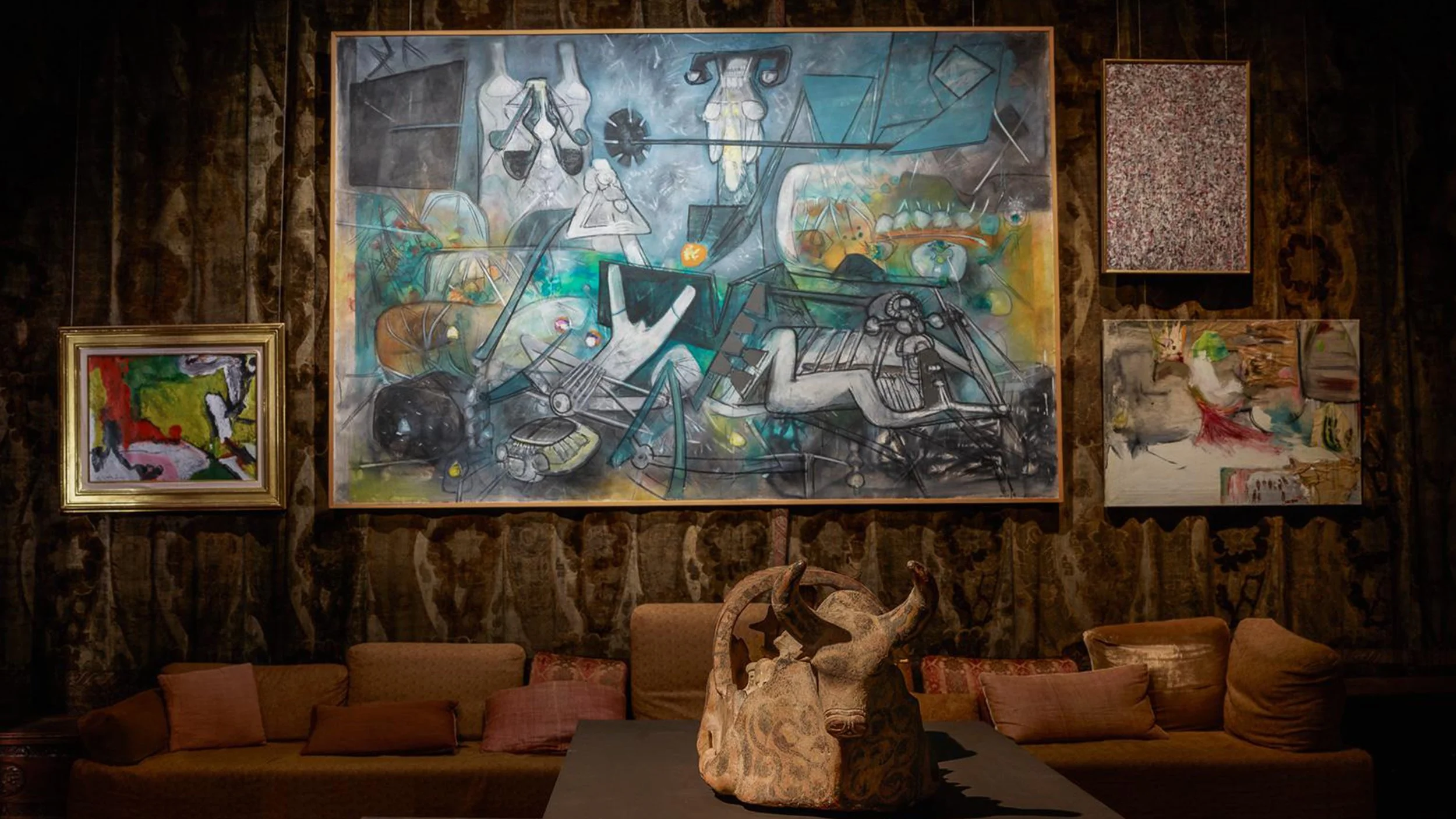
Jean Michel Basquiat, Versus Medici, (1982) Intuition, Palazzo Fortuny (2017)
Image © — @lazizhamani
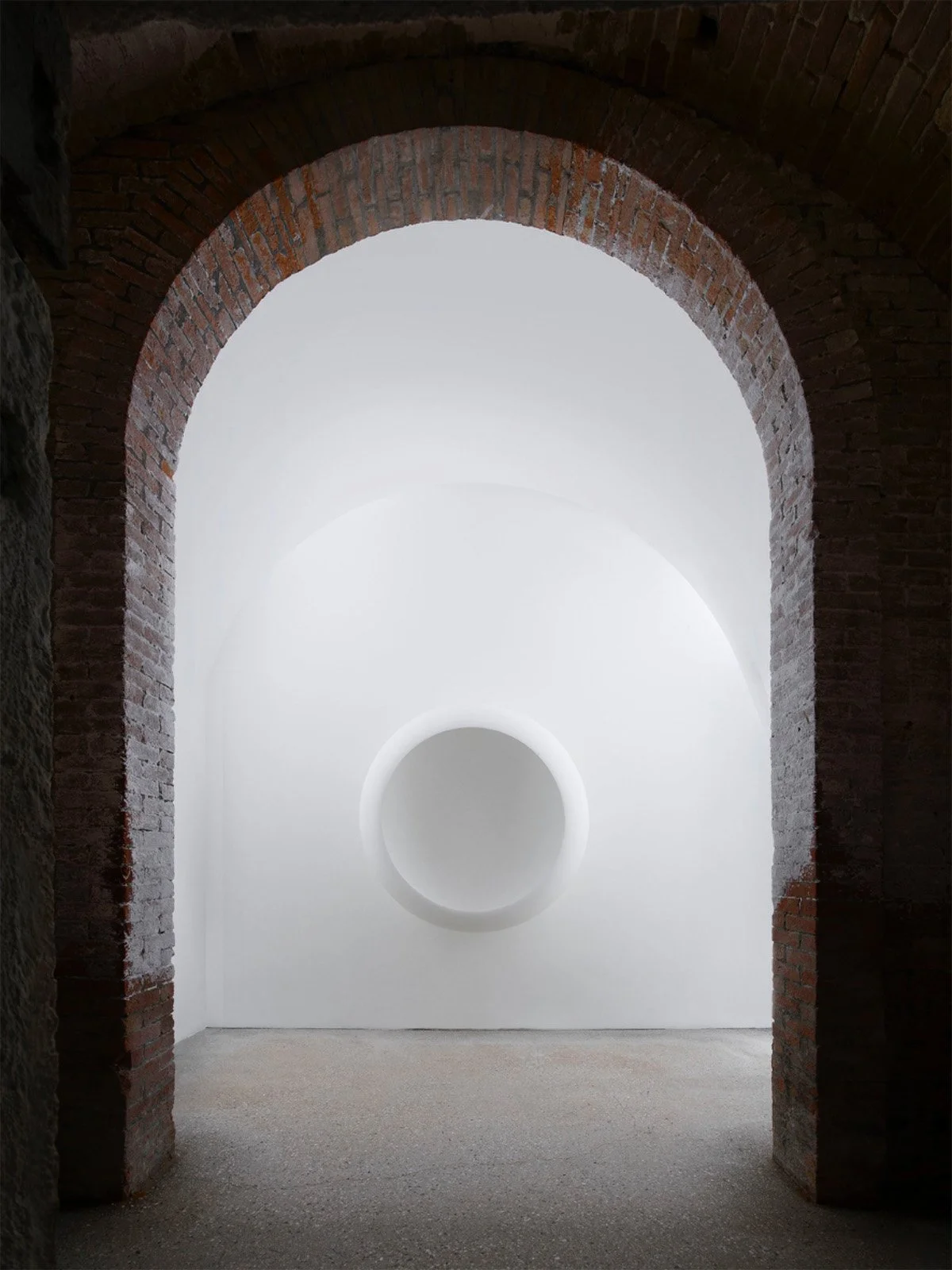
Anish Kapoor, White Dark VIII, (2000) Intuition, Palazzo Fortuny (2017)
Image © — @lazizhamani
That idea began at the entrance. In the darkened ground-floor rooms, Neolithic sandstone statue-menhir figures stood on plinths of earth, their ancient forms carrying the directness of objects made for forces older than art history. Nearby, Jean-Michel Basquiat’s Versus Medici from 1982 introduced a radically different speed. Basquiat’s marks appear almost seized before thought can domesticate them, giving the painting an urgency that belongs equally to the street, the unconscious and the studio
Looking back, the strength of the installation was its refusal to make these pairings feel merely clever. The prehistoric figures and Basquiat were not placed together as a visual trick. They shared an intensity of transmission: both seemed to have been made from the need to externalise something before it disappeared
Intuition, Palazzo Fortuny (2017)
Image © — @lazizhamani
Intuition, Palazzo Fortuny (2017)
Image © — @lazizhamani
Elsewhere, the exhibition turned towards the instability of the self. Kurt Ralske and Giulio D’Alessio’s audiovisual installation Tristis est anima mea presented a spectral figure appearing and dissolving to the sound of medieval music. The work suggested a body released from ordinary time, passing between memory, image and projection. Within the Fortuny rooms, intuition became less a private impulse than a way of encountering something outside the limits of the self
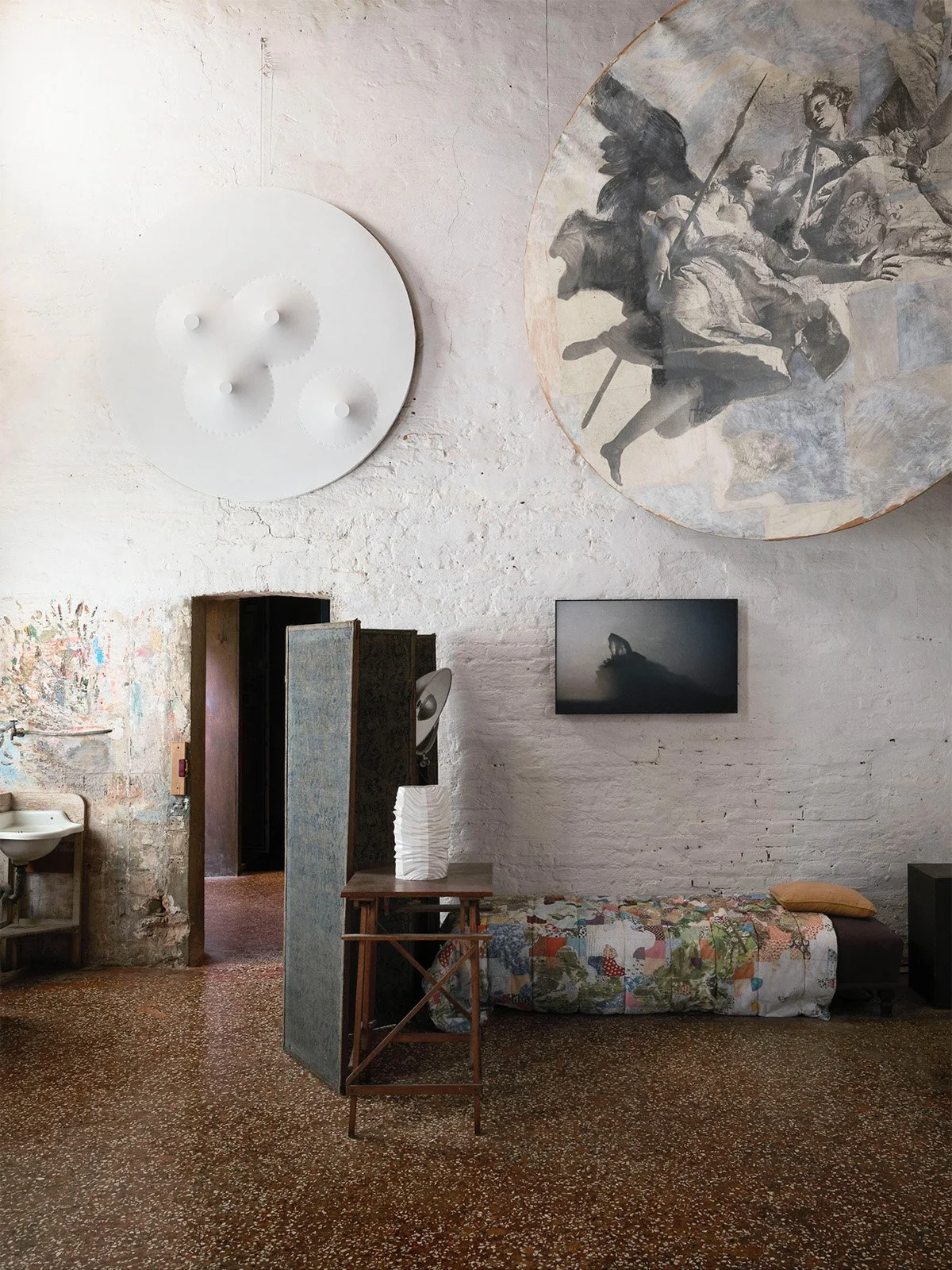
Renato Leotta’s photographic series Tempo (Memoria e Materia) offered a more elemental register. By immersing photosensitive paper in the Mediterranean and exposing it to moonlight, Leotta allowed the sea and lunar light to participate in the making of the image. The artist did not withdraw entirely, but he accepted a diminished authority. He created the conditions, then allowed nature to leave the mark
Intuition, Palazzo Fortuny (2017)
Image © — @lazizhamani
Intuition, Palazzo Fortuny (2017)
Image © — @lazizhamani
One of the exhibition’s most exact architectural moments arrived in a white room with Anish Kapoor’s White Dark VIII. Projecting from the wall with ambiguous depth, the work appeared at once flat and spatial, object and void. Its soft contours resisted comprehension, holding the eye in a state of uncertainty. Nearby, a religious statuette of Saint Anne teaching the Virgin Mary shifted the question of intuition towards transmission, suggesting knowledge received through presence, touch and devotion rather than argument
Marina Abramović’s commissioned work, Standing Structure for Human Use, made that transmission physical. Visitors stood opposite one another with their foreheads touching large rose quartz crystals, entering a shared act of concentration. Whether approached as belief, scepticism or theatre, the work understood something central to the exhibition: intuition often depends on the desire to receive, not simply the will to know
Intuition, Palazzo Fortuny (2017)
Image © — @lazizhamani
What remains important about Intuition is how completely Palazzo Fortuny shaped the experience. The building was never a passive container. Its dense interiors, former life as Mariano Fortuny’s studio and atmosphere of textile, theatre, shadow and invention gave the exhibition a charge that a neutral museum space could not have supplied. Vervoordt and Ferretti used the palazzo as an active participant, allowing its rooms to hold the works in suspense
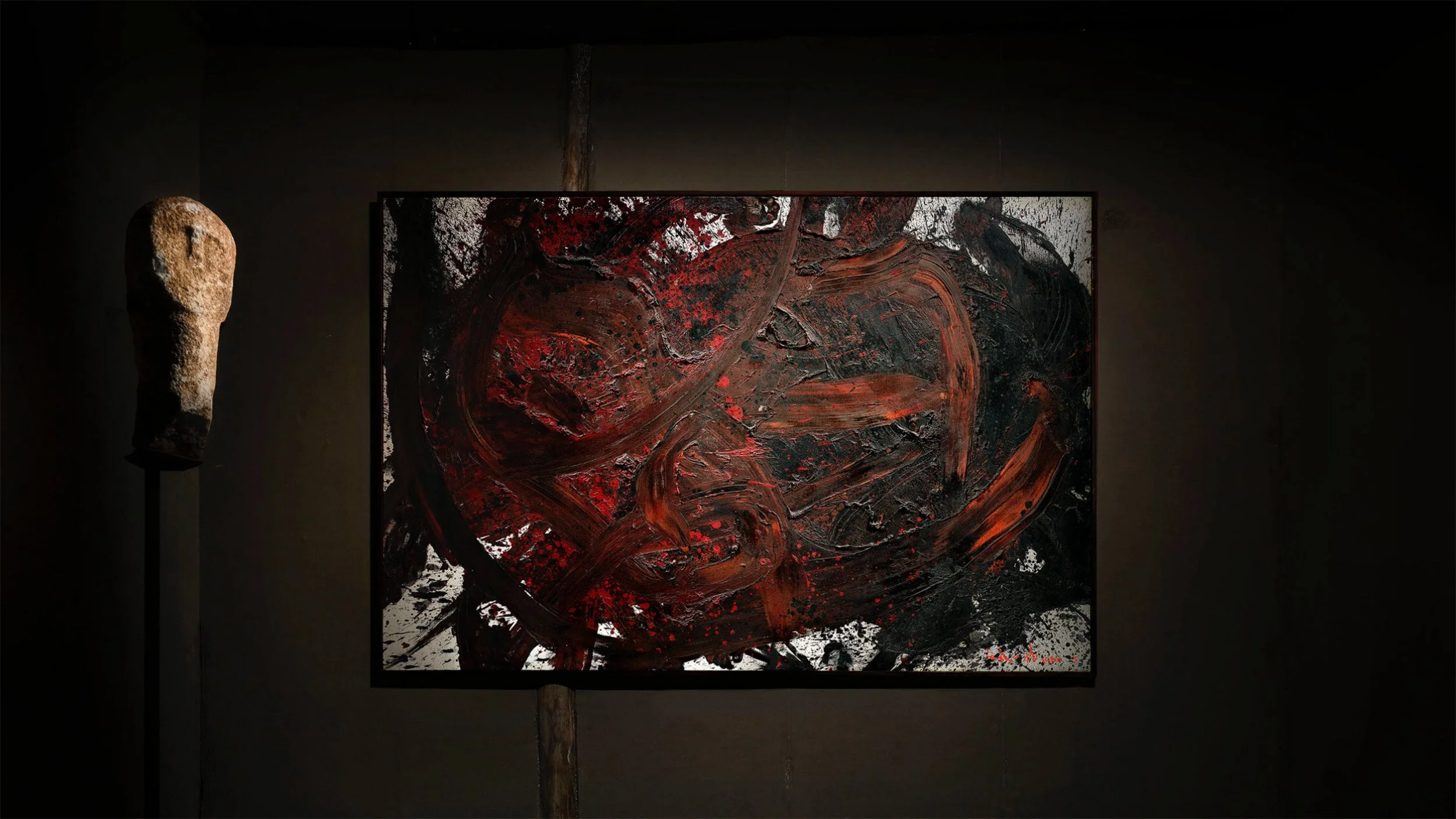
Idolo di Manzano, (first half of the 4th Millennium BC) and Kazuo Shiraga, Chiyosei Mochakuten (1960) Intuition, Palazzo Fortuny (2017)
Image © — @lazizhamani
In retrospect, Intuition stands as one of Vervoordt’s most persuasive Venice exhibitions because it did not treat art as evidence arranged around a thesis. It trusted proximity, silence and atmosphere. Prehistoric sculpture, Basquiat, Kapoor, Abramović and Leotta were gathered not to explain intuition, but to demonstrate its operation. At Palazzo Fortuny, art was allowed to reach the viewer before the mind could decide what it had understood
When the Room Becomes Part of the Collection
—
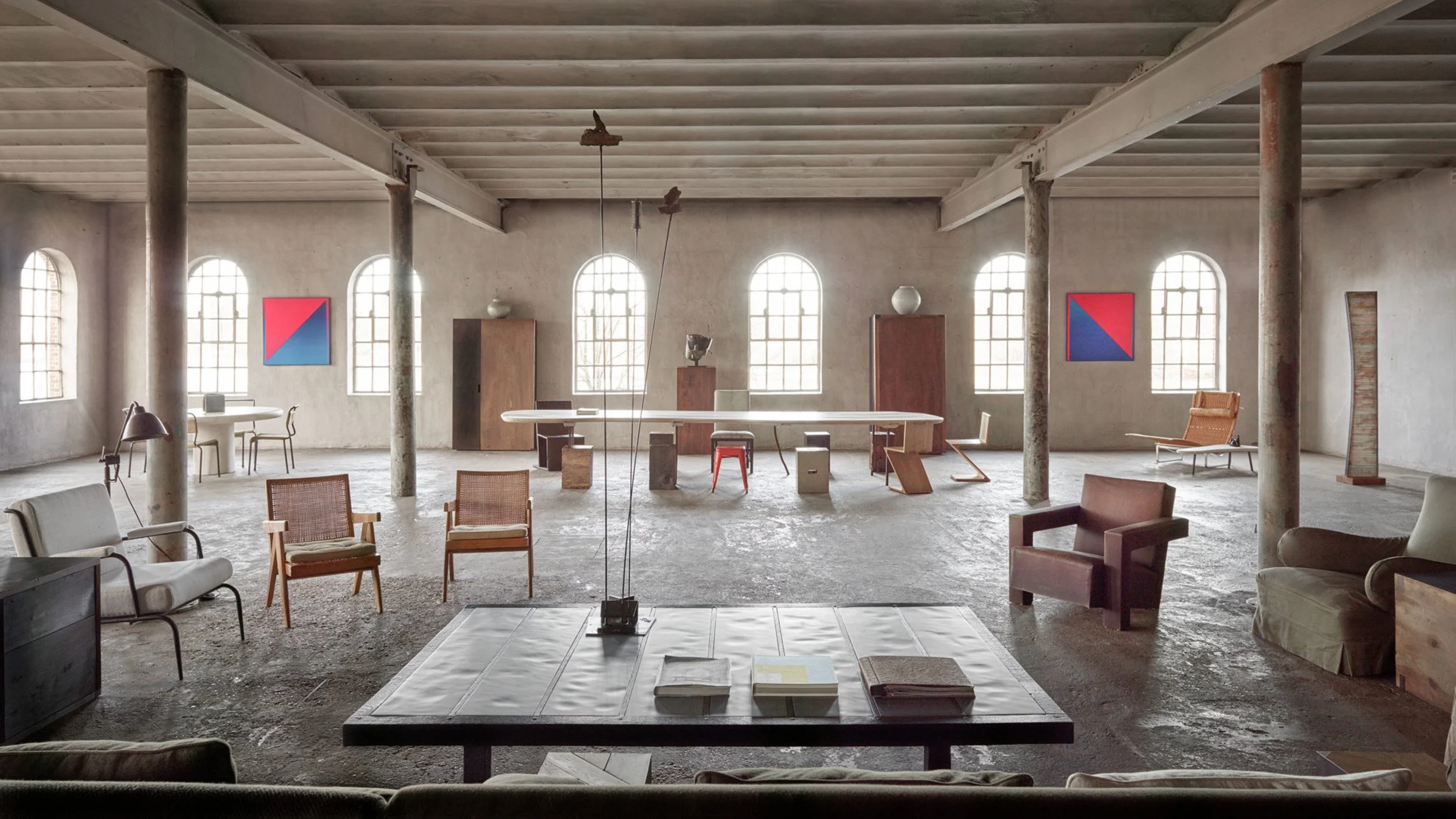
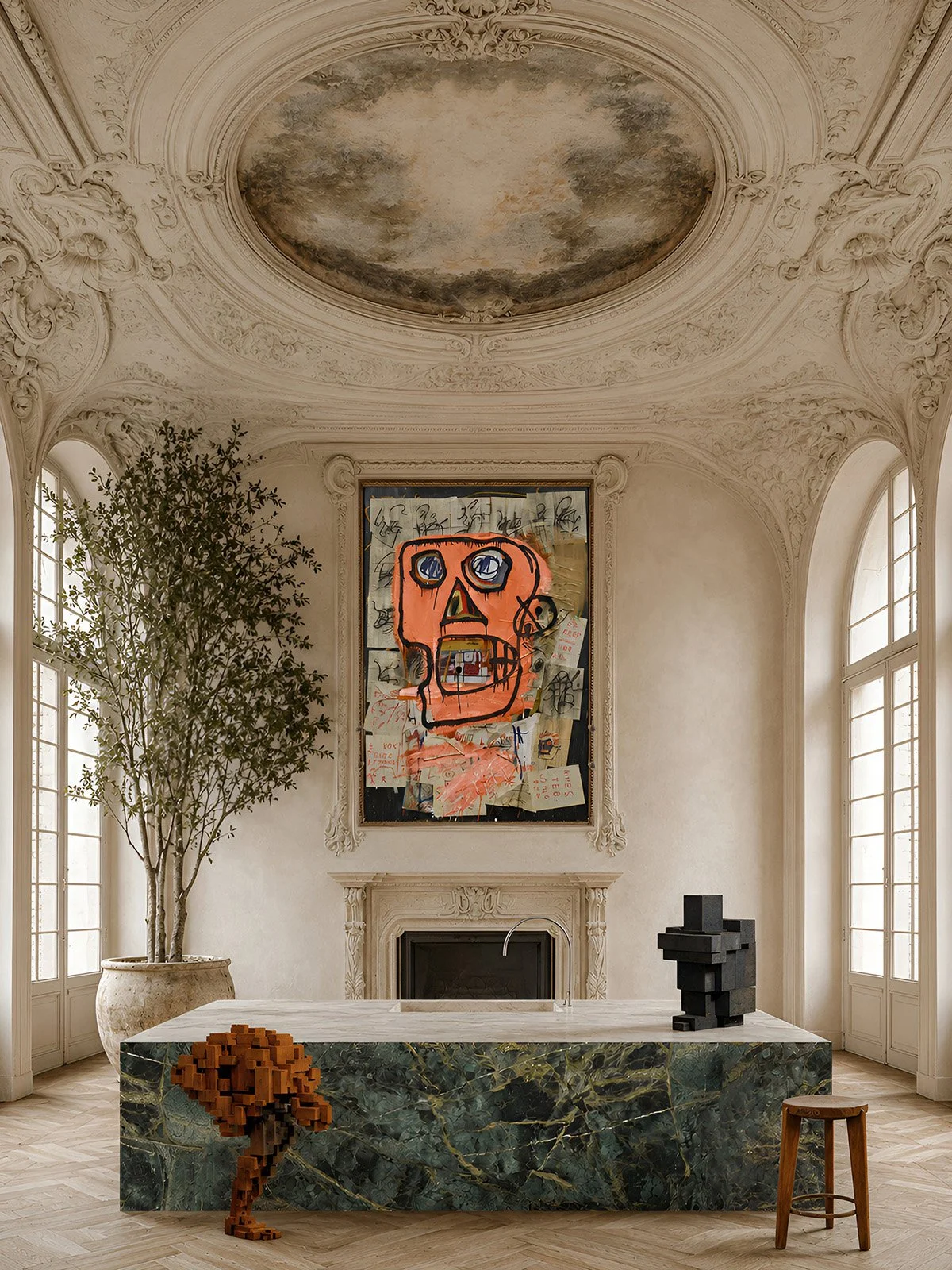
Works by Jean-Michel Basquiat, Antony Gormley, Thomas Houseago, Christopher Wool, Cy Twombly, Kazuo Shiraga and Mark Manders, together with Hellenistic and Roman antiquities, are contextually visualised by interior and furniture designer Brent Lee within interiors where chronology gives way to scale, material and spatial tension
At Castello di Montecalvello, Pierre Augustin Rose Finds a Softer Language of Stone and Velvet
—
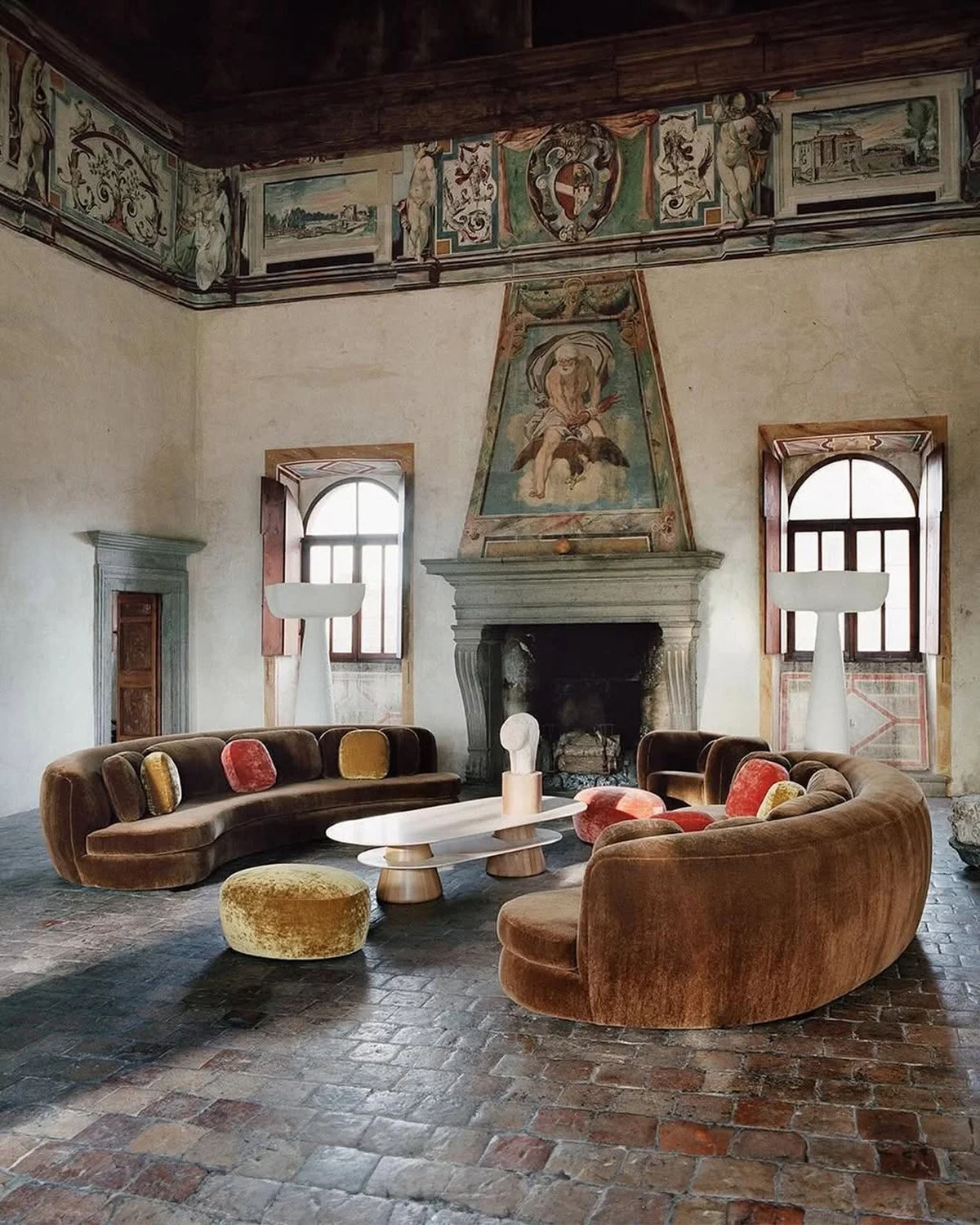
Inside an 11th-century castle once restored by Balthus, the French design house adapts its contemporary forms to the weight, texture and silence of the Italian countryside