

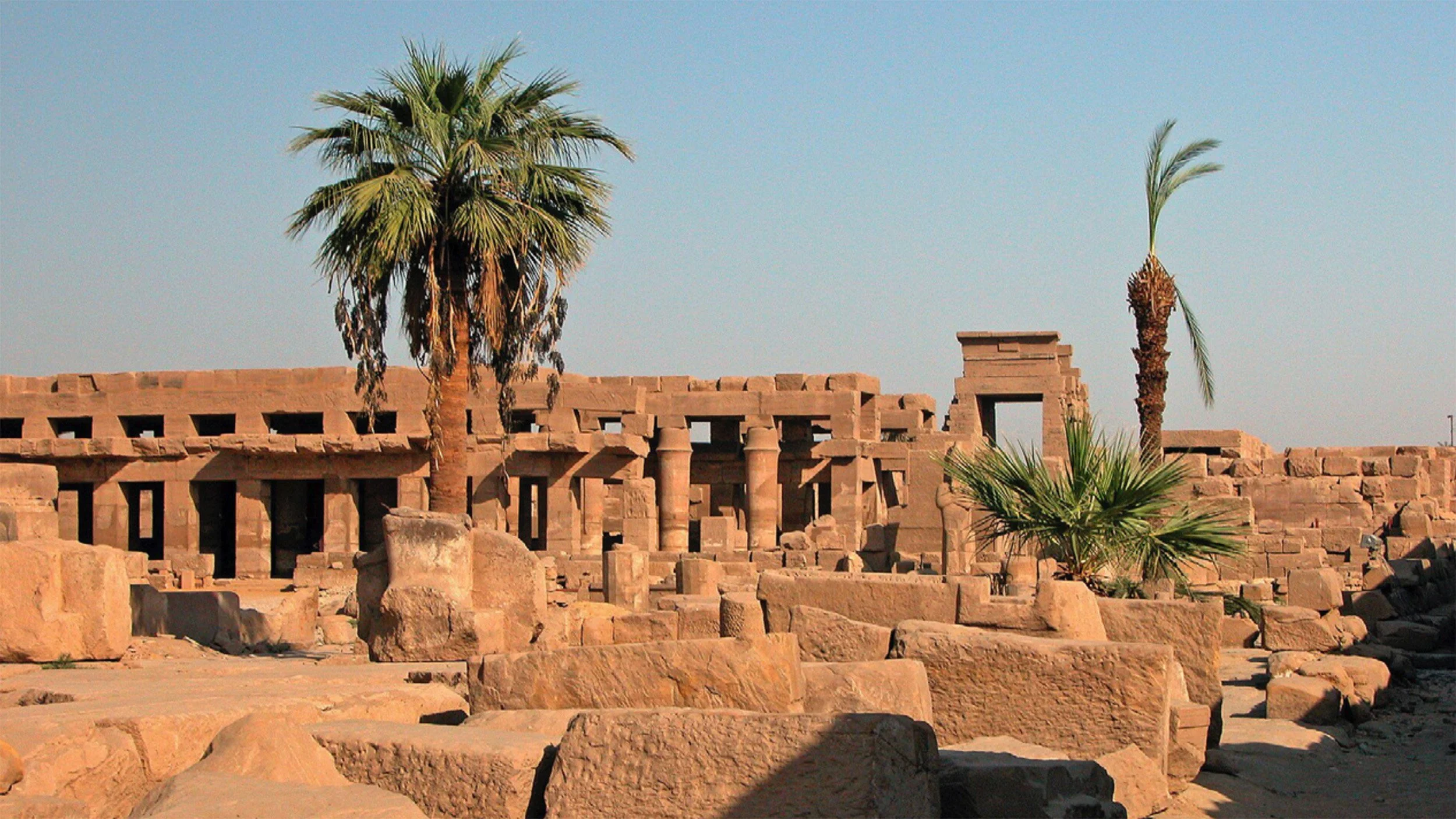
Festival Hall of Thutmose III, Precinct of Amun-Re, Karnak Temple Complex, Luxor (Thebes).
Image © — @artancient
ART & OBJECTS
An Egyptian Relief Preserves a Husband and Wife Across 3,500 Years
Held by London dealer ArtAncient, the painted limestone fragment from Thebes turns a gesture of affection into one of the most intimate surviving images of Egypt’s 18th Dynasty
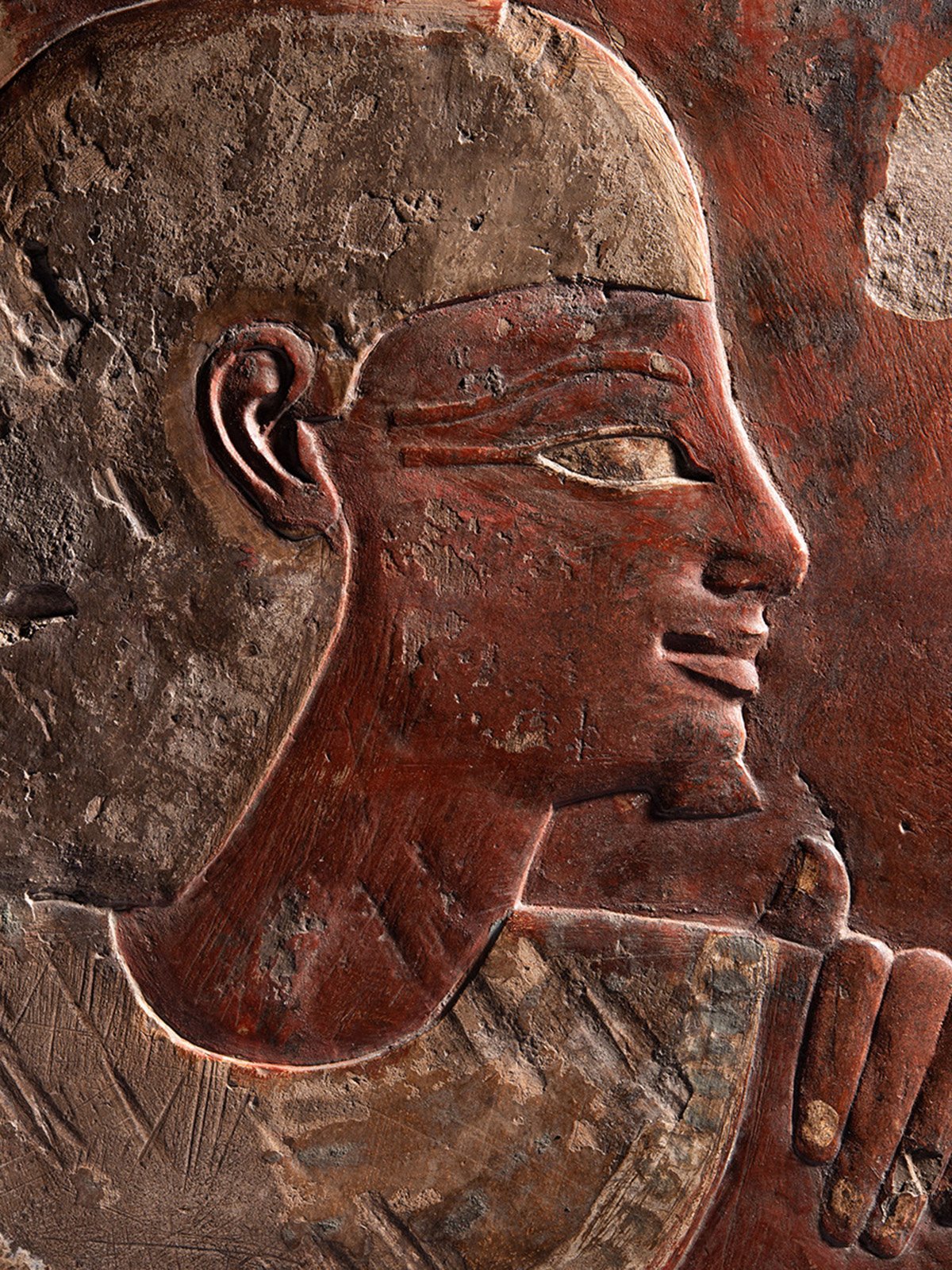
Egyptian Relief of a Man and His Wife, Thebes, first half of Dynasty 18, circa 1525–1425 BC
Image © — @artancient
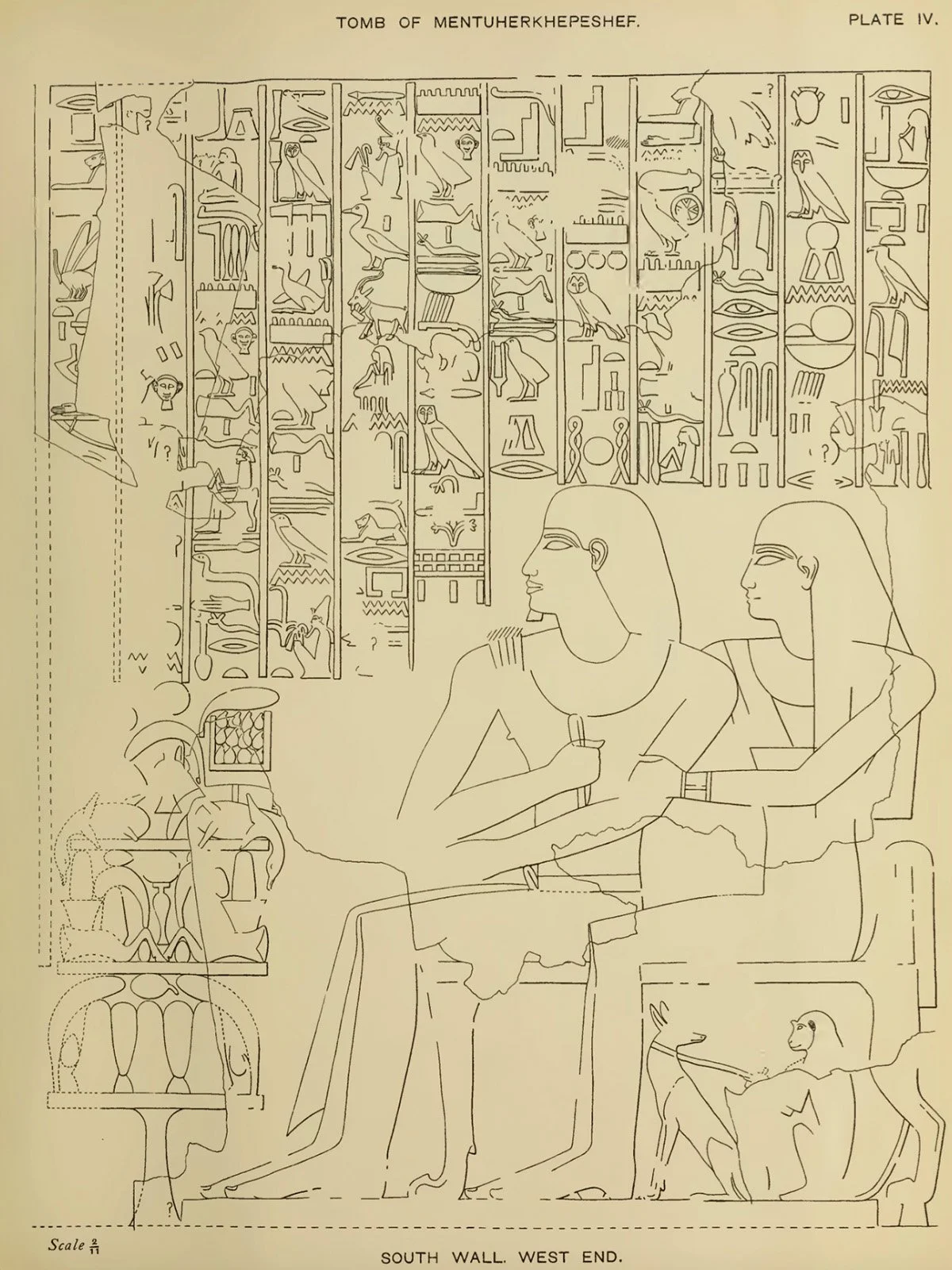
A typical 18th Dynasty scene of the seated tomb owner and his wife before a table
of offerings, from the Tomb of Mentuherkhepeshef
Image © — @artancient
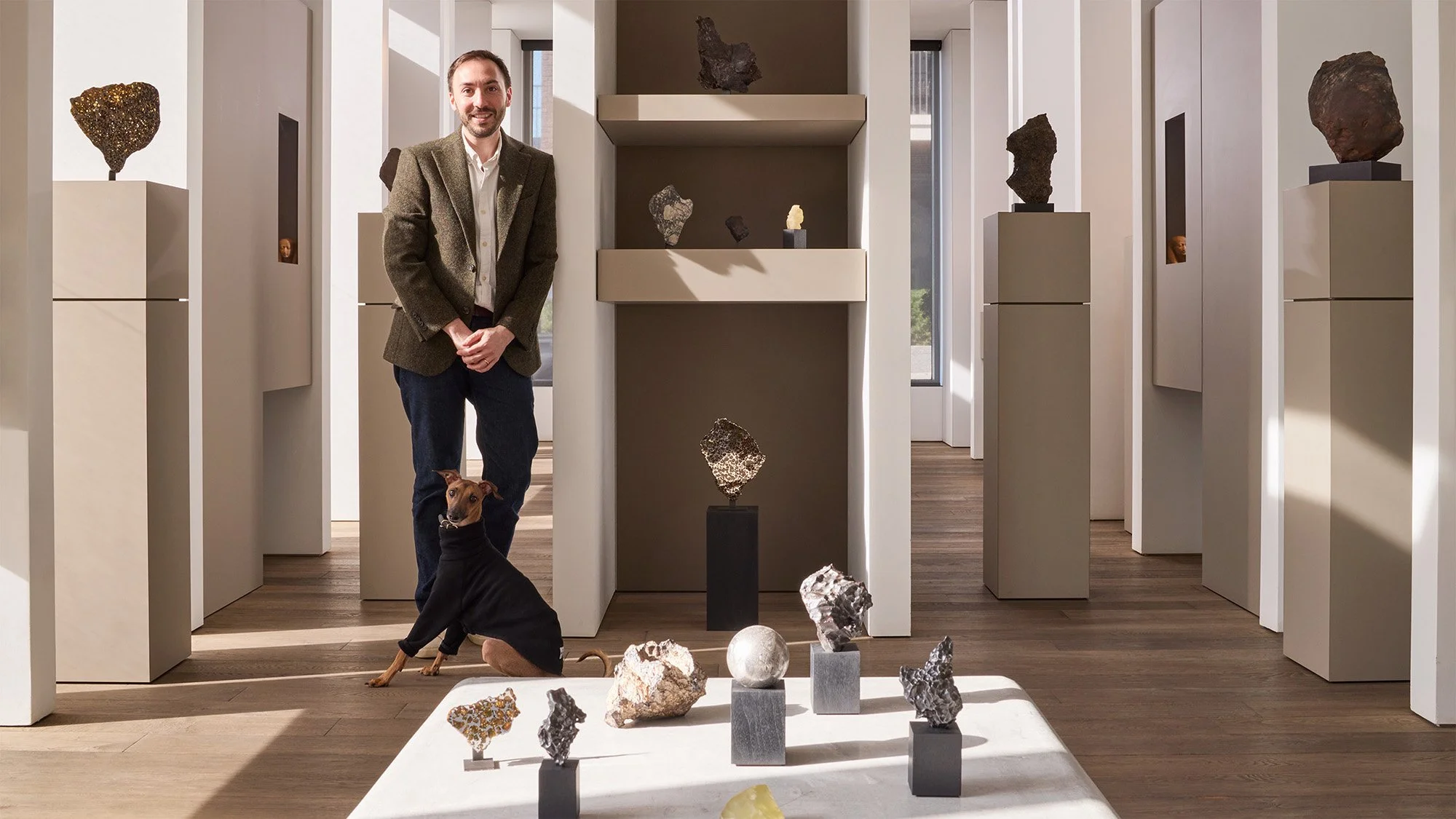
For ArtAncient, an object rarely begins and ends with appearance. The London-based gallery specialises in exceptional material spanning an almost unimaginable chronology, from the formation of the Solar System to late antiquity, with research, provenance and art-historical context central to its approach. Discoveries and acquisitions connected to the gallery are now held by institutions including the Metropolitan Museum of Art, the British Museum, Louvre Abu Dhabi and the Zayed National Museum, while its research has intersected with the J. Paul Getty Museum's APPEAR Project, the Fitzwilliam Museum's Hamilton Kerr Institute and the Courtauld Institute
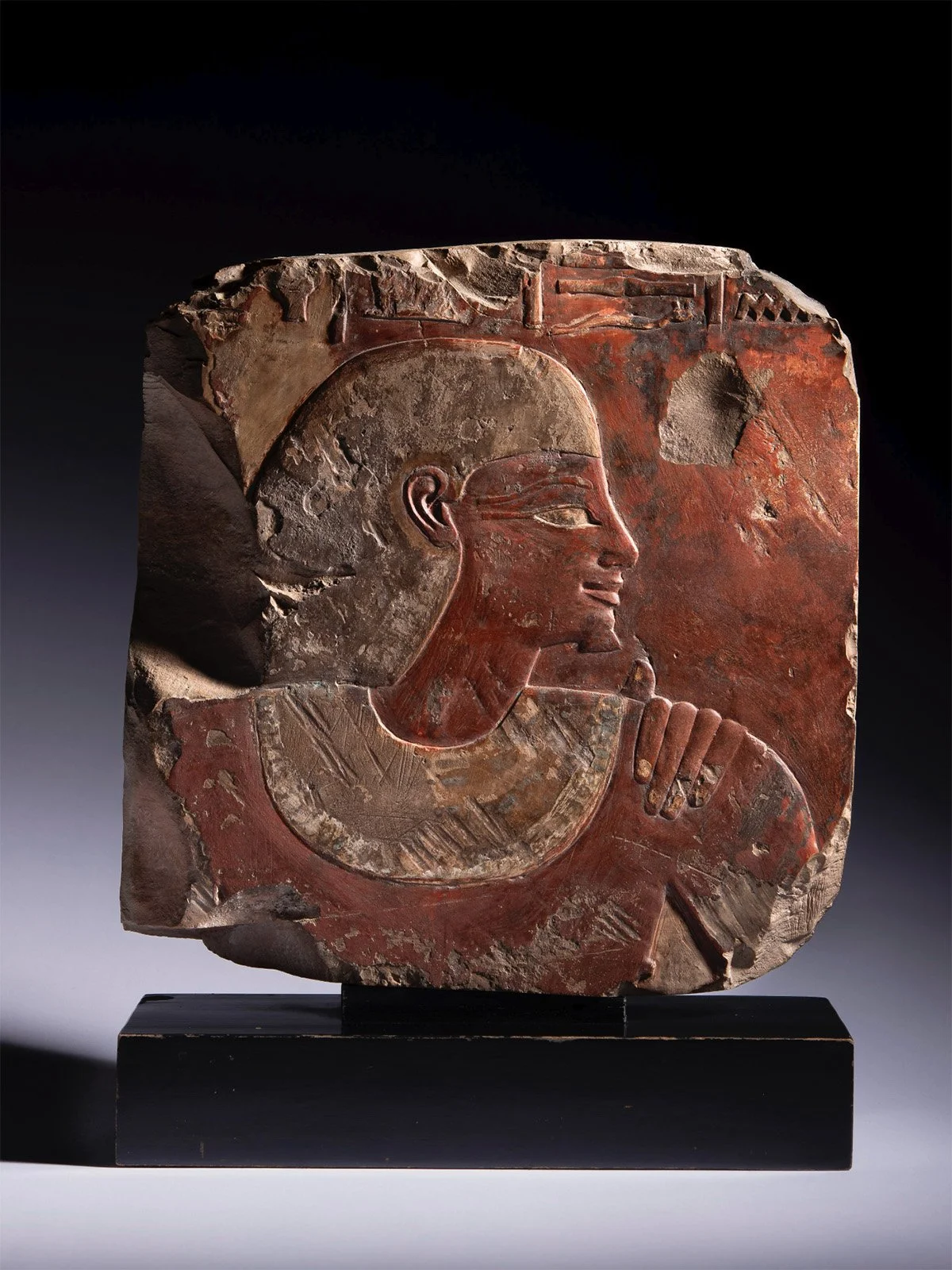
Among the ancient works handled by ArtAncient is an object whose emotional clarity feels almost resistant to time. At first, the eye is drawn to the man. His face emerges in profile from a field of deep red, the nose carefully modelled and the eyebrow extended towards the temple with the graphic precision associated with ancient Egyptian portraiture. Then another detail becomes visible: a hand resting quietly on his left shoulder. It belongs to his wife, and in a relief carved approximately 3,500 years ago, that small gesture transforms an exceptional archaeological object into something immediately human
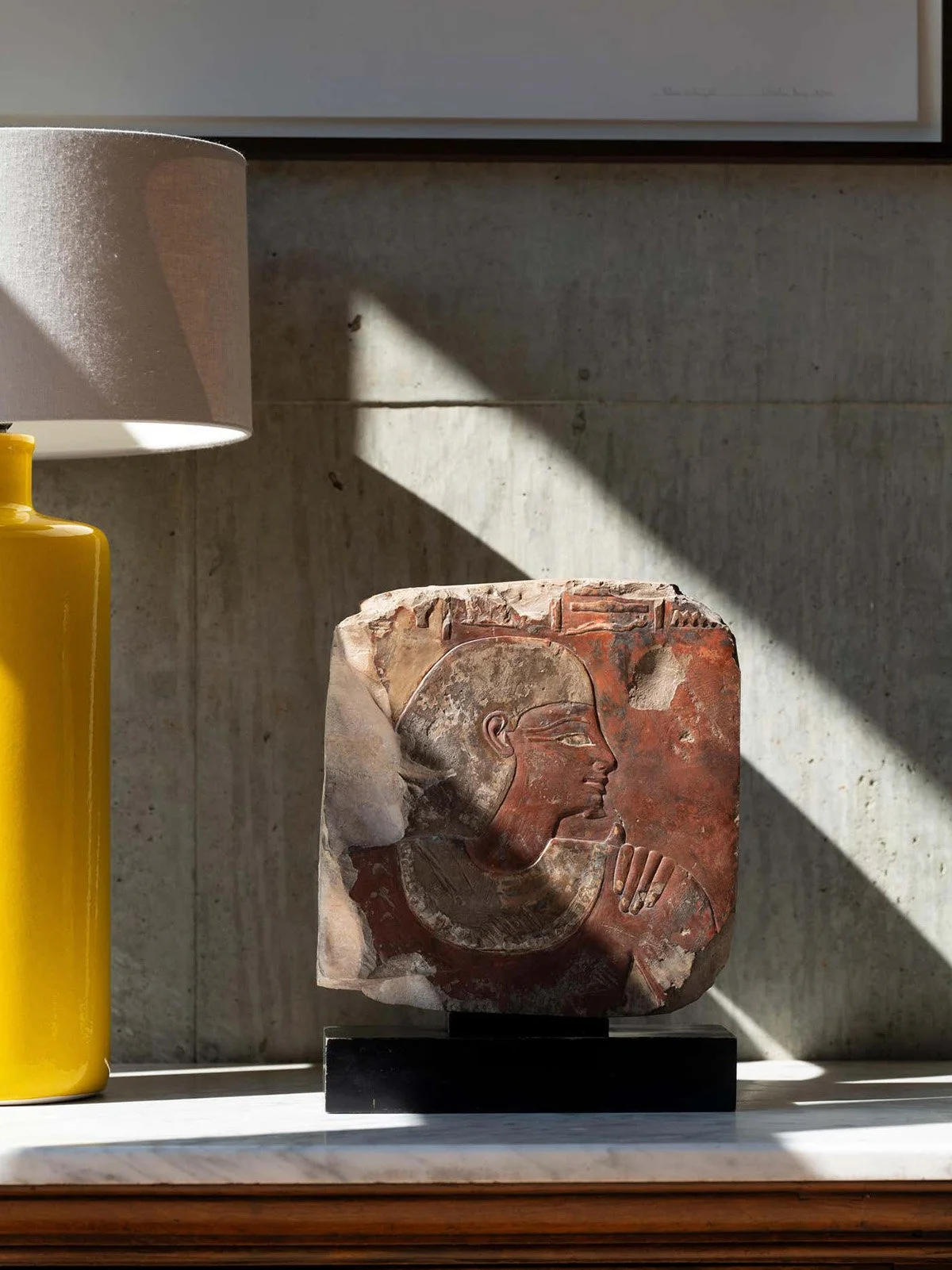
Egyptian Relief of a Man and His Wife, Thebes, first half of Dynasty 18, circa 1525–1425 BC
Image © — @artancient
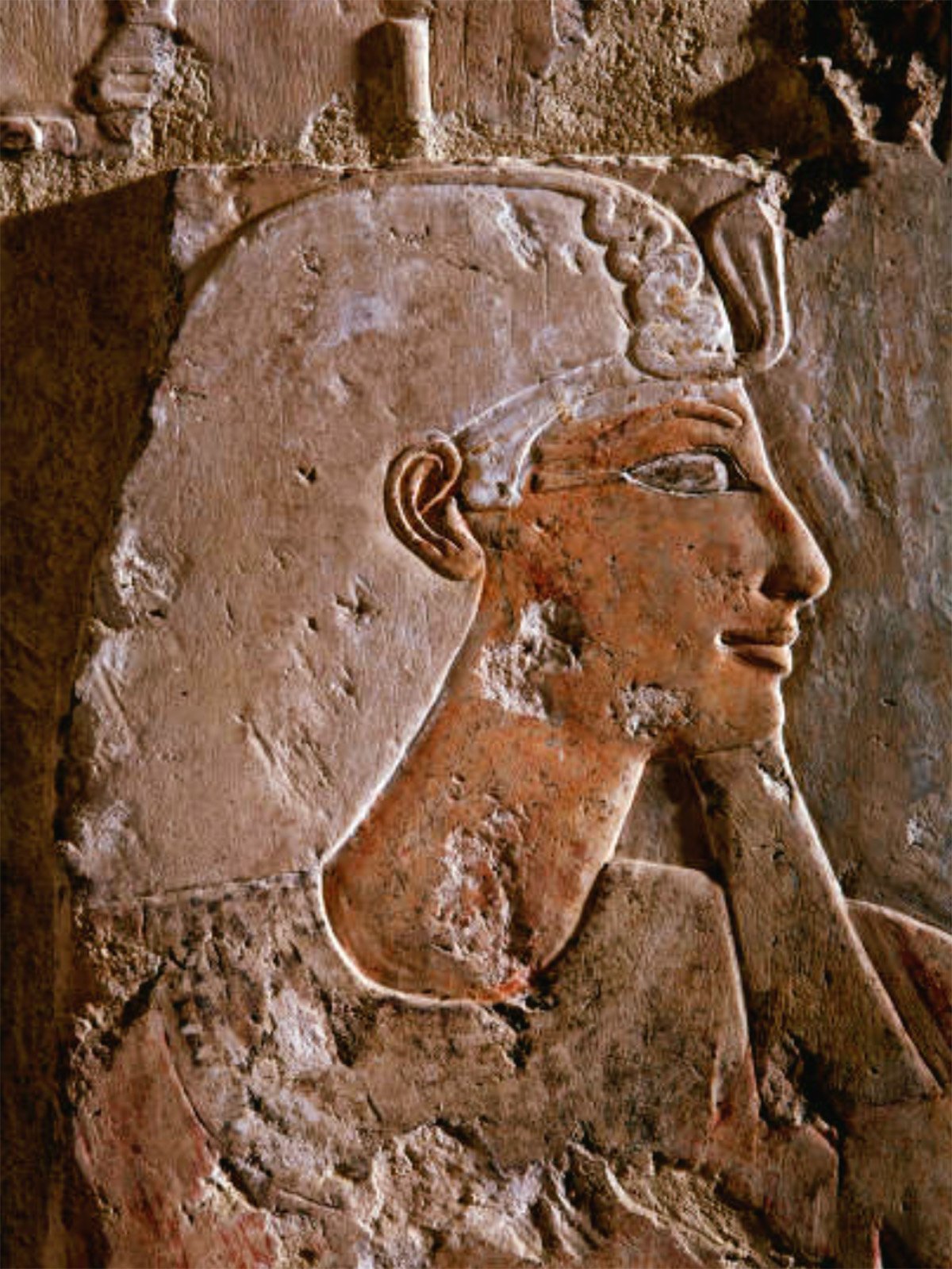
Relief of Hatshepsut from The Mortuary Temple of Hat-shepsut, Deir el-Bahar
Image © — @artancient
The Egyptian Relief of a Man and His Wife dates to the first half of Egypt's 18th Dynasty, circa 1525–1425 BC. Carved and painted in raised relief on limestone, the fragment is attributed to Thebes and is believed to have formed part of the decoration of a high-status private tomb in the Theban necropolis. Its material and quality of execution place it within a period widely regarded as one of the great heights of Egyptian artistic production
This was Egypt's New Kingdom, an era of immense political reach and cultural wealth. Under rulers including Hatshepsut and Thutmose III, Egypt extended its influence throughout the Near East and Nubia, while Thebes assumed considerable political and religious importance. Pharaohs directed extraordinary resources towards temples and cult centres; wealthy officials, meanwhile, commissioned private tombs whose decoration established status and assisted their passage into the afterlife
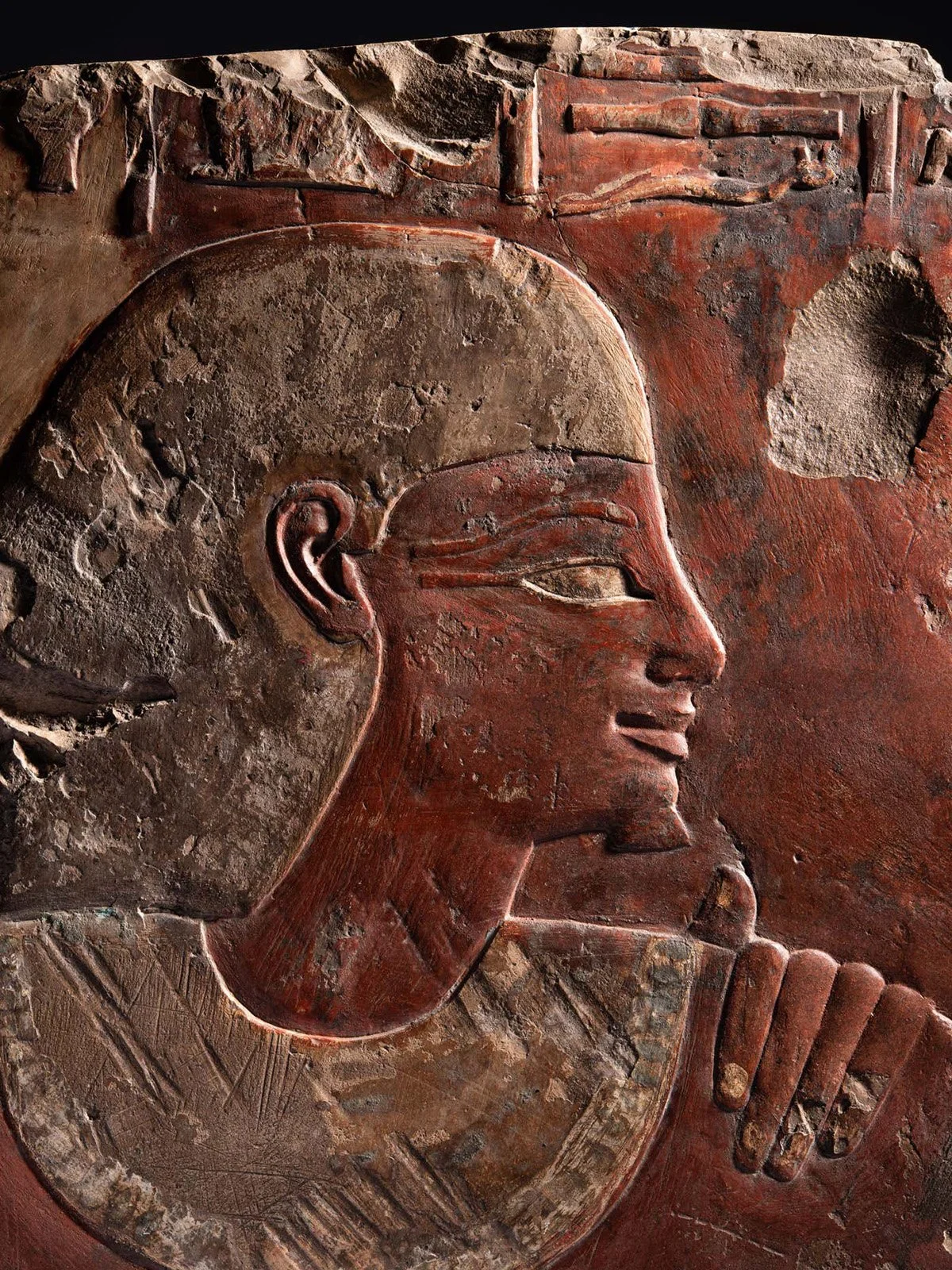
The ArtAncient relief belongs to this sophisticated funerary tradition. The tomb owner is shown wearing a plain bag wig and broad collar, his youthful expression constructed through an almost economical sequence of carved lines. A drill was used to deepen the nostrils and corners of the mouth, while the jaw is subtly modelled from the limestone surface. The rounded nose and chin, elongated eyebrow and cosmetic lines recall royal relief portraiture associated with Hatshepsut and Thutmose III
Egyptian Relief of a Man and His Wife, Thebes, first half of Dynasty 18, circa 1525–1425 BC
Image © — @artancient
Egyptian Relief of a Man and His Wife, Thebes, first half of Dynasty 18, circa 1525–1425 BC
Image © — @artancient
Raised limestone relief was itself an indication of privilege. Most private Theban tombs of the period were decorated in painted plaster, a quicker and less costly process. Research accompanying the work notes that of 129 Theban tombs datable to before the reign of Thutmose IV, only 19 featured raised relief either exclusively or in part. The more demanding technique was largely reserved for some of the necropolis's most ambitious private tombs
Time remains visible across the fragment. Traces of pigment survive on the wig, collar and surrounding field, while angular chisel marks expose the physical process of carving. Some may once have disappeared beneath a layer of lime plaster and further paint. In the relief's present condition, making and erosion exist together, allowing the ancient sculptor's hand to remain visible beside the gradual deterioration of the surface
Yet it is the wife's hand that gives the work its extraordinary force. In its original tomb setting, the couple would likely have been shown seated before a table of offerings intended to sustain them on the journey to the underworld. Partial hieroglyphs survive above, though not enough remains to identify the figures. Comparable 18th Dynasty tomb scenes show wives beside their husbands as active partners in funerary ritual, assisting the deceased through the transition into the afterlife
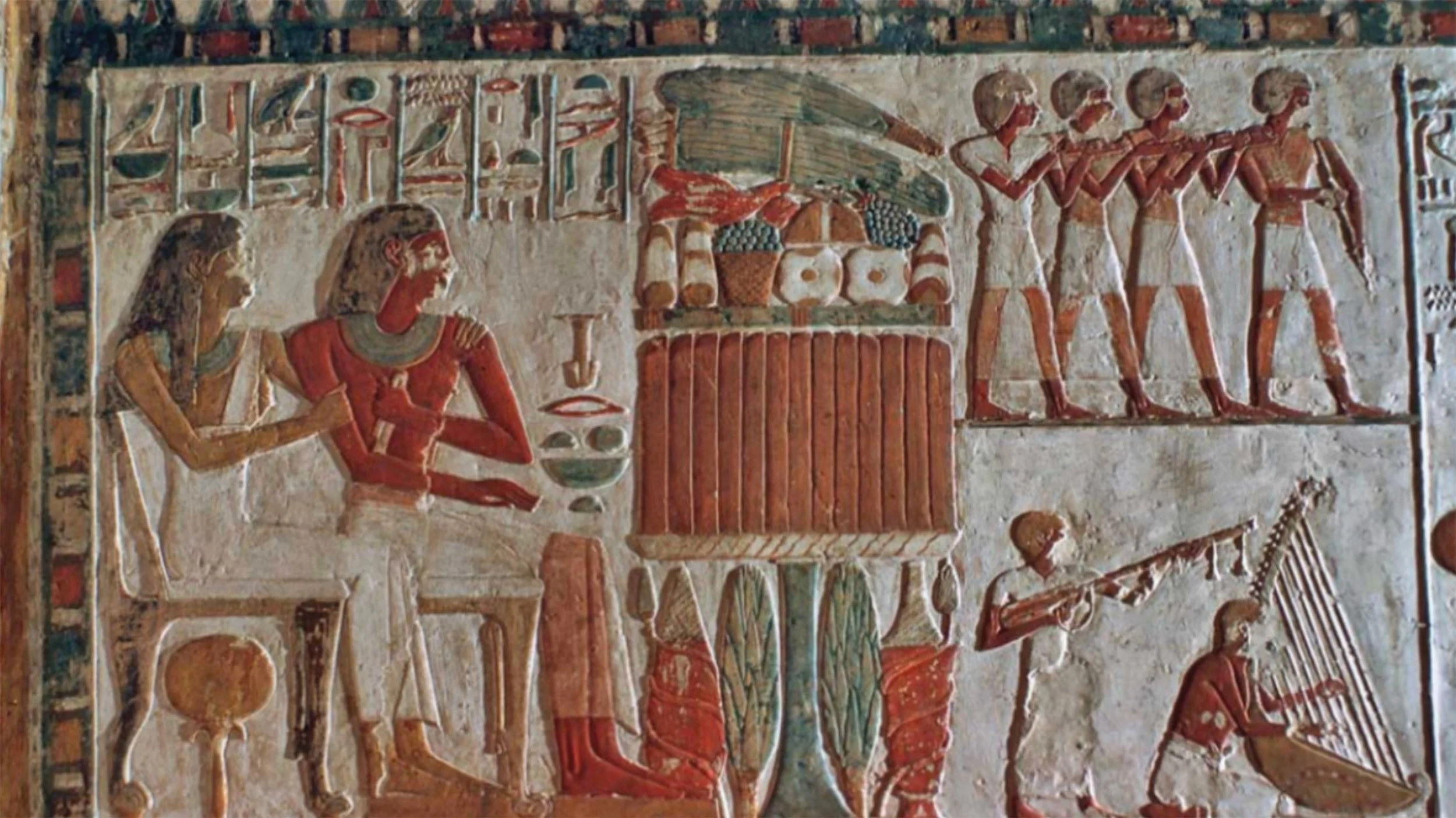
A typical 18th Dynasty paintedcrelief scene, from the tomb of Be-nia called Paheqamen
Image © — @artancient
Here, that complex religious belief is expressed with remarkable simplicity. Four fingers fall across the man's shoulder, close enough to his neck to suggest intimacy rather than formal ceremony. The gesture represented connection and mutual support in life and death, but it requires almost no specialist knowledge to understand. Across three and a half millennia, affection remains visually legible
Ancient Egyptian art is often encountered through the monumental: temples, colossal figures and architecture constructed around ideas of permanence. This fragment offers permanence at a much more intimate scale. Its original tomb, its owners and most of the decorative programme surrounding it are now absent. What survives is a face, a shoulder and the hand of a wife placed there in affection
Through ArtAncient, the Egyptian Relief of a Man and His Wife is presented not simply as an exceptional work of 18th Dynasty carving, but as a remarkably enduring portrait of two people who expected their union to continue beyond death
Egyptian Relief of a Man and His Wife
Thebes, first half of Dynasty 18, circa 1525–1425 BC
Raised relief carved and painted limestone
H. 28 × W. 26.5 cm
Provenance
1960s French private collection, based on notarised statement, surface condition, restorations and extant wooden base
Subsequently art market, Montpellier, France
Robert Shaw Antiques, acquired from the above on 11 February 2020
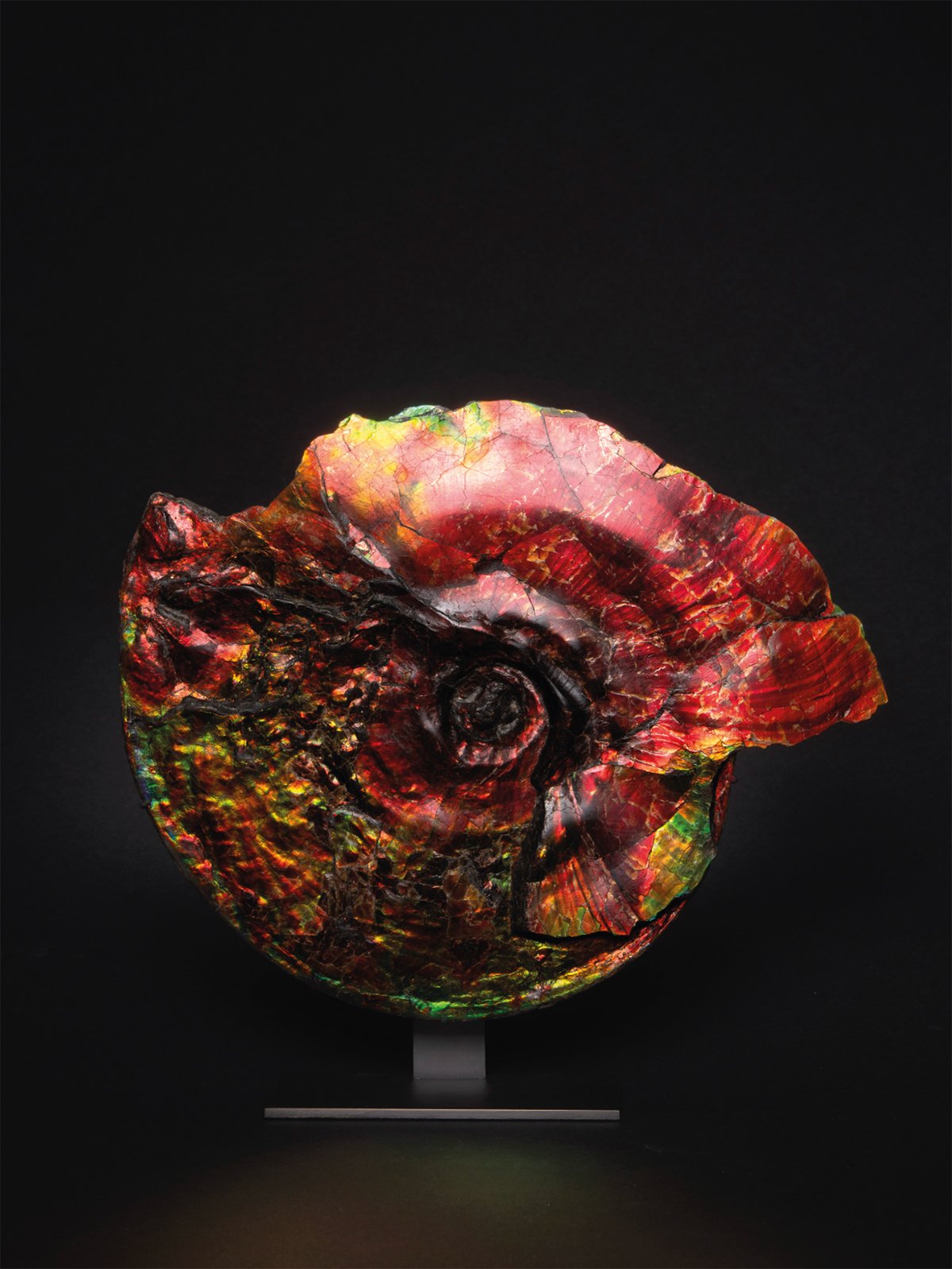
75-Million-Year-Old Ammonite Preserves an Extraordinary Natural Iridescence
—
Presented by London dealer ArtAncient, the fossilised marine shell from Alberta's Bearpaw Formation shifts from crimson and emerald to gold, violet and blue as light moves across its surface
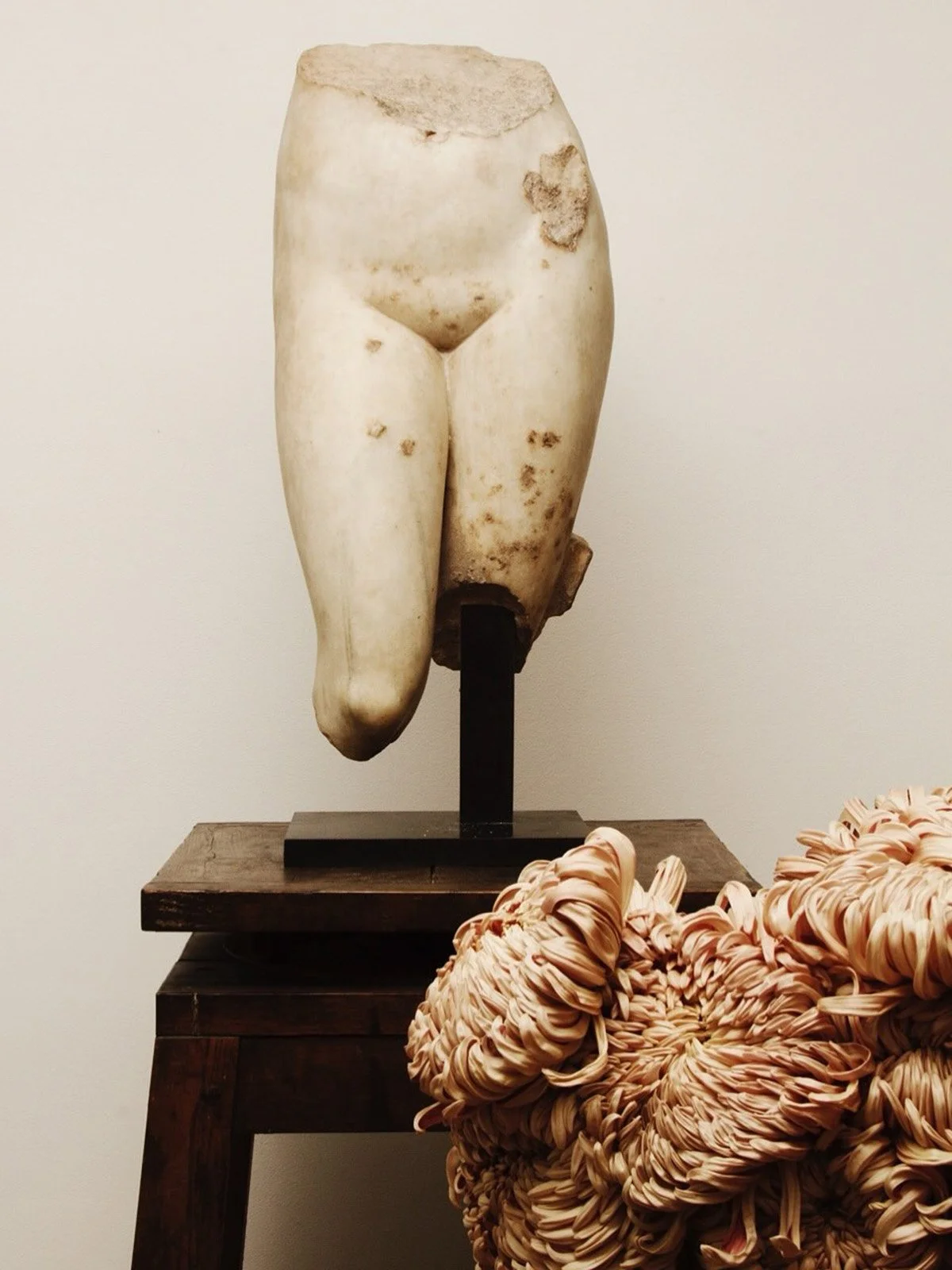
Galerie Chenel Places Roman Sculpture in a Contemporary Parisian Frame
—
From its Quai Voltaire gallery opposite the Louvre, the family-run specialist has built an international reputation around archaeological objects, provenance and the enduring presence of antiquity