

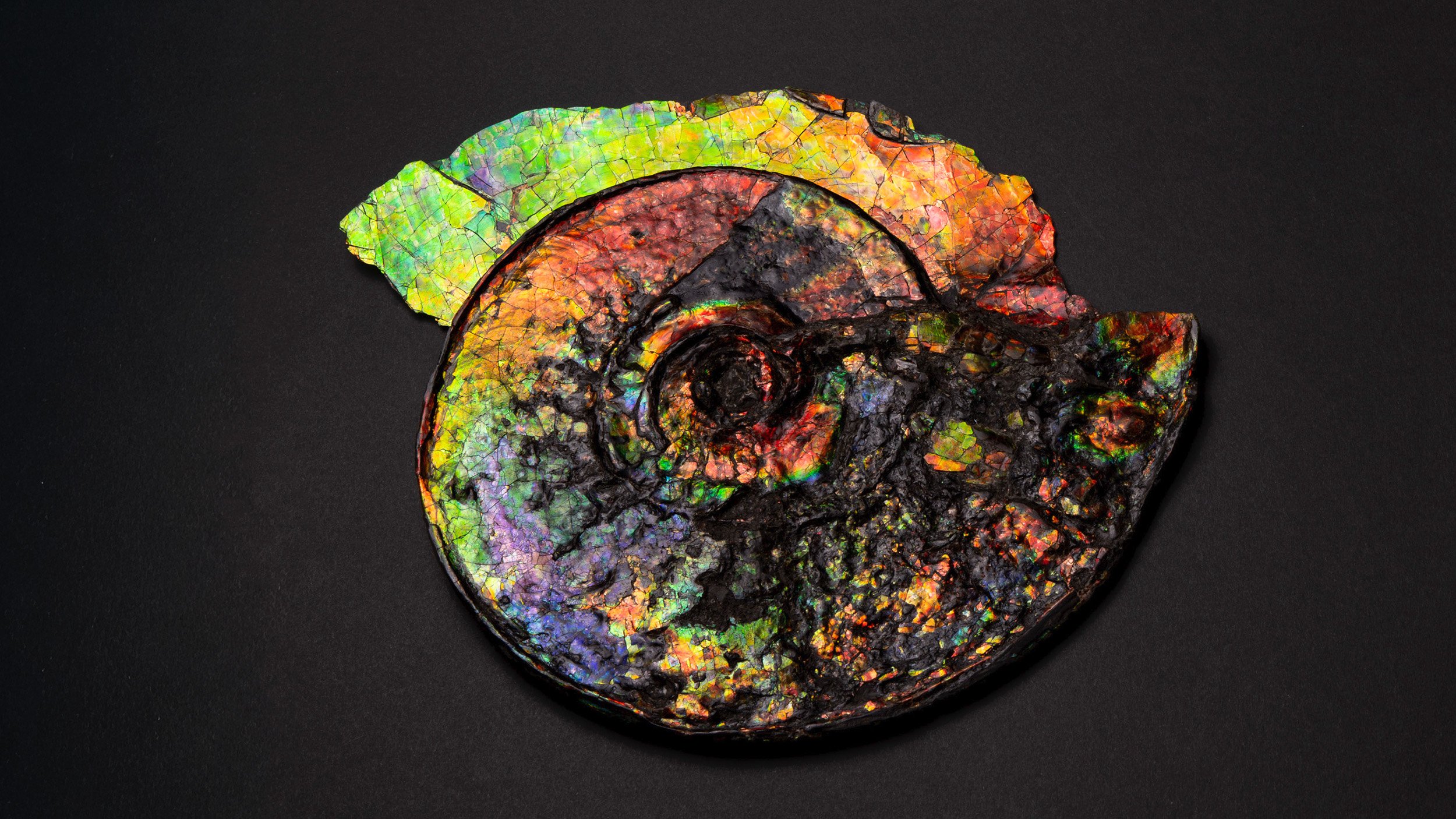
Iridescent Ammonite Fossil, (75 million years old)
Image © — @artancient
ART & OBJECTS
75-Million-Year-Old Ammonite Preserves an Extraordinary Natural Iridescence
Presented by London dealer ArtAncient, the fossilised marine shell from Alberta's Bearpaw Formation shifts from crimson and emerald to gold, violet and blue as light moves across its surface
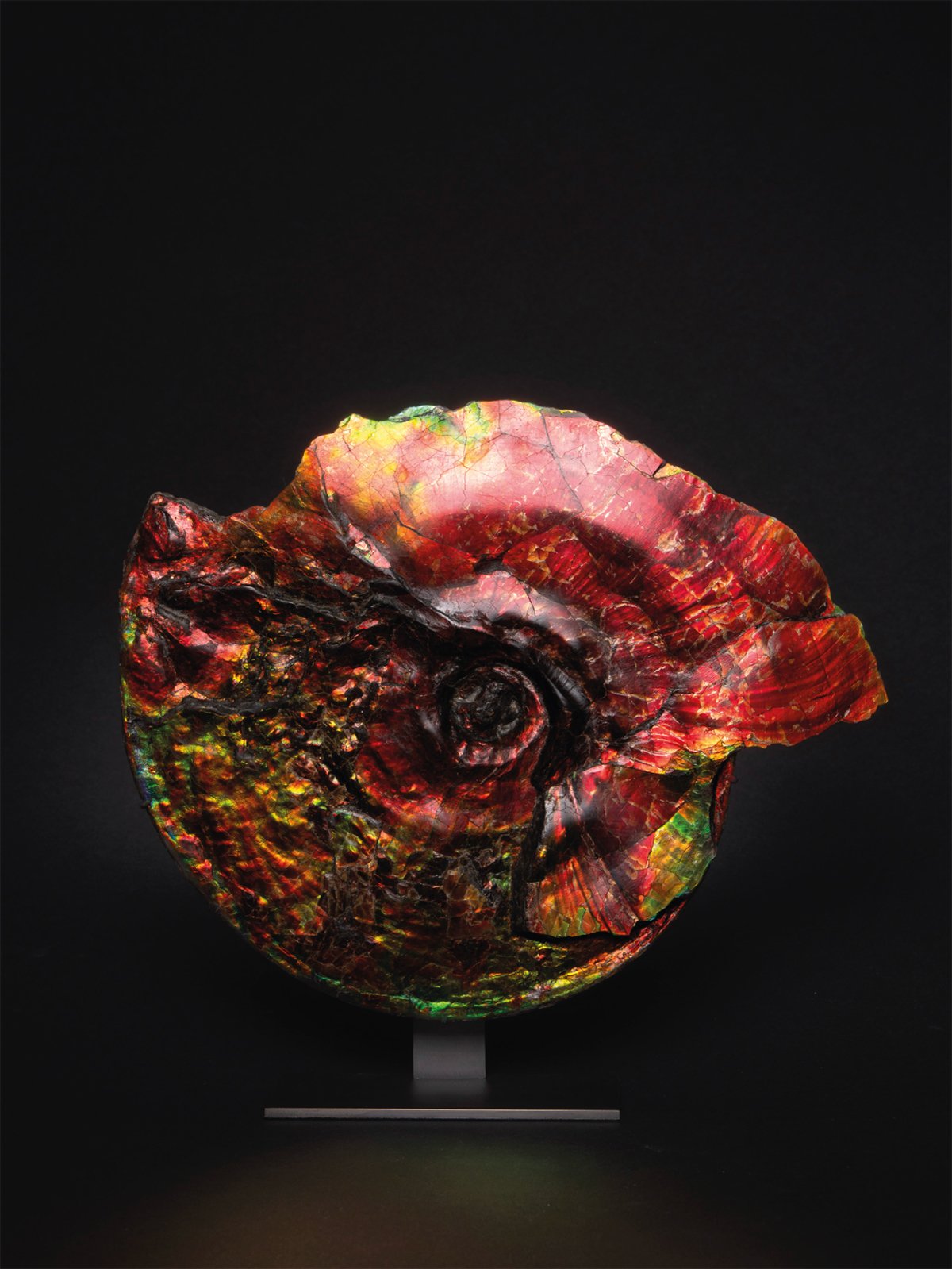
Iridescent Ammonite Fossil, (75 million years old)
Image © — @artancient
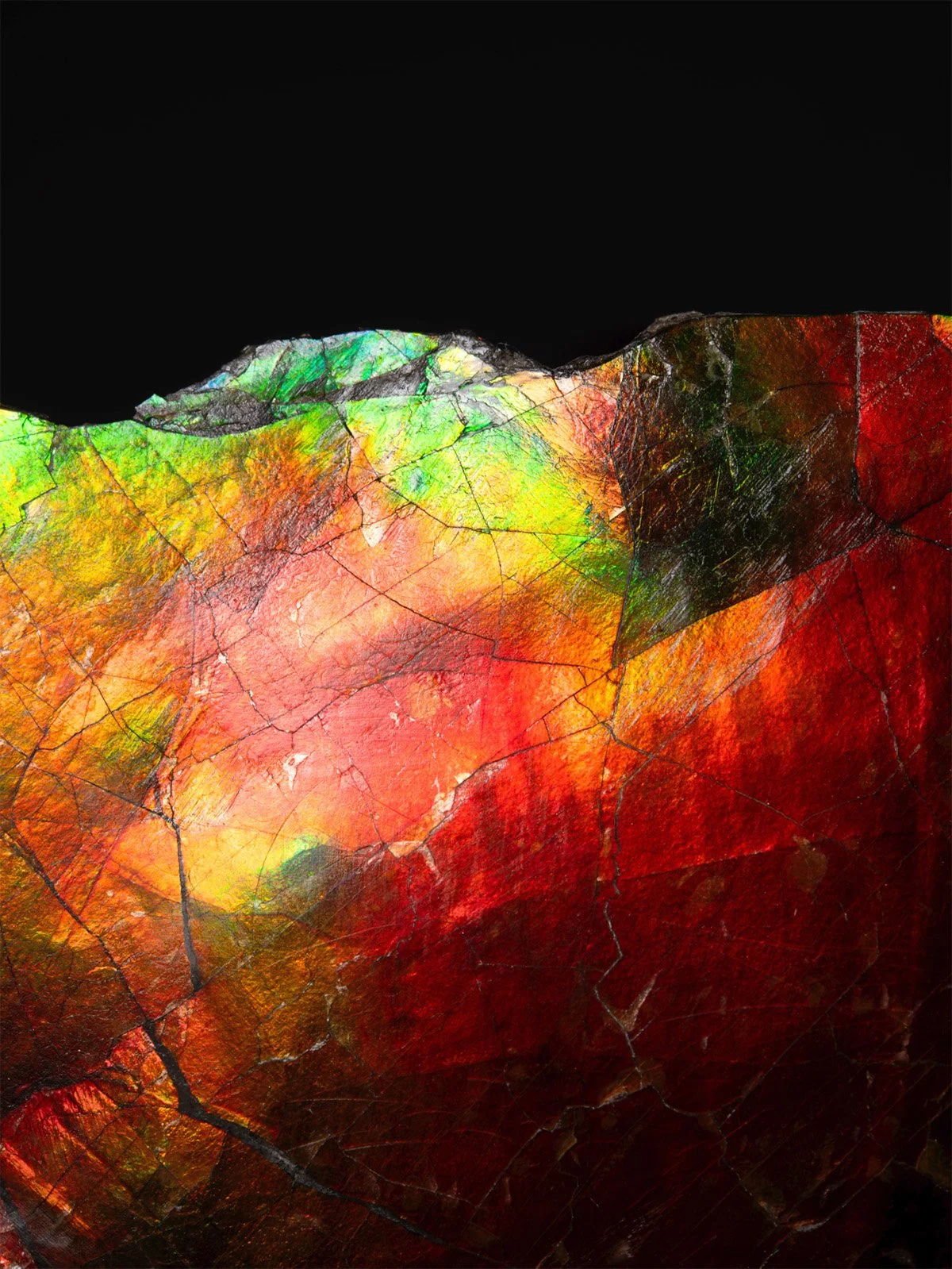
Iridescent Ammonite Fossil, (75 million years old)
Image © — @artancient
ArtAncient has built its practice around objects whose histories extend far beyond conventional art-historical chronology. The London-based dealer specialises in material ranging from the formation of the Solar System to late antiquity, approaching fossils, antiquities and natural history through detailed research and provenance. Its Iridescent Ammonite Fossil is an arresting example of that breadth: a 75-million-year-old marine shell whose surface now possesses the visual intensity of an abstract painting
The object is almost difficult to understand at first sight. Deep reds spread across the broad spiral, interrupted by flashes of emerald green, orange, gold and brilliant blue. Under changing light, violet and yellow emerge from sections that moments earlier appeared almost black. None of this colour has been applied. The iridescence is the result of an exceptionally rare natural fossilisation process associated with ammonites recovered from Alberta's Bearpaw Formation in Canada
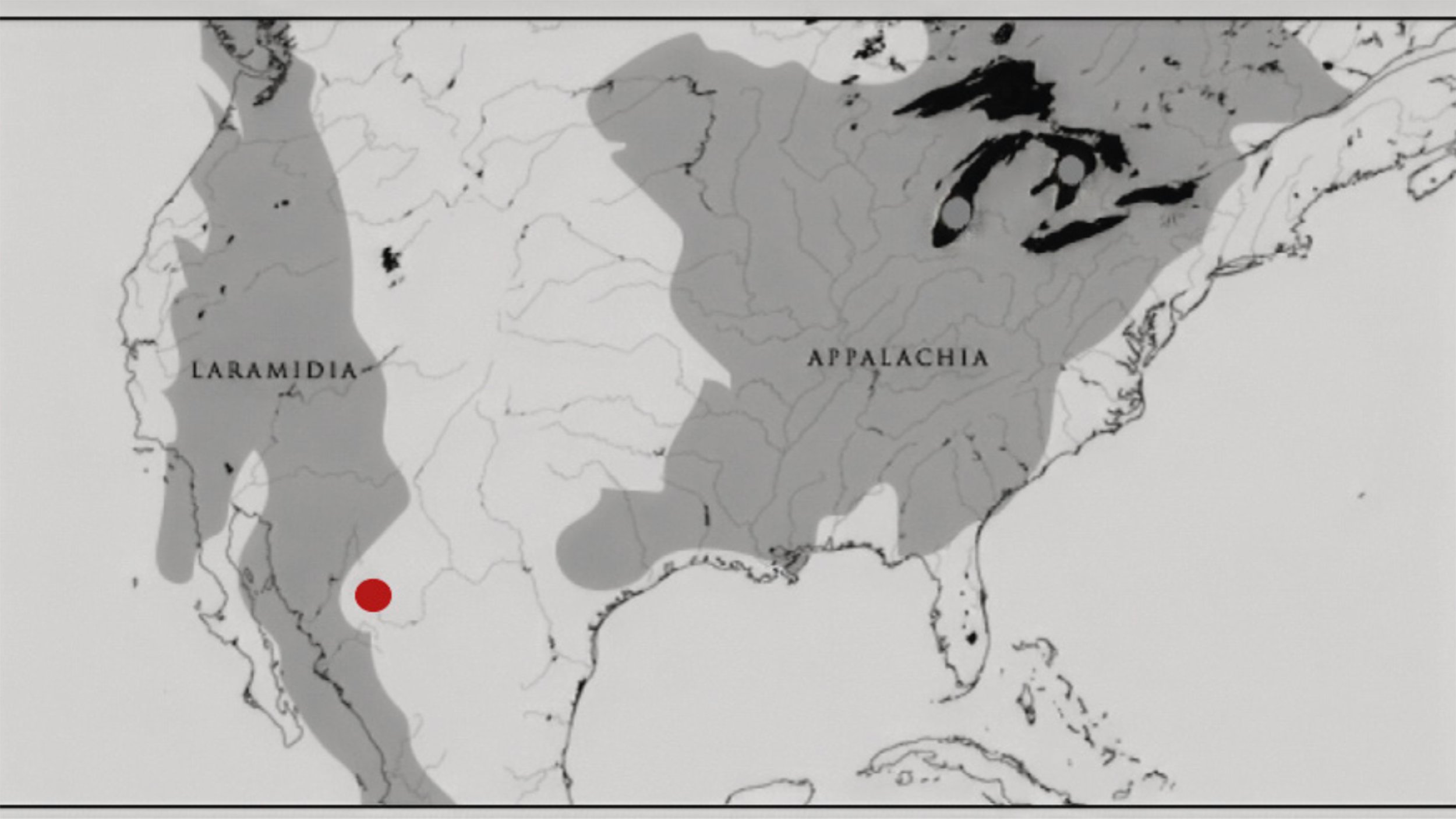
Map detailing the location of the Bearpaw Formation
Image © — @artancient
The ammonite is identified as Placenticeras costatum, a species that lived during the Late Cretaceous period. Ammonites belonged to an extinct branch of the mollusc family and were related to animals including the modern octopus. Their coiled shells have survived in the geological record with remarkable frequency, yet the intensely coloured examples from this particular part of Alberta occupy an entirely different category of natural preservation
Over millions of years, the shell's original material mineralised, creating the gemstone effect now known through ammolite. The result is not colour sitting on the surface but colour structurally embedded within it, changing according to the angle of illumination. In ArtAncient's photographs, reproduced across the accompanying research catalogue, the fossil appears almost incandescent against a black ground, while a closer view reveals a fractured mosaic of mineralised planes through which the spectrum continually shifts
Its condition is particularly significant. Many ammonites recovered from the Bearpaw Formation have been compressed, damaged or reconstructed from multiple specimens, while some examples have their colour artificially strengthened with varnish. This fossil retains its unrestored original surface and unenhanced iridescence. More remarkably, the specimen is formed from two ammonite shells that mineralised together in situ, the result of a rare natural fossilisation event rather than later assembly
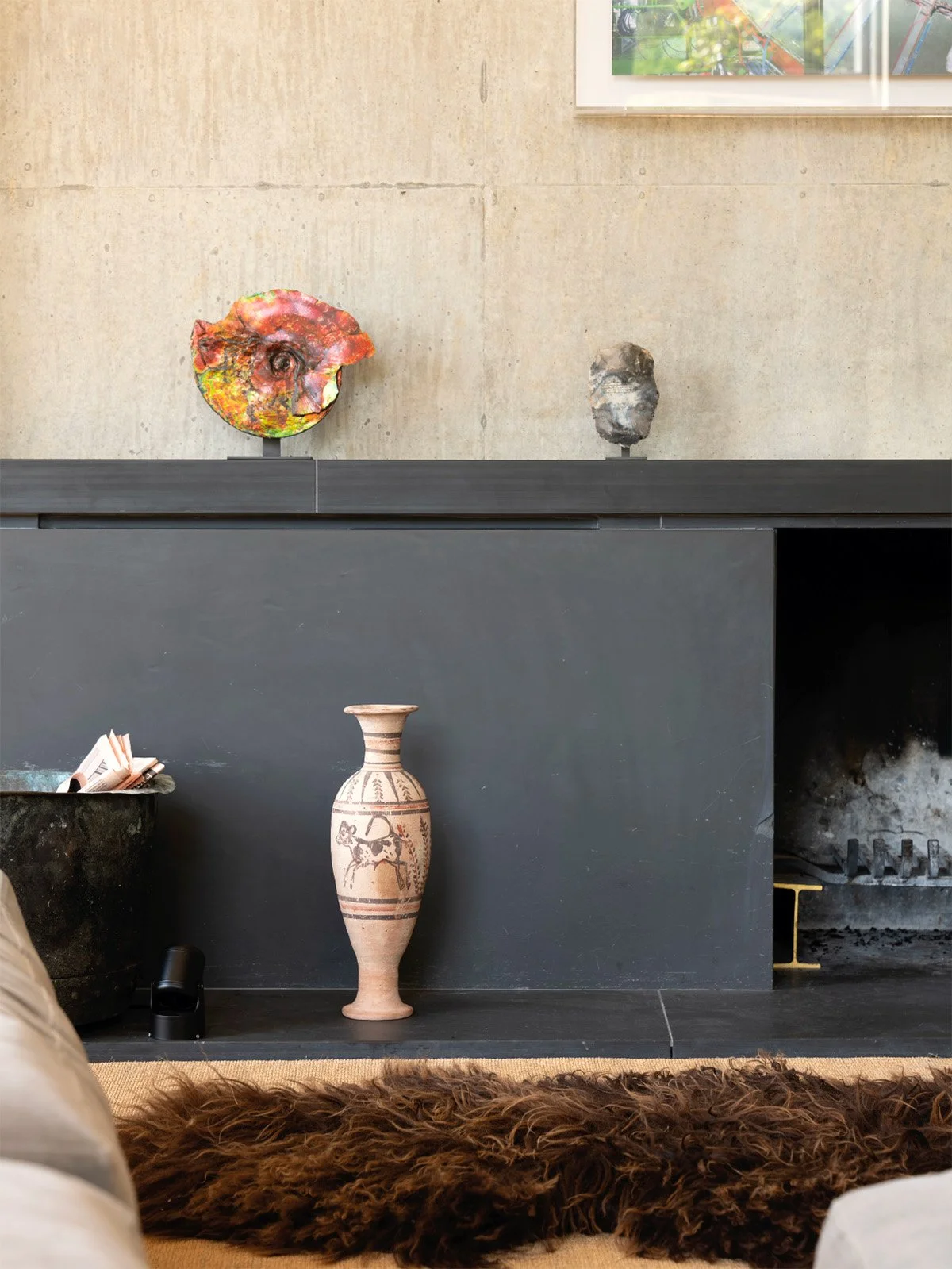
Iridescent Ammonite Fossil, (75 million years old) among other artefacts
Image © — @artancient
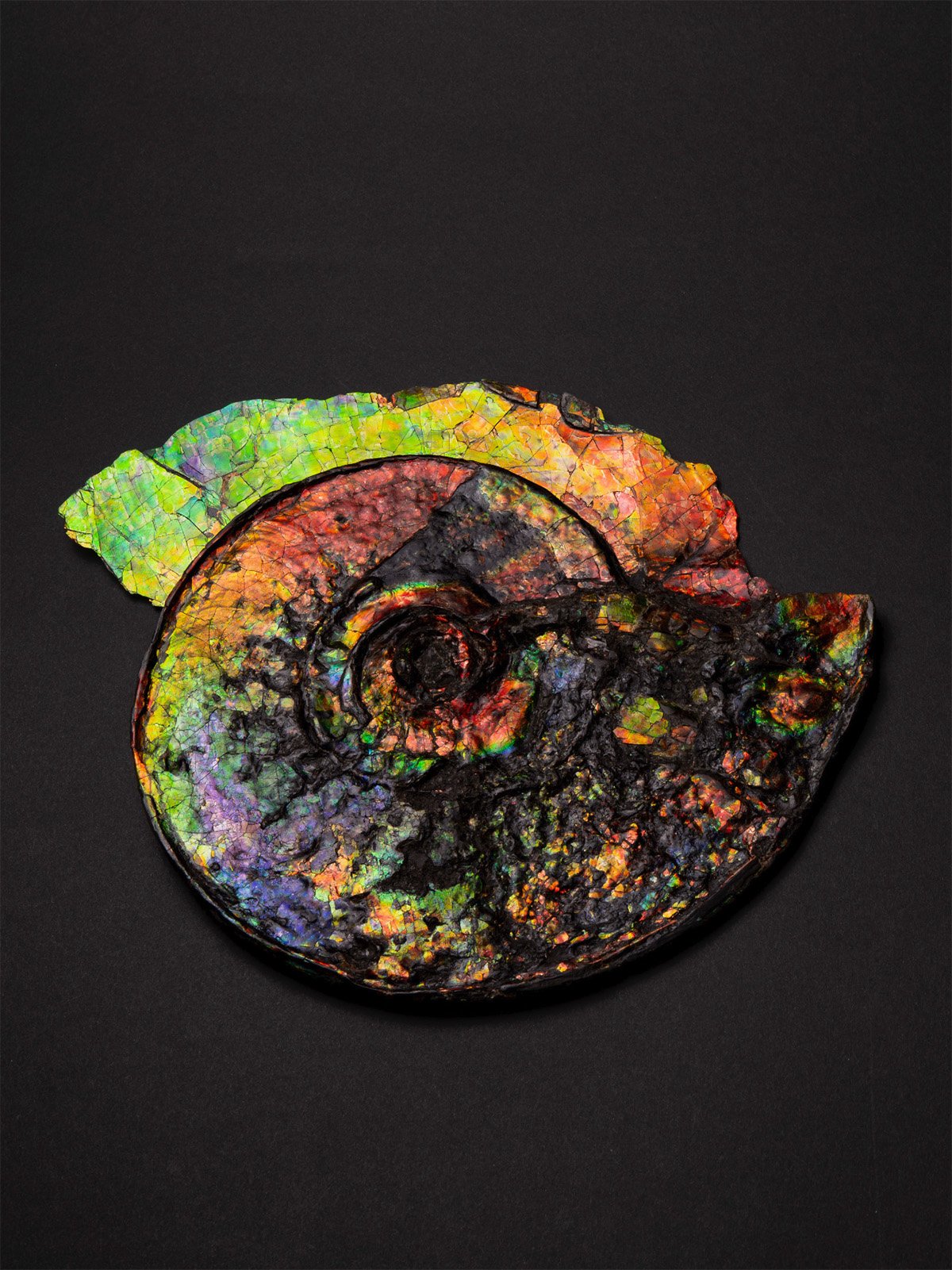
Iridescent Ammonite Fossil, (75 million years old)
Image © — @artancient
The spiral form also carries a history of human interpretation. The name ammonite derives from the ancient association of these fossils with the ram horns of the Egyptian god Ammon. Pliny the Elder recorded a belief in the so-called Horn of Ammon as a sacred stone capable of bringing good fortune and prophetic dreams. Long before geology could explain the origins of the shell, its geometry had already encouraged mythology
Viewed within a contemporary interior, the fossil becomes something more ambiguous. At 42 centimetres in diameter, it has enough scale to read architecturally, yet its colour makes it appear almost weightless. In one installation image, the ammonite sits against exposed concrete beside an ancient sculptural head and a ceramic vessel. The surrounding restraint only intensifies its surface, allowing an object formed without human intervention to compete visually with works deliberately made as art
There is an appealing contradiction at the centre of the piece. Its colours feel almost synthetic in their saturation, yet they were created by geological processes unfolding across tens of millions of years. Its spiral appears perfectly composed, yet belongs to the anatomy of an extinct marine animal. Through ArtAncient, the Iridescent Ammonite Fossil is presented not merely as a specimen of natural history, but as evidence of nature producing an object with its own extraordinary command of form, colour and time
Iridescent Ammonite Fossil
75 million years old
Fossilised shell
Diameter 42 cm
Provenance
Discovered in the Blood Reserve, Alberta, Canada
Legally exported with a Canadian Cultural Property Export permit

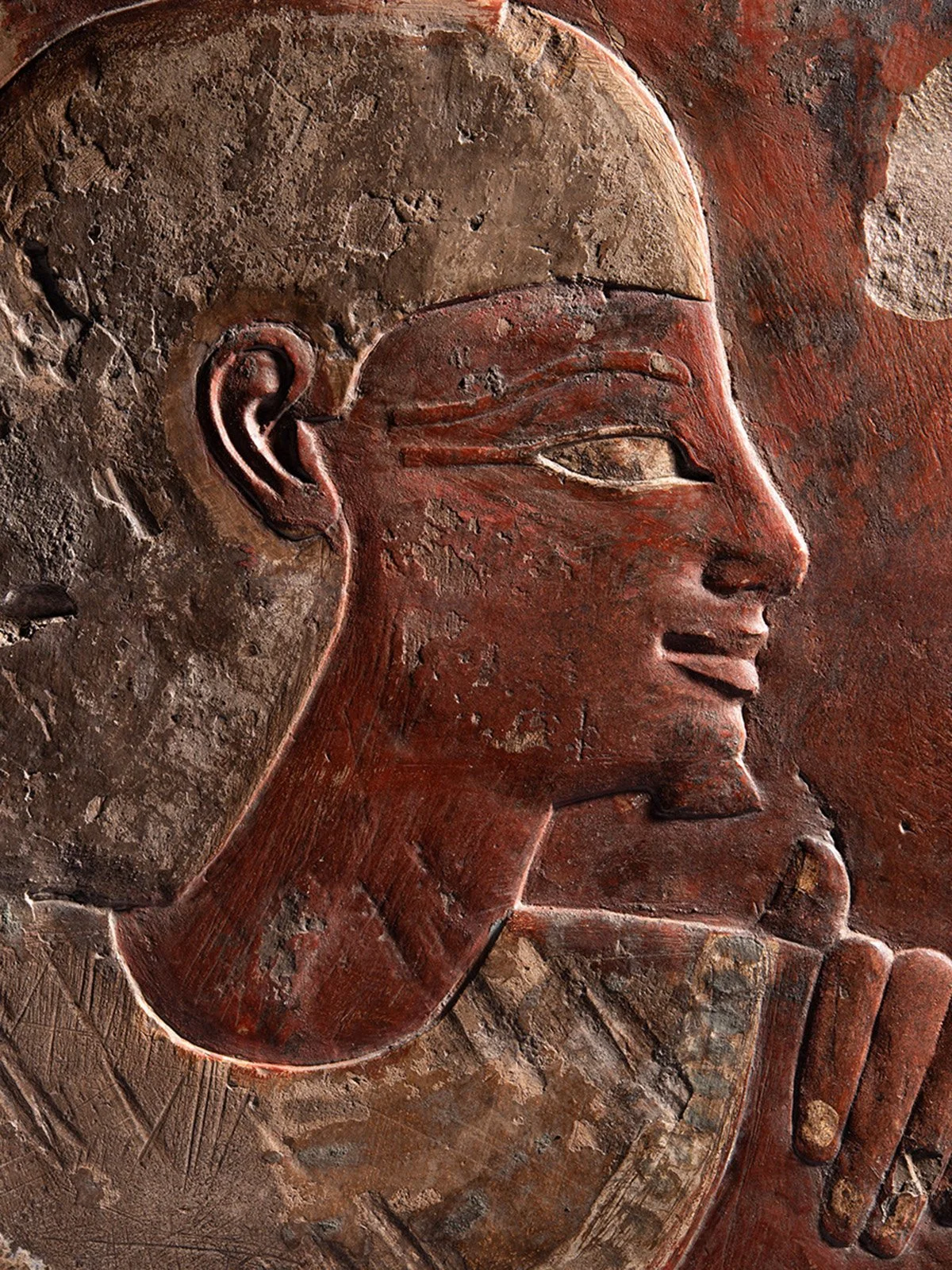
An Egyptian Relief Preserves a Husband and Wife Across 3,500 Years
—
Offered by London dealer ArtAncient, the painted limestone fragment from Thebes turns a gesture of affection into one of the most intimate surviving images of Egypt’s 18th Dynasty
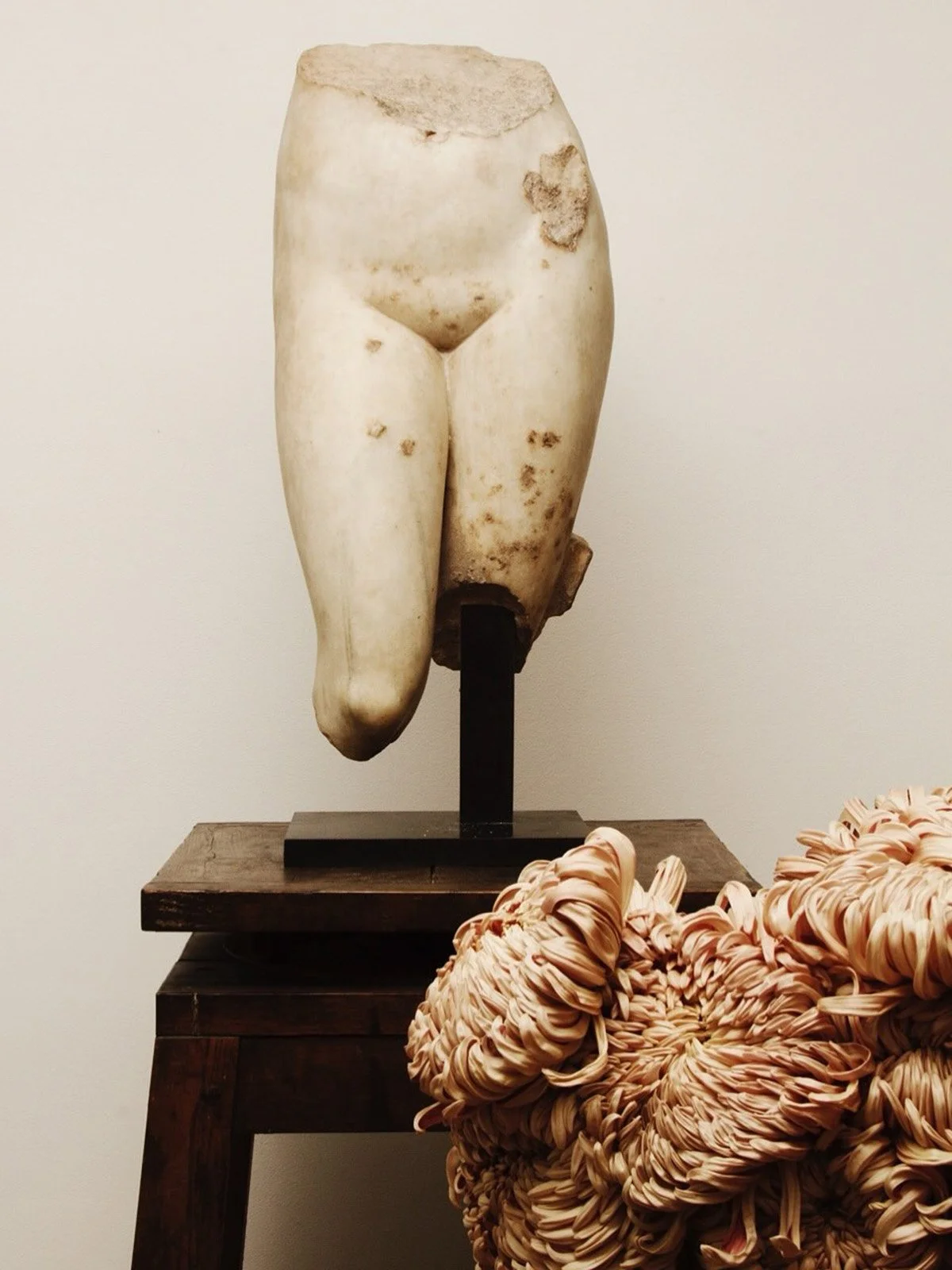
Galerie Chenel Places Roman Sculpture in a Contemporary Parisian Frame
—
From its Quai Voltaire gallery opposite the Louvre, the family-run specialist has built an international reputation around archaeological objects, provenance and the enduring presence of antiquity