

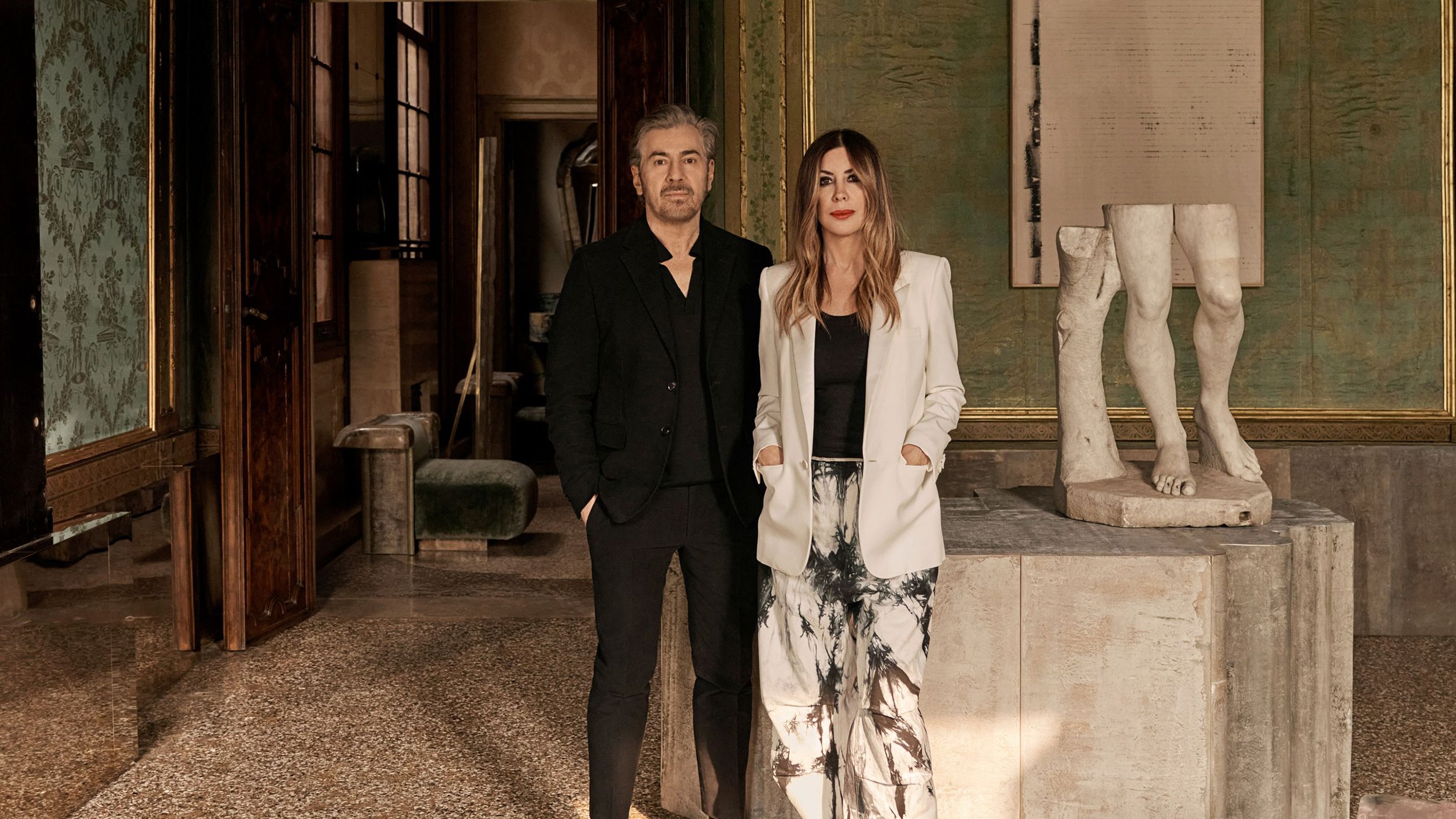
Vincenzo and Claudia Rose De Cotiis with a fragment of a Roman sculpture and an artwork By Jean Degottexb
Image © — @_martin_morrell
PRIVATE RESIDENCE – FOUNDATION
Vincenzo De Cotiis Brings a New Material Language to a Longhena Palazzo
At Palazzo Giustinian Lolin, malachite, silvered metal and recycled fibreglass enter a centuries-old world of Murano glass, silk brocade and shifting Grand Canal light
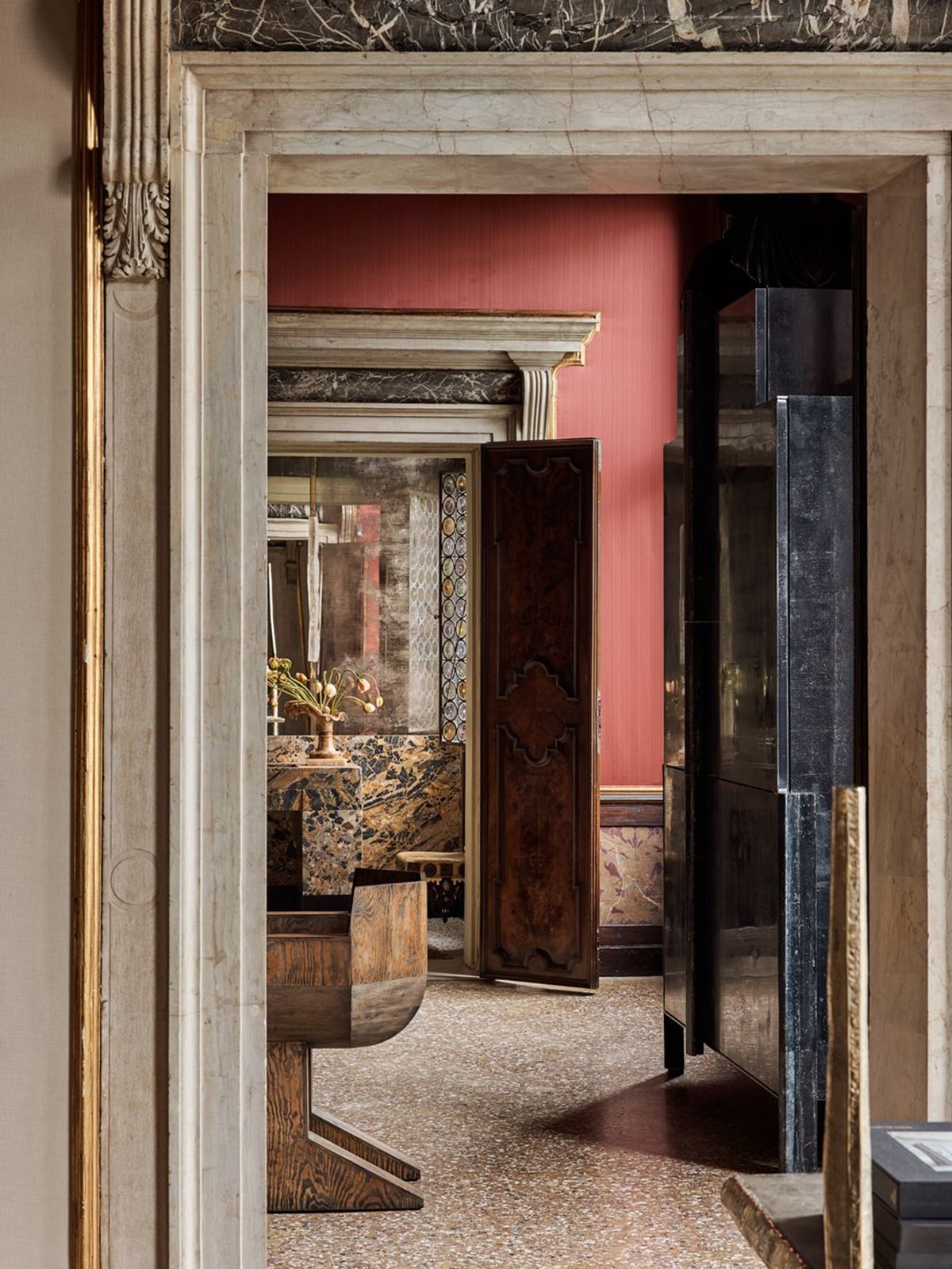
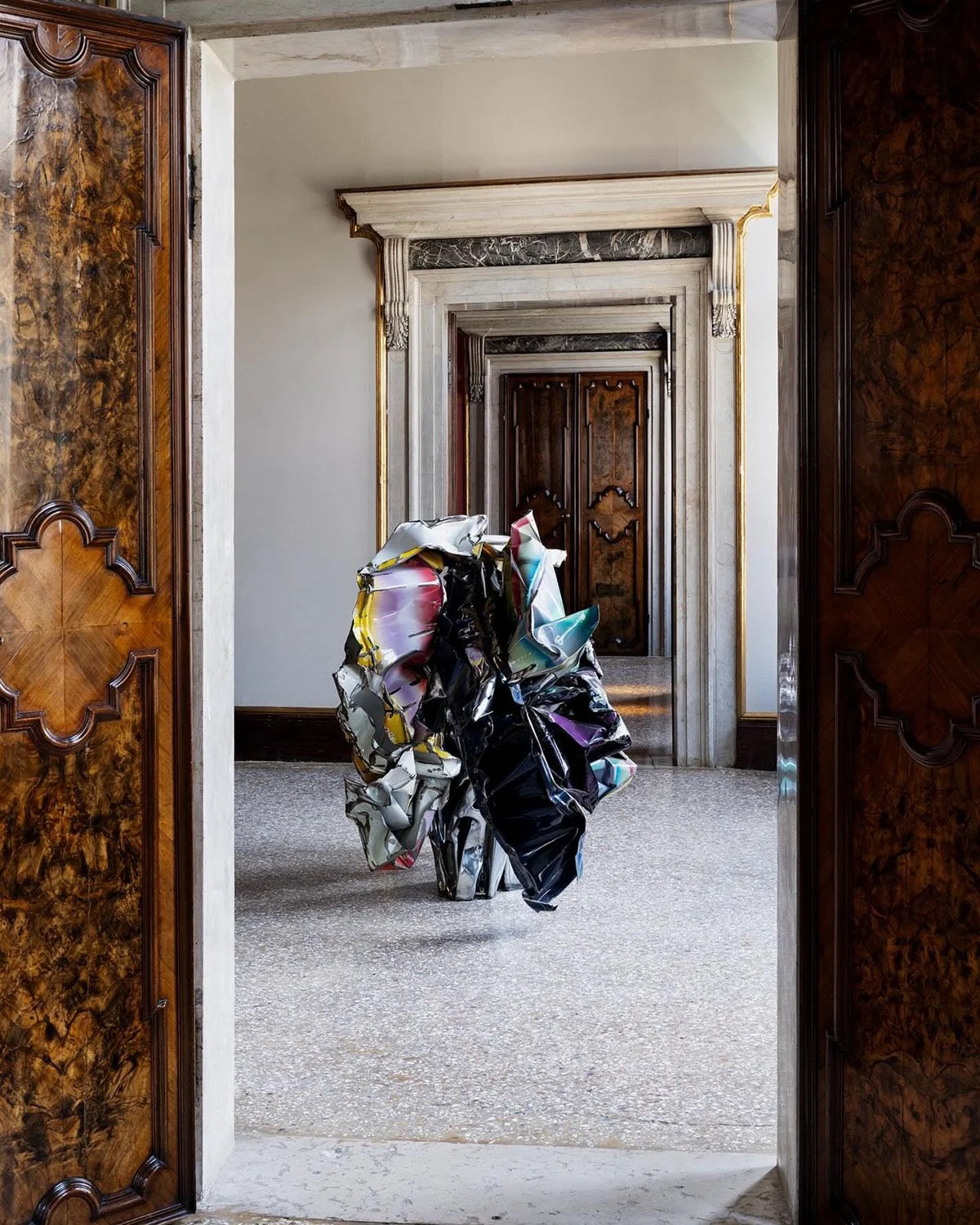
Enfilade view of the Palazzo Giustinian Lolin with a Rick Owens Gallic Chair, designed in 2007 with a tiger plywood
Image © — @_martin_morrell
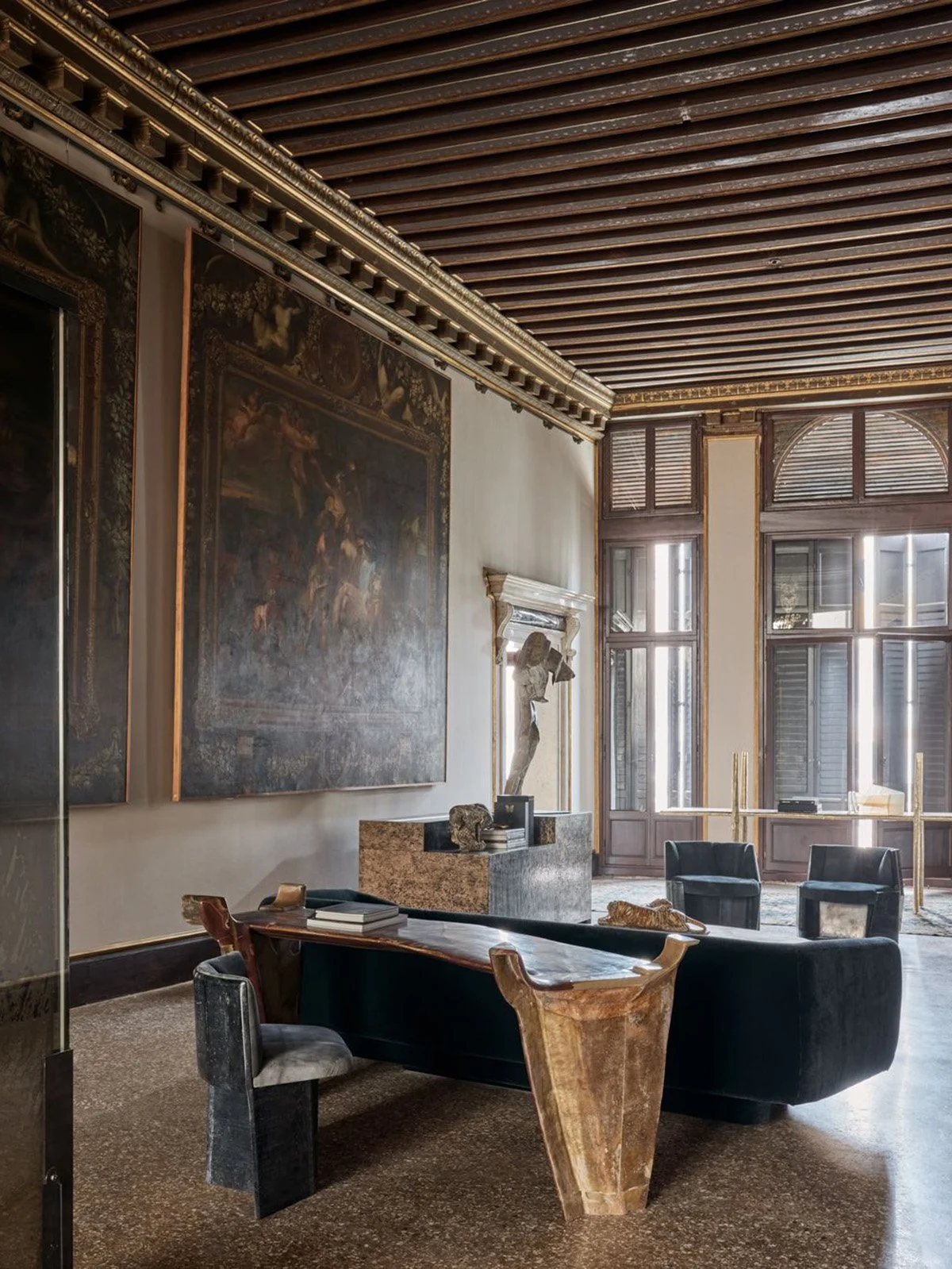
Vincenzo De Cotiis DC2210A chair, crafted from black hand-painted fiberglass and suede
Image © — @_martin_morrell
At Palazzo Giustinian Lolin, the Grand Canal is more than a view. Light reflected from the water moves across silk-covered walls, terrazzo floors and polished metal, changing the character of the rooms throughout the day. It was this immediate connection to Venice that drew designer Vincenzo De Cotiis and his wife, Claudia Rose, to the palace in 2019
The building’s history extends back to a medieval residence associated with the Miani family. After the Lolin family acquired it during the early 17th century, Giovanni Lolin commissioned the young Venetian architect Baldassarre Longhena to reconstruct the palace around 1630. Lolin intended it for his nephew Giovanni Giustinian, with the condition that the family names remain joined
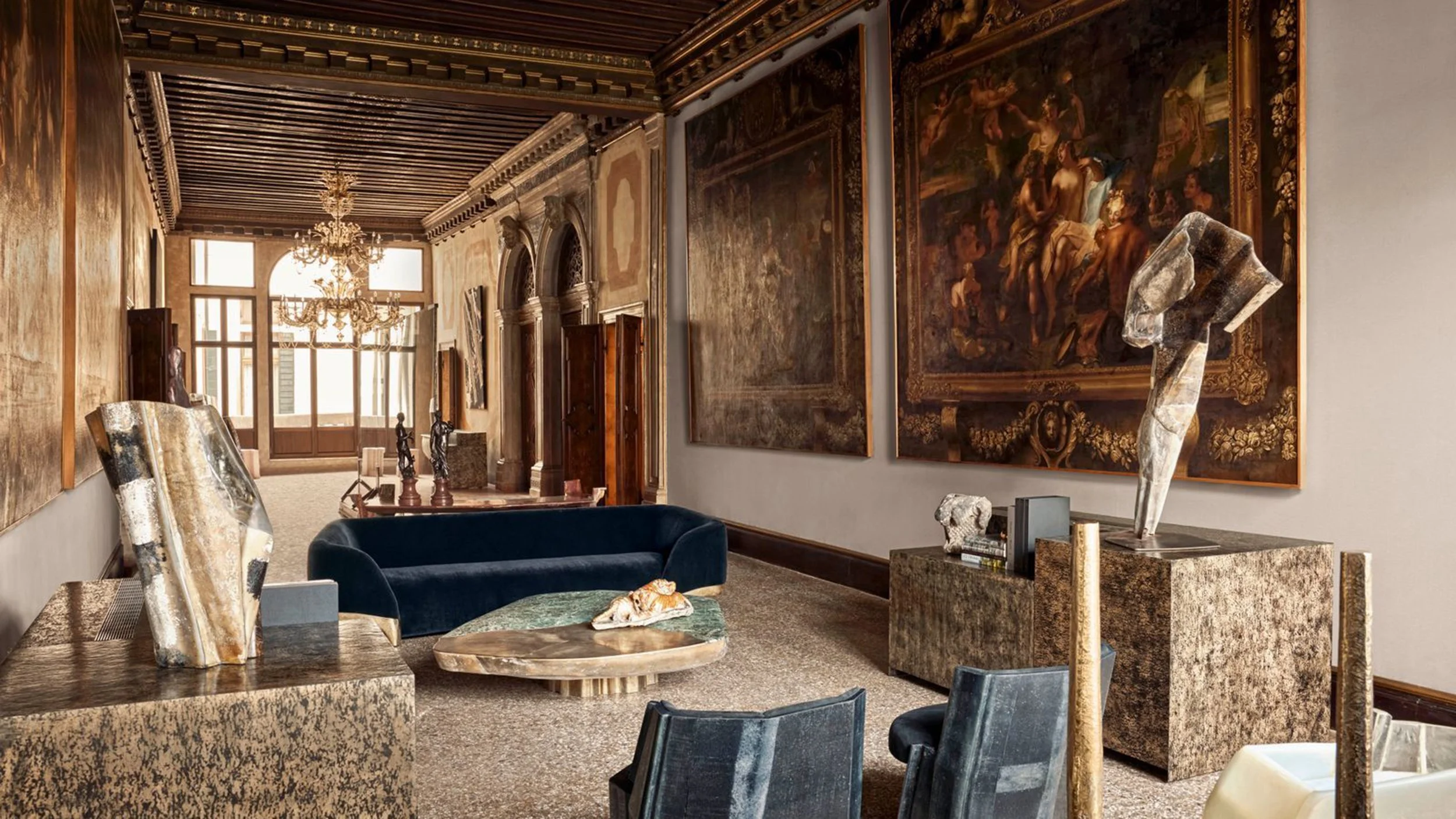
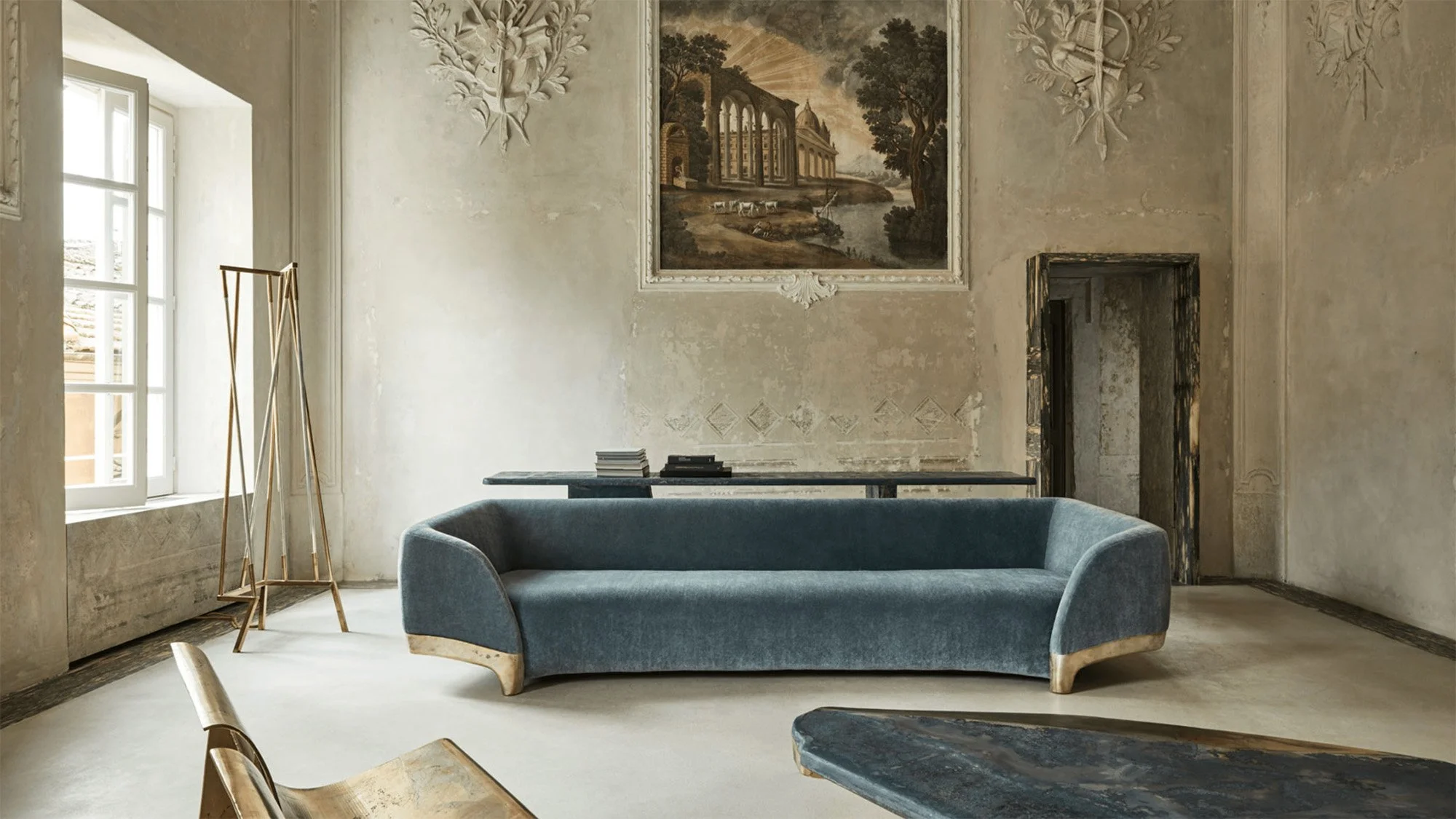
In the living room, De Cotiis’s own sculptural furnishings sit with four 18th-century Jean Raoux paintings. The sculptures on the cocktail table are by Girolamo Campagna
Image © — @_martin_morrell
Considered one of Longhena’s earliest independent works, the palazzo anticipates the architectural command he would later bring to Santa Maria della Salute. Its Grand Canal façade combines rusticated masonry with superimposed Doric, Ionic and Corinthian pilasters, while carved festoons soften the classical order with an emerging Baroque sensibility. The reconstruction substantially transformed the earlier Gothic building, although its vertical character survives in the narrow pointed windows. Behind the façade, two principal structures are connected by wings enclosing a courtyard and well
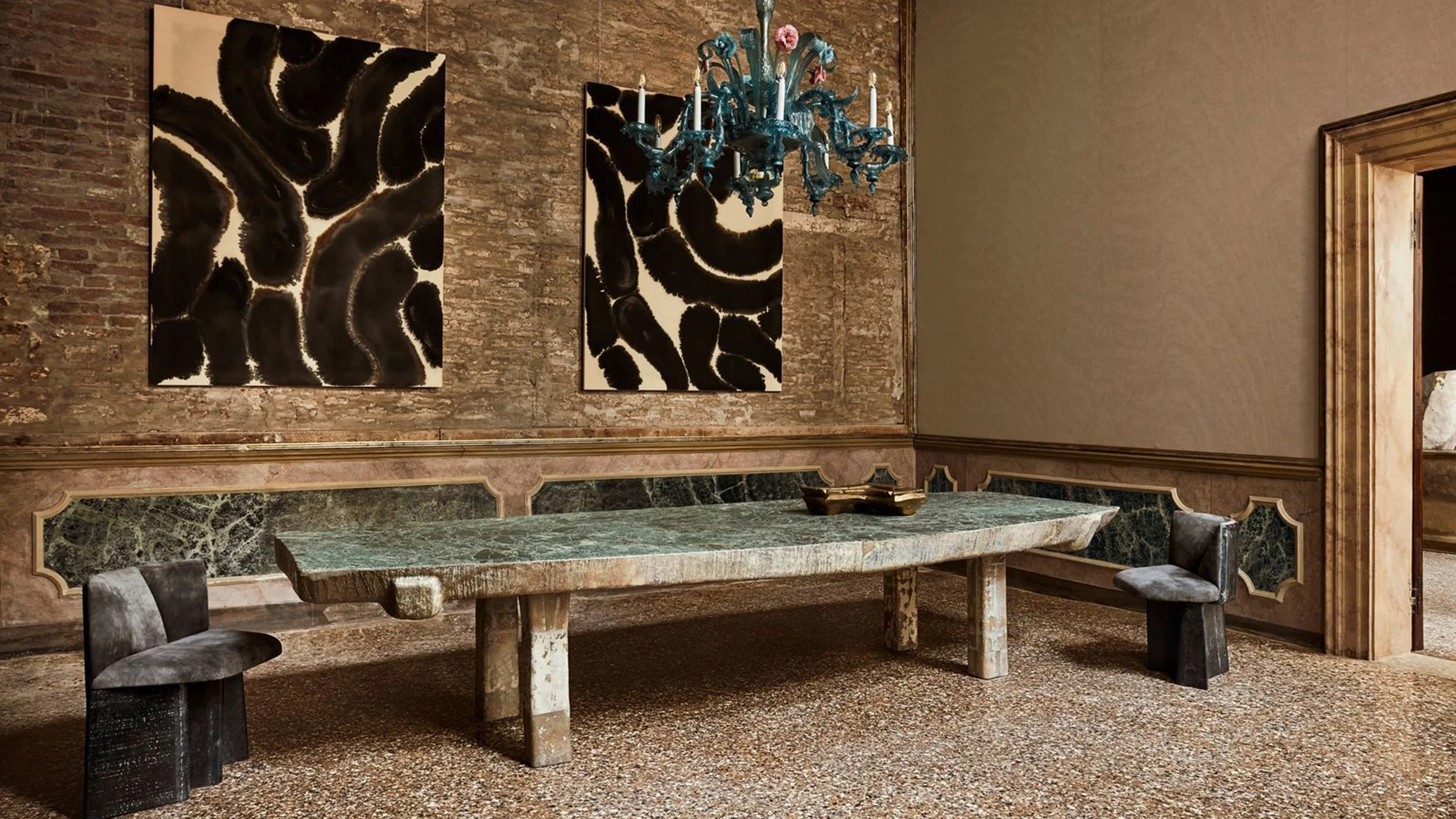
The monumental dining table is hewn from recycled fibreglass and green malachite challant marble. The paintings are by Latifa Echakch, and the Murano glass chandelier is original to the palazzo
Image © — @_martin_morrell
Successive occupants included physician Francesco Aglietti and celebrated dancer Maria Taglioni. Since 1962, the upper floor has housed the Ugo and Olga Levi Foundation for musical studies. Its collection includes family portraits and four paintings by the French artist Jean Raoux, recorded within the palace during the 18th century and reacquired by the foundation in 1977
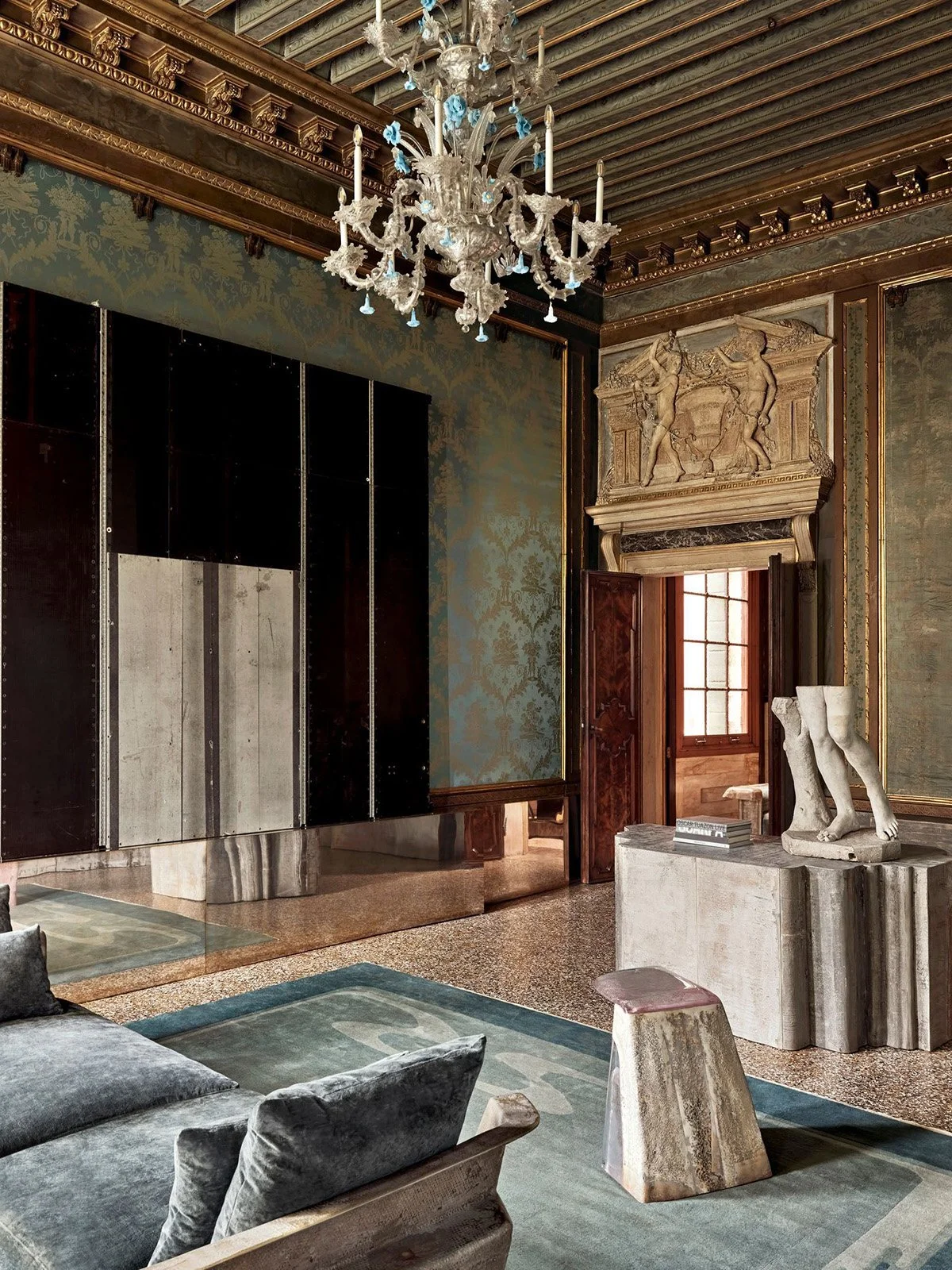
Wrapped in original silk brocade, the study contains fibreglass and Murano glass furnishings by De Cotiis and an artwork by Michail Pirgeli
Image © — @_martin_morrell
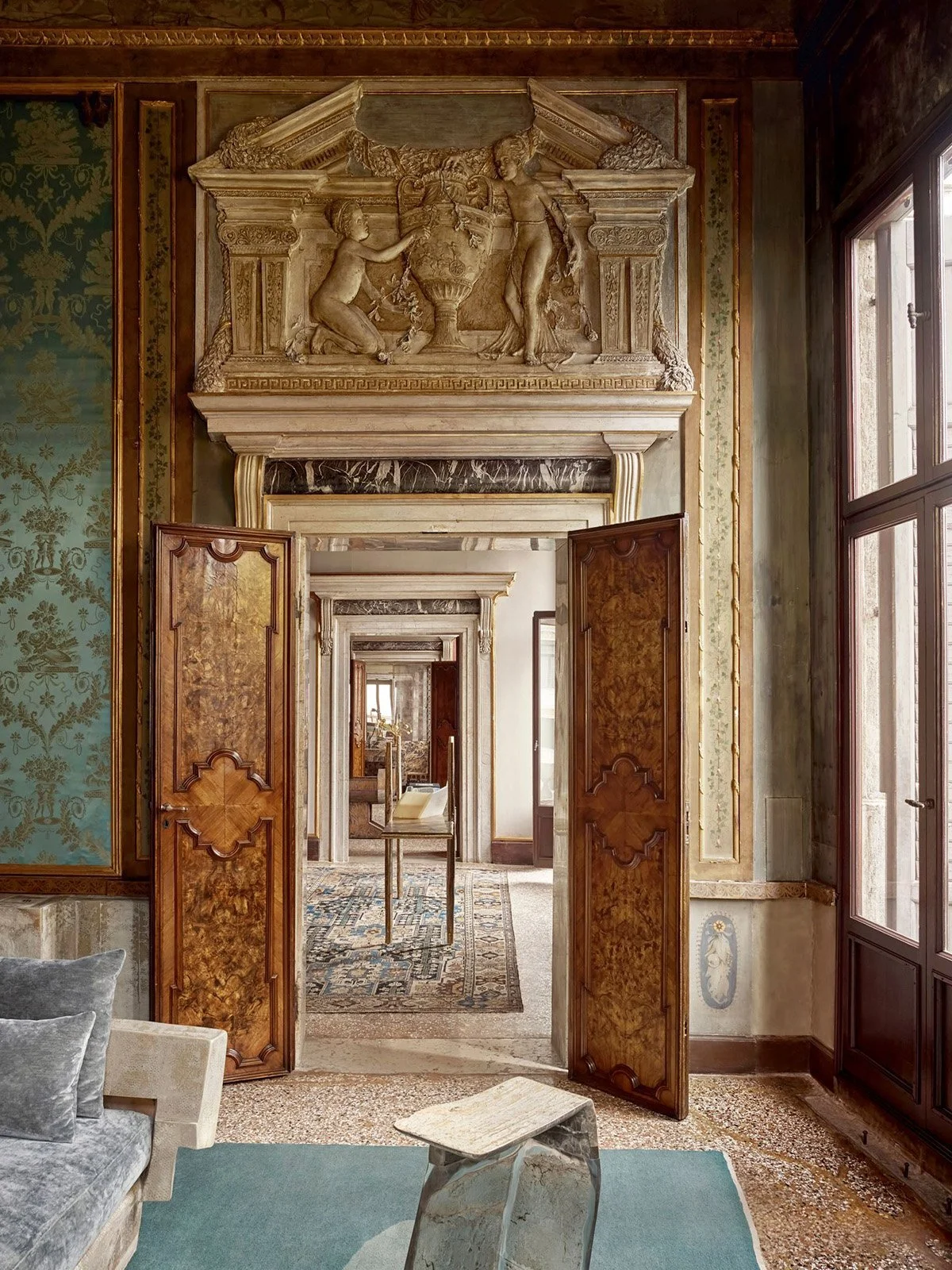
A view inside the palatial home of architect and designer Vincenzo De Cotiis and his wife Claudia Rose—on the piano nobile of the Palazzo Giustinian Lolin in Venice—from the study to the living room, bedroom, and bath
Image © — @_martin_morrell
De Cotiis approached the piano nobile as the next stage in this accumulated history. His architectural work was intentionally discreet. Unsympathetic additions from an earlier 1980s renovation were removed, original terrazzo floors uncovered and silk wall coverings restored. Vermilion panels were repaired, while new heating and electrical systems disappeared behind polished silver-plated balustrades. Track lighting was inserted between decorated ceiling beams, leaving the proportions and surfaces of the rooms visually intact
The palette came directly from Venice. Cyan-blue silk echoes the lagoon beyond the windows, while the deep red of adjoining rooms responds to the façade of a neighbouring palazzo. It is a considerable departure from the greys and muted metallic tones commonly associated with De Cotiis’s work, yet his material language remains unmistakable
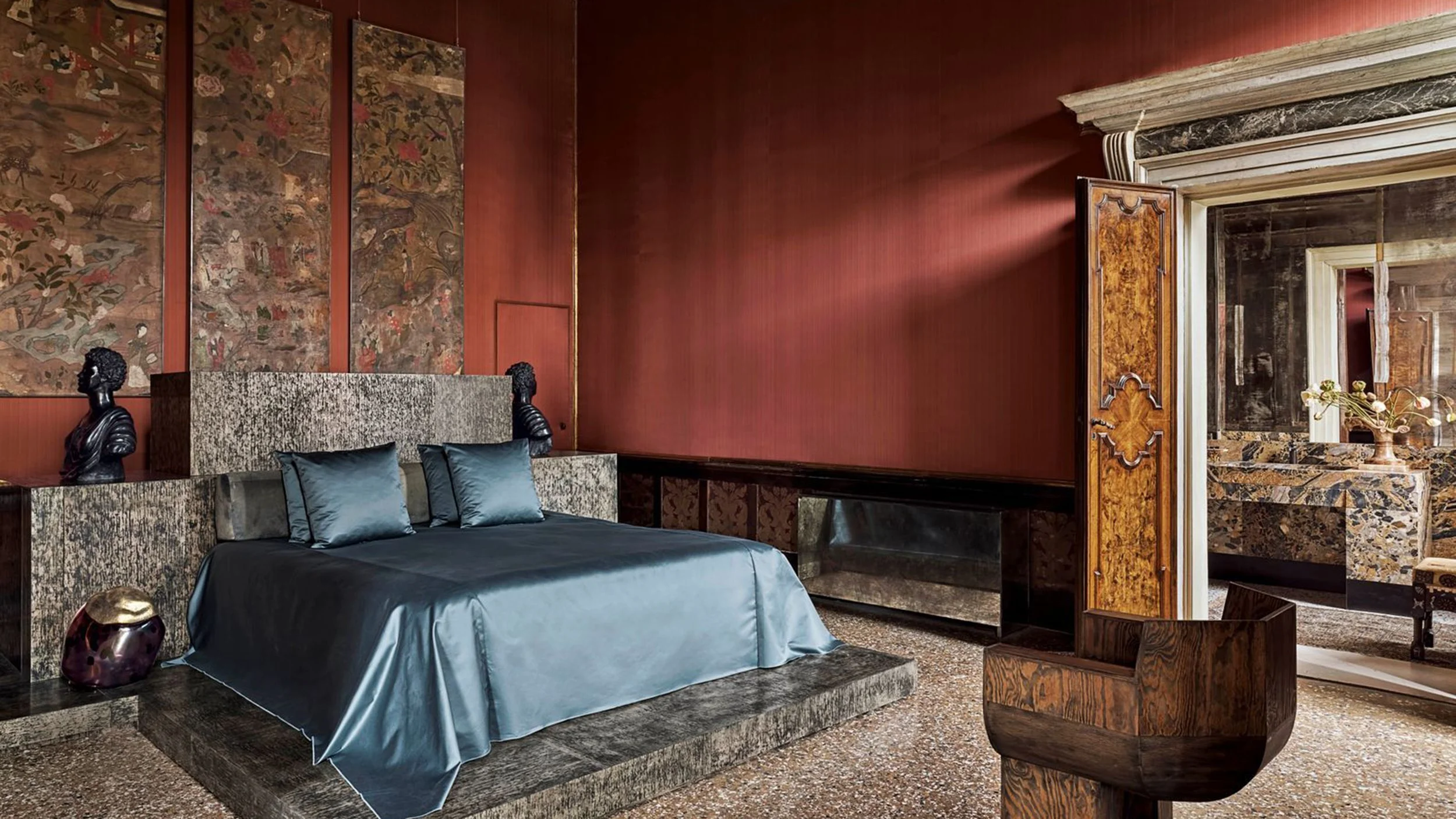
A hand-painted platform anchors the primary bedroom, which is enveloped in venetian red fabric. The antique panels are Chinese, the floor lamp (at left) is by De Cotiis, and the mirrored balustrade disguises the heating elements
Image © — @_martin_morrell
In the living room, a mirrored glass-and-steel triptych by Anne Imhof cuts through the historical setting, multiplying reflections of a monumental Murano chandelier, carved burl-walnut doors and traces of 19th-century marmorino. De Cotiis’s own furnishings occupy the room as sculptures: a mohair-covered sofa in cast brass and a cocktail table combining malachite with hand-painted recycled fibreglass
A 12-foot slab of green Malachite Challant forms the dining table, while yellow marble from Siena surrounds a bath. In the primary bedroom, a cabinet of German silver, white bronze and painted fibreglass adopts the stepped profile of a 16th-century Venetian storage piece. Nearby, a severe bed platform is finished to resemble weathered concrete while resting on the original terrazzo
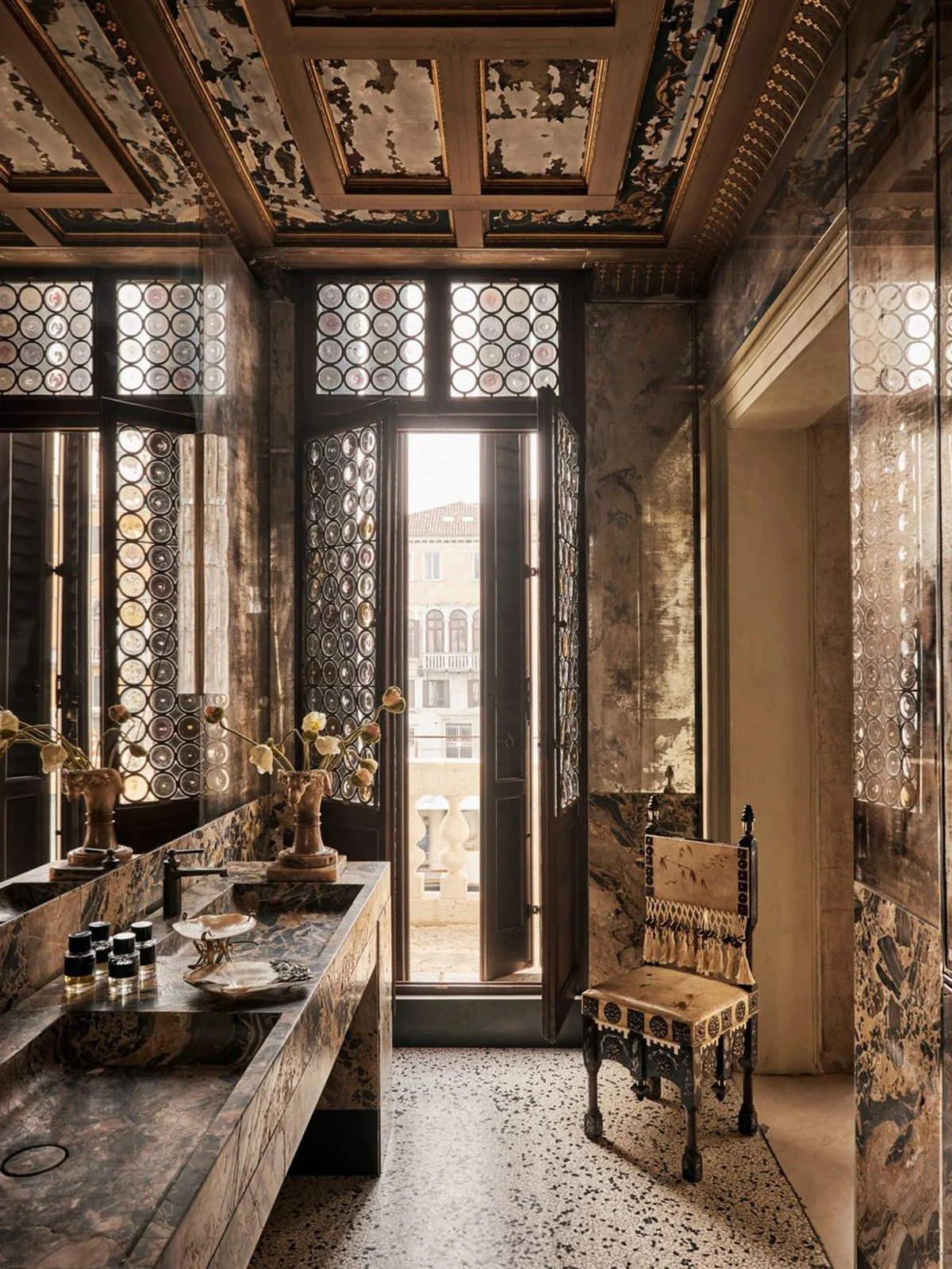
The breccia baixa marble was chosen for its resemblance to the Palazzo’s original ceiling, shown in this bath; the Carlo Bugatti chair is circa 1895
Image © — @_martin_morrell
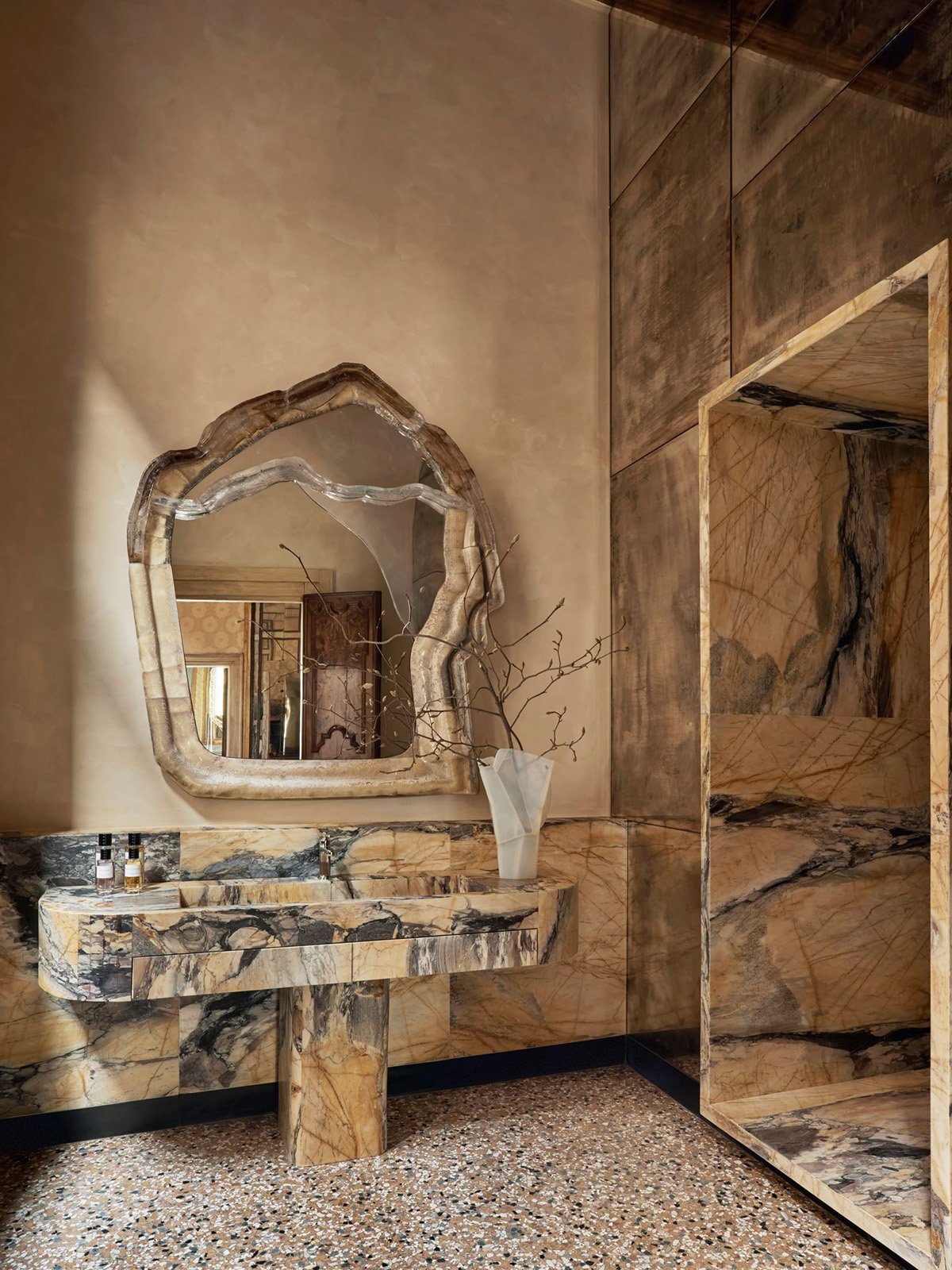
The mirror in a sumptuous, marble-clad bath is made of hand-painted recycled fibreglass, german silver, and glass. The vase, also a De Cotiis design, is Murano glass
Image © — @_martin_morrell
Works by Sterling Ruby, Jean Degottex, Michail Pirgelis and Simone Fattal extend the conversation across painting and sculpture, joining the historic Raoux canvases and figures by Girolamo Campagna. Within these rooms, age and authorship become increasingly fluid. De Cotiis has created a home in which Longhena’s architecture remains fully present, yet the palace continues to absorb the art, materials and domestic rituals of another Venetian century
Vincenzo De Cotiis Reframes Minimalism Inside a Venetian Palace
—
At Palazzo Giustinian Lolin, Minimal Legends pairs works by Judd, Andre, Flavin, LeWitt, Martin, Rothko, Serra, and Stella with De Cotiis’ contemporary language of material, memory, and transformation
When the Room Becomes Part of the Collection
—
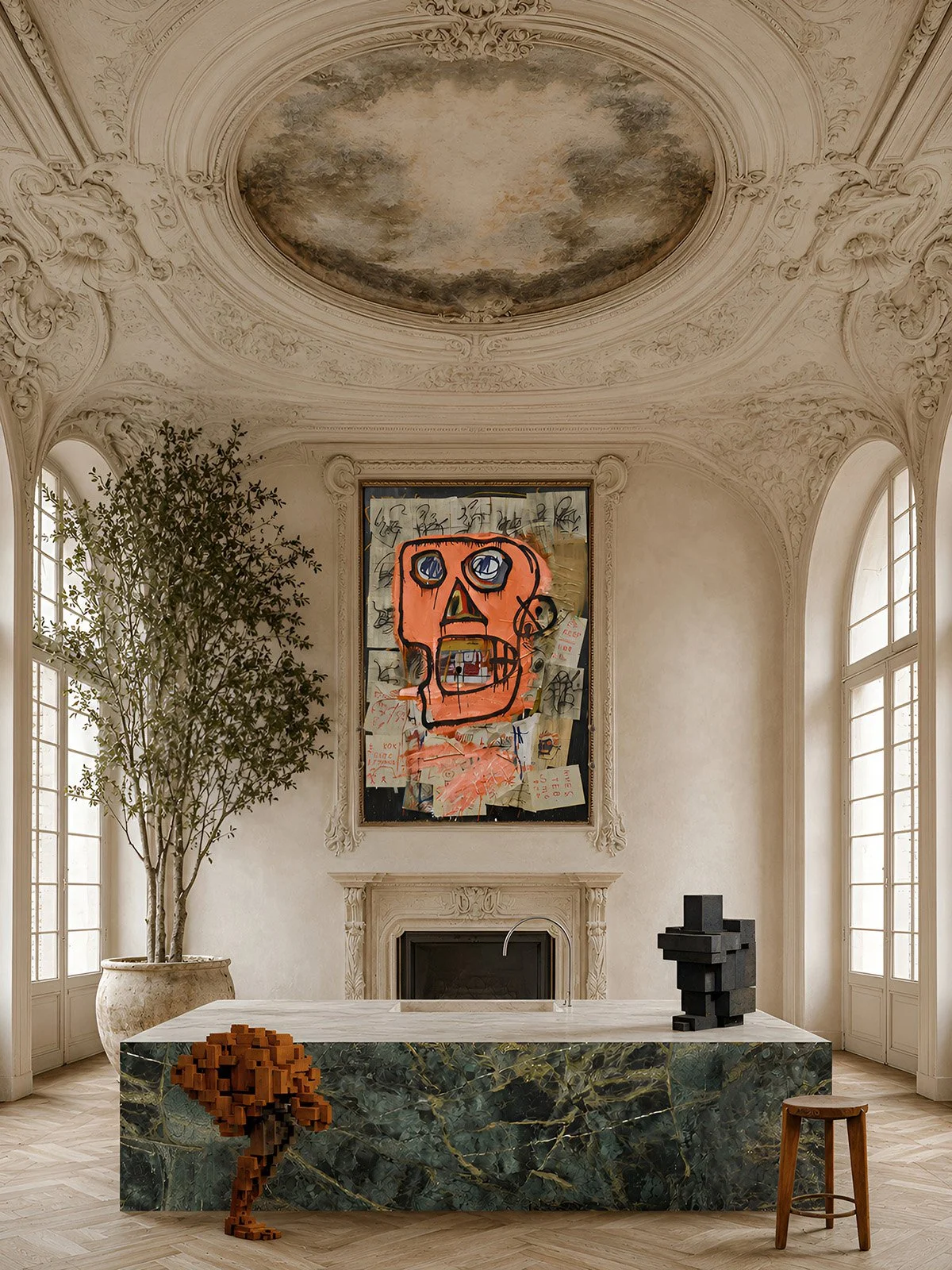
Works by Jean-Michel Basquiat, Antony Gormley, Thomas Houseago, Christopher Wool, Cy Twombly, Kazuo Shiraga and Mark Manders, together with Hellenistic and Roman antiquities, are contextually visualised by interior and furniture designer Brent Lee within interiors where chronology gives way to scale, material and spatial tension