

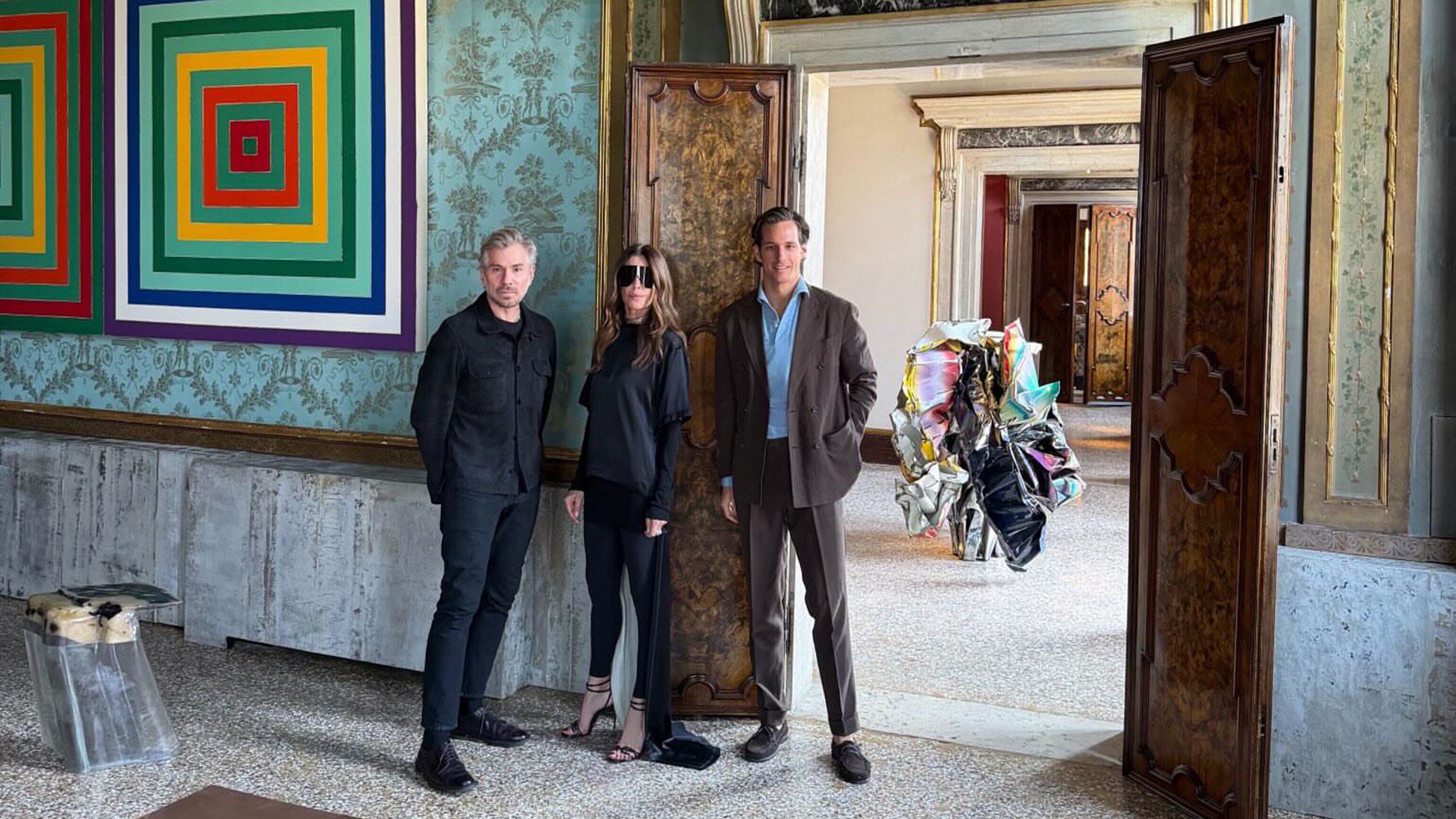
Vincenzo De Cotiis, Claudia Rose De Cotiis and Lawrence van Hagen
Image © — @albsinigaglia
ART & OBJECT
Vincenzo De Cotiis Reframes Minimalism Inside a Venetian Palace
May 6 — October 3, 2026
At Palazzo Giustinian Lolin, Minimal Legends pairs works by Judd, Andre, Flavin, LeWitt, Martin, Rothko, Serra, and Stella with De Cotiis’ contemporary language of material, memory, and transformation
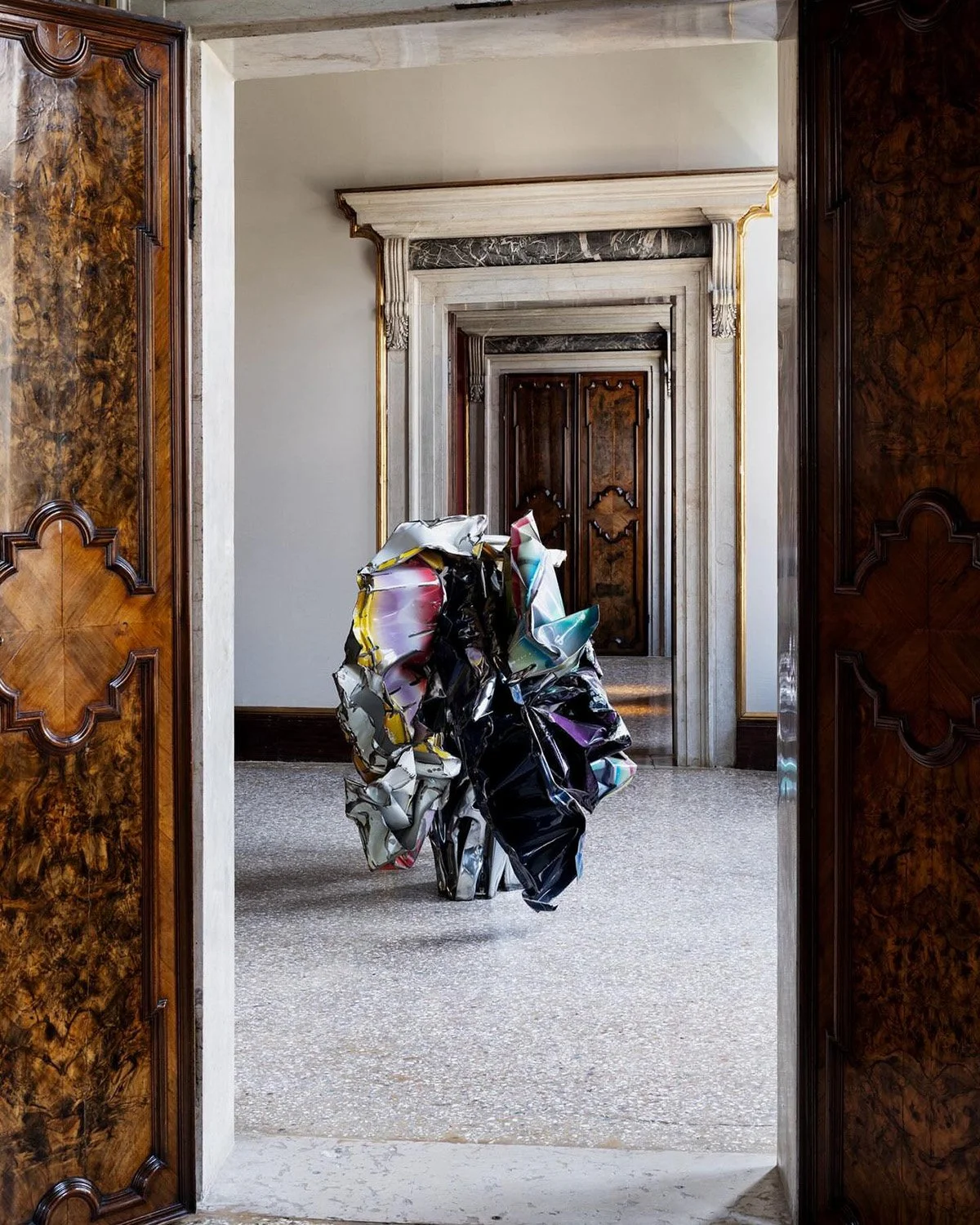
John Chamberlain Splendid Actor, (1989)
Image © — @albsinigaglia
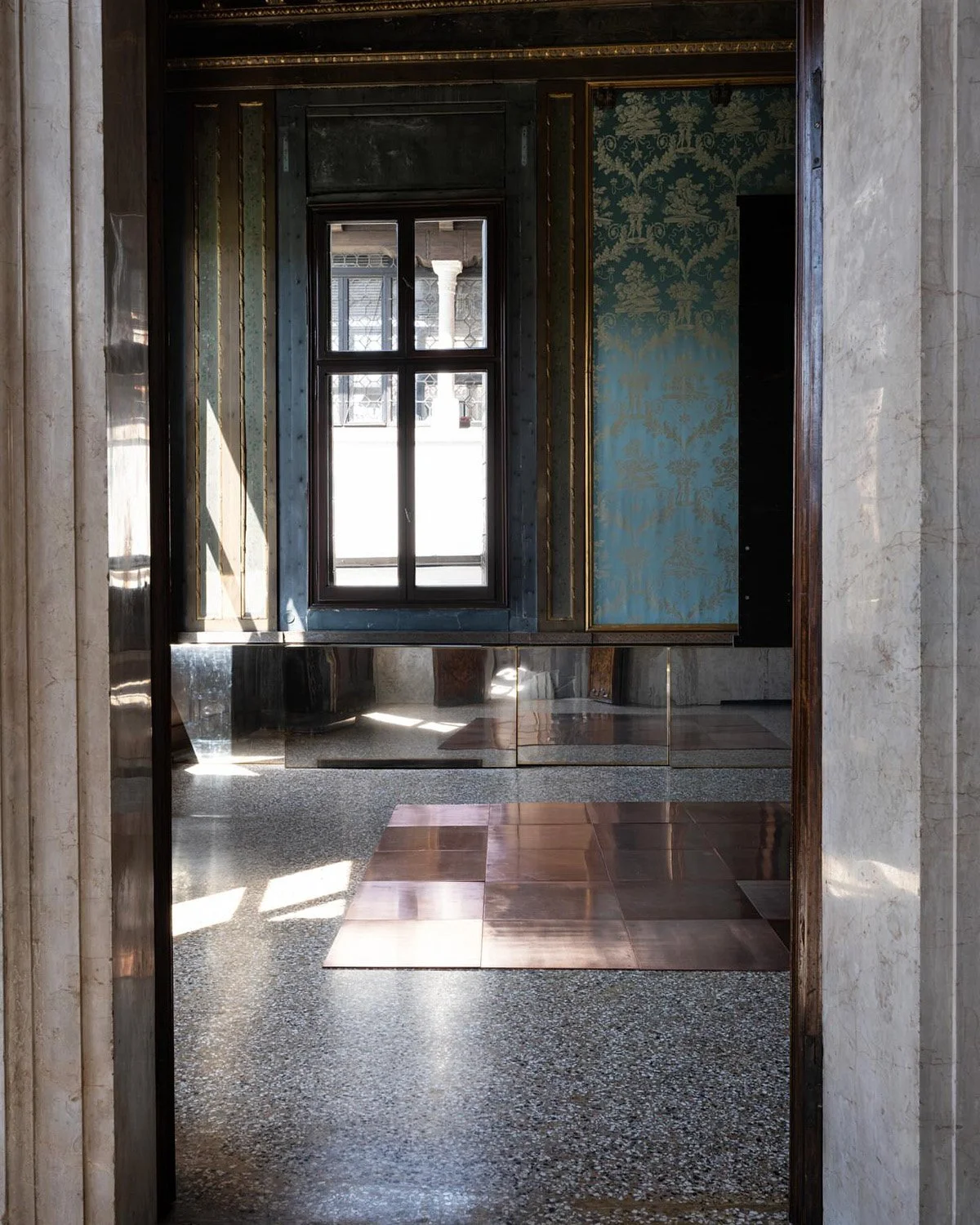
Carl Andre Fifth Copper Square , (2007)
Image © — @albsinigaglia
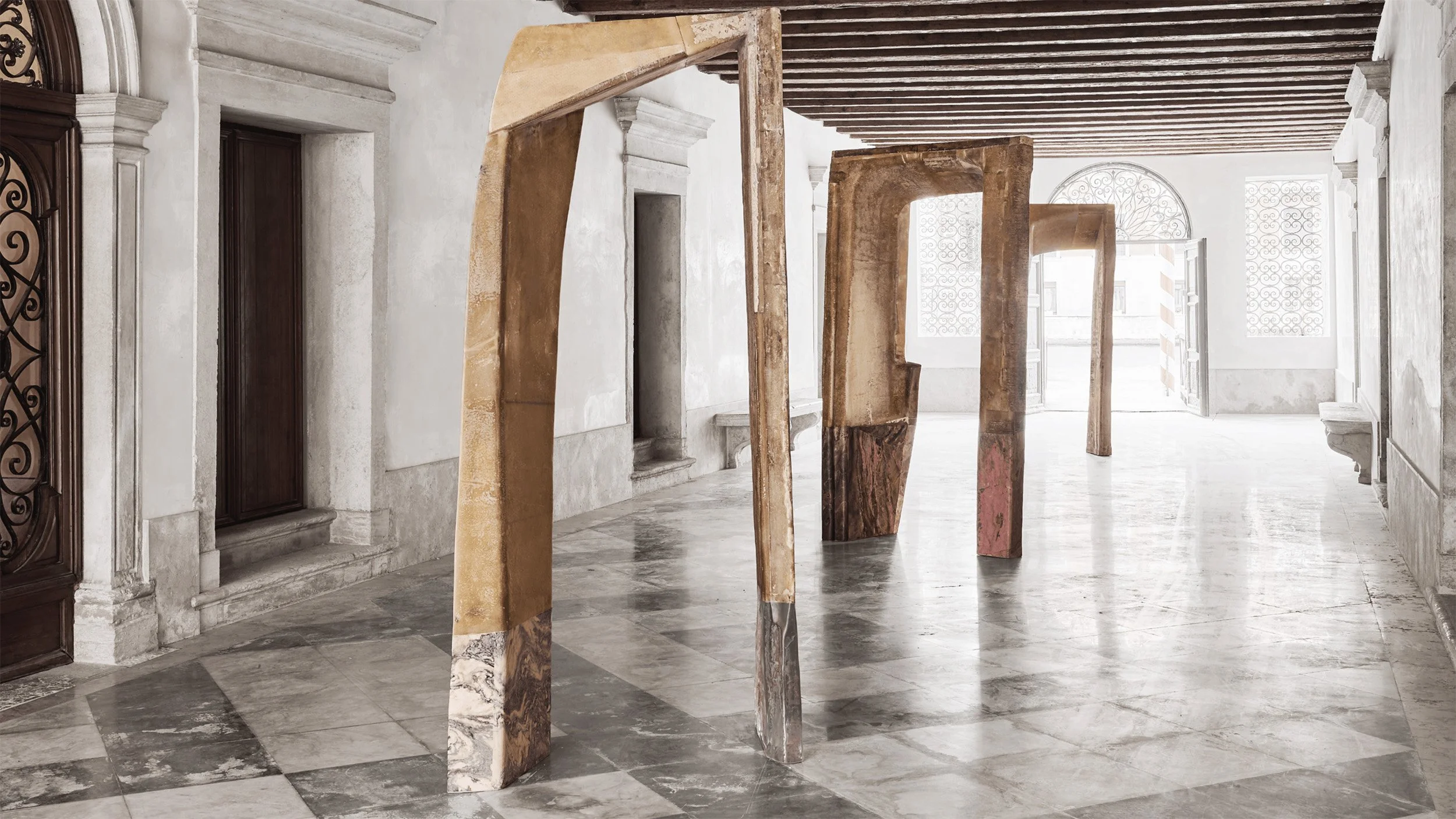
At Palazzo Giustinian Lolin, Vincenzo de Cotiis’ foundation treats the Venetian palace not as a neutral exhibition space, but as an active participant in the work. Opened by de Cotiis and Claudia Rose with a restrained installation of monumental arches in recycled fiberglass, ancient stone, and Murano glass, the foundation established its interest in the shifting territory between art, architecture, and collectible design. Those slightly off-balance forms still occupy the central courtyard, guiding visitors through the building before giving way to Minimal Legends, an exhibition devoted to the continuing force of Minimalist thought
Presented in Venice during the 61st Venice Biennale, Minimal Legends unfolds across the palazzo’s layered rooms with a rare dialogue between generations. The exhibition brings together nearly twenty works by artists associated with Minimalism and its wider field, including John Chamberlain, Sol LeWitt, Larry Bell, Agnes Martin, Mark Rothko, Frank Stella, Richard Serra, Dan Flavin, and Bridget Riley, alongside two works by de Cotiis. Rather than approaching Minimalism as a closed historical movement, the exhibition presents it as a language still capable of renewal, shaped by material, perception, repetition, light, and space
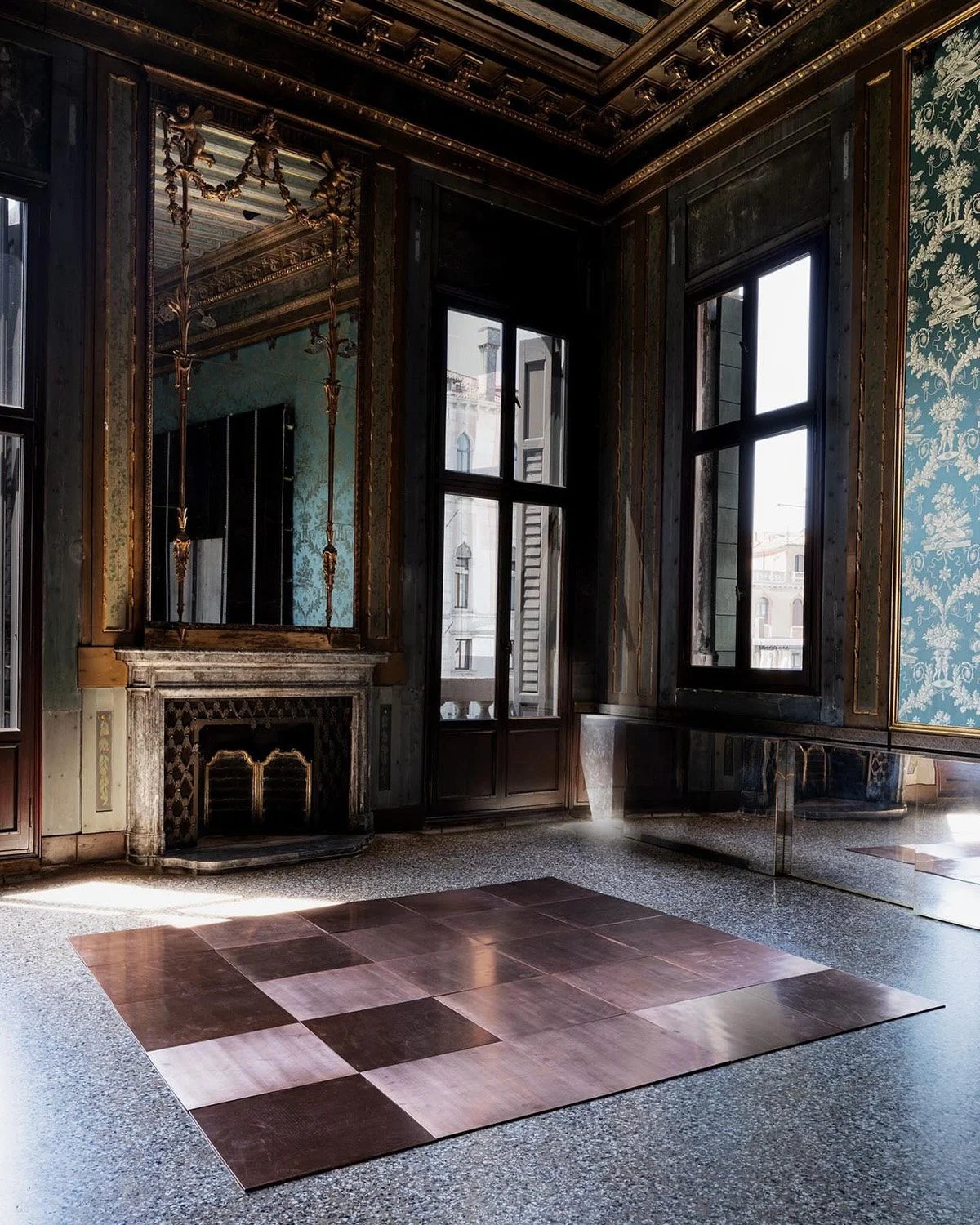
Carl Andre Fifth Copper Square , (2007)
Image © — @albsinigaglia
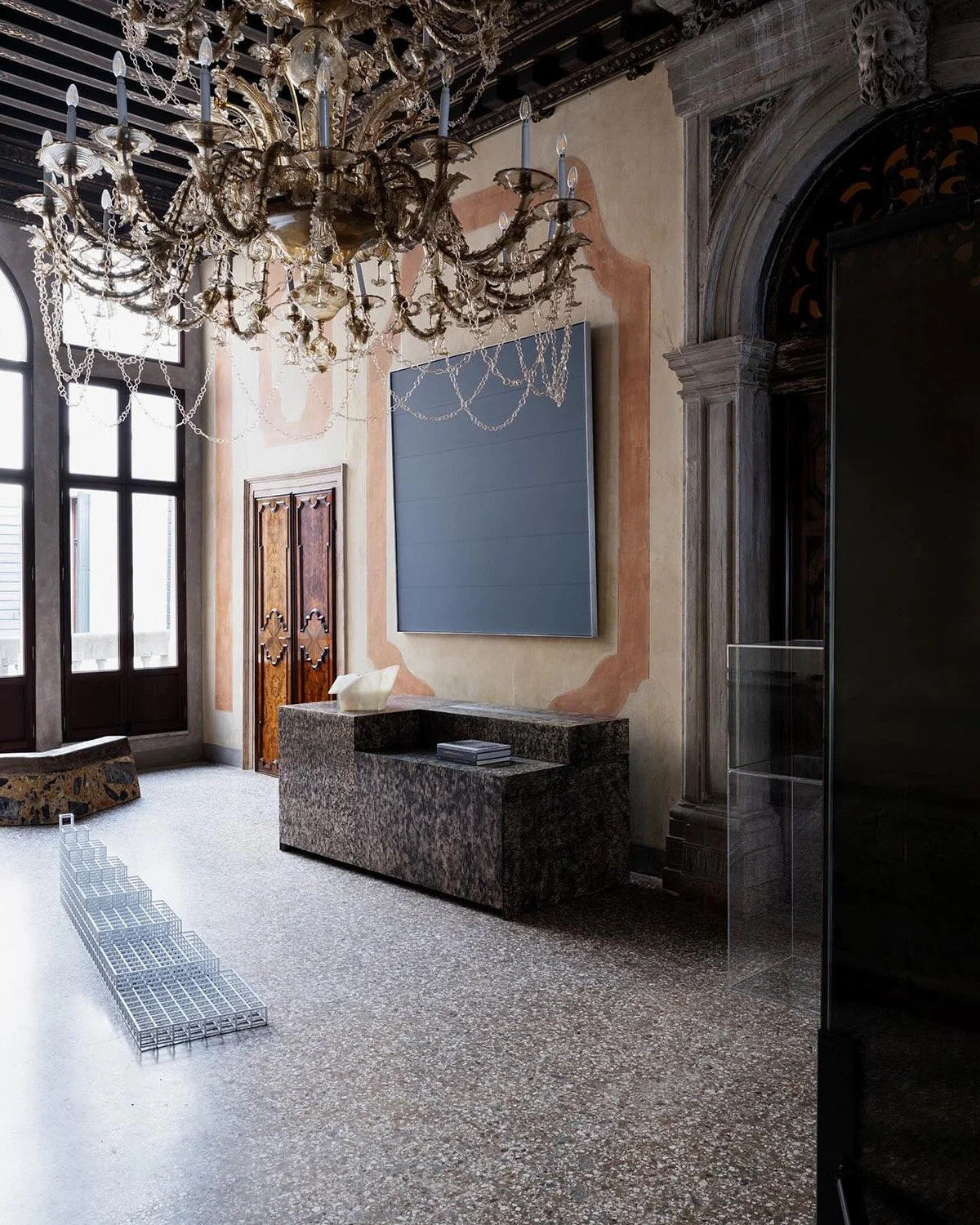
Floor — Sol LeWitt Horizontal Progression #7 , (1991)
Wall — Agnes Martin Untitled 5 , (1989)
Image © — @albsinigaglia
That wider reading is essential to the exhibition’s tone. While many of the works carry the clarity and restraint associated with Minimalism, others move through adjacent territories, from LeWitt’s conceptual systems and Bell’s investigations of light to Rothko’s immersive fields of color and Chamberlain’s compressed steel forms. LeWitt’s own resistance to fixed labels feels especially relevant here, as Minimal Legends looks beyond strict classification to consider how Minimalist thinking expanded into other artistic vocabularies
Co-curated with Lawrence Van Hagen of LVH Art, the exhibition opens through a measured pairing of Agnes Martin and Bridget Riley, two artists whose practices approach structure, rhythm, and perception through distinct visual means. Elsewhere, the lineage described by Donald Judd in his 1965 essay Specific Objects appears throughout the installation. Rothko’s atmospheric color fields echo through Stella’s geometry, Chamberlain’s contorted metal volumes, and Judd’s ordered constructions, revealing a broader conversation around objecthood, surface, and the viewer’s physical experience
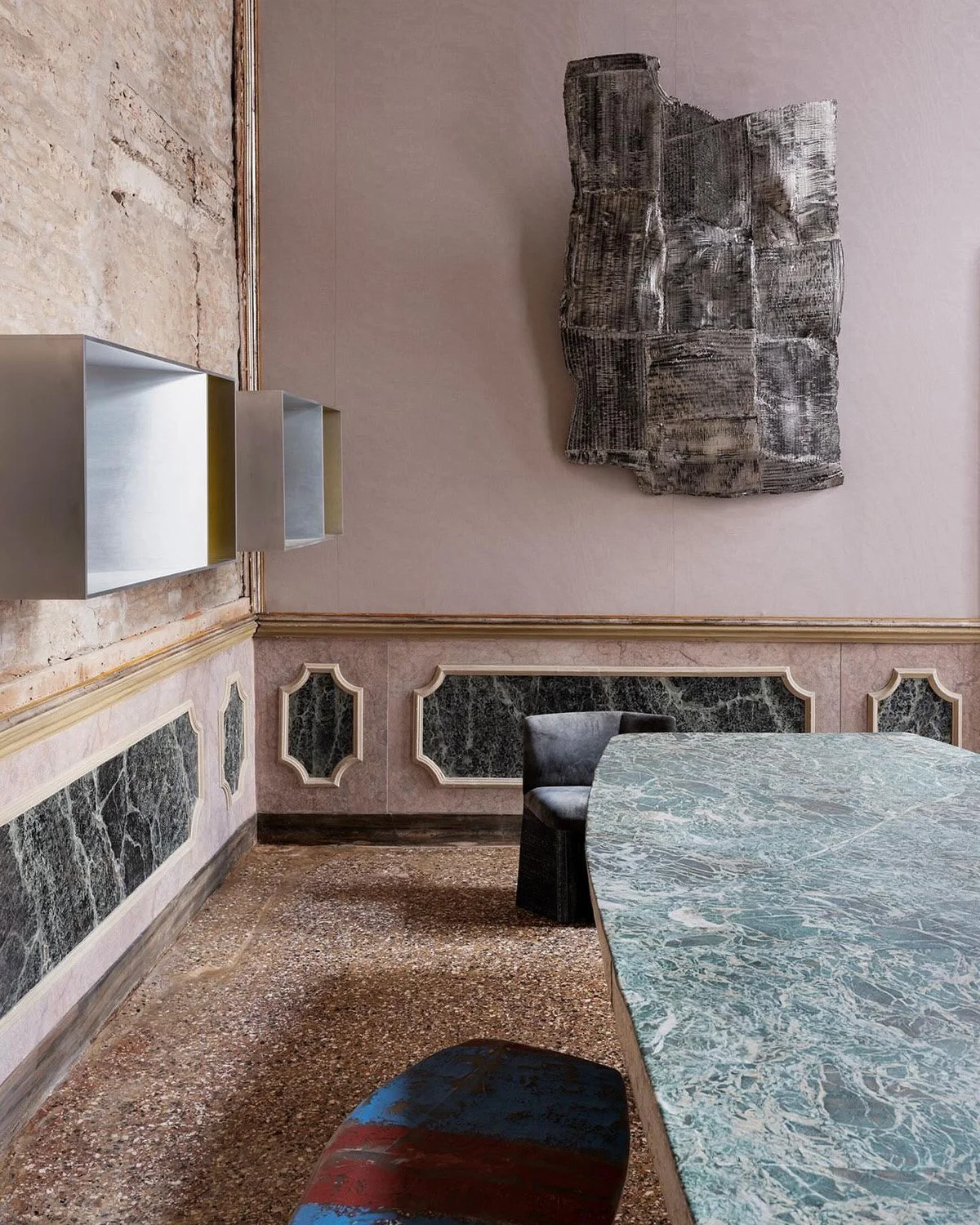
Vincenzo De Cotiis Untitled, (1997)
Image © — @albsinigaglia
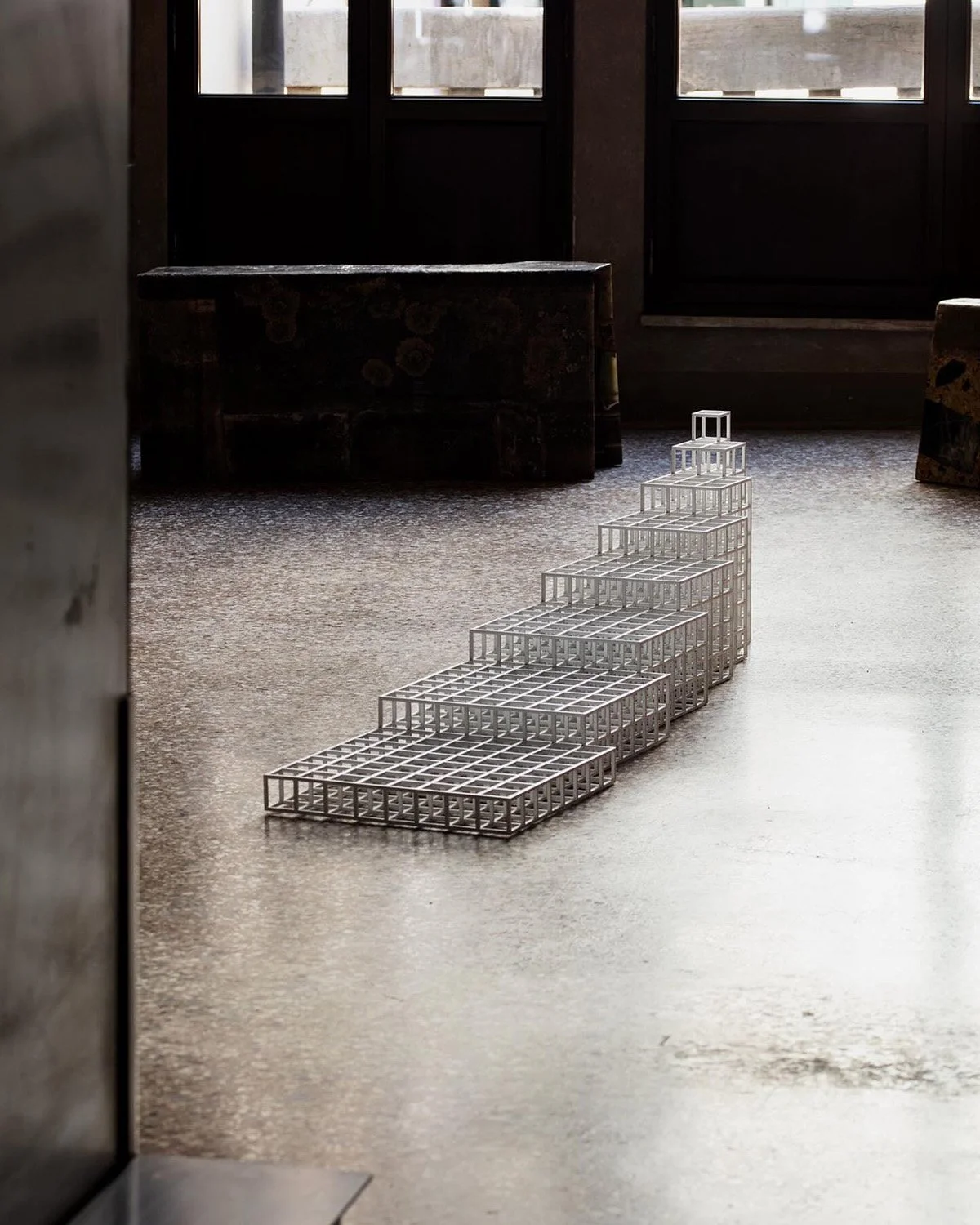
Sol LeWitt Horizontal Progression #7 , (1991)
Image © — @albsinigaglia
Several works activate the palazzo itself. Carl Andre’s Fifth Copper Square turns the floor into a reflective plane, altering the way the body moves through the room. Dan Flavin’s Untitled to Sabine and Holger and Larry Bell’s glass sculpture shift light across frescoed walls, veined marble, and worn architectural surfaces. Industrial materials appear repeatedly, from Judd’s aluminum and plexiglass structures to Chamberlain’s chromium-plated steel, while de Cotiis extends the material dialogue through Untitled from 1997, a recycled aluminum work marked by scorched tones, oxidation, and heavily worked texture
Set against terrazzo floors, aged plaster, marble thresholds, and monumental chandeliers, Minimal Legends becomes more than an exhibition about Minimalism. It is a meditation on how perception changes within space, and how material can carry time. De Cotiis’ own works deepen that conversation, bringing erosion, transformation, and memory into contact with one of the twentieth century’s most influential artistic languages
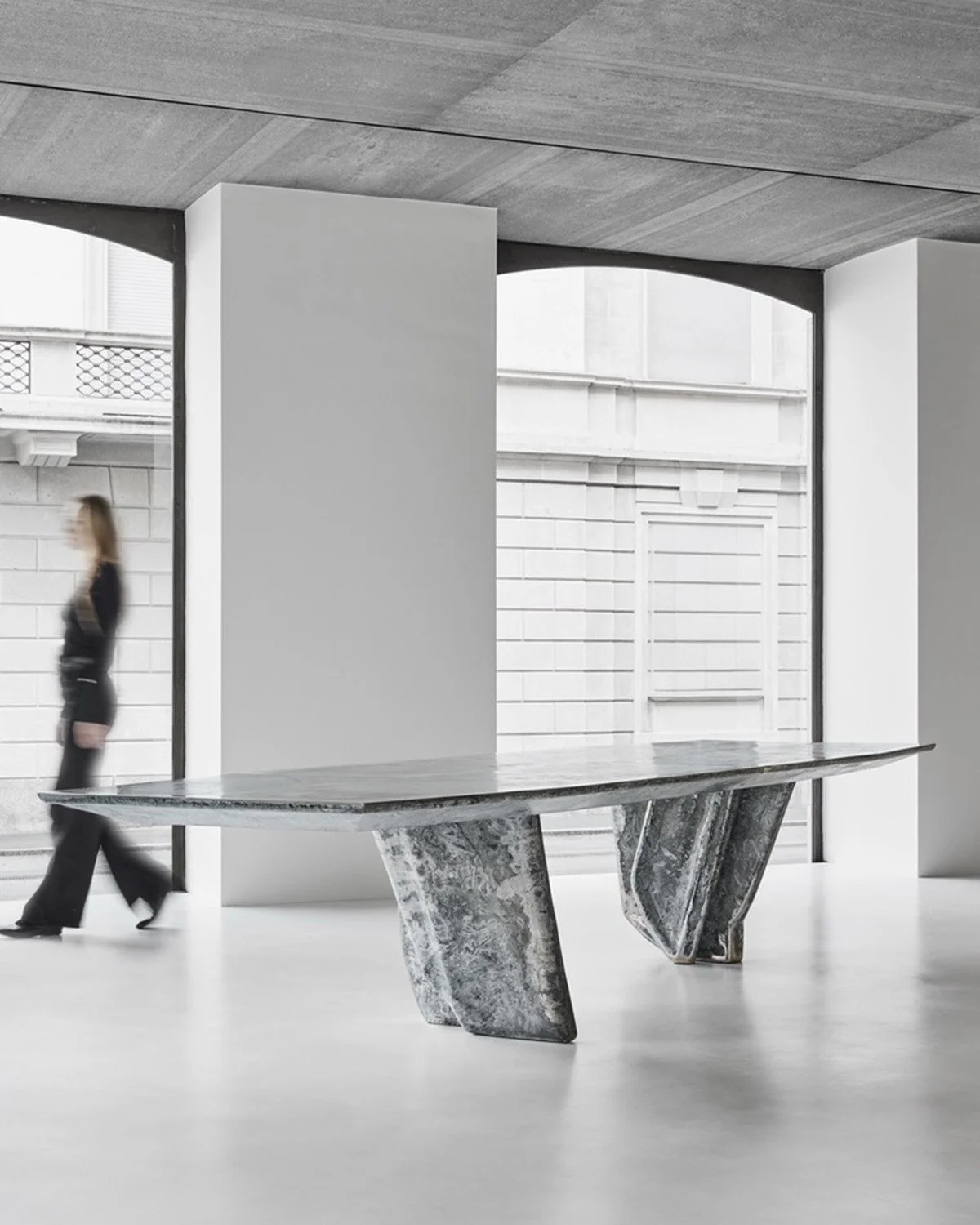
Je suis La Matière
—
A series of works in cast white bronze, Murano glass, and recycled materials explores the cosmic tension between matter, perception, and invisible color
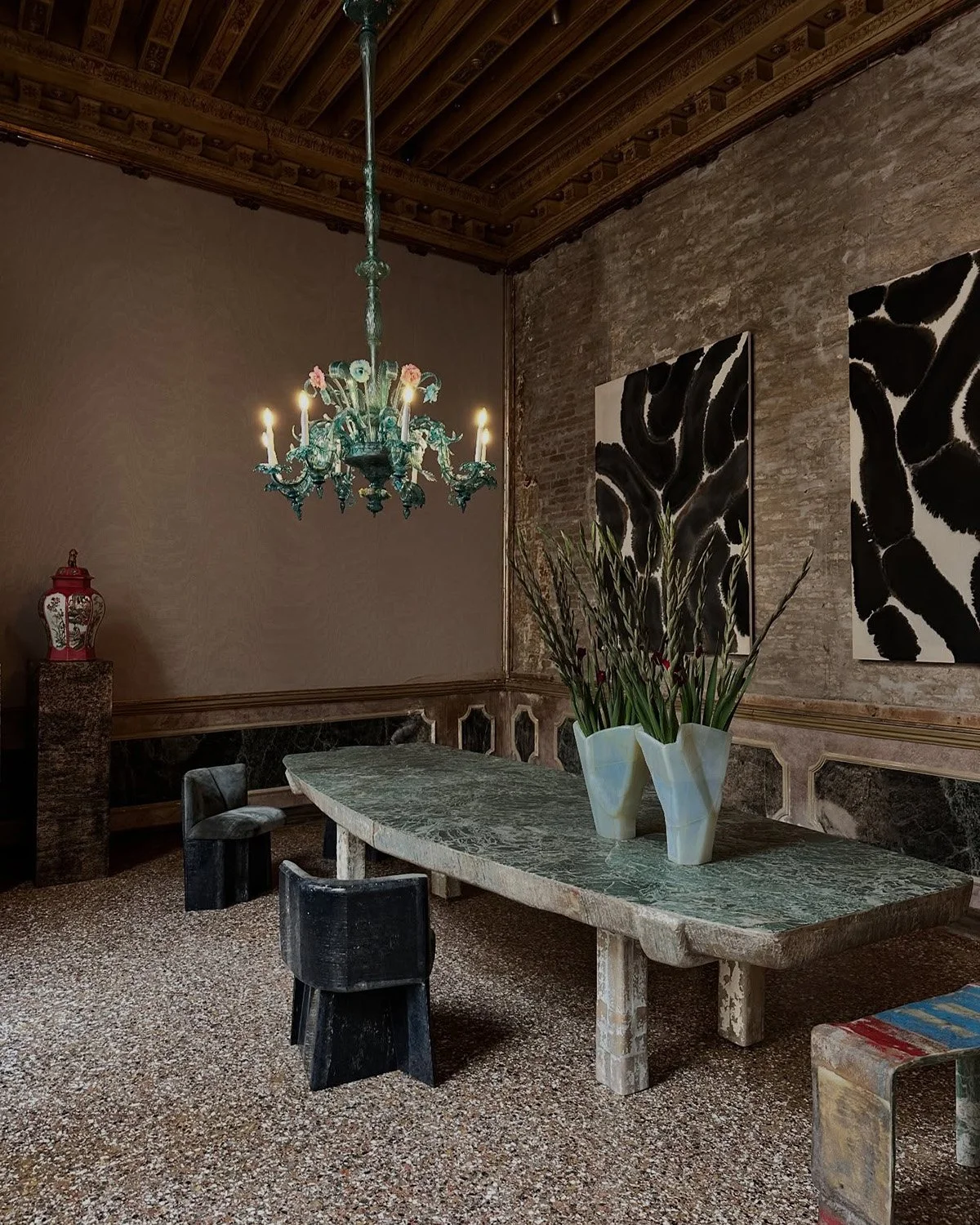
Vincenzo De Cotiis Foundation
Vincenzo De Cotiis Foundation through the lens of an Art Advisor
—
An art advisor’s iPhone photos trace the Vincenzo De Cotiis Foundation within Palazzo Giustinian Lolin, Venice