

-
Rarity
Unique
Certificate of Authenticity
Request through gallery representation
-
- Catalogue of Pictures, Marbles, Bronzes, Antiquities, &c., &c., Palazzo Accoramboni, Rome, Forzani & co., 1894.
- Catalogue du musée de peinture, sculpture et archéologie au Palais Accoramboni (“Catalogue of the painting, sculpture and archaeology museum in the Palazzo Accoramboni”), Vol. II, Rome, 1897, no. 18 p. 144.
- Early Christian and Byzantine Art, an exhibition held at the Baltimore Museum of Art, 25 April–22 June 1947, Baltimore, John D. Lucas, 1947, no. 24, p. 26 -
From the collection of Don Marcello Massarenti (1817–1905), Palazzo Rusticucci-Accoramboni, Rome, 1894.
Purchased by Henry Walters (1848-1931), Baltimore, in 1902.
Bequeathed to the Walters Art Museum in 1931.
Sold at Sotheby’s, “Antiquities and Islamic Arts” sale, New York, 12-13 December 1991, lot 109.
In a private collection in New York after 1991.
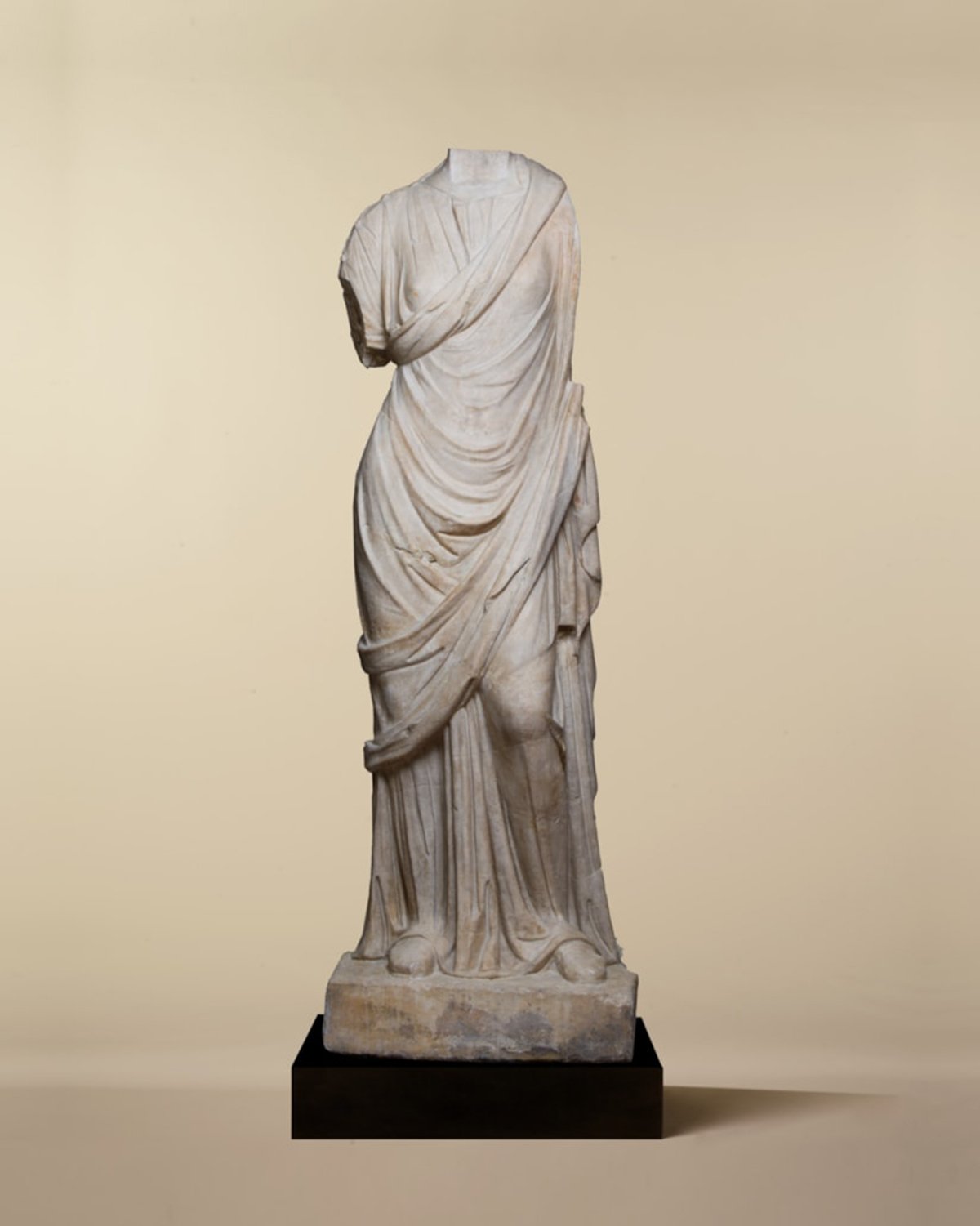
Statue of a Woman
2nd century AD
This magnificent sculpture of a woman captivates the beholder through its masterful and sensual treatment of drapery
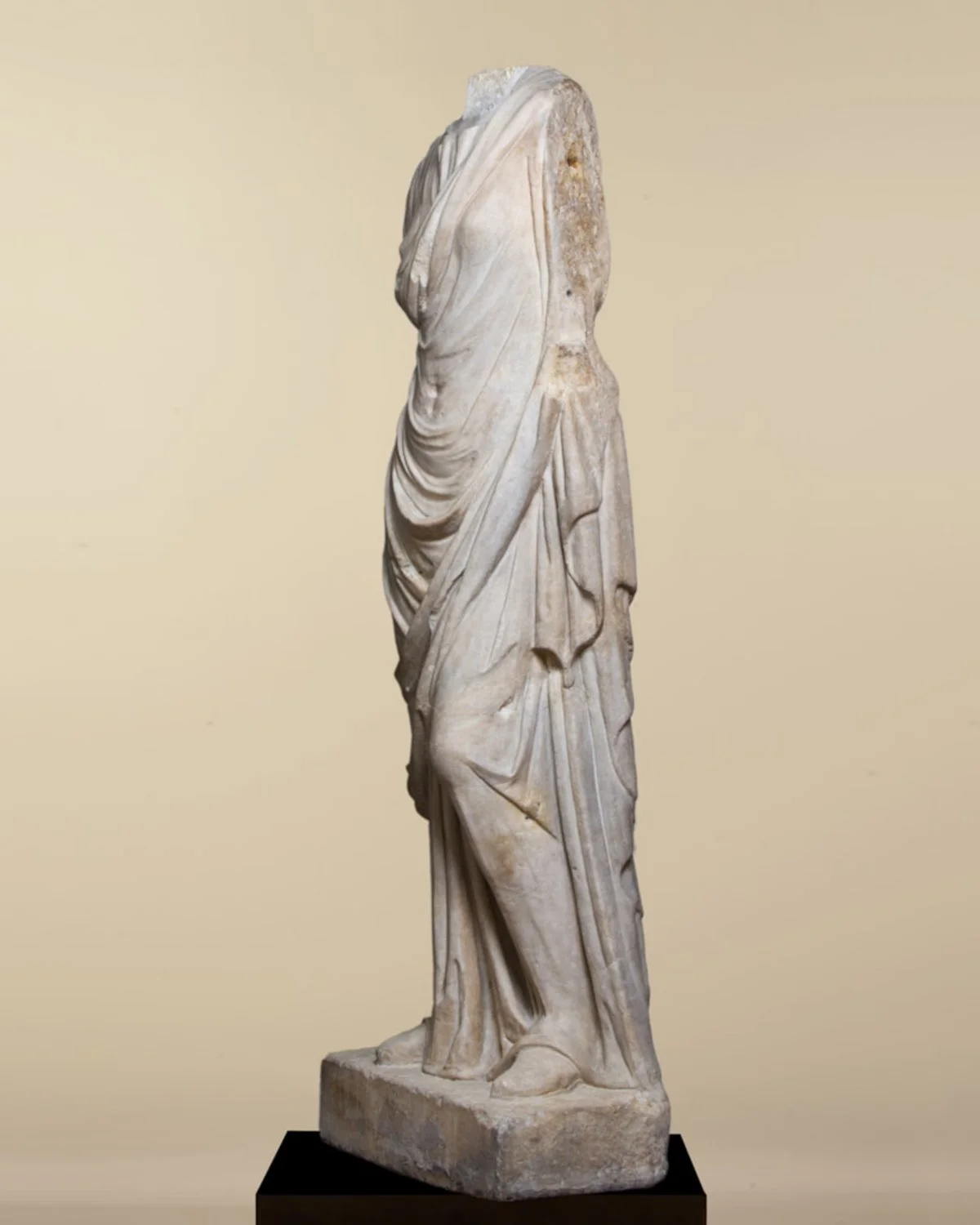
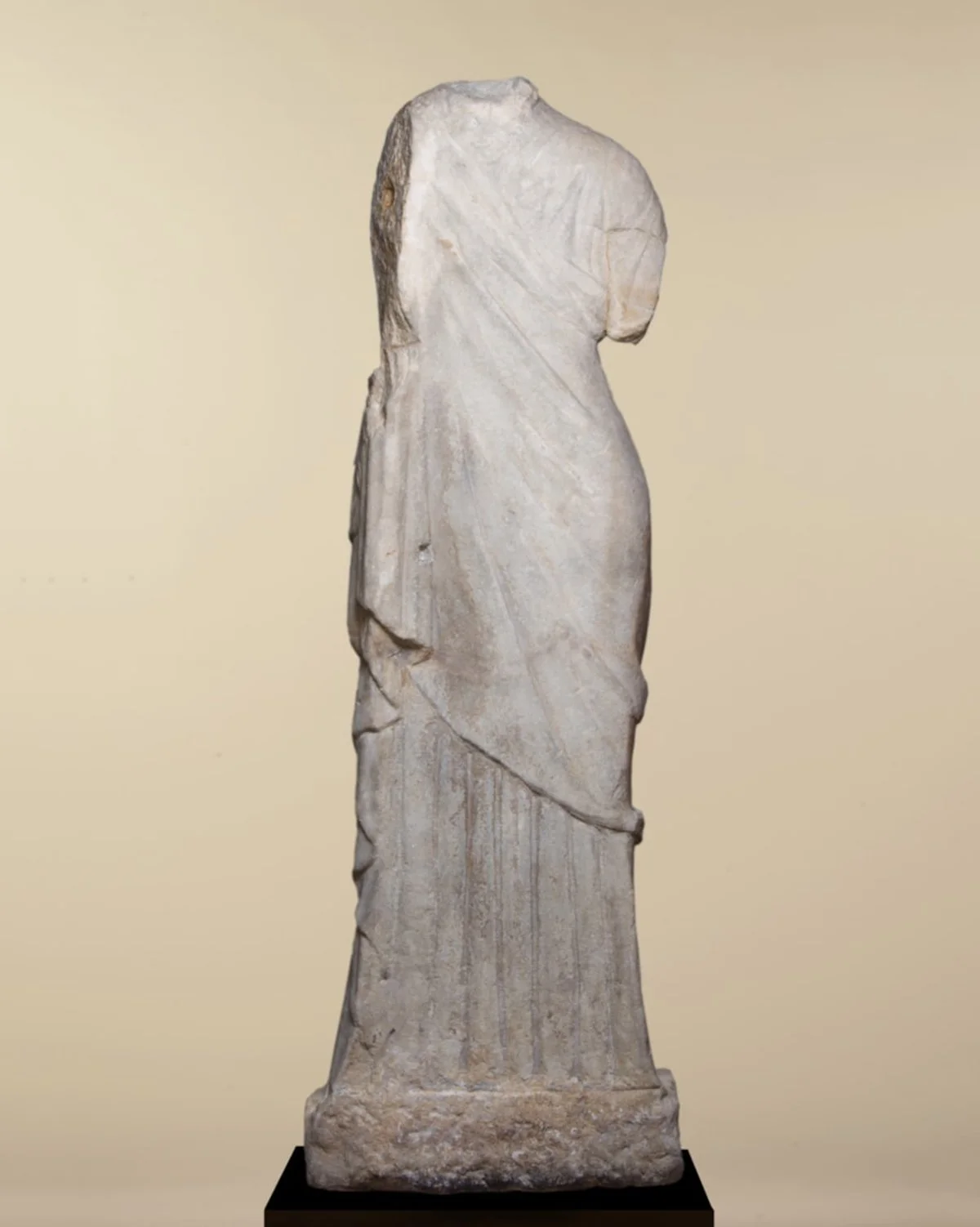
The work represents a life-sized female figure standing majestically before the viewer. Her right hip is raised higher than the left, indicating that the full weight of her body rests on her right leg, while the left leg remains free. Animated by a sense of vital movement, the left leg resists gravity and becomes visible beneath the garment, with the knee subtly advancing through the fabric
This contrapposto introduces a powerful energy into the composition, creating a distinctly sensual tilt through the figure’s hips. Contrapposto first appeared in Greek statuary at the beginning of the 5th century BC, marking the transition from Archaic art to the Severe style. It later became central to Graeco-Roman artistic creation. By giving the body a subtle twist, contrapposto brought life to marble and answered the ancient pursuit of imitative illusion that shaped much of Western art
That achievement is beautifully expressed in this delicate and appealing body, which the striking drapery both reveals and conceals. The woman wears several garments. The innermost layer is a thin chiton, the basic garment of Greek civilisation, falling to her feet as was appropriate for women. Its fastening system remains visible on the shoulder, where a series of precisely sculpted buttons join the front and back sections of the tunic. The V-shaped folds created by these fastenings are meticulously rendered
Particularly captivating is the treatment of the folds along the neckline of the chiton. They fall with remarkable naturalism, suggesting the softness and suppleness of fabric so convincingly that the weight of the marble almost disappears
Galerie Chenel
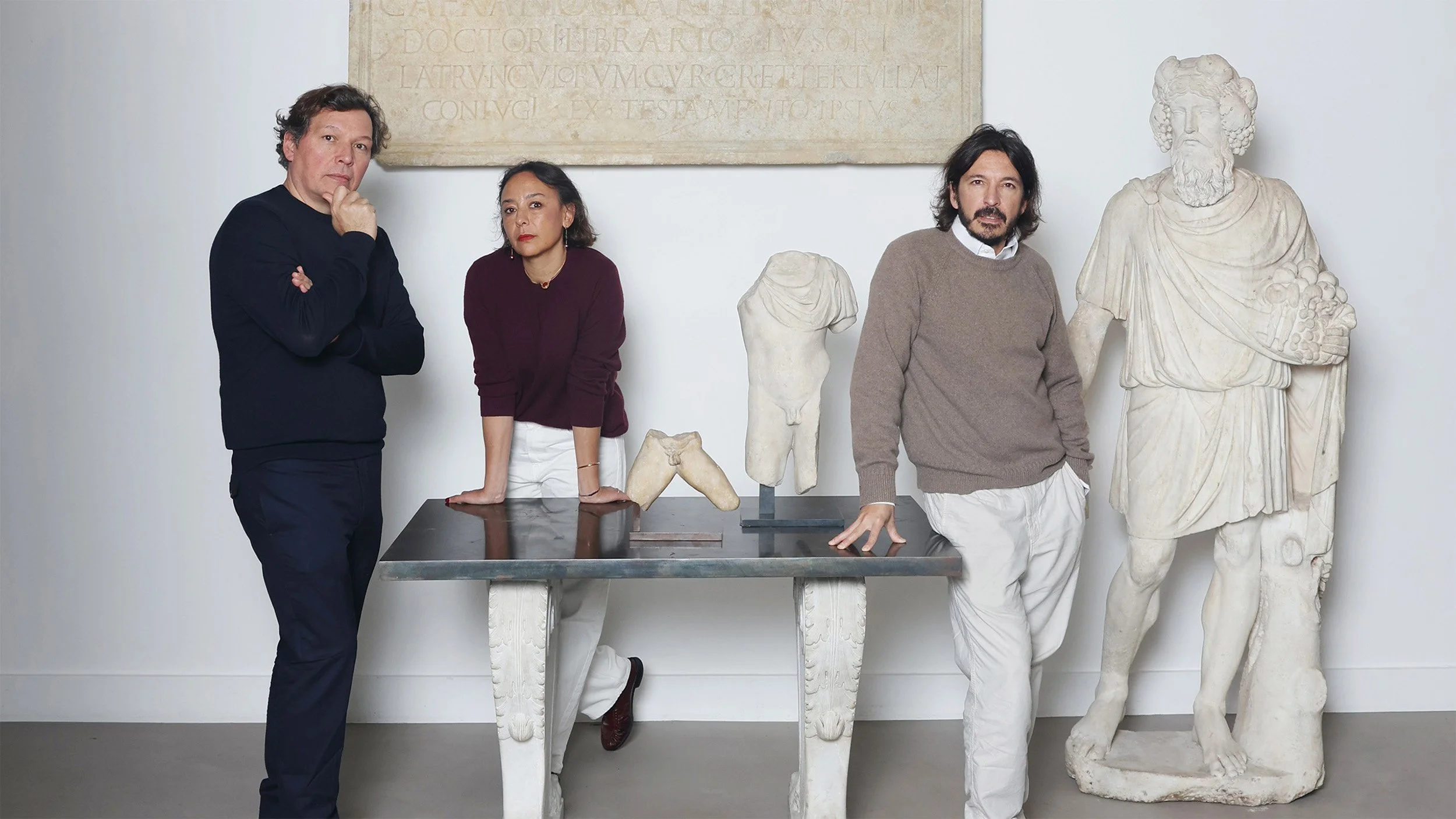
Gallery Chenel is a family business that is driven by a passion for sculpture. It specializes in archaeological objects, with particular emphasis on Roman arts
Established in Paris in 1999, the gallery has grown over the years and it has settled on Quai Voltaire, opposite the Louvre Museum, where it has fitted a modern exhibition space, a shrine for antique pieces