

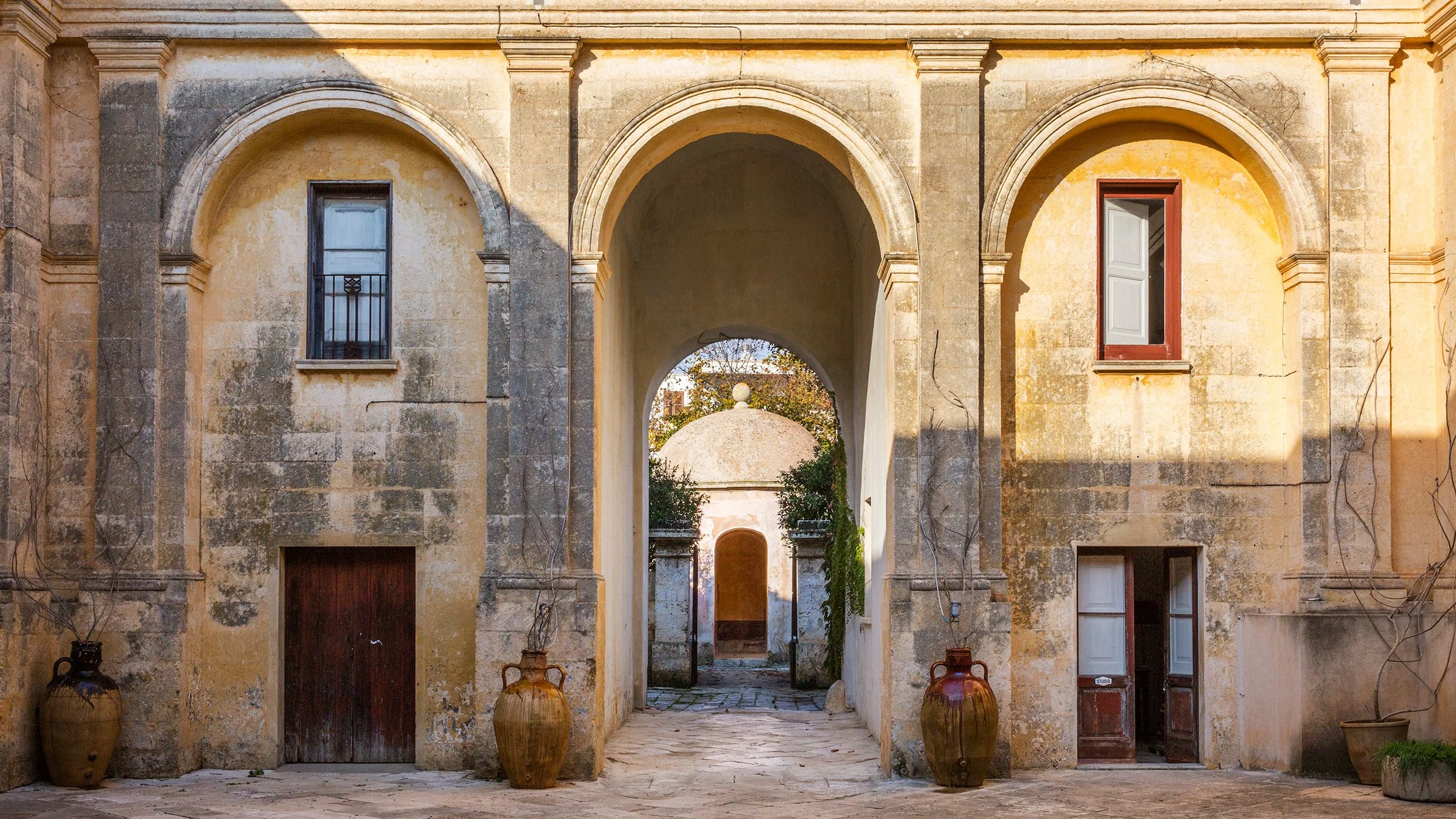
Kaffeehaus views through the archway at Palazzo Daniele
Image © — @serenaeller
HOTEL
Inside the Puglian Palazzo Where 19th-Century Grandeur Meets Contemporary Art
At Palazzo Daniele, a former aristocratic residence in Salento has been stripped back with radical restraint, revealing frescoed ceilings, mosaic floors and a new life shaped by artists, collectors and slow Italian hospitality
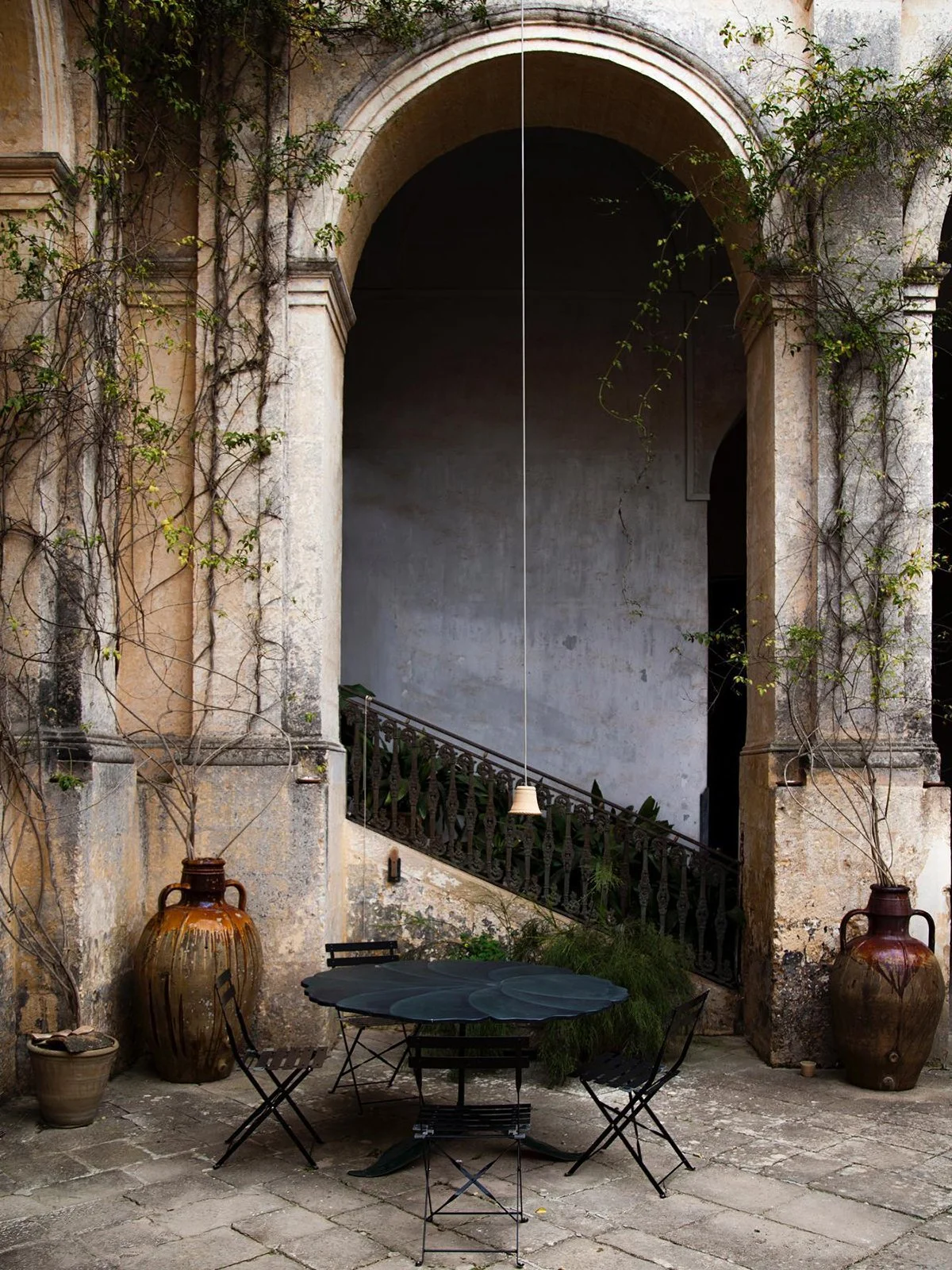
Palazzo Daniele’s iconic table setting photo
Image © — @enrico_costantini
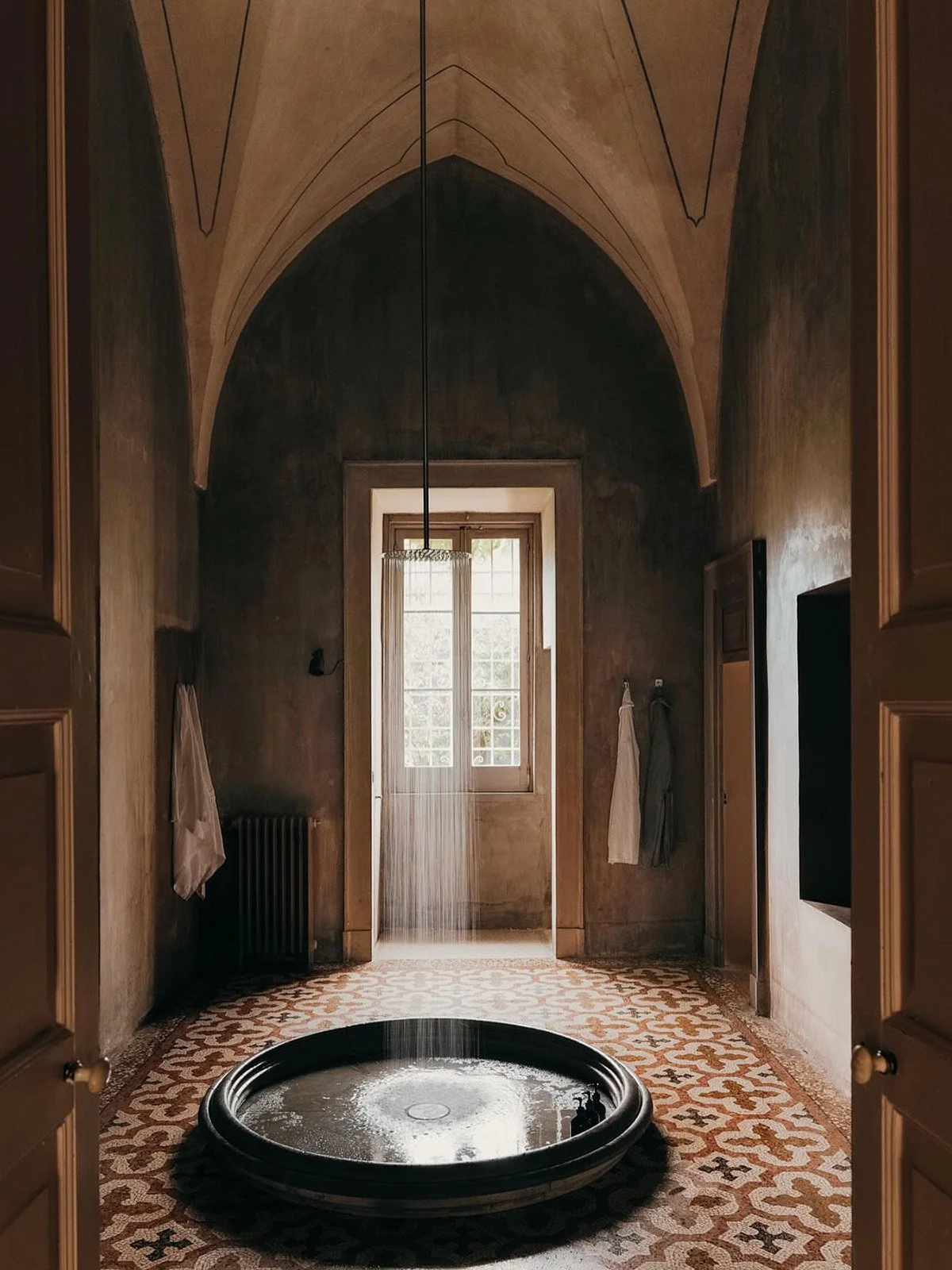
Shower bliss above a mosaic floor
Image © — @hannes.klaeger @_frncsca_
Built in 1861, the year Italy became a unified nation, Palazzo Daniele belongs to the architecture of inheritance. Designed by the local architect Domenico Malinconico in Gagliano del Capo, a small village at the southern edge of Salento, the palazzo remained a family residence for four generations. Its scale, frescoed ceilings and neoclassical proportions speak to a former aristocratic world, but its second life has been shaped by something quieter and more exacting: removal
By the time Francesco Petrucci, the last descendant of the family, returned to the palazzo, the building carried the weight of domestic history. Rooms were filled with inherited furniture, decoration and the layered habits of a house that had been lived in for more than a century. Petrucci, who had spent time abroad and developed a serious interest in contemporary art, began to see the residence less as a static family monument and more as a place that could hold artists, conversations and new work
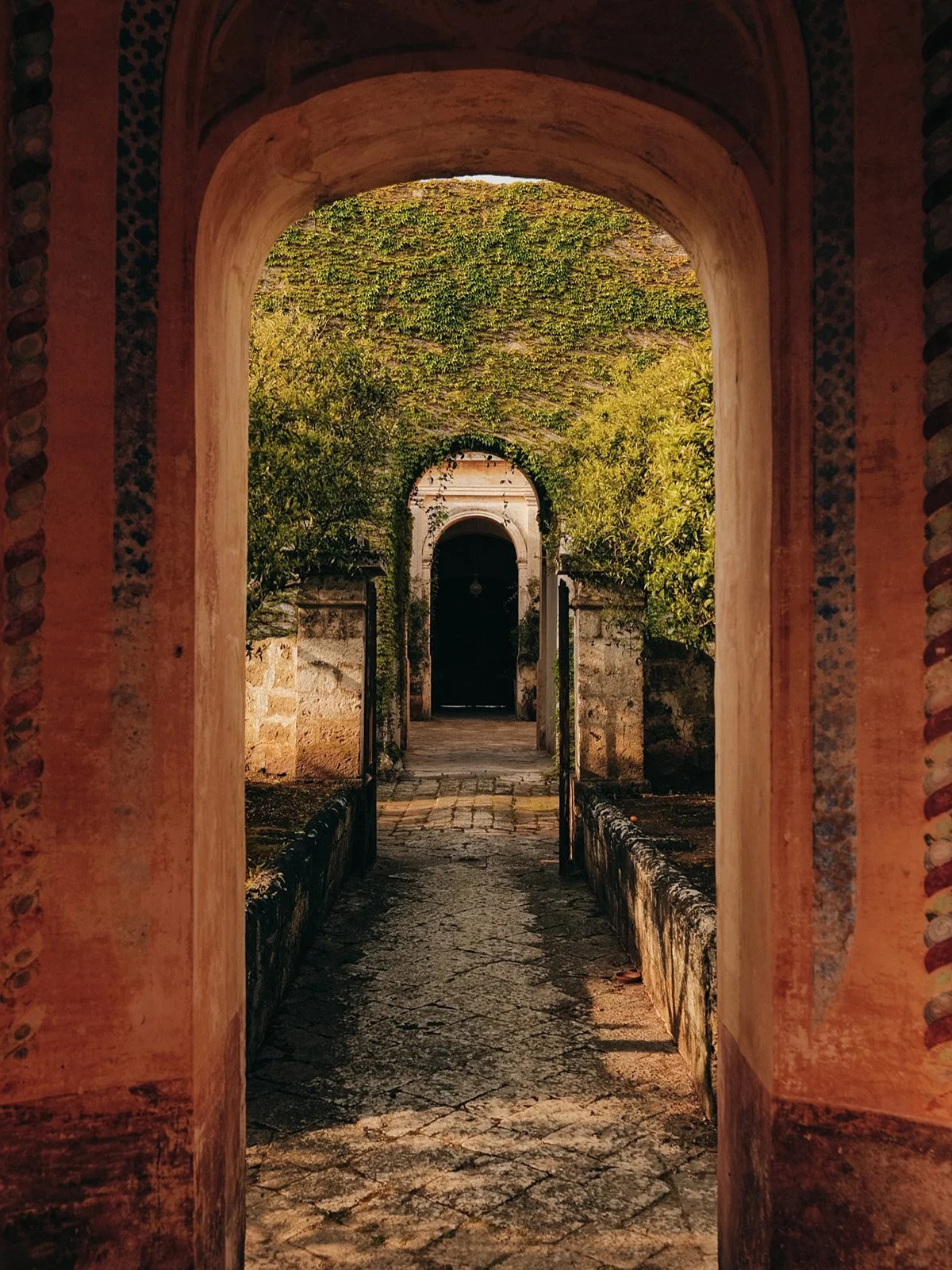
Kaffeehaus’ charming enclosure nestled in the orangerie of the Palazzo’s garden
Image © — @palazzo.daniele
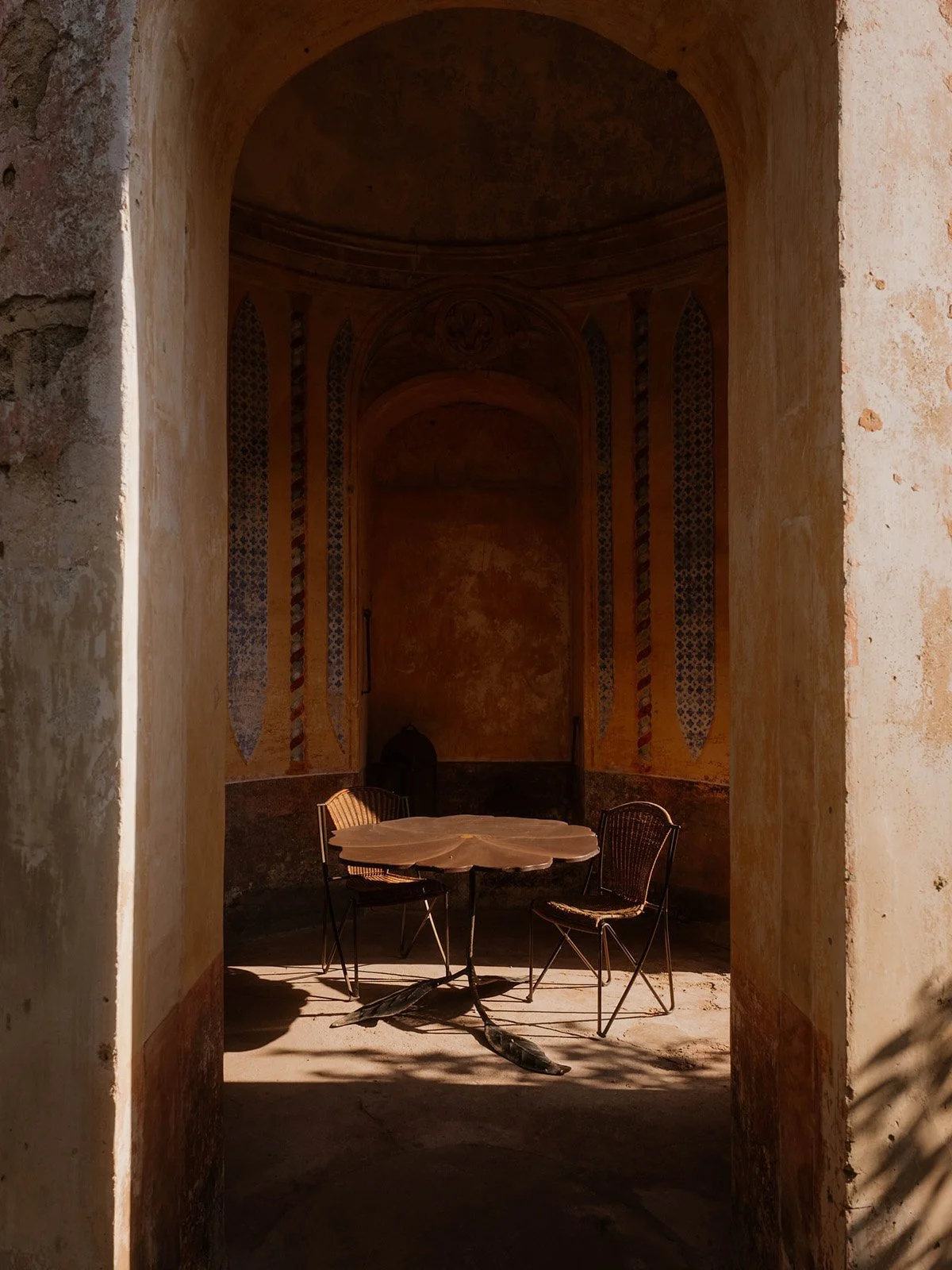
Kaffeehaus at Palazzo Daniele
Image © — @palazzo.daniele
That instinct had already taken public form through Capo D’Arte, the contemporary art festival he founded in Gagliano del Capo, bringing international artists into direct contact with the town. Palazzo Daniele became the private extension of that vision. Rather than overrestore the building or turn it into a decorative period fantasy, Petrucci began stripping it back, removing what clouded the architecture and allowing the original structure to breathe
The transformation was later refined by Milanese architects and designers Roberto Palomba and Ludovica Serafini, whose intervention was defined by restraint rather than addition. Their work did not attempt to compete with the palazzo’s history. It clarified it. Walls were left bare, rooms were opened, and unnecessary ornament was removed so that the bones of the building could come forward: frescoes, mosaic floors, high ceilings, worn surfaces, ancestral portraits and the irregular beauty of age
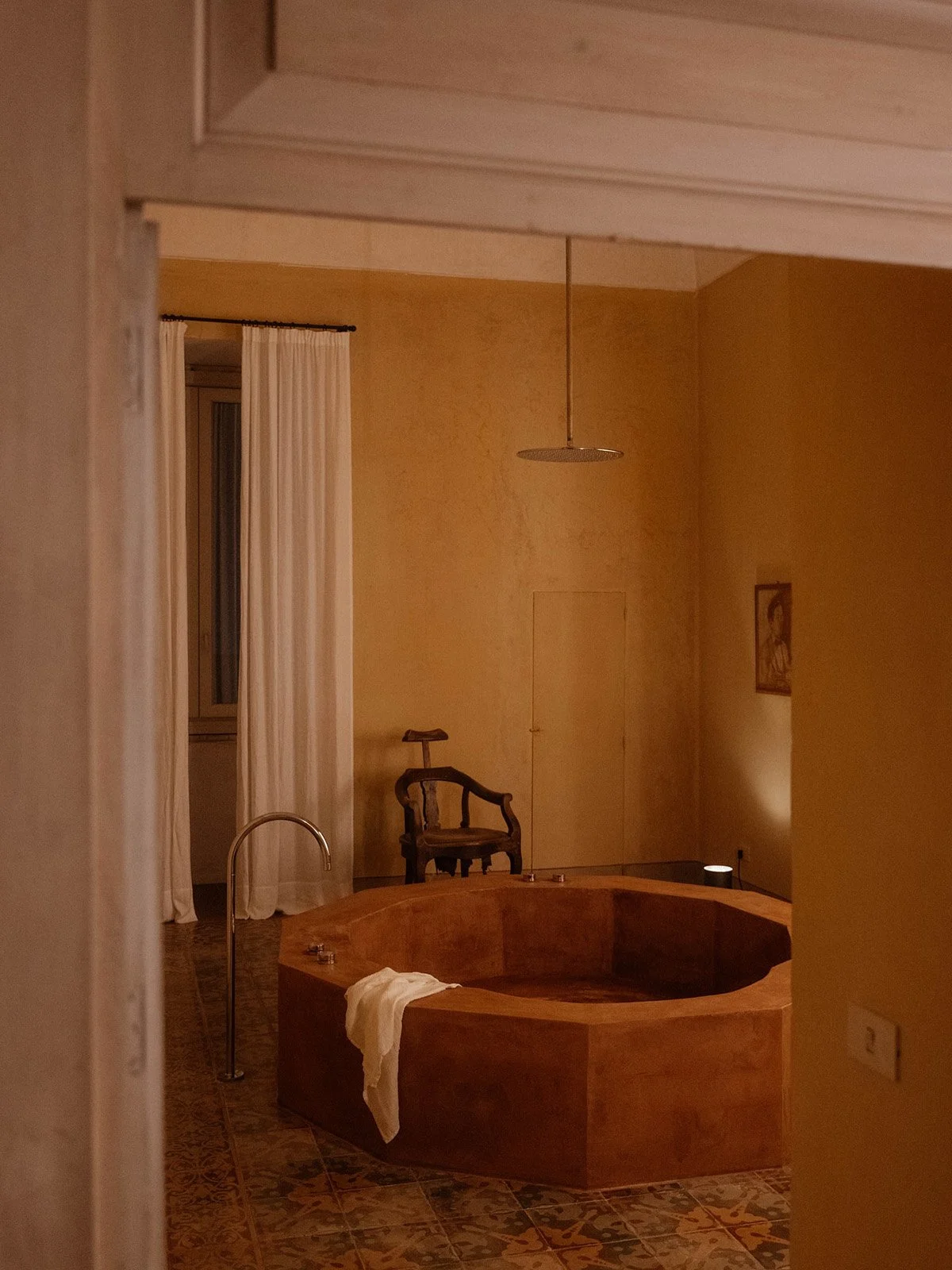
Royal Suite at Palazzo Daniele
Image © — @palazzo.daniele
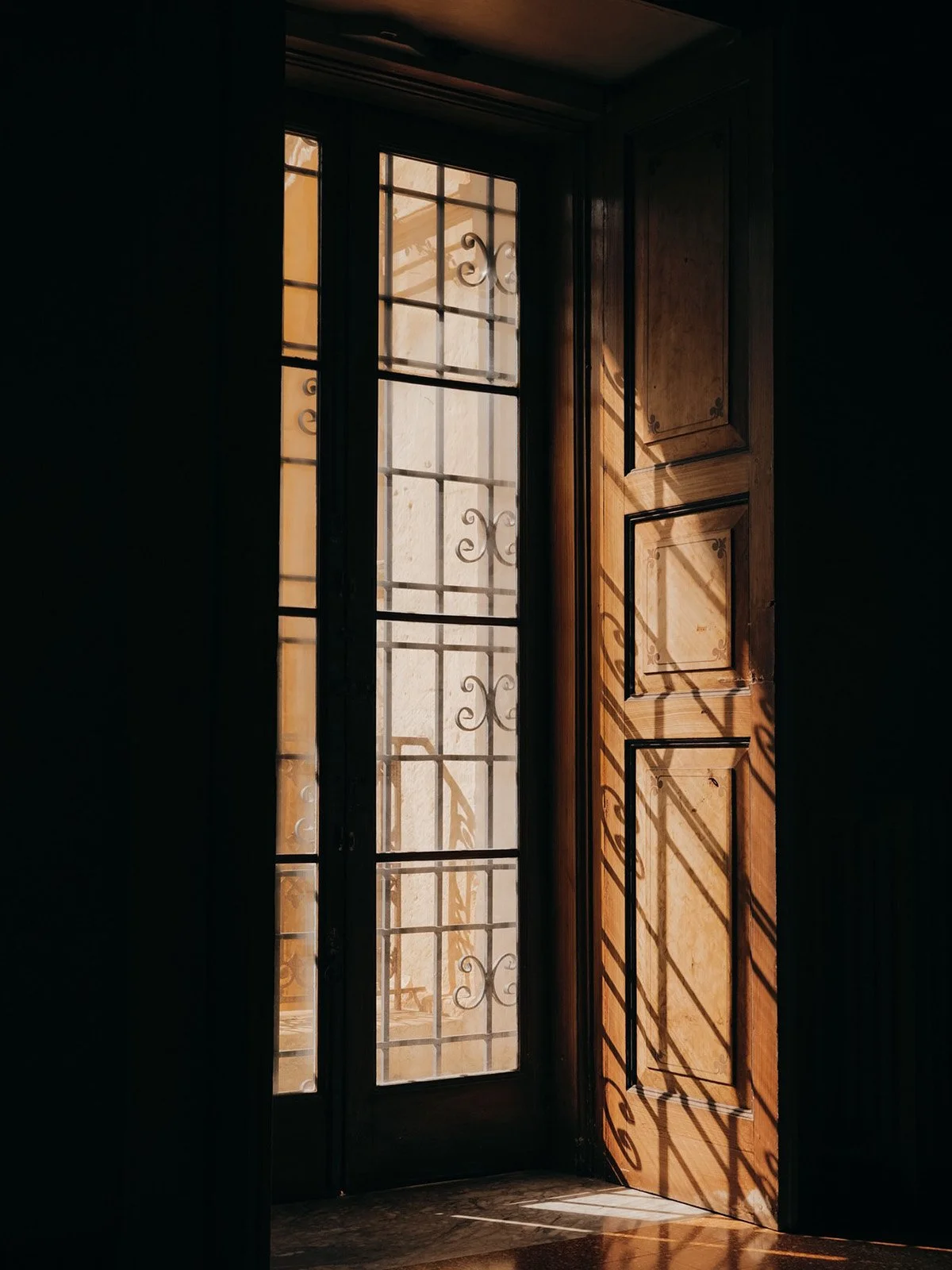
Decorative iron shadows
Image © — @tmrw.tours
The result is not minimalism in the cold sense. It is an architecture of pause. The emptiness is deliberate, giving the historic rooms a new clarity while creating space for contemporary art to register with unusual force. A lamp by Luigi Presicce, stools by Nicolas Party, a sculpture by Roberto Cuoghi and lithography by Carla Accardi sit within rooms that still carry traces of the 19th century. The dialogue is not forced. The old and the new do not collapse into one another; they hold their distance, and that distance is what gives the interiors their charge
Above, the frescoed ceilings remain the emotional centre of the palazzo. Their cracks have not been disguised. They are part of the atmosphere, evidence of time rather than damage to be corrected. Against the plain walls and sparse furnishings, these ceilings become almost cinematic, drawing the eye upward and reminding the guest that this is not a designed stage set, but a building with a long private memory
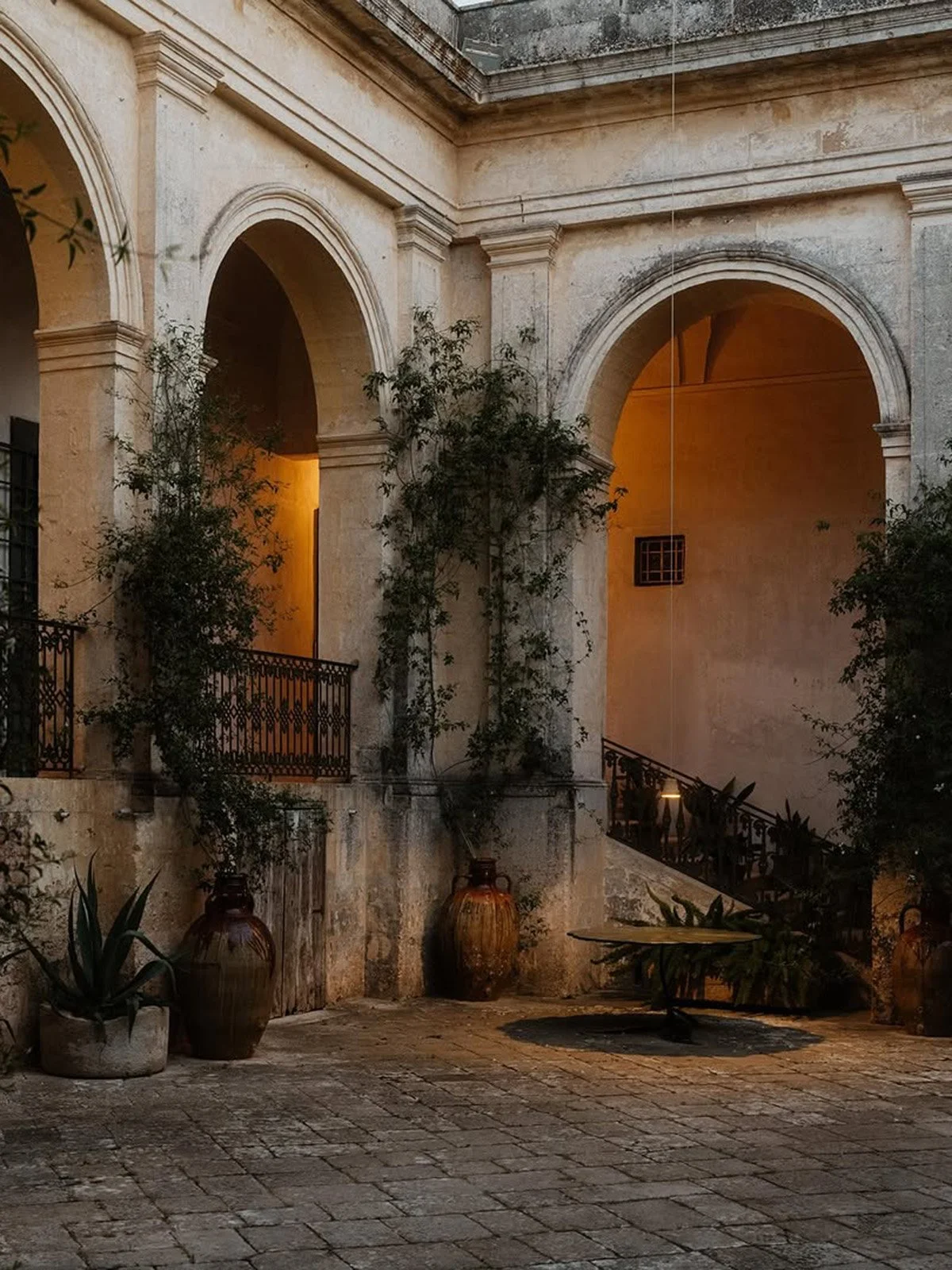
Palazzo Daniele stone arches
Image © — @tmrw.tours
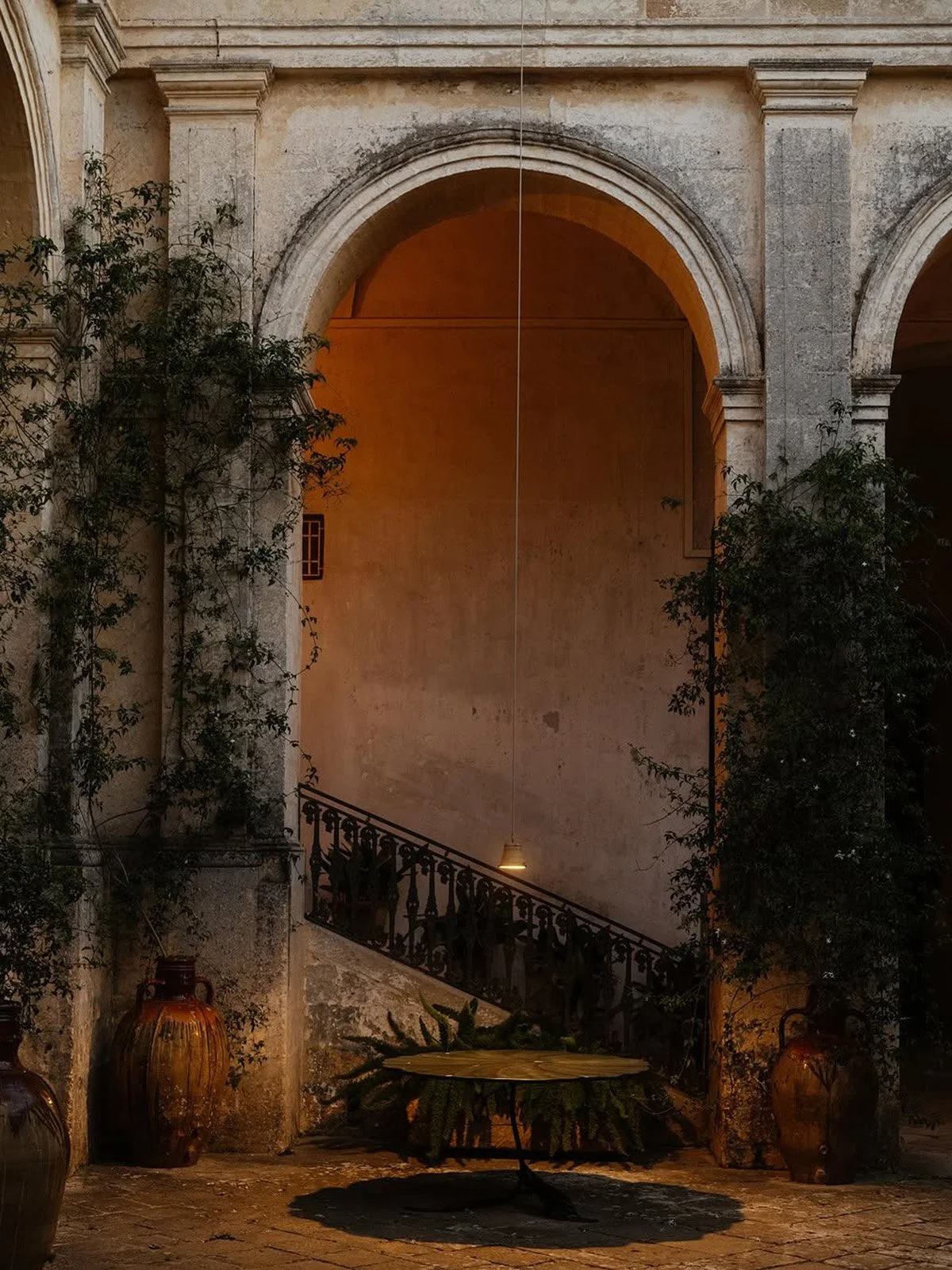
Contrasting burnt light and green climbing plants
Image © — @tmrw.tours
In 2018, Petrucci handed the keys to his friend Gabriele Salini, the Italian entrepreneur and art collector behind G Rough in Rome and the GS Collection. Salini did not approach Palazzo Daniele as a conventional hotel project. Its origin was more personal: two friends opening a house to artists, designers, photographers, musicians and curators. Hospitality came later, almost as a formalisation of something that had already begun
Palazzo Daniele opened to guests in April 2019, but it resists the language of the “art hotel.” Its strength lies in the fact that the art does not feel applied as a theme. It is embedded in the life of the building, in the friendships that shaped it, and in the cultural work already taking place in the village through Capo D’Arte. Salini’s ambition was not to create a hotel decorated with art, but a place where art, architecture and hospitality could remain in active conversation
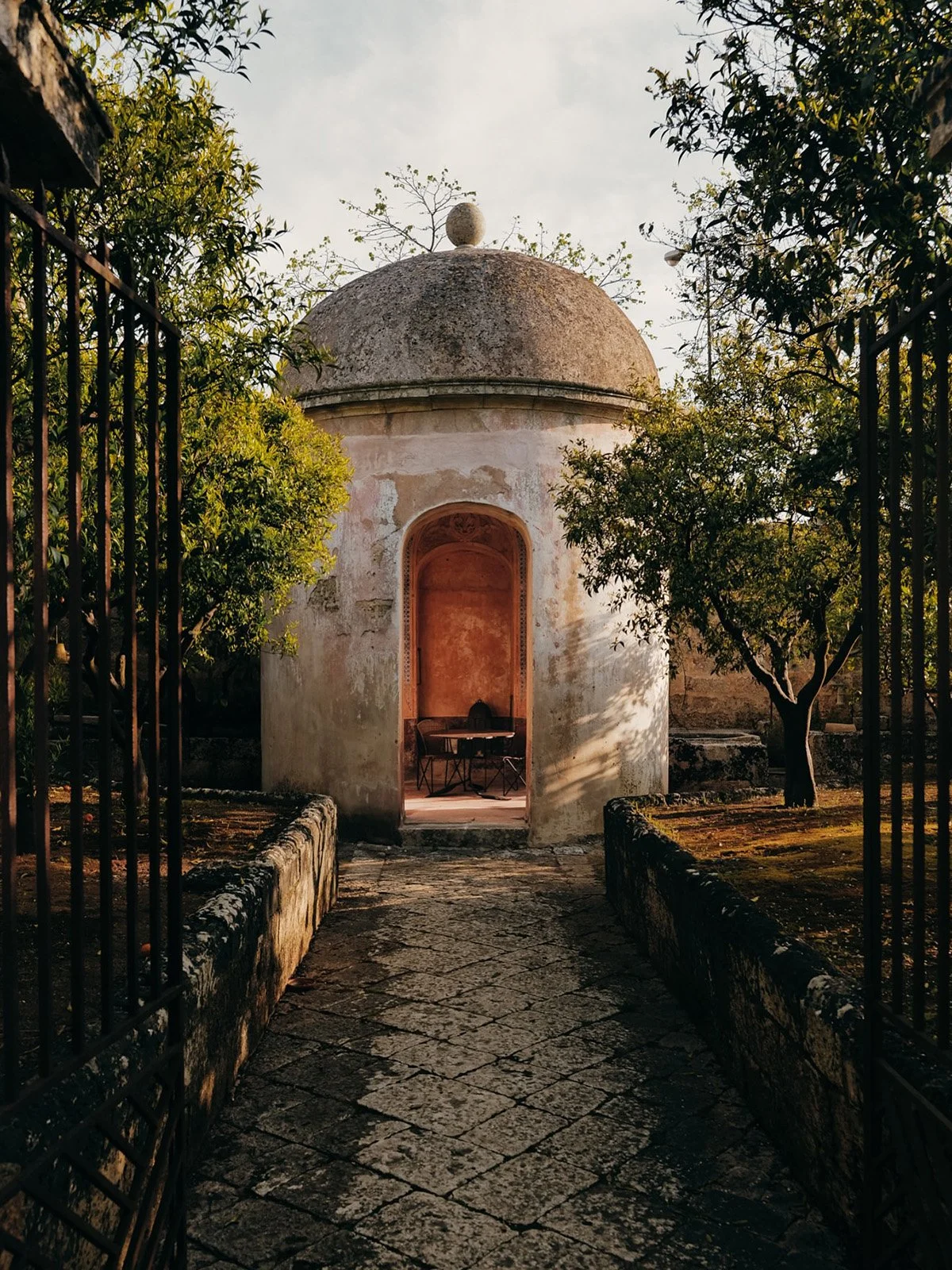
Kaffeehaus at Palazzo Daniele
Image © — @palazzo.daniele
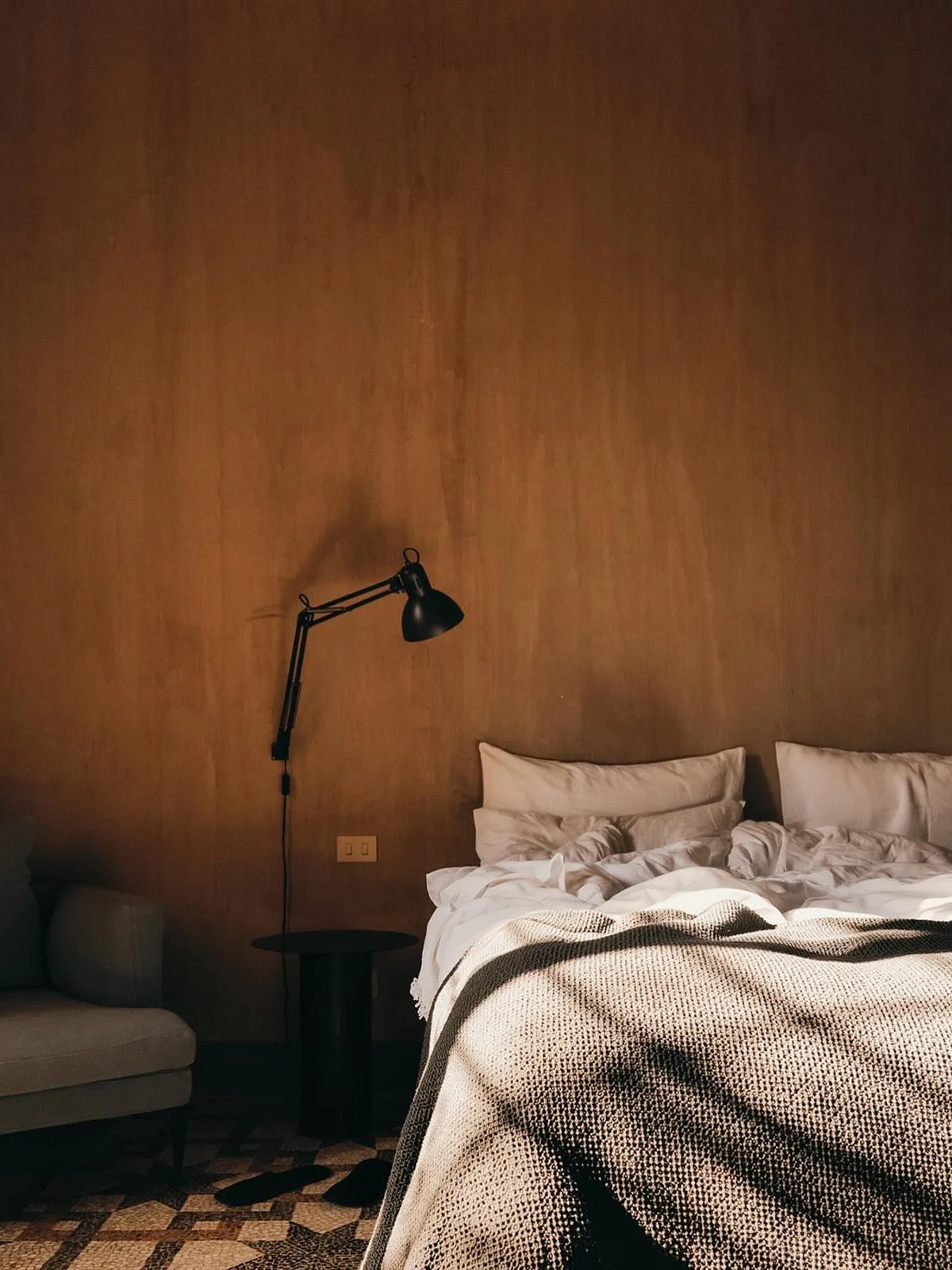
Bedroom textures
Image © — @hannes.klaeger @_frncsca_
The suites continue that balance. Large in volume but spare in treatment, they retain the palazzo’s aristocratic proportions while adopting an almost monastic calm. Views fall toward the courtyard, the pool or the surrounding village, grounding the grandeur of the building in the slower rhythm of southern Puglia
Palazzo Daniele’s power comes from its refusal to overexplain itself. It does not perform history through excess, nor does it erase history in pursuit of modernity. Instead, it reveals what was already there and allows contemporary art to enter without spectacle. In Gagliano del Capo, at the southernmost tip of Italy, the palazzo has become something rare: a house, a hotel, a private collection and a cultural threshold, held together by restraint
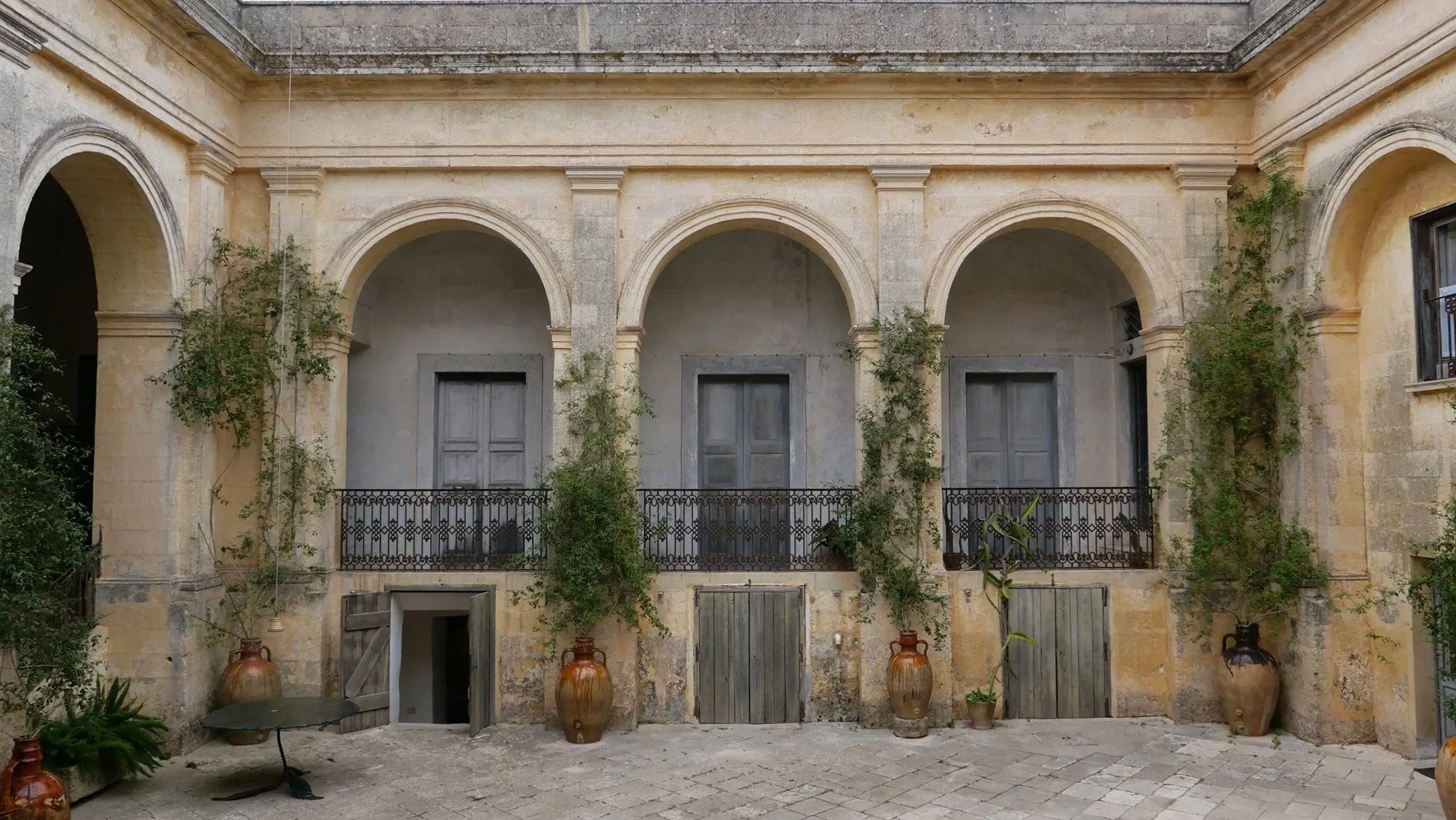
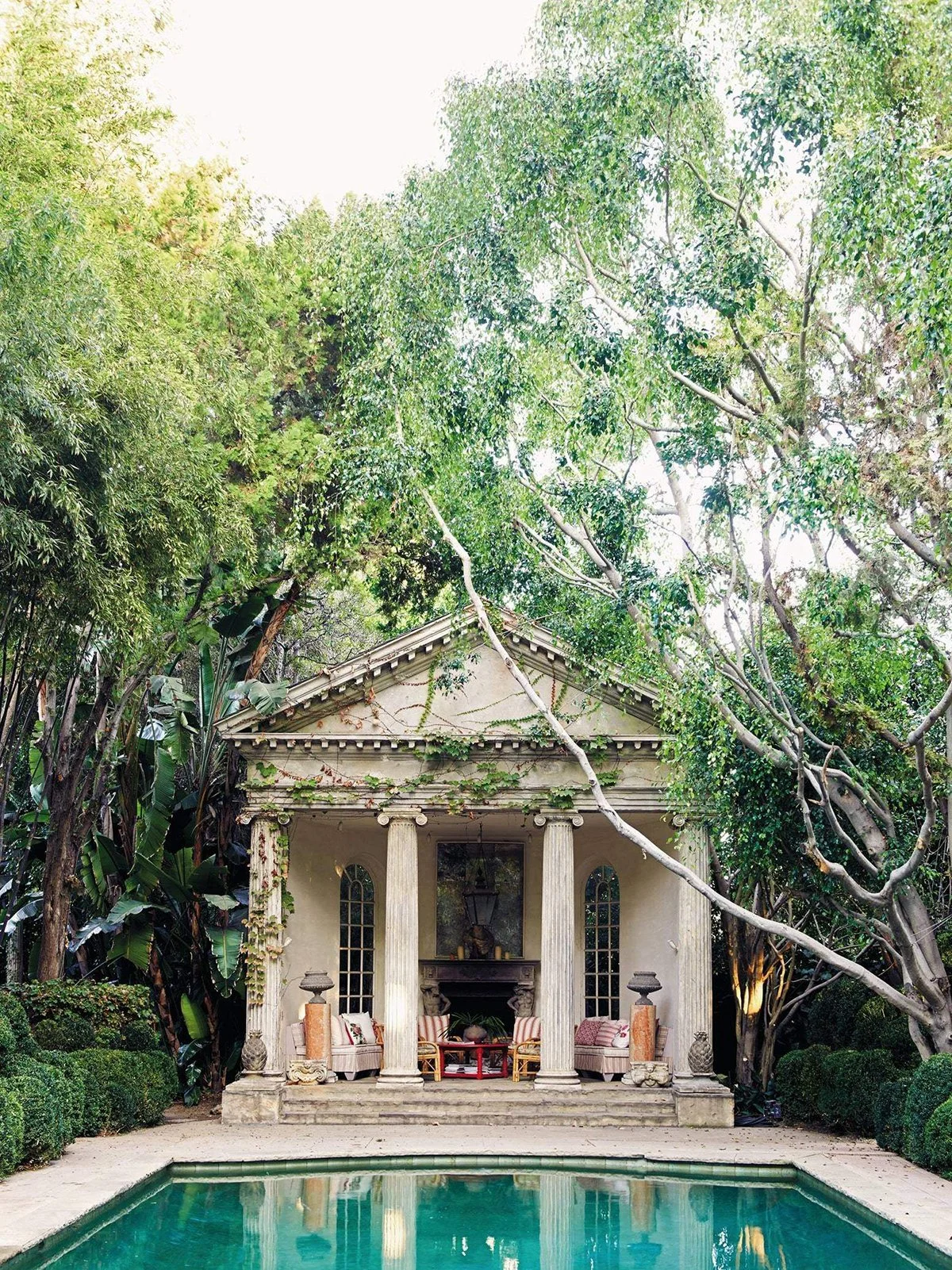
A Florentine Illusion in Holmby Hills
—
Antiques dealer Richard Shapiro transformed a 1926 Los Angeles manor into an imagined Italian villa shaped by aged surfaces, collected histories and the exacting proportions of Palladio
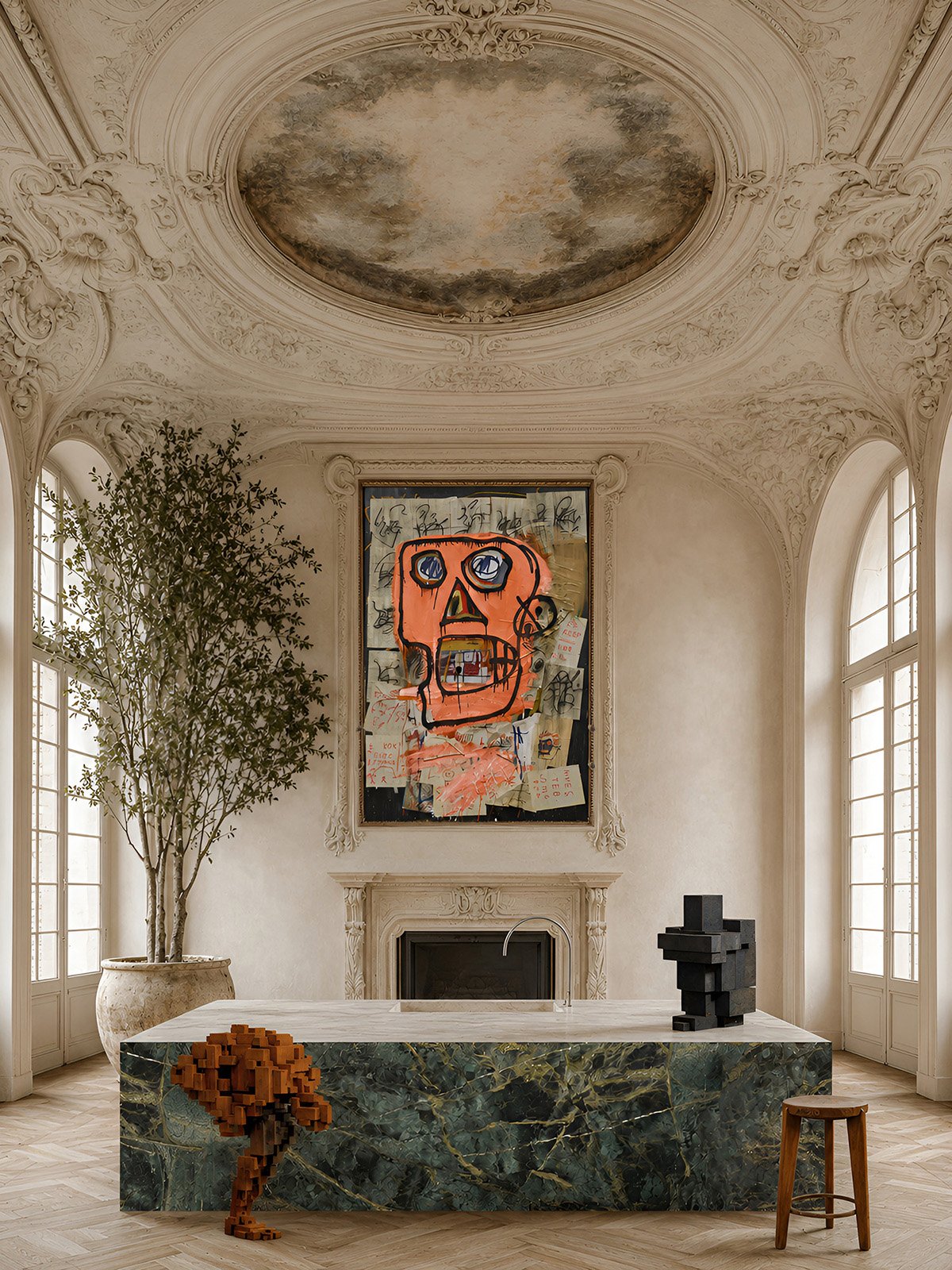
When the Room Becomes Part of the Collection
—
Works by Jean-Michel Basquiat, Antony Gormley, Thomas Houseago, Christopher Wool, Cy Twombly, Kazuo Shiraga and Mark Manders, together with Hellenistic and Roman antiquities, are contextually visualised by interior and furniture designer Brent Lee within interiors where chronology gives way to scale, material and spatial tension