

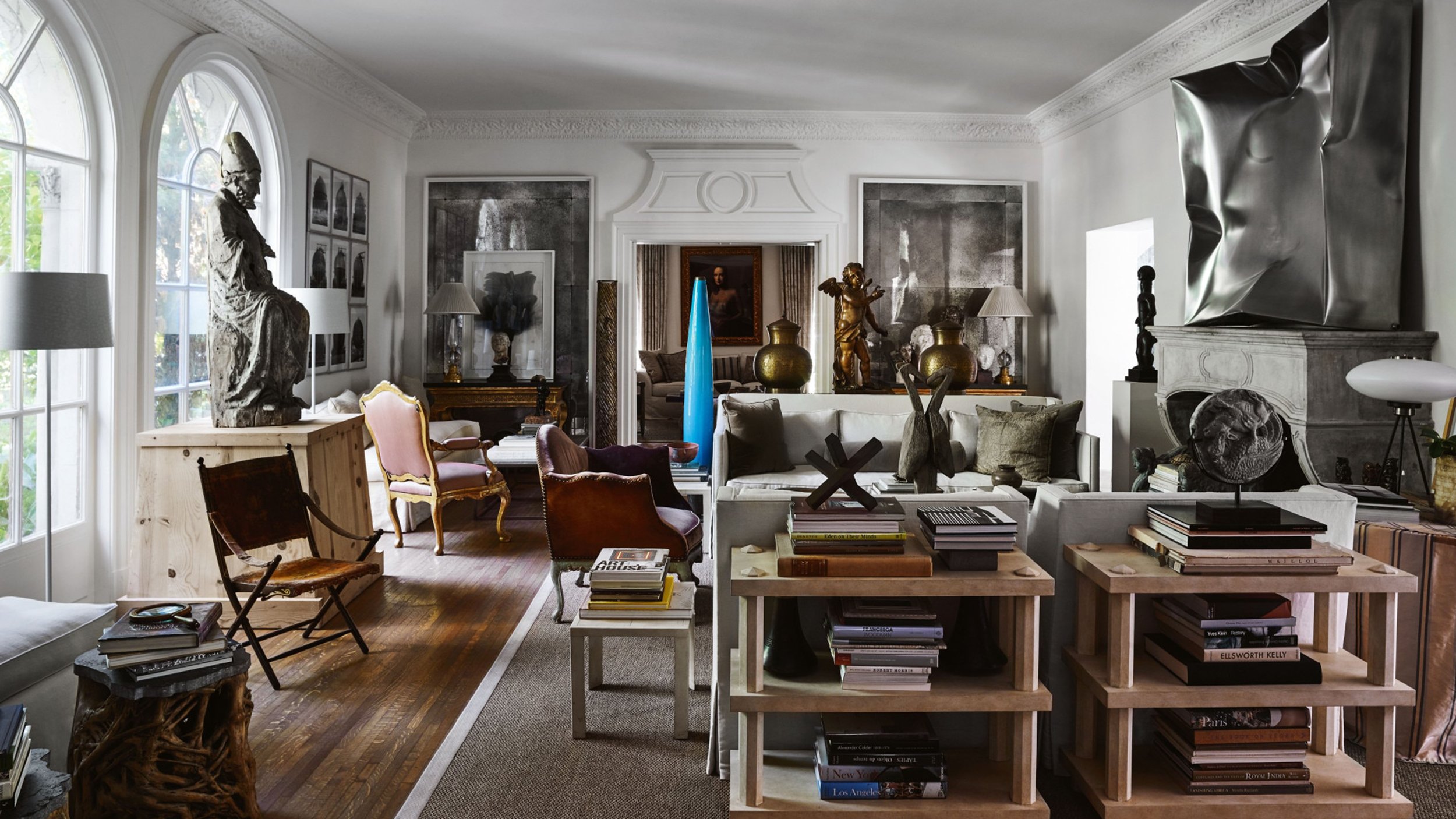
Antiques dealer Richard Shapiro’s living area
Image © — @smartanson
PRIVATE RESIDENCE
A Florentine Illusion in Holmby Hills
Antiques dealer Richard Shapiro transformed a 1926 Los Angeles manor into an imagined Italian villa shaped by aged surfaces, collected histories and the exacting proportions of Palladio
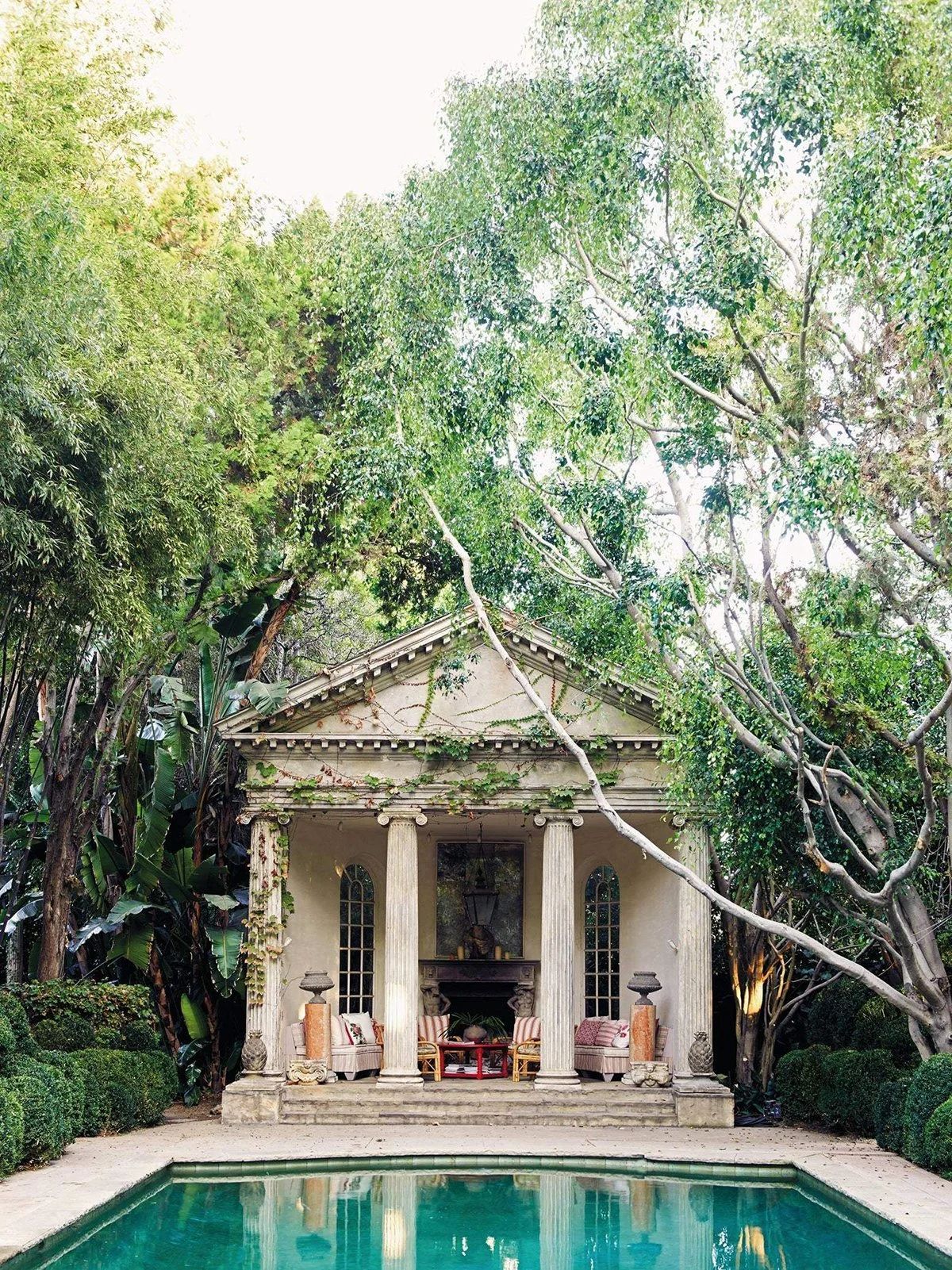
Poolhouse inspired by a 17th-century Florentine villa
Image © — @jasonschmidtstudio
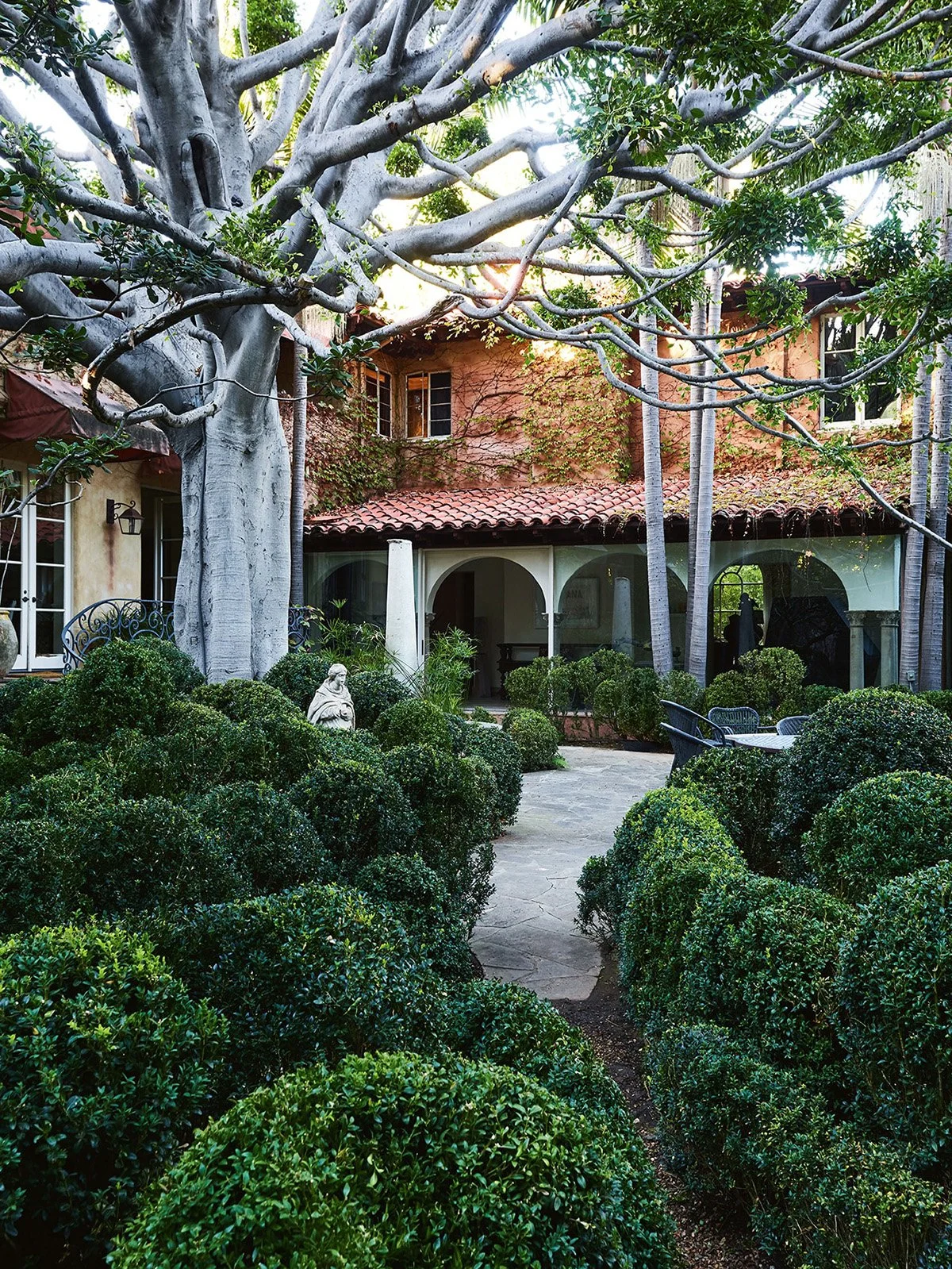
Manicured boxwood hedges and a pathway leading to Richard Shapiro’s home
Image © — @smartanson
Richard Shapiro’s house begins at the gate. Beyond it, Los Angeles recedes behind dense planting, weathered walls and stone that appears to have endured centuries of rain. The deception is deliberate. When the antiques dealer and founder of Richard Shapiro Studiolo acquired the Holmby Hills property in the mid-1980s, his ambition was to create the atmosphere of a 17th-century Florentine villa with enough conviction that even he might forget it was built in California
The existing house, a two-storey Hispano-Moorish manor completed in 1926, provided approximately 720 square metres of generous rooms and what Shapiro considered strong underlying proportions. Its transformation depended less upon reconstruction than the manipulation of time. Walls were stained and mottled instead of uniformly painted. Stone was manually eroded, architectural details were softened and the gardens were allowed to become dense in some areas while remaining rigorously controlled in others
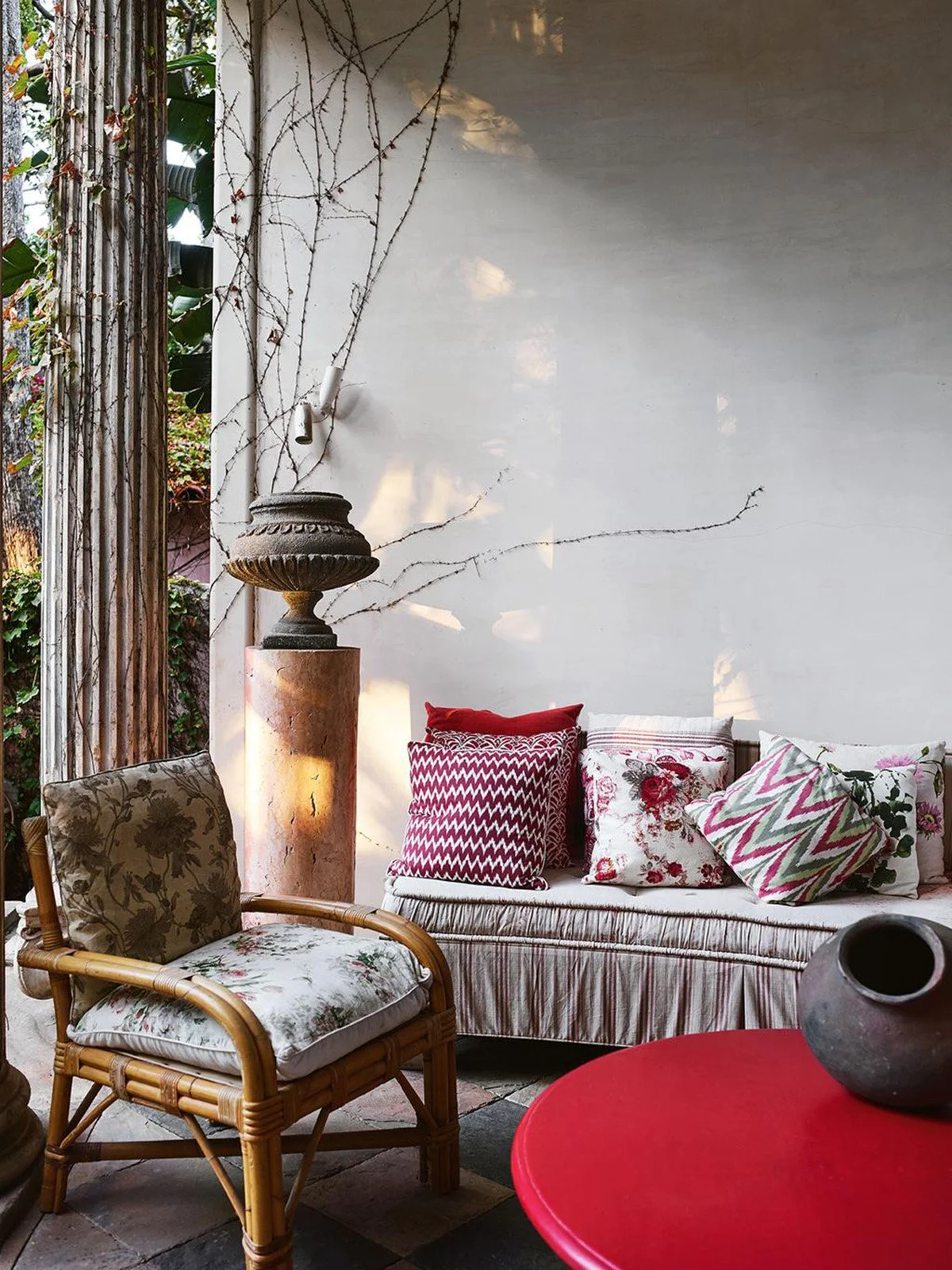
Moroccan styling in the 17th-century Florenian inspired poolhouse
Image © — @smartanson
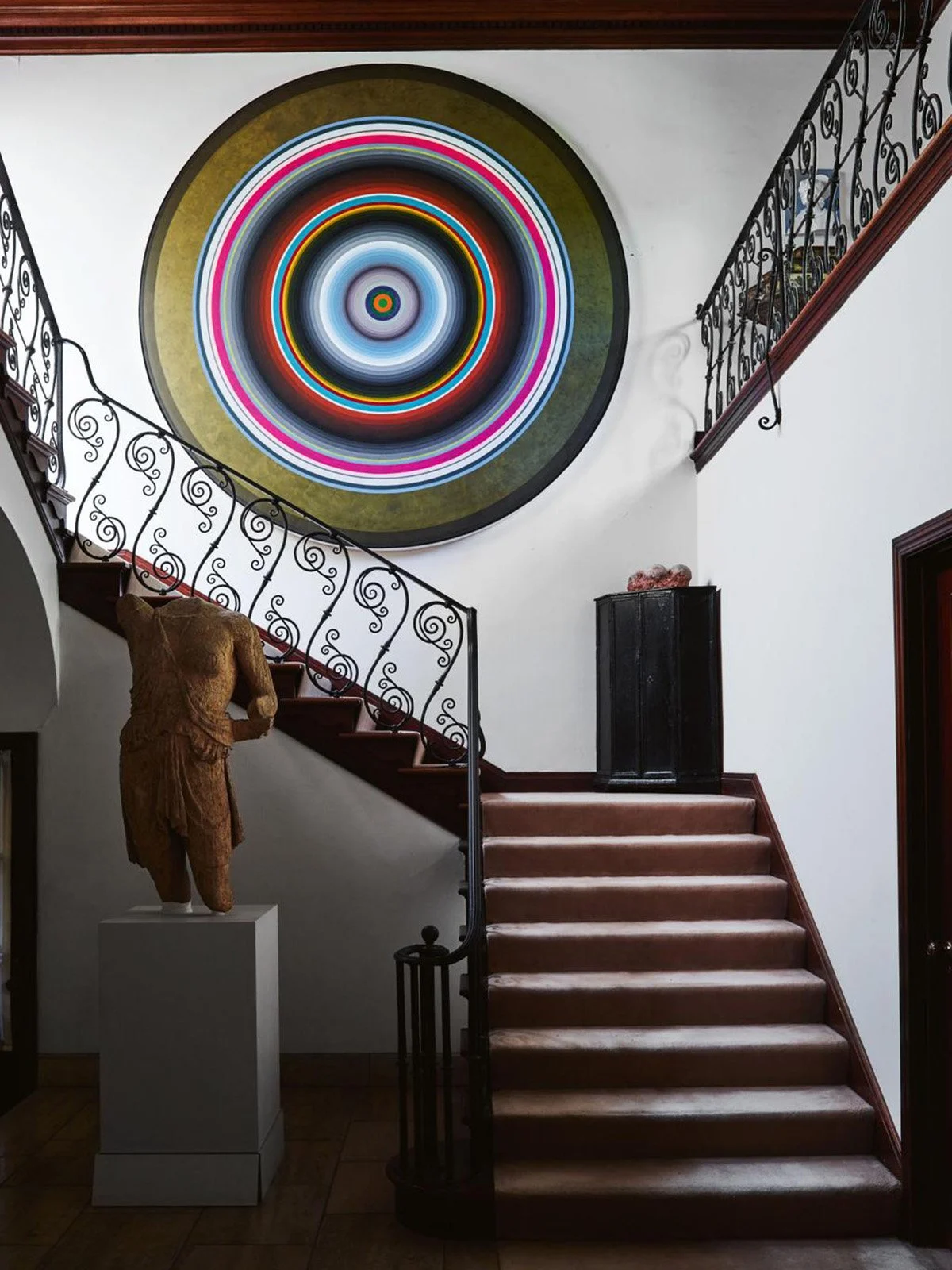
A Gary Lang painting positioned above a 1st-century AD Roman torso sculpture
Image © — @smartanson
This cultivated irregularity gives the house its authority. Nothing is arranged to suggest a single historical moment. Ancient objects, Renaissance sculpture, classical fragments, contemporary art and 20th-century design occupy the same rooms, joined by Shapiro’s confidence in their individual quality. A medieval Italian bishop might appear beside an abstract modern sculpture; museum-level furniture shares space with objects recovered from markets, garages and unremarkable shops. Even a collection of purported dinosaur eggs enters the composition with the same curiosity as a carved antique chest
For Shapiro, who has spent more than two decades dealing in furniture and art from antiquity through the 20th century, collecting is inseparable from the suspense of discovery. The house consequently behaves as neither showroom nor period interior. Objects move between rooms, new acquisitions displace old arrangements and unsold pieces from the gallery occasionally find a permanent position at home. Their difference in origin is what gives the interior its depth
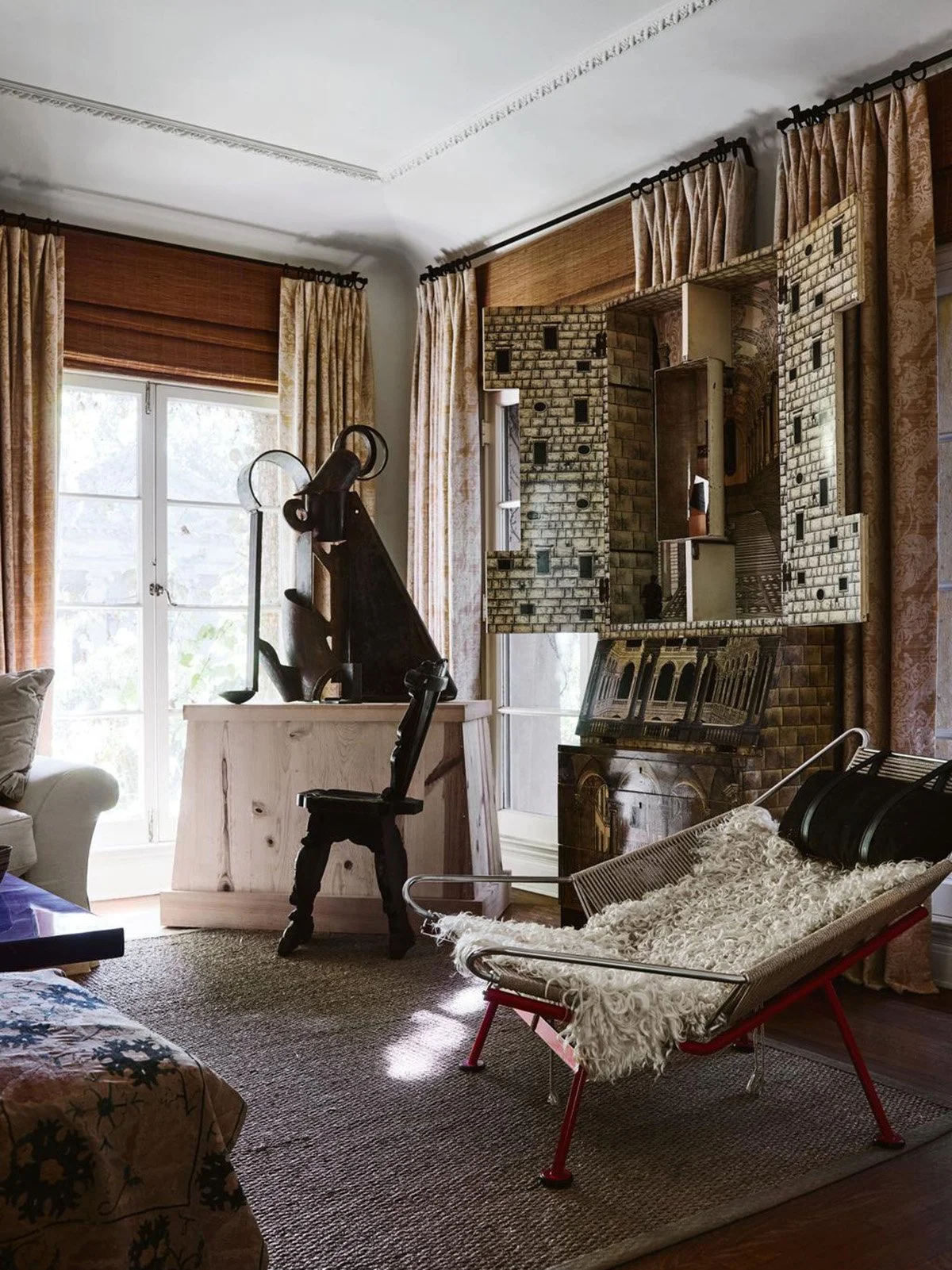
Hans Wegner PP225 Flag Halyard chair features a solid stainless steel frame wrapped in jute line and topped with a sheepskin rug
Image © — @smartanson
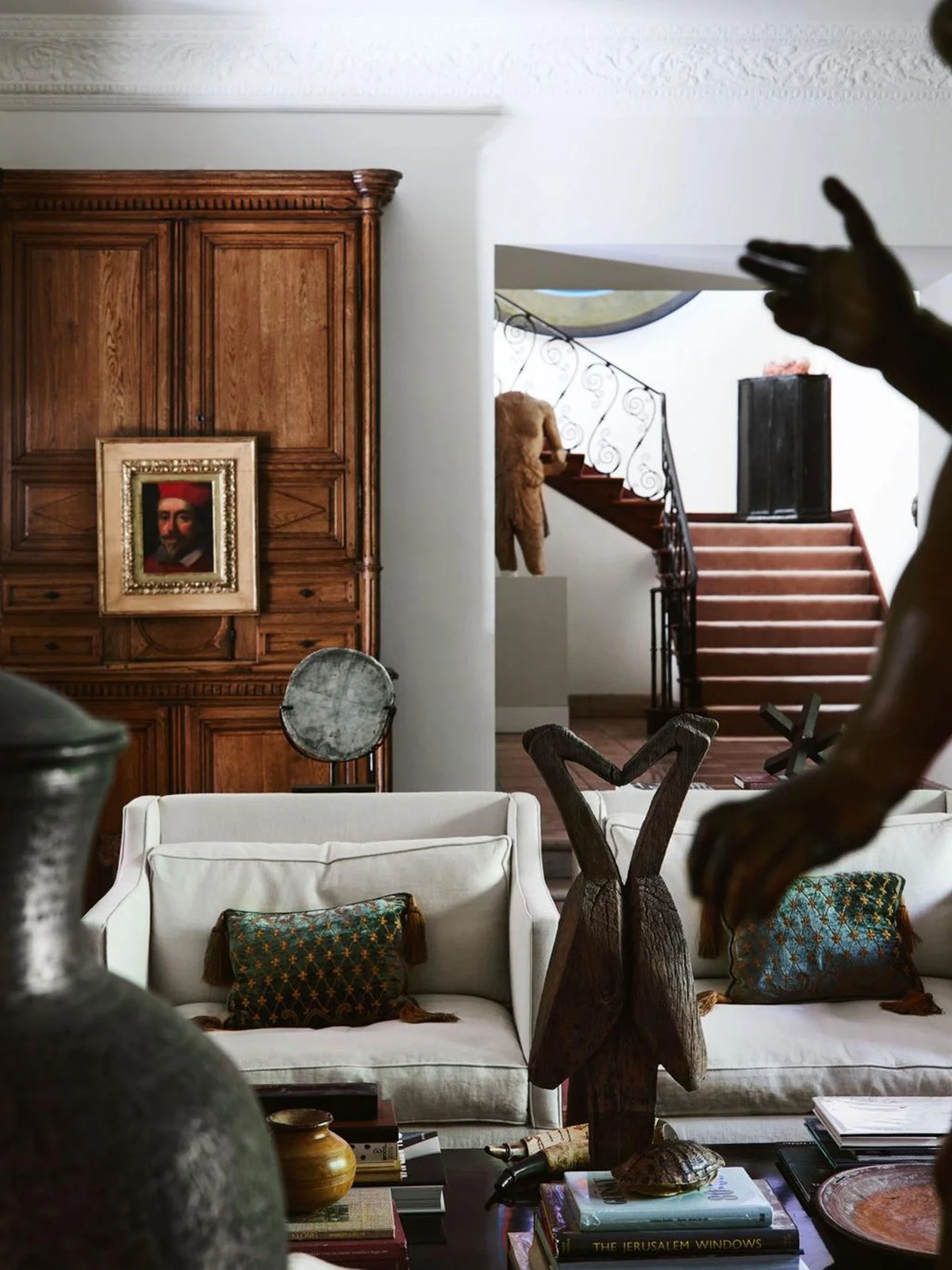
A 19th-century version of an earlier Renaissance piece, found in Antwerp, is flanked by white sofas and featured prominently in the room
Image © — @smartanson
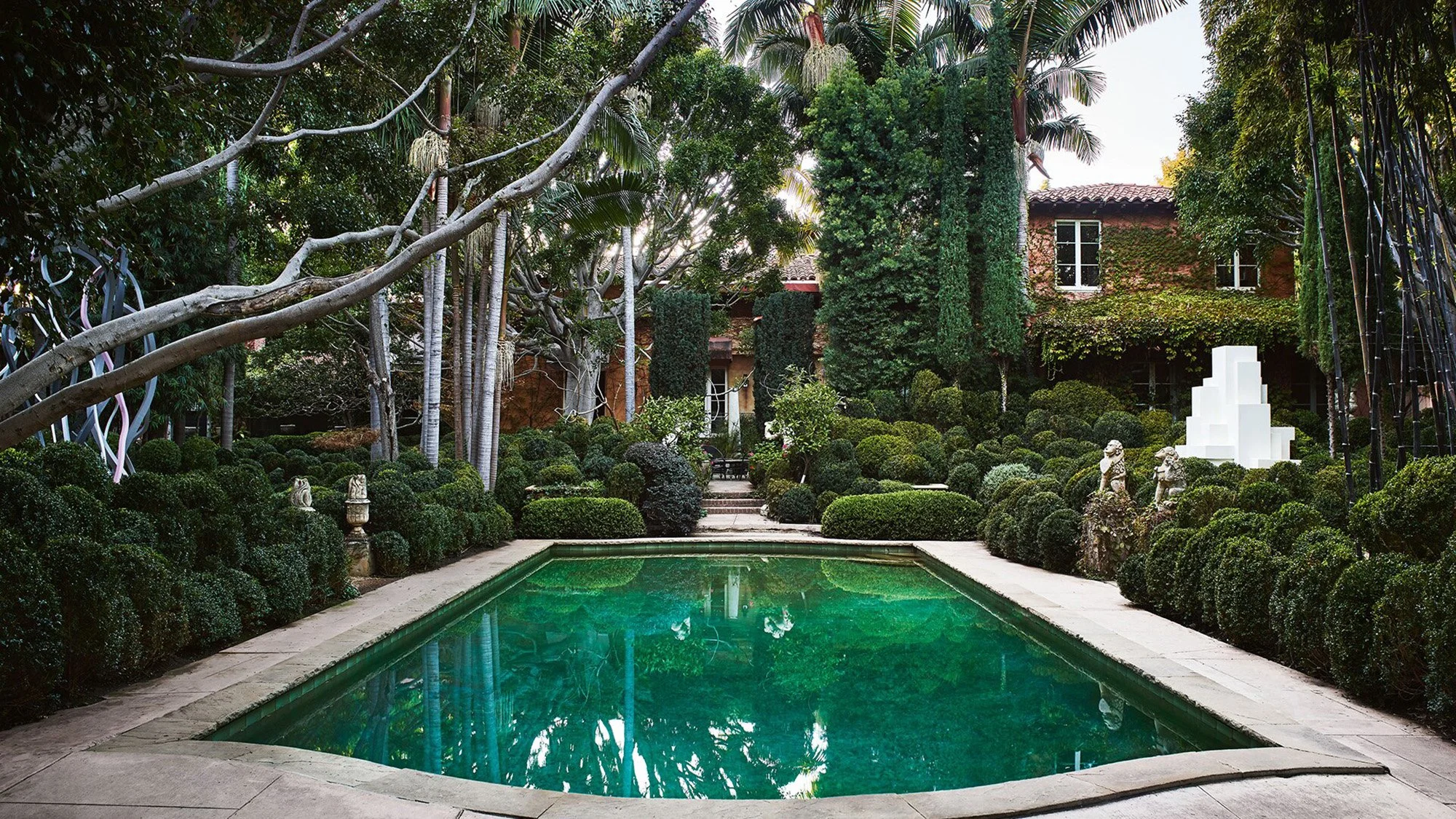
The garden carries the illusion further. Sculpted box hedges form an immaculate green structure beneath towering bamboo and the exposed, web-like branches of a Ficus retusa. Shapiro shapes the topiary himself, clipping it only once each year. Its disciplined geometry provides the setting for the estate’s most ambitious architectural intervention: a Greco-Roman pavilion erected in 2001
Shapiro based the structure on Andrea Palladio’s 16th-century Villa Chiericati at Vancimuglio in the Veneto, reproducing the proportions of its temple-front portico at full scale. Working from Palladio’s drawings, he prepared the design for his engineer and contractors, following the mathematical relationship between the diameter and height of each column, the pediment and the building’s complete width. Redwood columns were finished and distressed to resemble eroded stone, giving the pavilion the appearance of an excavated ruin
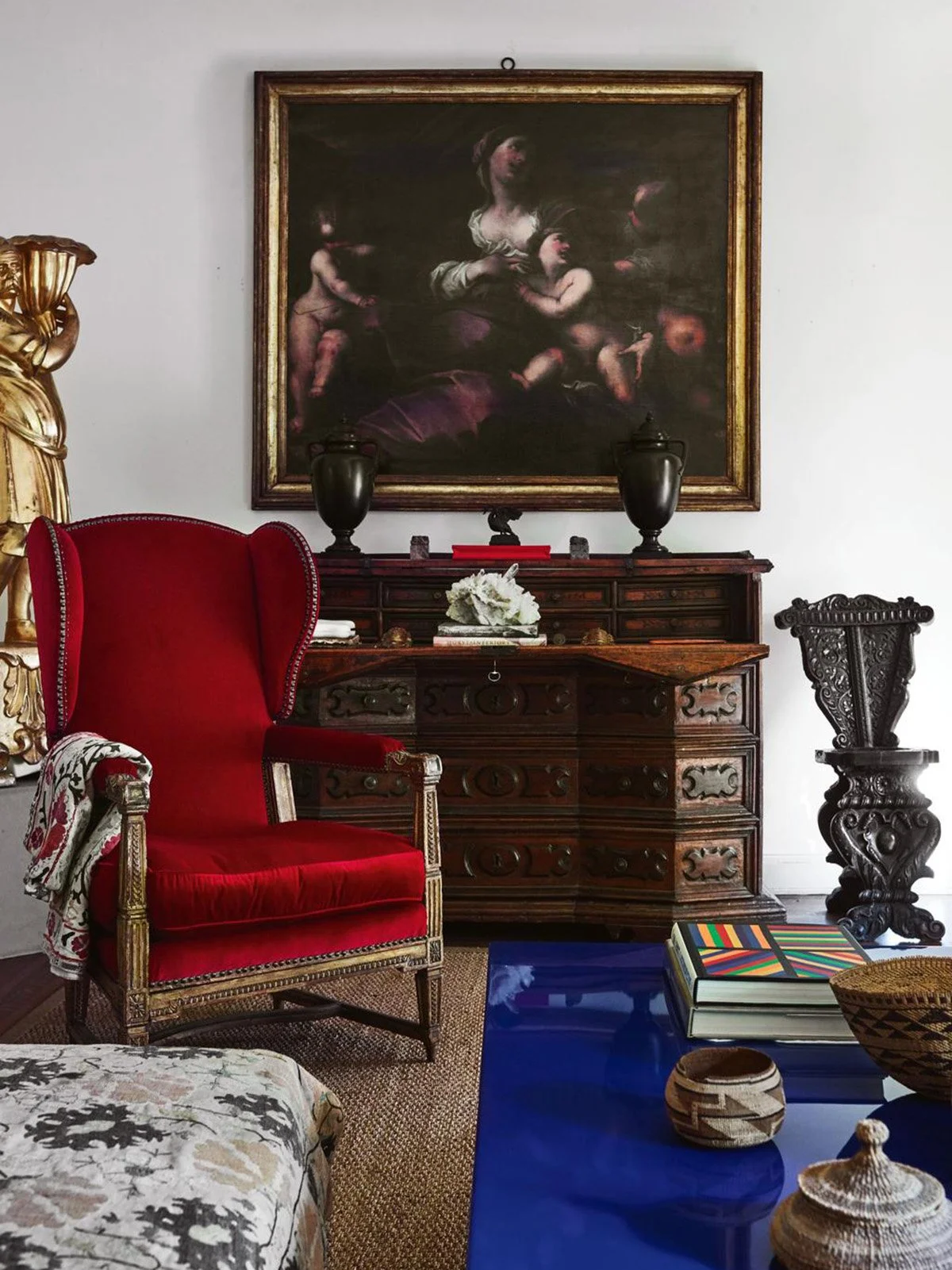
Artwork is an Italian Baroque Old Master painting, likely from the 17th century, with stylistic connections to artists like Giulio Cesare Procaccini or Bartolomeo Schedoni
Image © — @smartanson
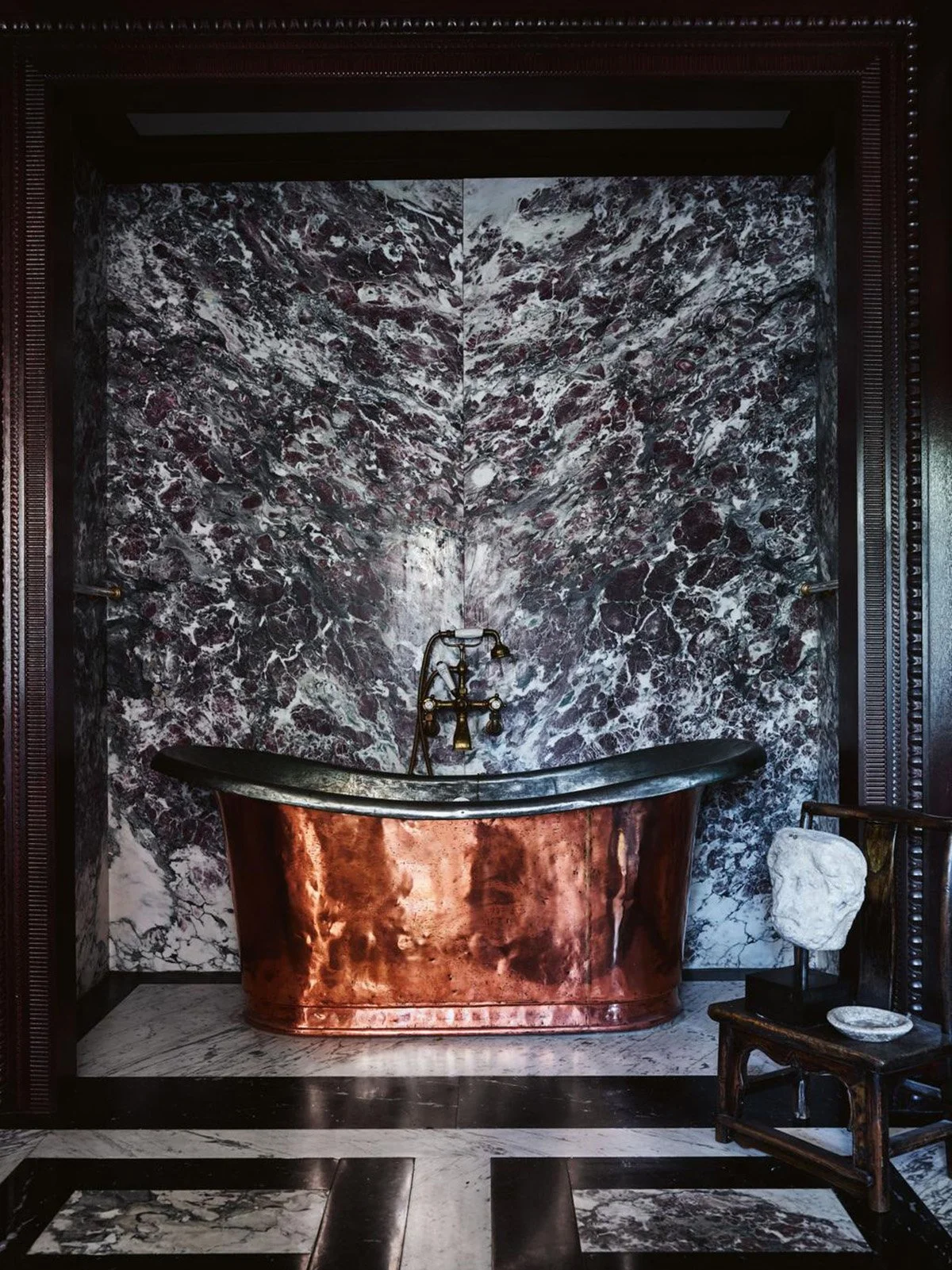
Free-standing copper bathtub with a sculptural Dutch school of design chairs paired with a classical white bust
Image © — @smartanson
At its centre is a 19th-century fireplace modelled on a Renaissance original, discovered by Shapiro in a garage in Antwerp. The pavilion was constructed around it, with sofas positioned on either side for winter evenings overlooking the garden
The achievement of the Holmby Hills house lies in the completeness of its imagined history. Architecture, garden and collection have been assembled with the knowledge of a dealer and the instinct of an artist, creating a Florentine world that may be invented, but never feels insincere
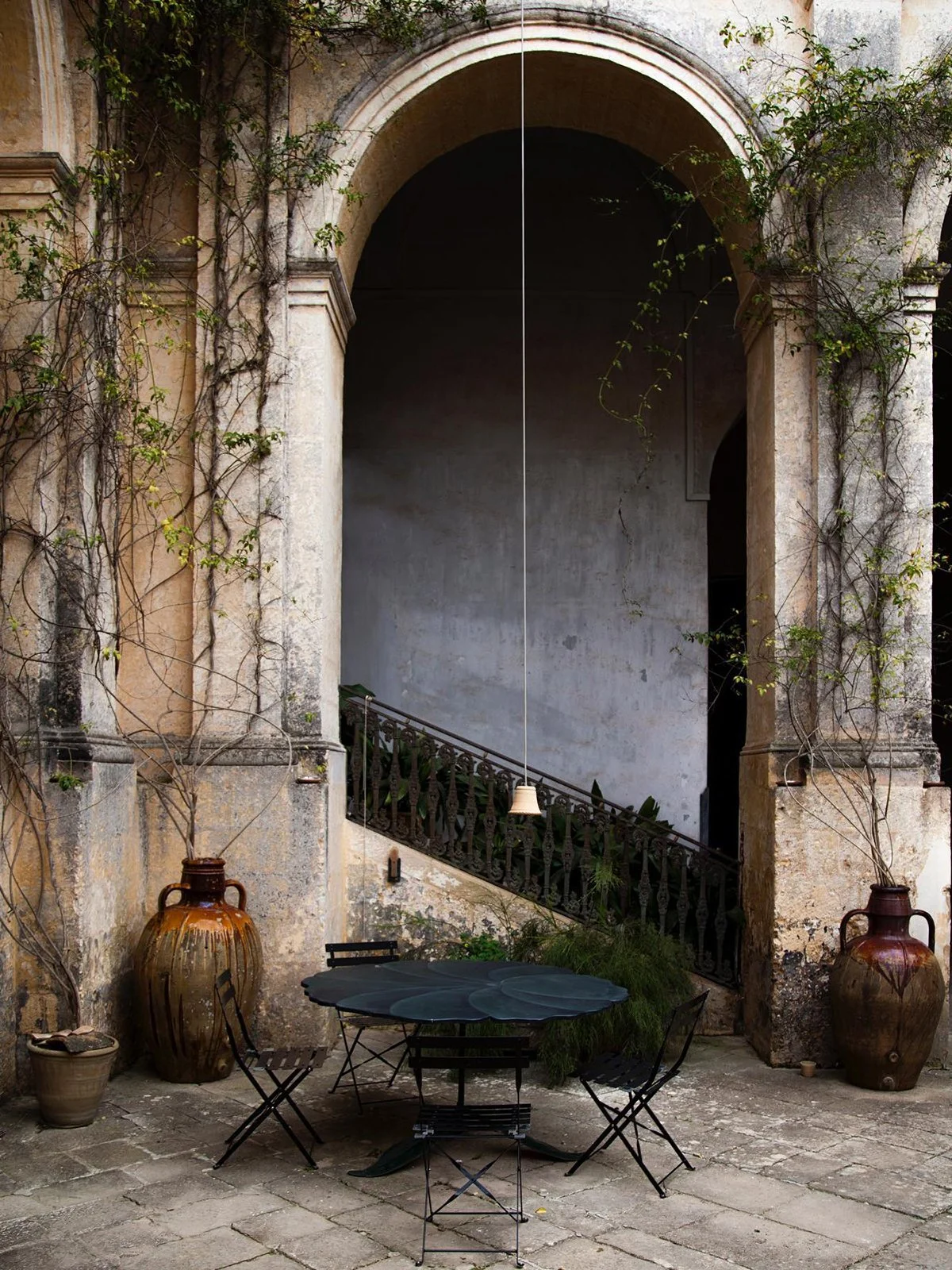
Inside the Puglian Palazzo Where 19th-Century Grandeur Meets Contemporary Art
—
At Palazzo Daniele, a former aristocratic residence in Salento has been stripped back with radical restraint, revealing frescoed ceilings, mosaic floors and a new life shaped by artists, collectors and slow Italian hospitality
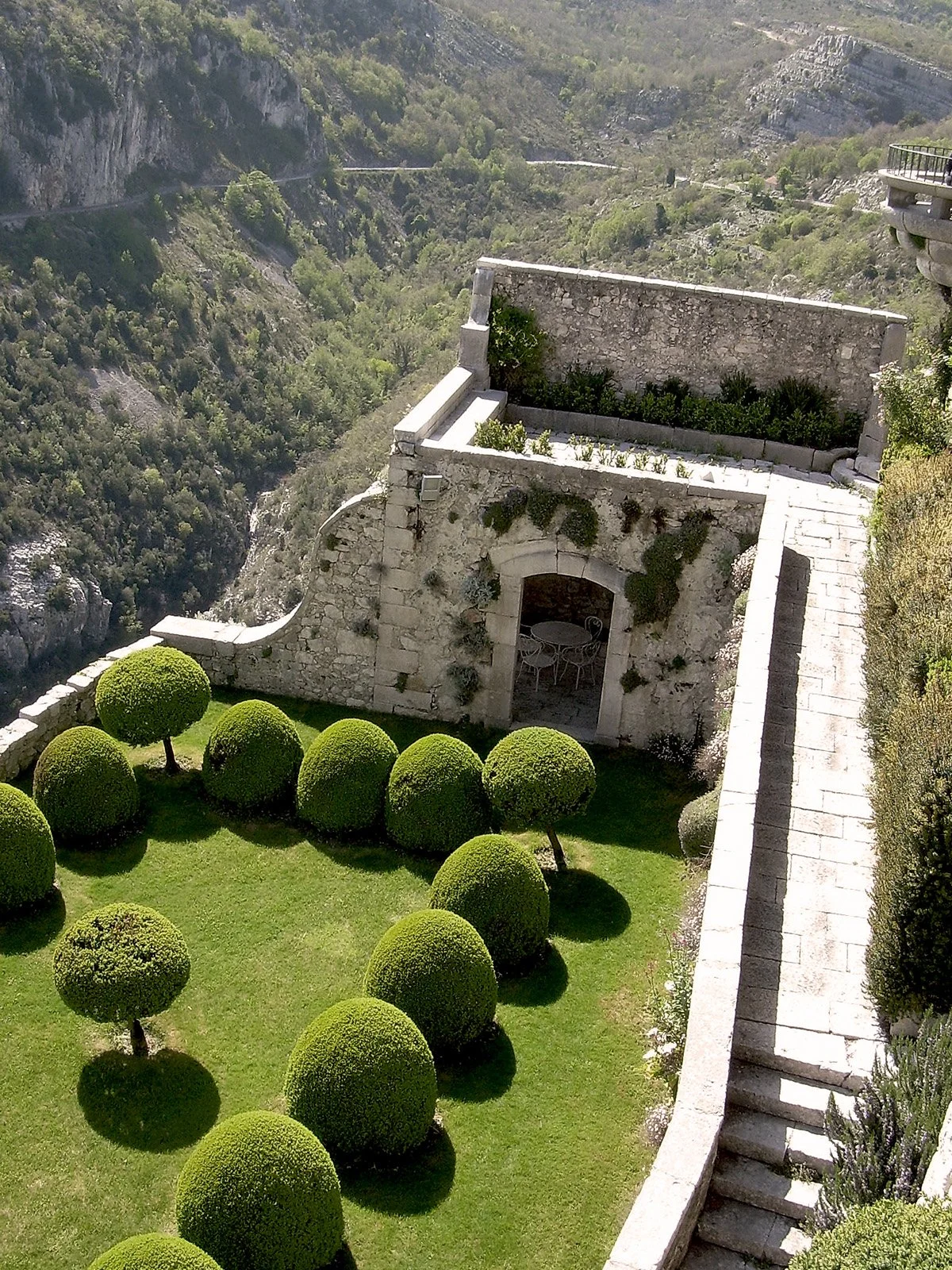
Château de Gourdon Has Watched Over the Riviera for a Thousand Years
—
Suspended 758 metres above the Loup Valley, this ancient Provençal fortress finds its most extraordinary architecture at the meeting point of stone and sky