

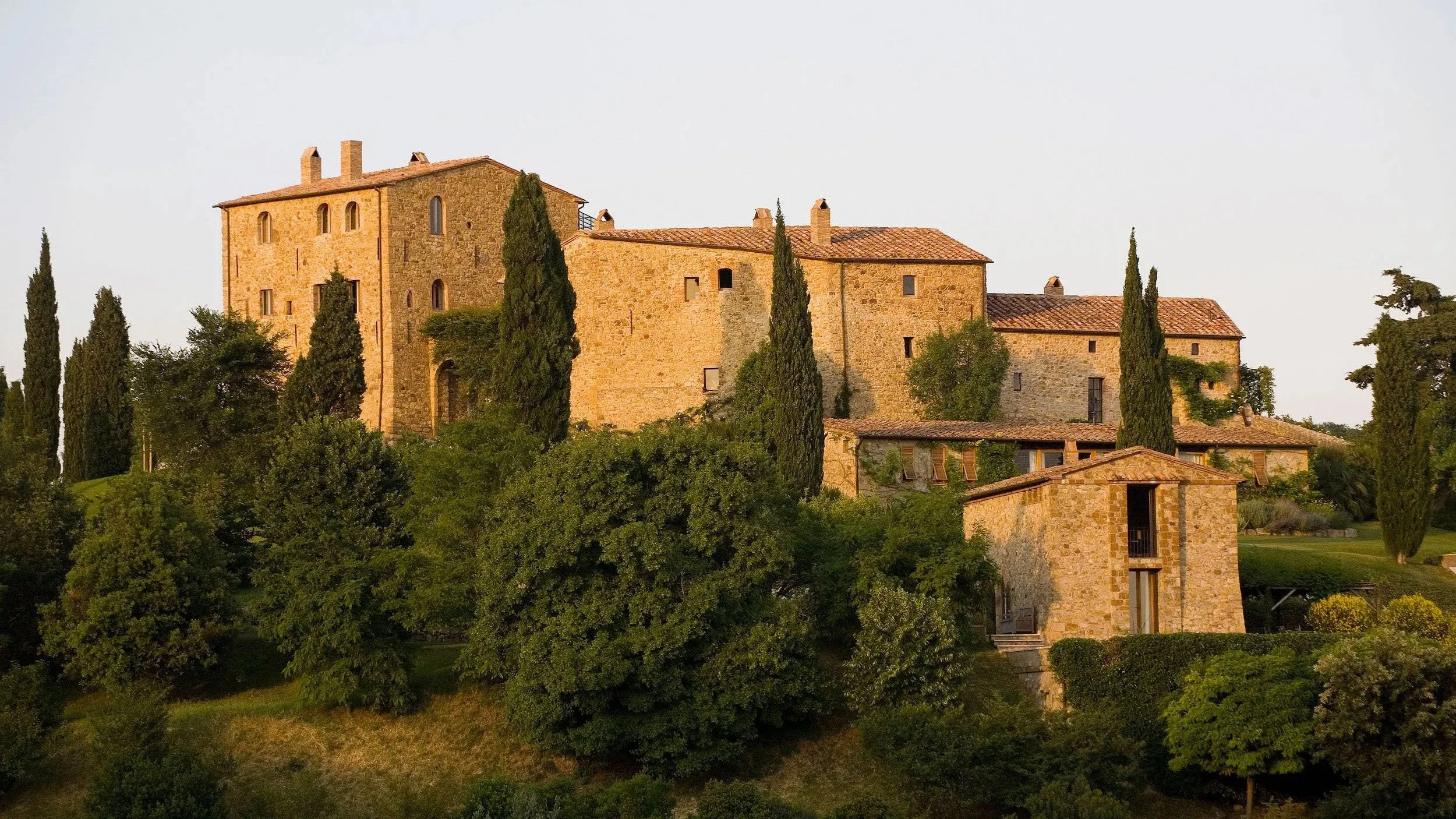
Warm tones across Castello di Vicarello
Image © — @castello_di_vicarello
HOTEL
Castello di Vicarello Preserves Eight Centuries of Tuscan Life
In the hills between Rome and Florence, a 12th-century castle has been transformed into a deeply personal hotel shaped by family, landscape and the rhythms of rural Tuscany
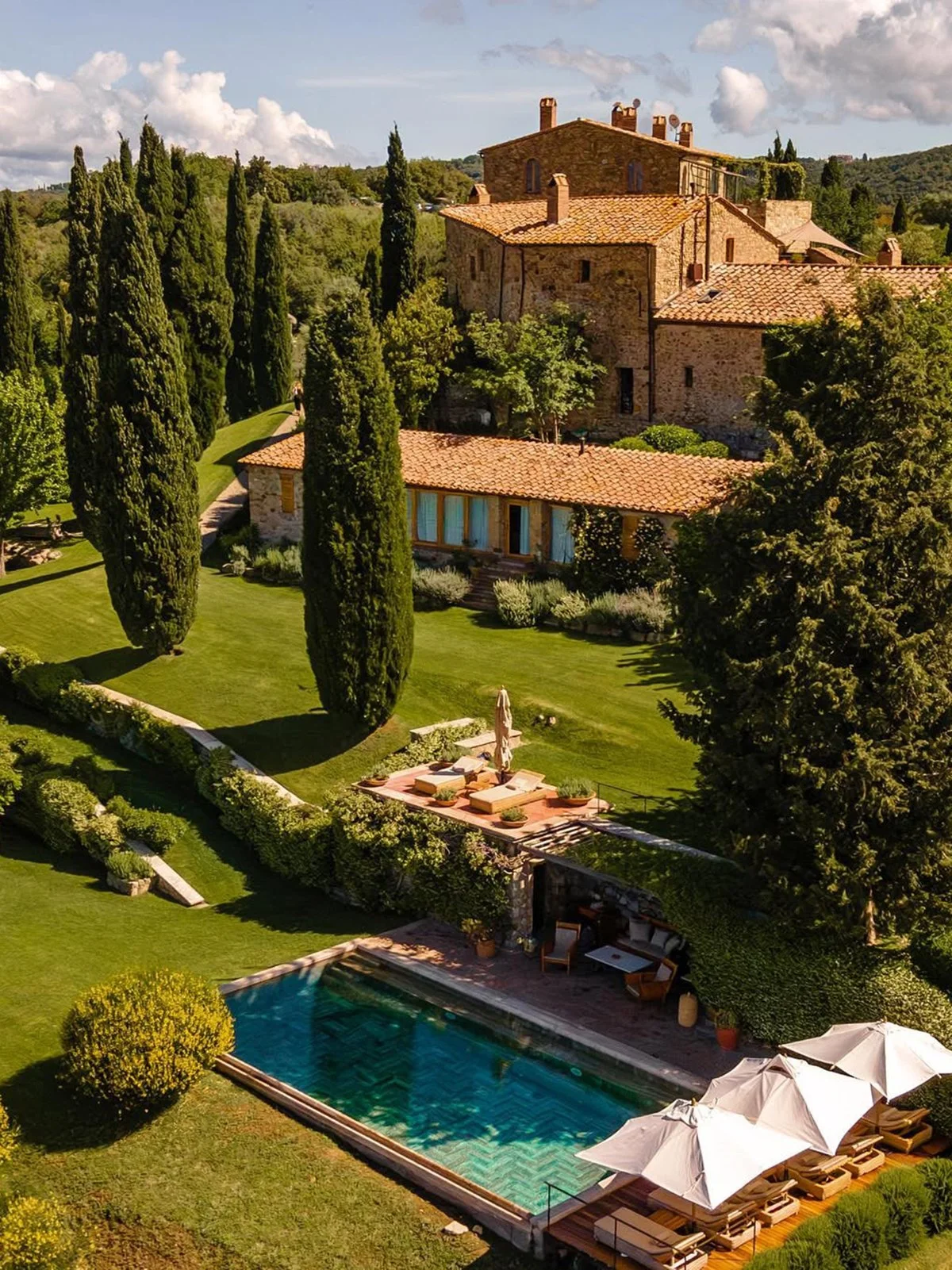
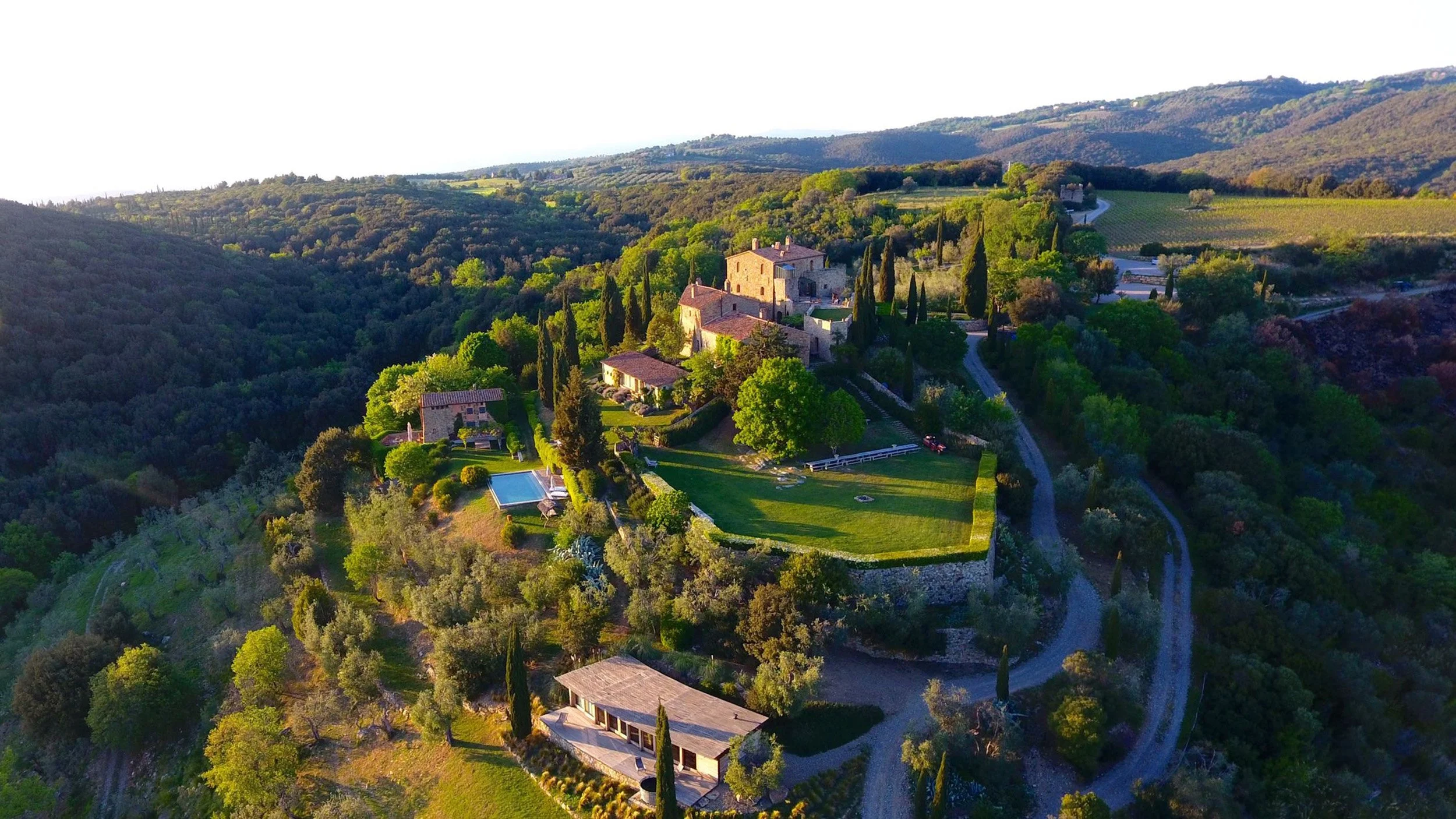
Aerial view at Castello di Vicarello
Image © — @victorsfitz
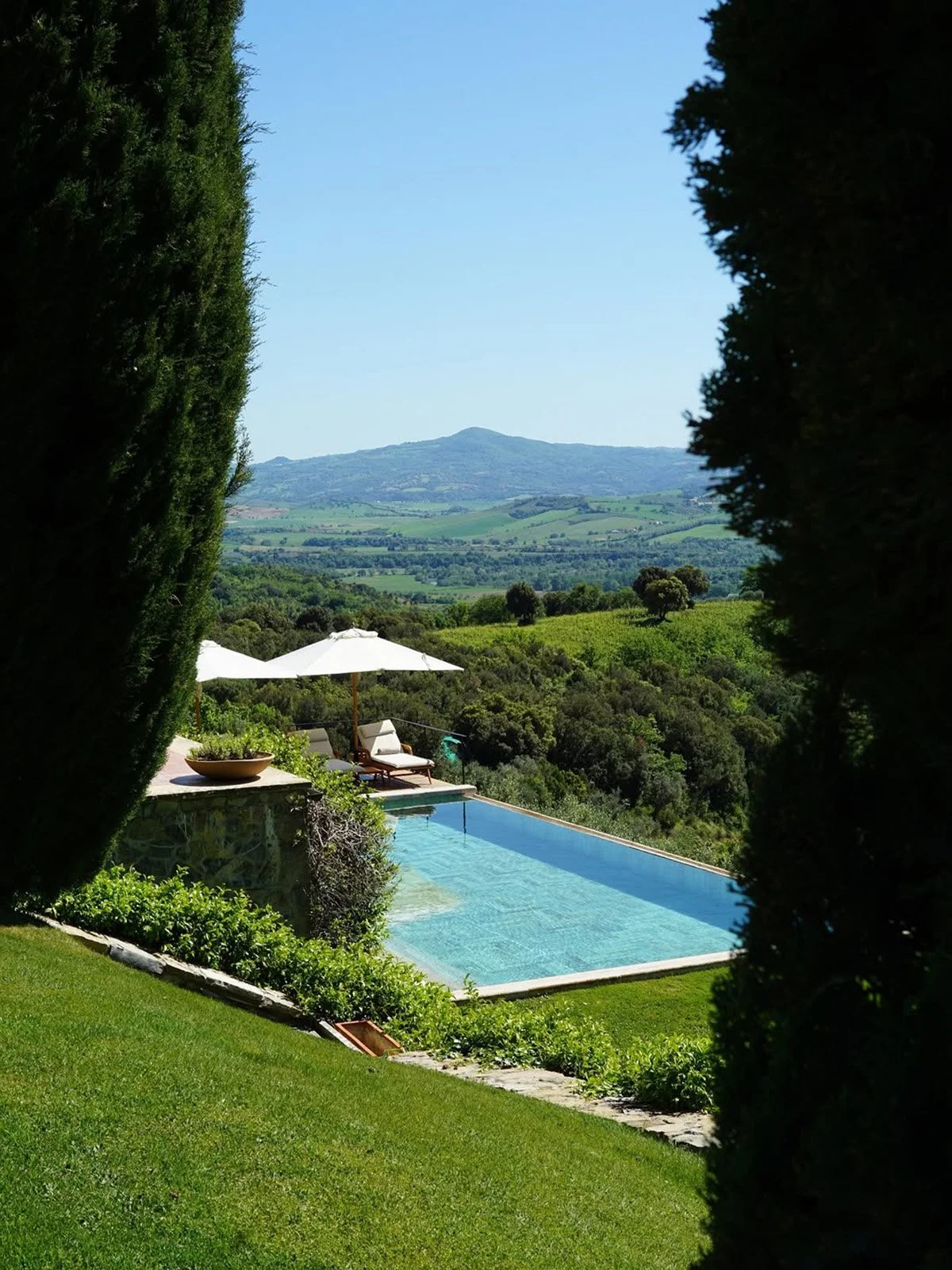
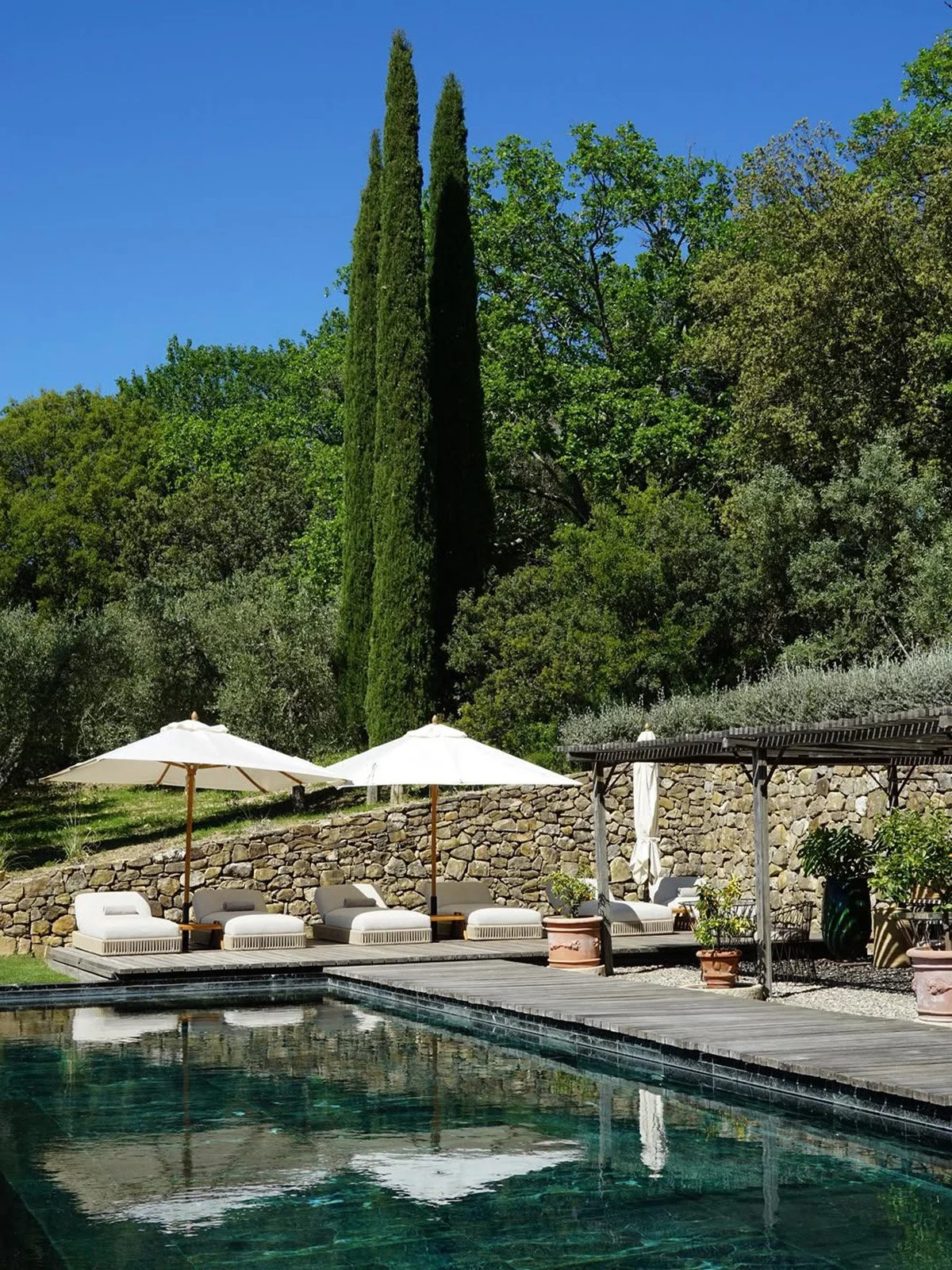
Poolside
Image © — @dahowarth
Set high in the Tuscan countryside, Castello di Vicarello feels less like a hotel than a private estate that has slowly opened itself to the outside world. The 12th-century castle carries more than 800 years of history in its stone walls, towers and courtyards, yet its current identity is inseparable from Carlo and Aurora Baccheschi Berti, who discovered the ruined property in the 1980s while living between Bali and Milan. What followed was a decades-long restoration and the creation of a family home that would eventually evolve into one of Tuscany's most singular retreats
That family presence remains central. The couple's three sons grew up while the estate was still a work in progress, and today each remains involved in its future. Neri serves as CEO, Brando oversees the vineyards and Corso works across the organisation of the property. The result is a hospitality experience that avoids the polished anonymity of a conventional resort. Vicarello still feels inhabited, its architecture carrying the evidence of a family's long relationship with the place
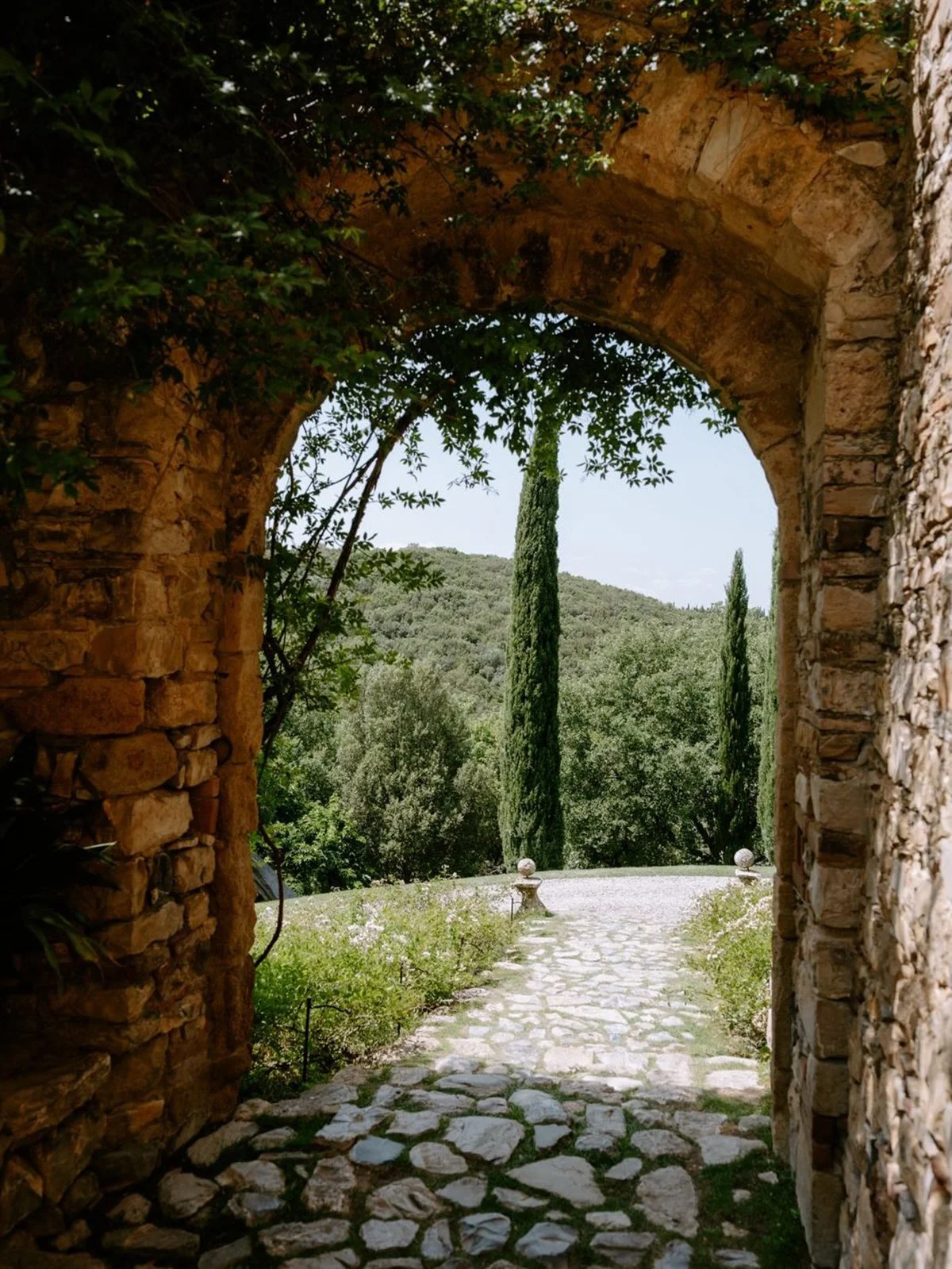
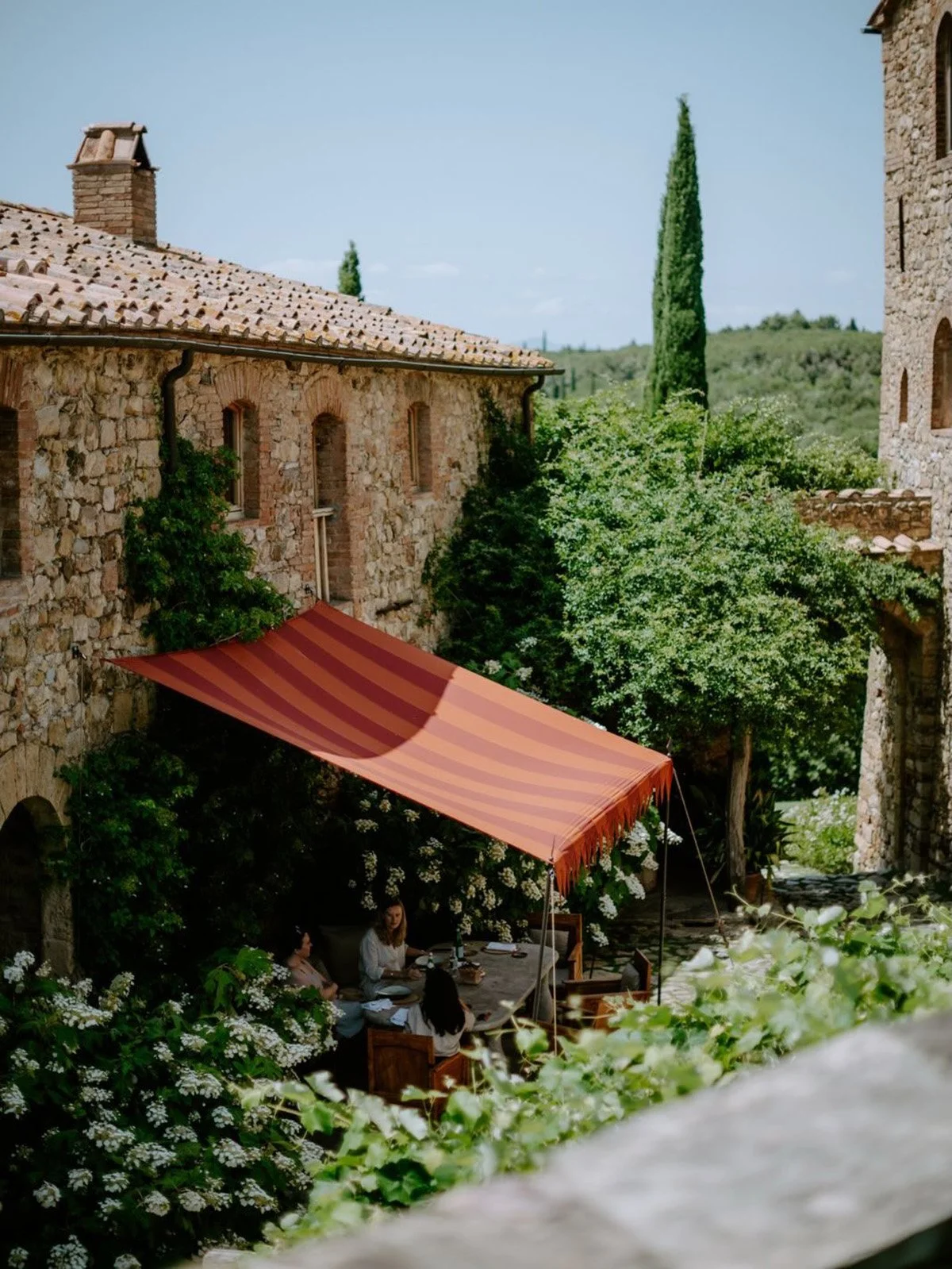
Arrival reinforces the sense of distance from contemporary life. Country roads climb through vineyards and past weathered farm buildings before the castle finally appears above the landscape. Within the central courtyard, rough stone walls and cobbled surfaces establish the architectural language of the estate, while towers, terraces and planted gardens unfold gradually across the hilltop
The suites are equally individual. No two occupy the same architectural condition, and their differences are largely determined by the historic fabric they inherit. Suite Villa Chiesina extends into a generous pergola and is finished with olive wood floorboards, while the Spa Suite introduces a more contemporary layer with a private sauna, steam room and an outdoor jacuzzi adapted from an oak wine barrel
Stone arched entrance
Image © — @dahowarth
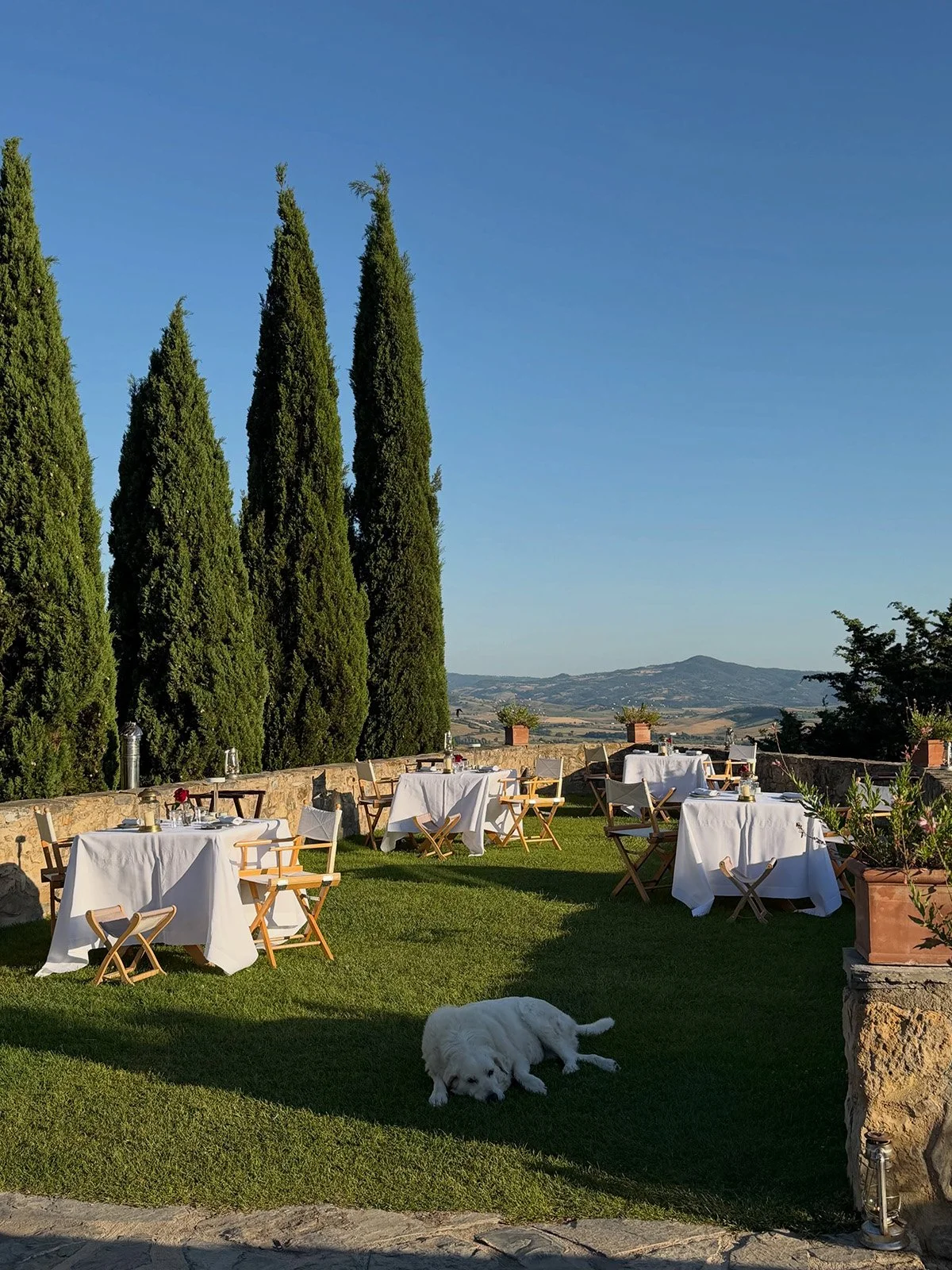
Garden terrace
Image © — @nicolekavander
Suite Torre occupies an entire floor at the castle's highest point. Timber floorboards creak underfoot, fireplaces whistle and shutters respond audibly to the wind. These imperfections are not disguised. Instead, they reinforce the experience of staying within an old building whose character is inseparable from age. Books, art and objects are layered throughout the rooms, giving the interiors the accumulated quality of a private house rather than a newly assembled scheme
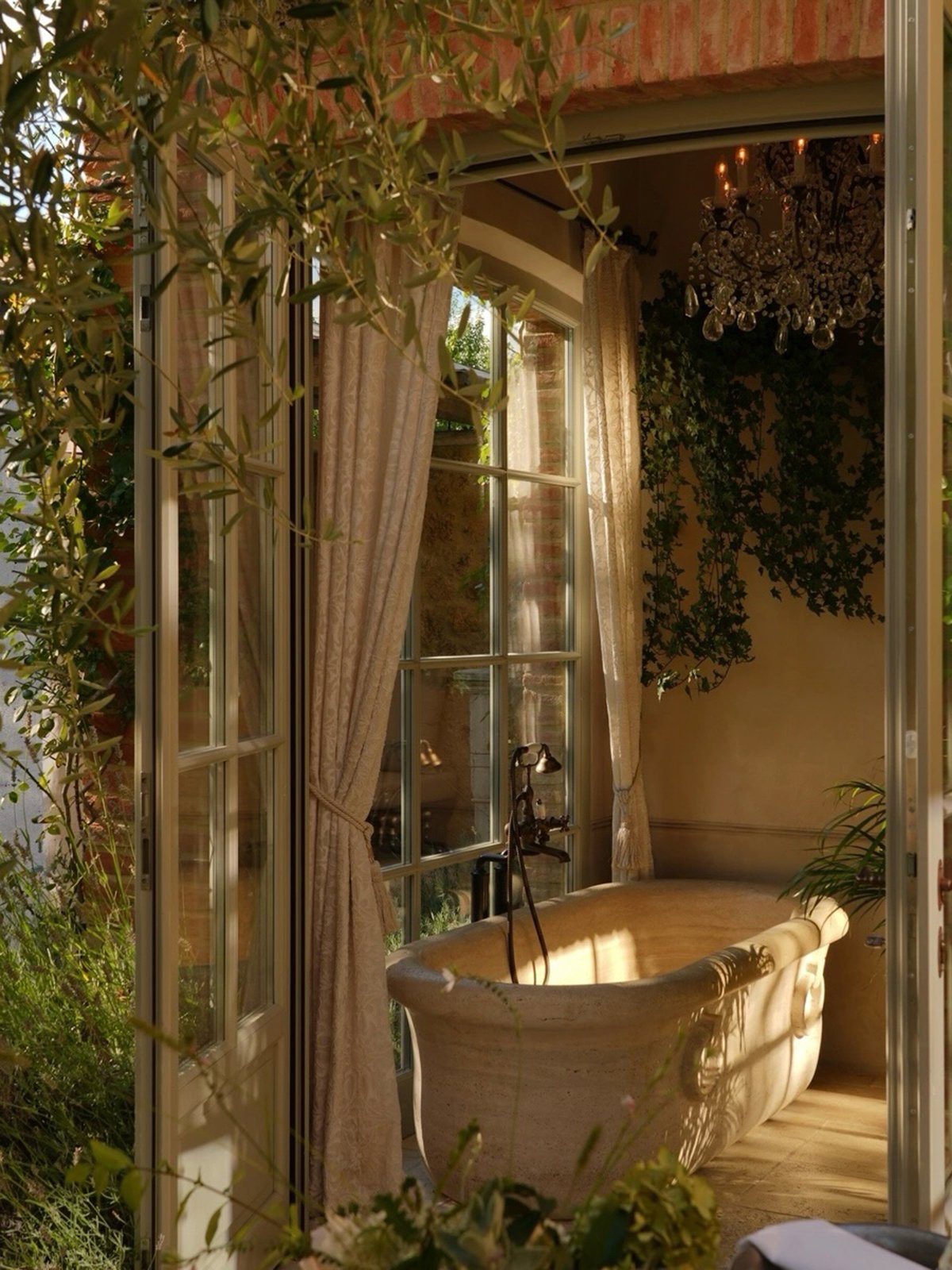
The more recent Suite Mezzatorre occupies the second floor of the tower, with views extending in every direction across the estate. Medieval arched windows sit alongside a freestanding copper bathtub, while Italian and Indonesian art reflects the family's long-standing relationship with both cultures. That dialogue between Tuscany and Bali is subtle but persistent throughout Vicarello, visible less as a decorative theme than in the way indoor and outdoor spaces are allowed to merge
Food is treated with similar directness. Head chef Massimiliano Volonterio works with seasonal produce grown across the estate, while wild game is sourced from the surrounding hills. Guests move past the working kitchen on their way to dinner, reinforcing the sense that the culinary life of the property is part of its daily architecture. Wild boar, porcini mushrooms, tomatoes, herbs and pecorino appear in dishes that remain closely connected to the landscape from which they come
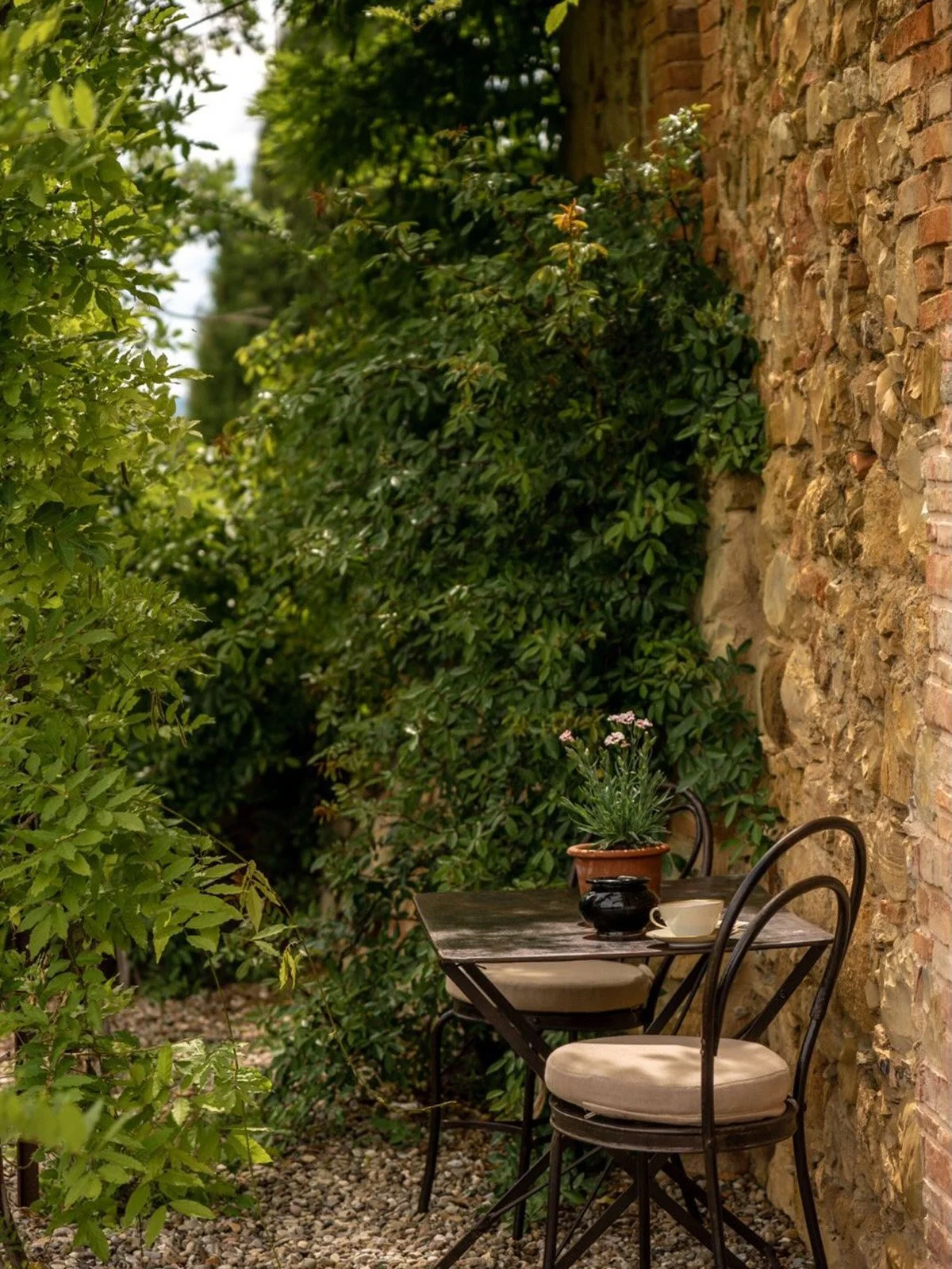
Quiet garden seating
Image © — @victorsfitz
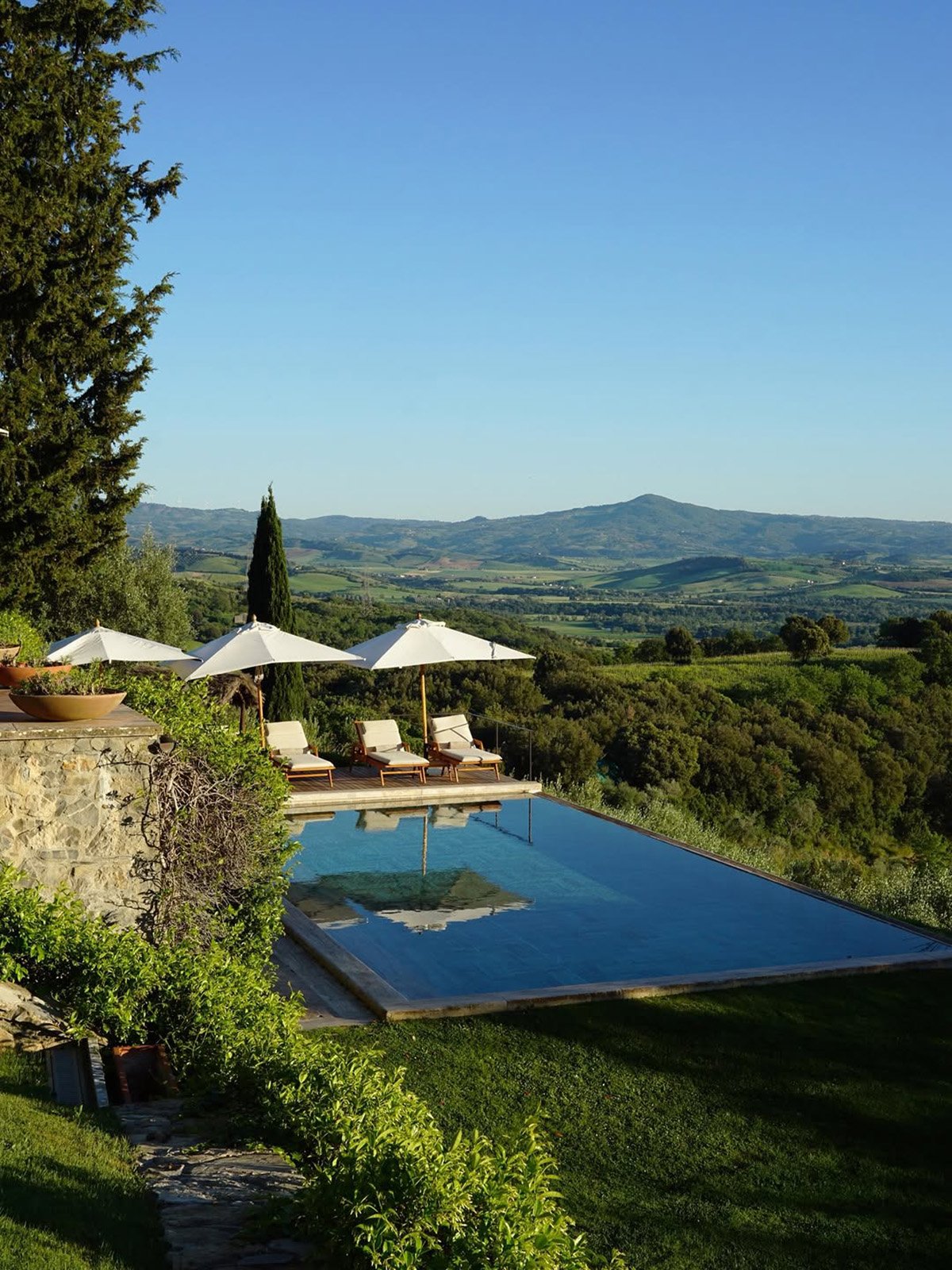
Infinity pool reflections
Image © — @dahowarth
The vineyards are equally important. Brando oversees the estate's wine production, and bottles from Vicarello are served alongside meals before travelling far beyond Tuscany to restaurants including London's River Café and Angelina. Guests are also invited into the process of cooking itself, moving through vegetable gardens before making pasta, pappa al pomodoro and tiramisu with the kitchen team
A small spa pavilion sits beside the estate's largest pool, its architecture carrying a more distinctly Balinese influence. Introduced in response to returning guests seeking slower ways to spend their days, it adds another layer to an estate already structured around retreat. Yet the strongest experience of Vicarello remains the landscape itself
Walks through the property pass vineyards, vegetable gardens, fungi and a centuries-old well gradually reclaimed by vegetation. Beyond the estate are the villages of Poggi del Sasso and Campagnatico, but Castello di Vicarello has enough architectural and cultural depth to function almost as a landscape of its own
Its strength lies in the absence of reinvention for reinvention's sake. The castle has been restored, inhabited and adapted over decades, allowing old stone, new rooms, family memories and contemporary hospitality to coexist. Castello di Vicarello does not present Tuscany as a romantic idea from a distance. It offers something more convincing: a centuries-old estate still very much alive
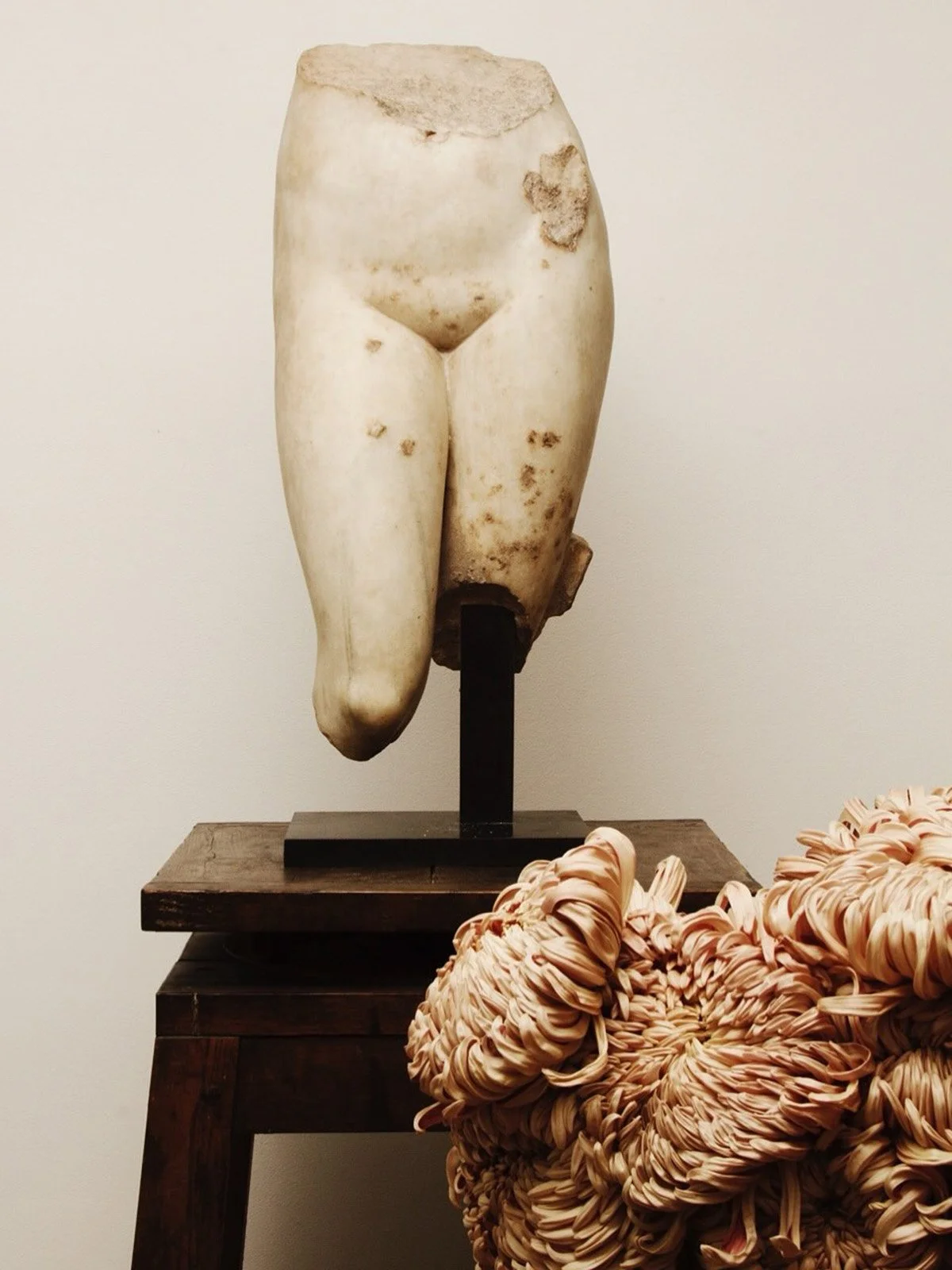
Galerie Chenel Places Roman Sculpture in a Contemporary Parisian Frame
—
From its Quai Voltaire gallery opposite the Louvre, the family-run specialist has built an international reputation around archaeological objects, provenance and the enduring presence of antiquity
Borgo Santo Pietro Turns a 13th-Century Tuscan Estate Into a Living Landscape
—
South of Siena, 300 acres of organic farmland, woodland and gardens surround a restored medieval house where Danish restraint meets the material language of rural Tuscany