

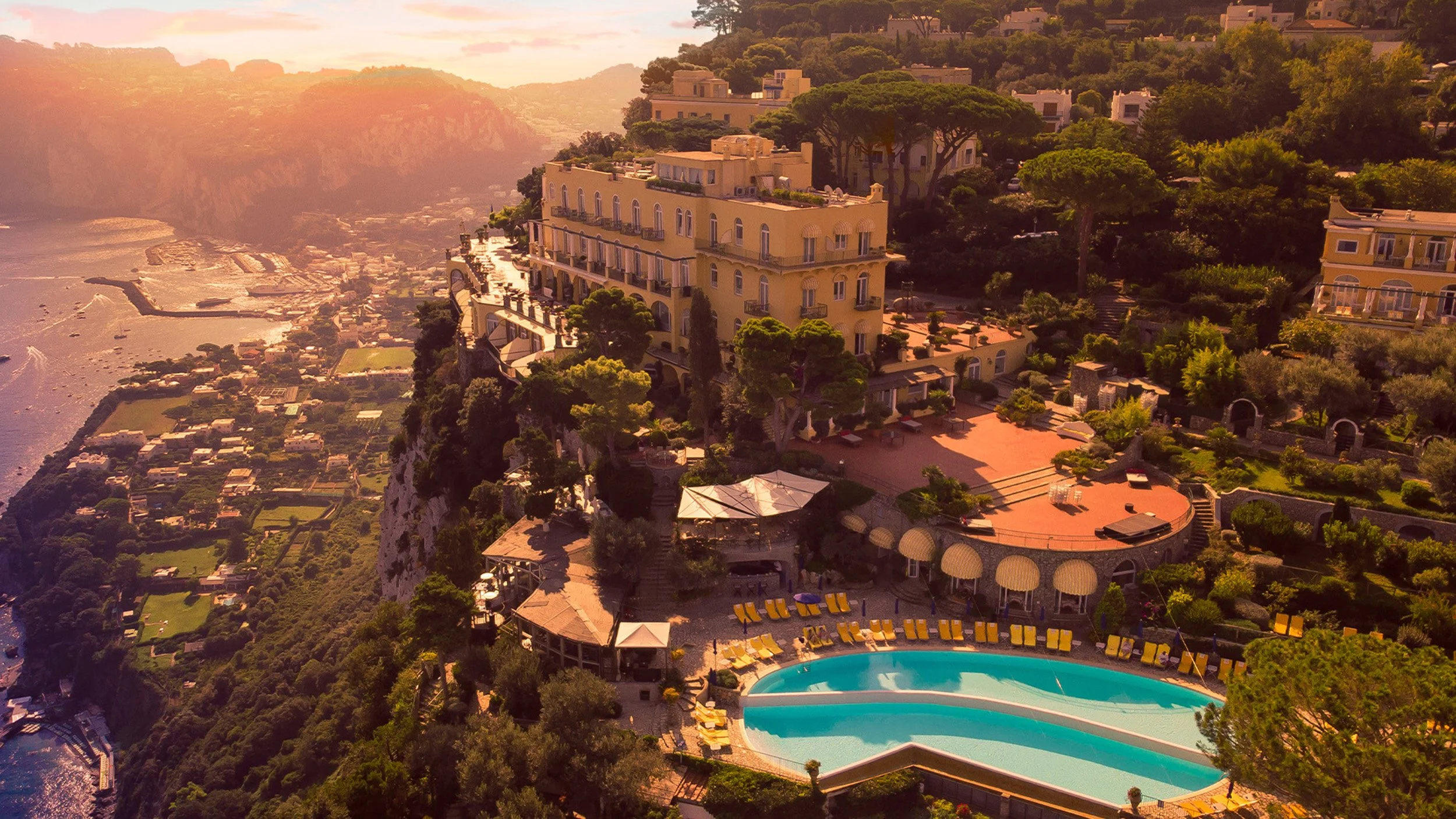
Hotel Caesar Augustus
Image © — @hotel_caesar_augustus
HOTEL
Capri’s Cliff-Edge Villa Above the Bay of Naples
Hotel Caesar Augustus, a former aristocratic retreat 1,000 feet above the sea becomes one of the island’s most quietly cinematic stays
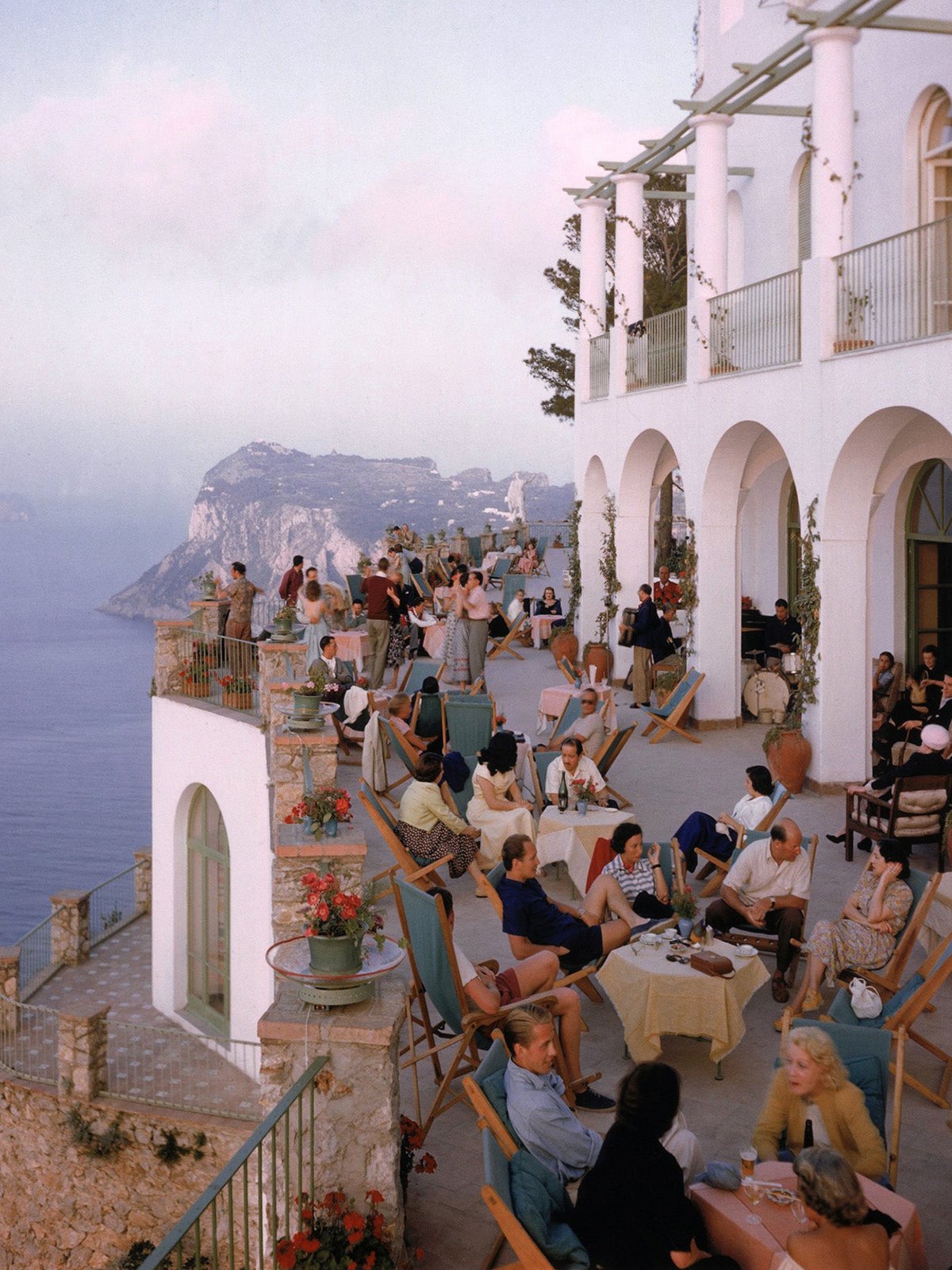
Ralph Crane (1913–1988) captured its cliffside terrace suspended above the Bay of Naples in 1949
Image © — Ralph Crane
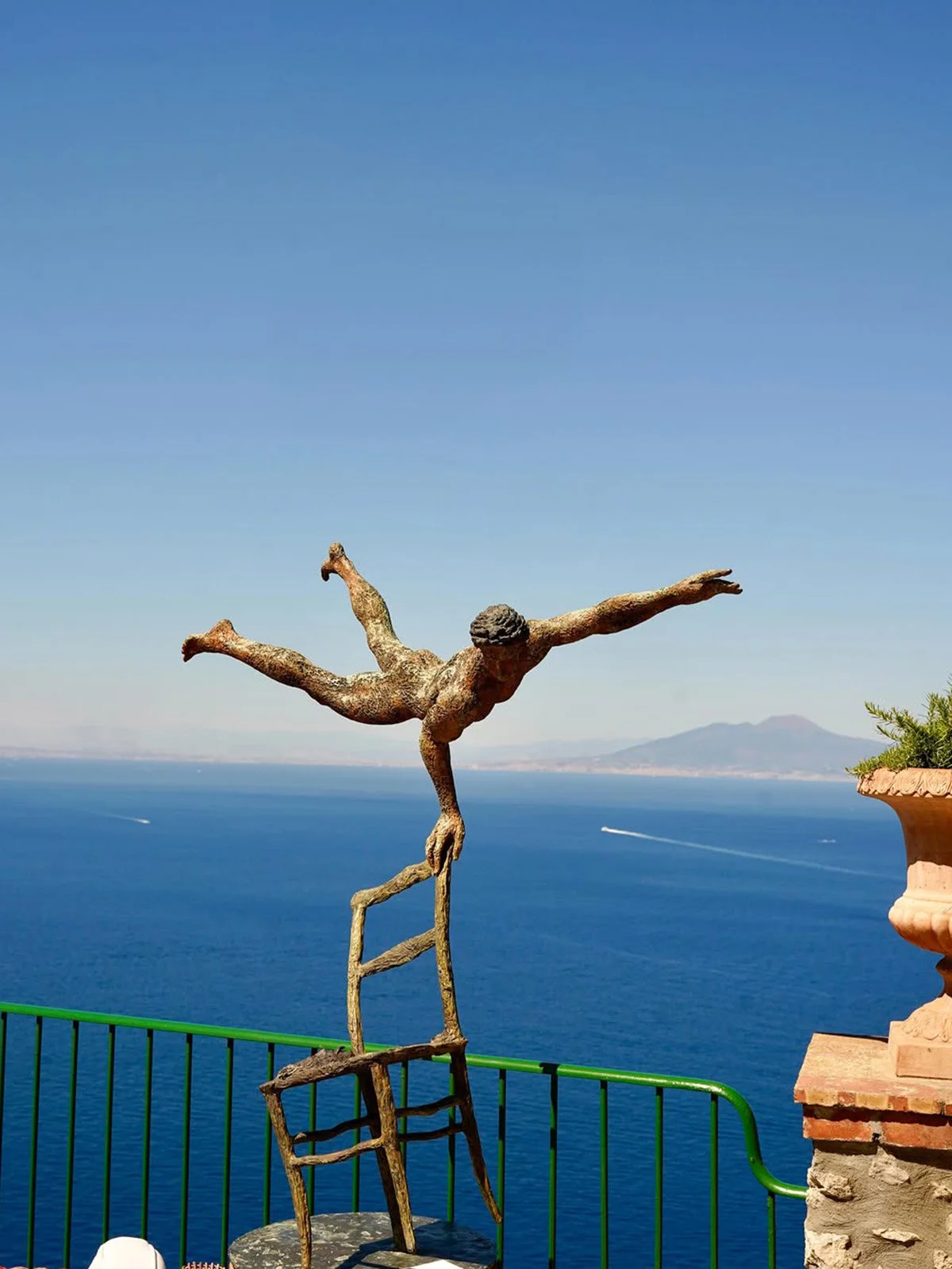
One of Hotel Caesar Augustus’ cliff-edge sculptures appears suspended above the Bay of Naples, with Mount Vesuvius rising in the distance
Image © — @hotel_caesar_augustus
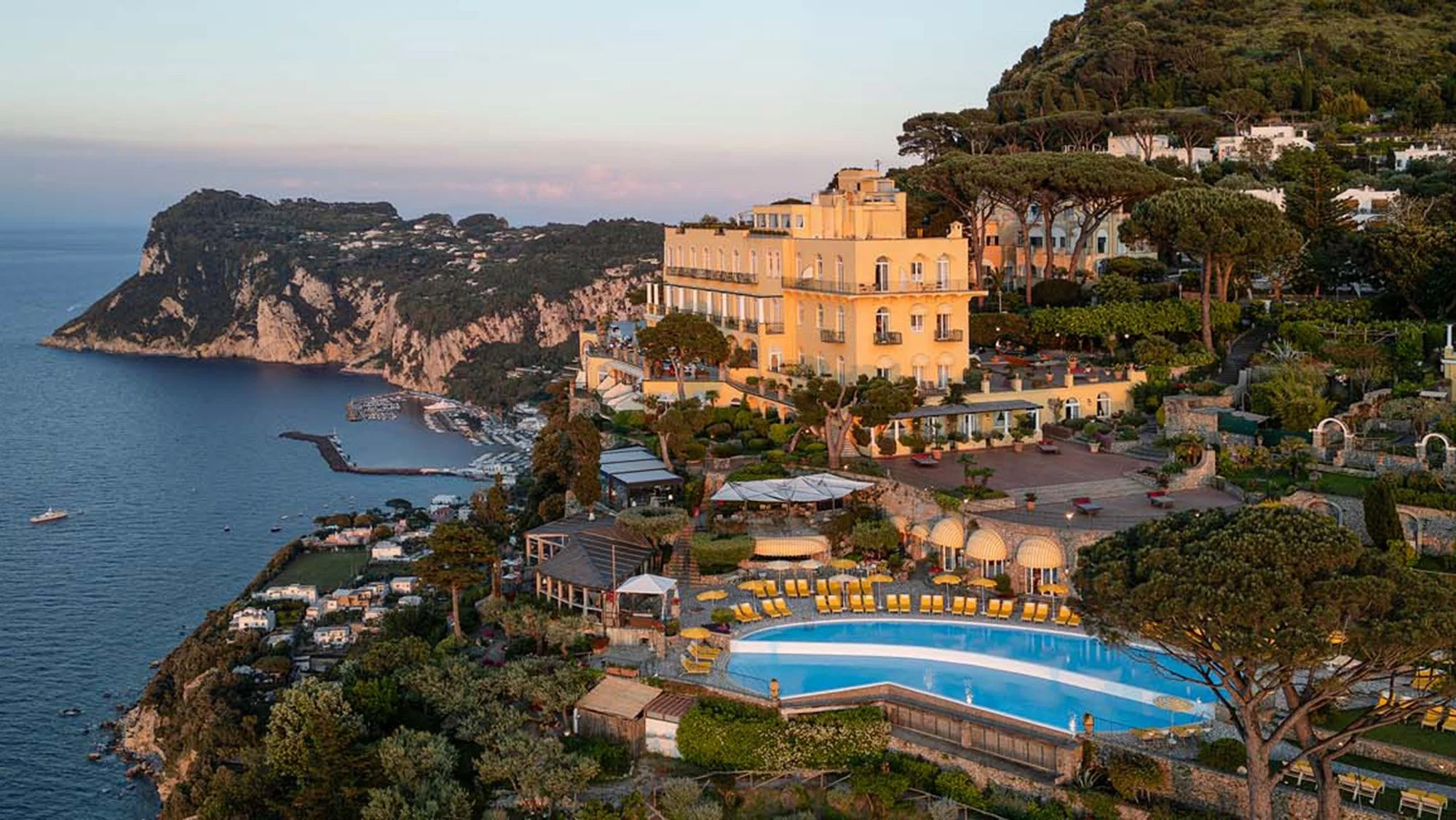
On Capri, luxury is often measured not by spectacle, but by position. At Hotel Caesar Augustus, that position is almost unreal. Built into the edge of a cliff in Anacapri, 1,000 feet above the Bay of Naples, the hotel looks out across the sapphire water toward Mount Vesuvius and the Sorrentine Peninsula. It is the kind of view that does not simply decorate a hotel. It defines it
Before it became one of Capri’s most quietly glamorous addresses, Caesar Augustus had the atmosphere of a private refuge. Perched high above the island’s busier rhythms, the property was once a secluded haven for artists and aristocrats, drawn to its silence, altitude, and extraordinary command of the horizon. Today, it remains family-run and intimate in scale, reimagined as a boutique hotel while preserving the essential character of a cliff-top villa
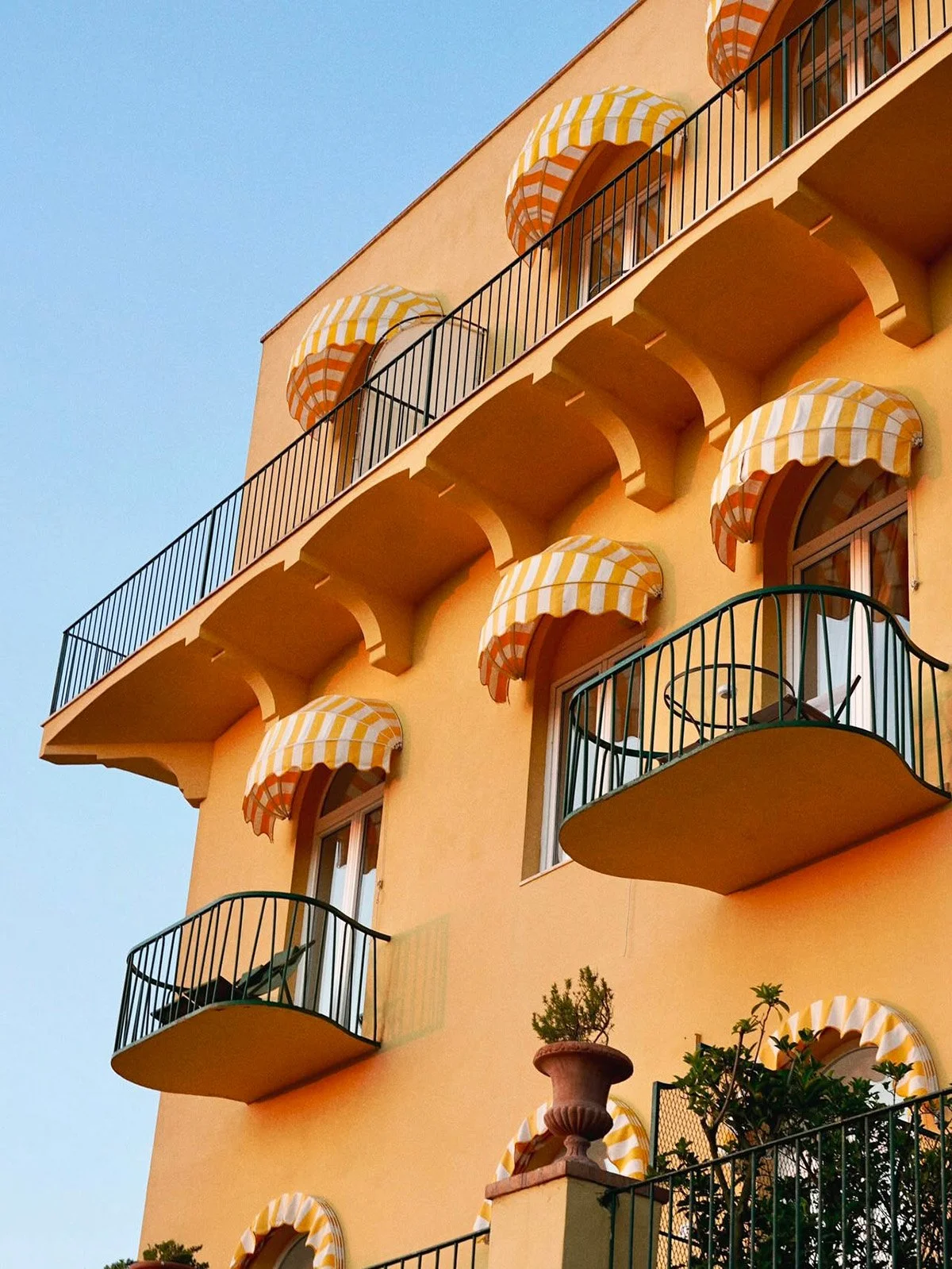
Striped awnings at Hotel Caesar Augustus
Image © — @hotel_caesar_augustus
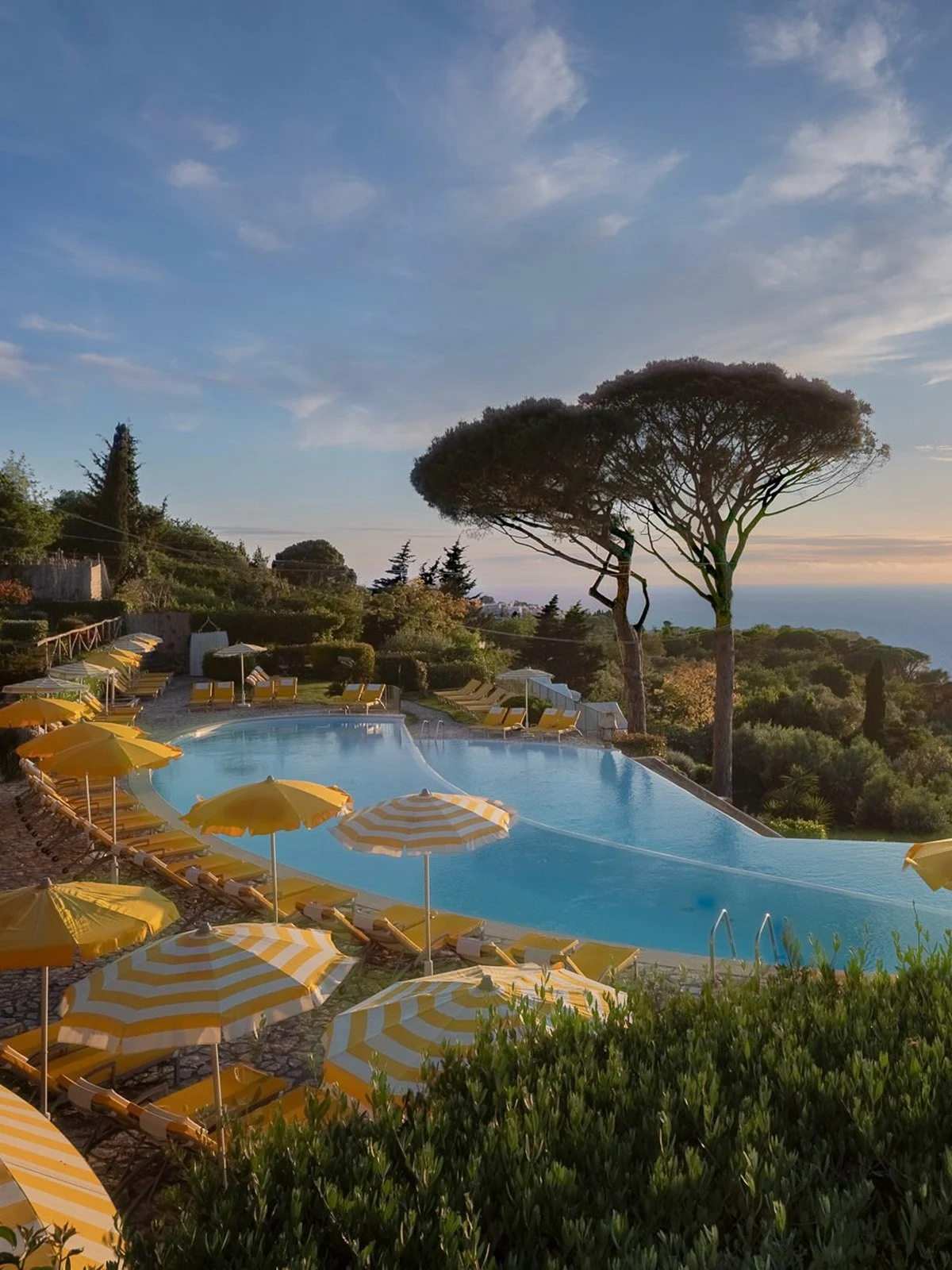
Infinity pool
Image © — @hotel_caesar_augustus
The hotel’s name is watched over, quite literally, by Caesar Augustus himself. A statue of the Roman emperor faces the sea from the edge of the property, placed there by Russian Prince Emmanuel Bulhak, who owned the villa around 1900. More than a decorative gesture, the statue gives the hotel its mythology: imperial, theatrical, and yet strangely serene. Around the grounds, other sculptures appear among gardens and terraces, turning the landscape into something between a private estate and an open-air gallery
Inside, the mood is not one of hard-edged resort design. The 49 rooms and six suites are appointed with a sense of timeless ease, balancing elegance with the relaxed informality that Capri does so well. Almost all look toward the sea, allowing the architecture to remain secondary to light, horizon, and air. The rooms feel less like isolated hotel interiors than private chambers within a larger Mediterranean house, each one oriented toward the same extraordinary blue
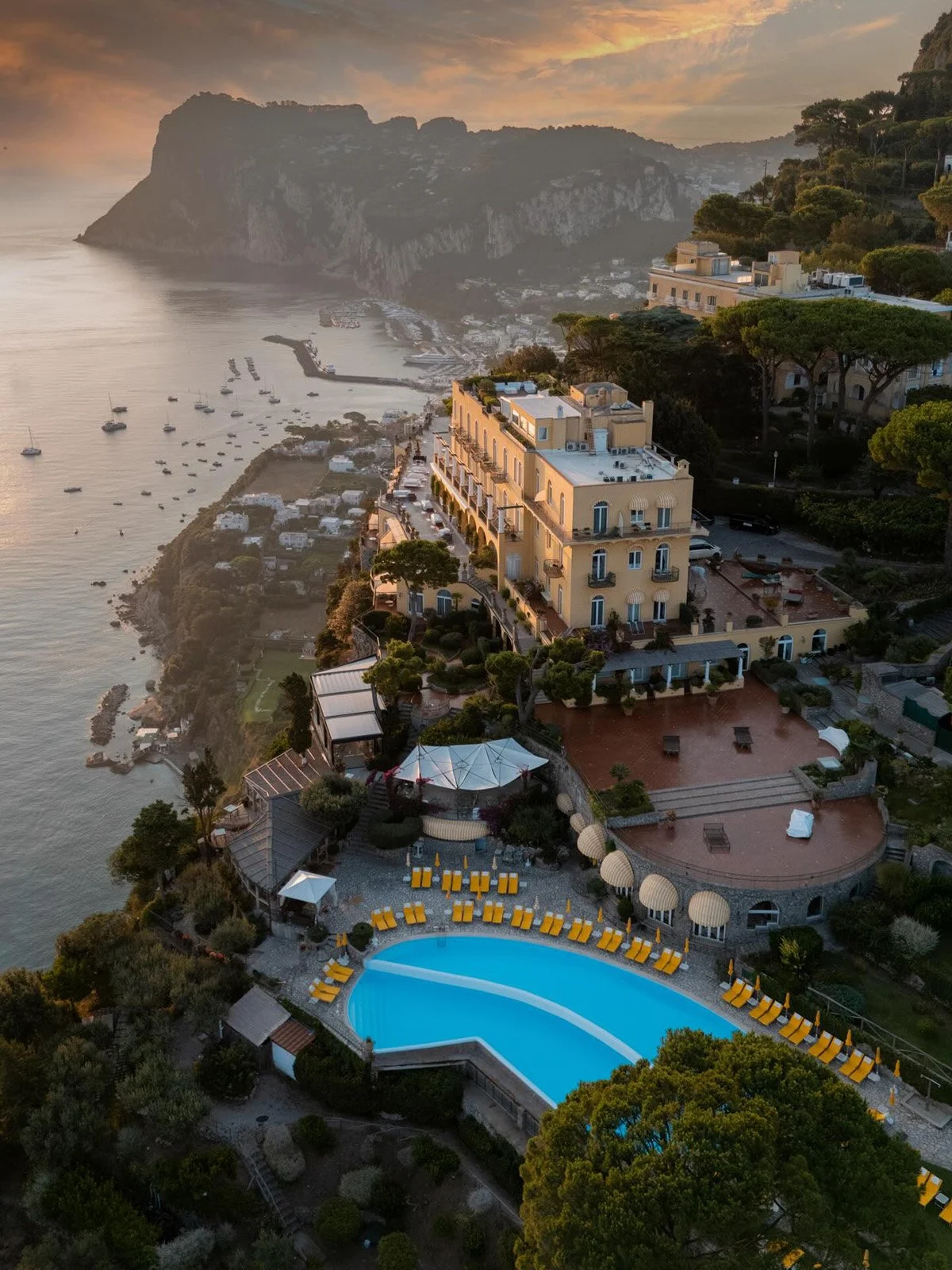
Cliffside view with dusty light
Image © — @lawrencewalton_
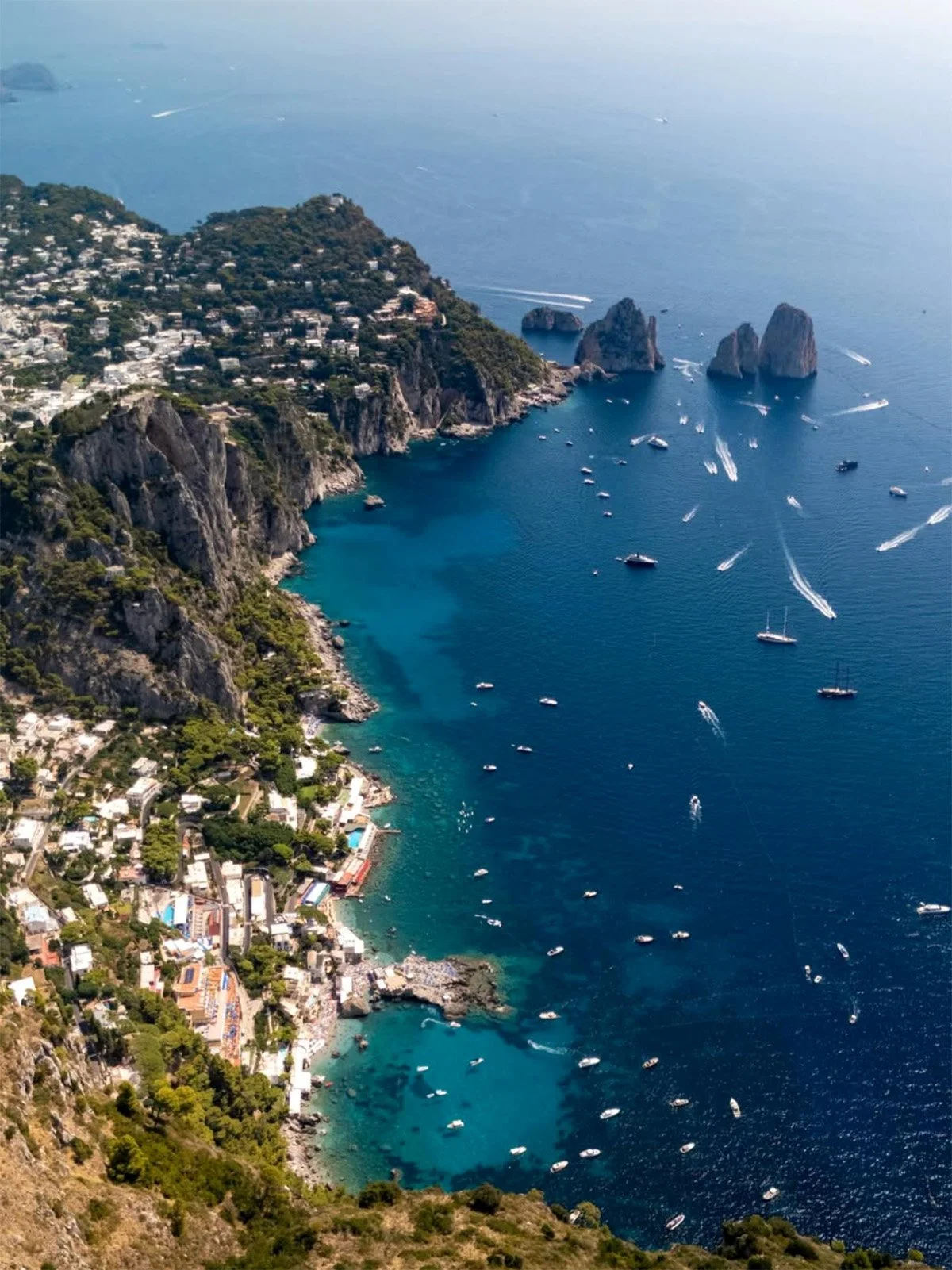
Aerial view with boats moving quickly
Image © — @lawrencewalton_
The real theatre, however, unfolds outside. At the Terrace Bar, oysters and champagne meet one of the island’s great panoramas. From here, the Bay of Naples opens below, Vesuvius sits in the distance, and the Sorrentine coast appears almost painted against the sky. The view has the rare quality of making everything around it feel slower, sharper, more composed
Dining follows the same logic. Mediterranean flavours are served in refined settings that understand the power of restraint. Nothing needs to compete with the sea, the gardens, or the changing light across the water. The experience is not about excess, but about the pleasure of being exactly where one is
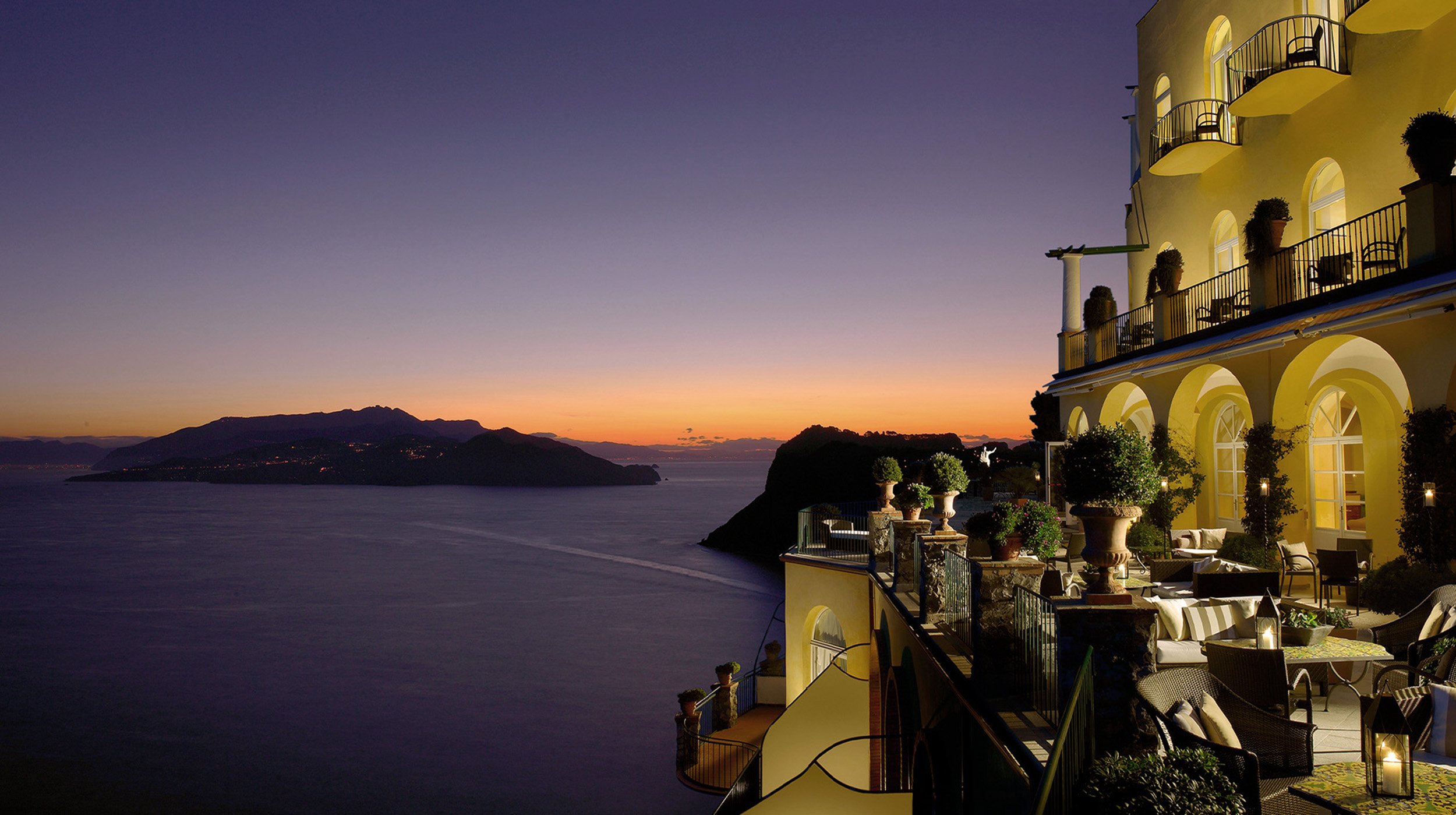
Hotel Caesar Augustus terrace at dusk
Image © — @hotel_caesar_augustus
Perhaps the hotel’s most memorable architectural moment is its panoramic two-level infinity pool. Suspended above the cliff, it creates the sensation of swimming at the edge of the world, with sea and sky folding into one another. Nearby, the open-air wellness area and expansive gardens offer a softer kind of luxury: quiet corners, planted terraces, sculpture, and shade, all held within the drama of the cliff
Open seasonally from May through October, Hotel Caesar Augustus belongs to that rare category of hotel where the building, landscape, and history feel inseparable. Its beauty lies not only in its elevation or its views, but in the way it maintains the atmosphere of a private villa. Capri is full of glamour, but here it becomes something more suspended and contemplative: a place where aristocratic history, Mediterranean ease, and the vast blue theatre of the Bay of Naples meet at the edge of the island

The Saint-Germain Gallery Built on Matisse, Maillol and a Century of Modern Art
—
At Galerie Dina Vierny, a former coalman’s shop transformed by Auguste Perret still carries the story of its founder, from Maillol’s studio and wartime resistance to Russian avant-garde art and a new generation of Paris dealers
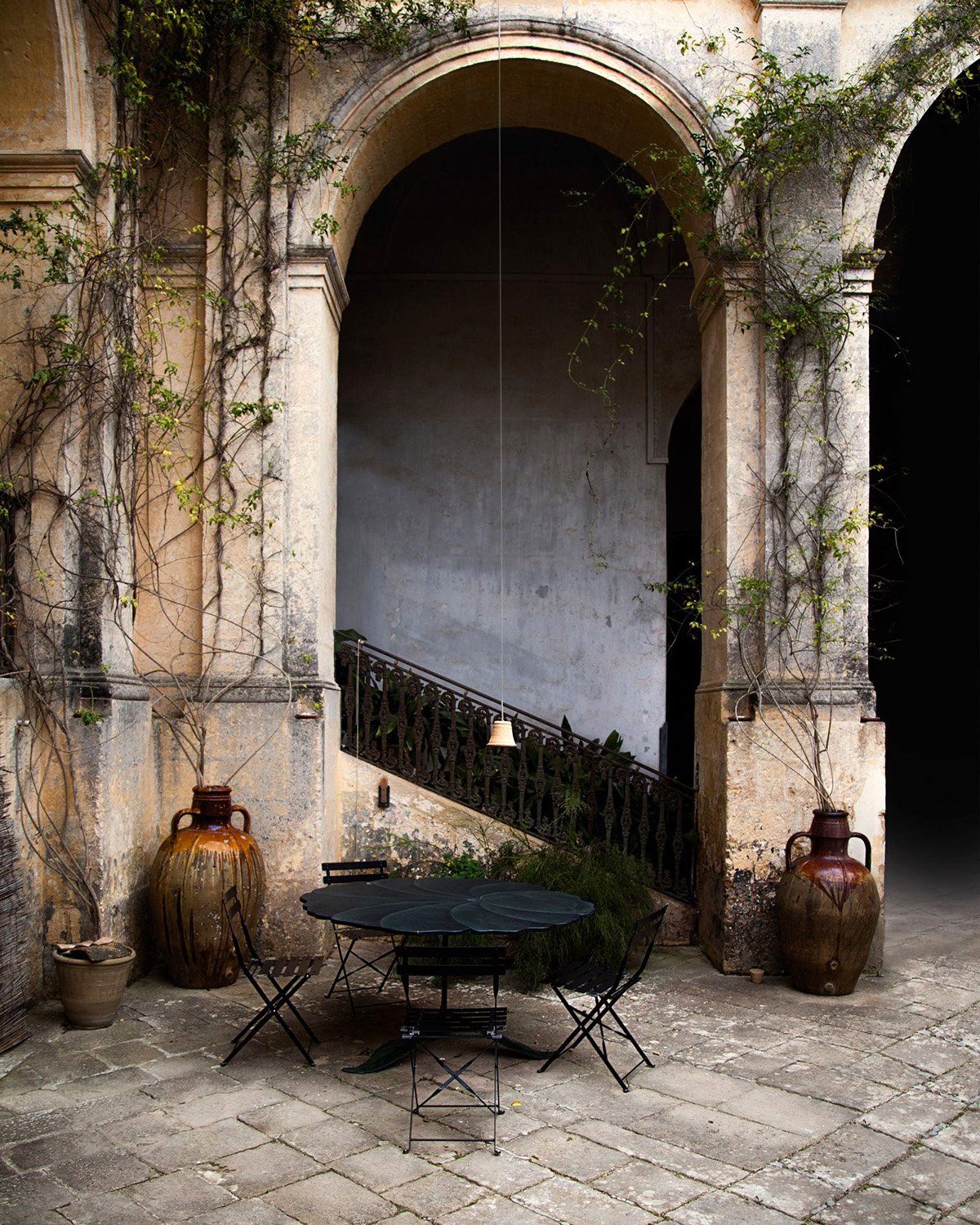
Inside the Puglian Palazzo Where 19th-Century Grandeur Meets Contemporary Art
—
At Palazzo Daniele, a former aristocratic residence in Salento has been stripped back with radical restraint, revealing frescoed ceilings, mosaic floors and a new life shaped by artists, collectors and slow Italian hospitality