

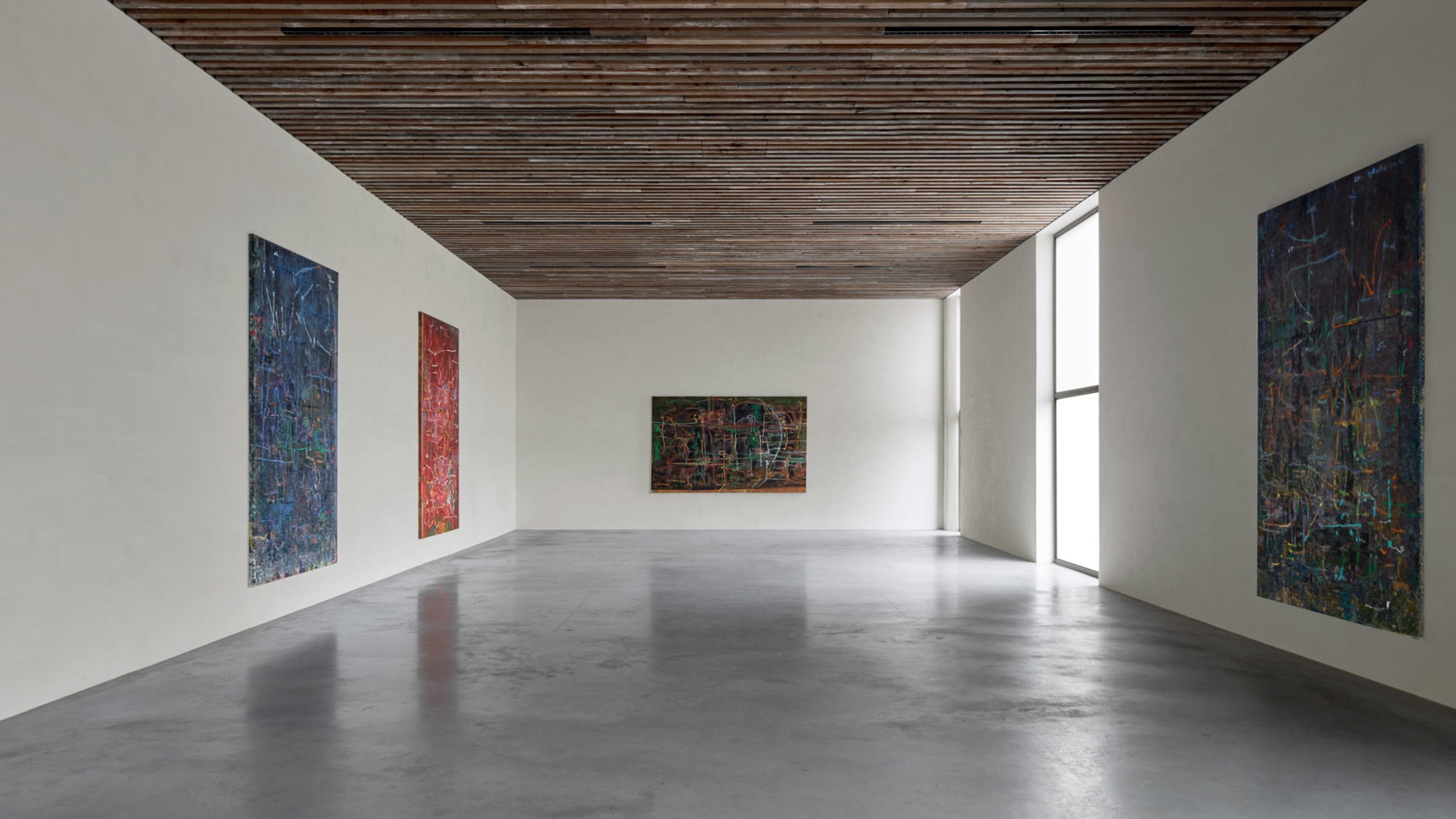
Angel Vergara, What happens, Terrace Gallery, Kanaal (2024)
Image © — @axelvervoordt_co
ART & OBJECTS
Angel Vergara Paints in Step With the Moving Image
Represented by Axel Vervoordt Gallery, the Brussels-based artist moves between painting, performance and film to examine how images operate within contemporary life
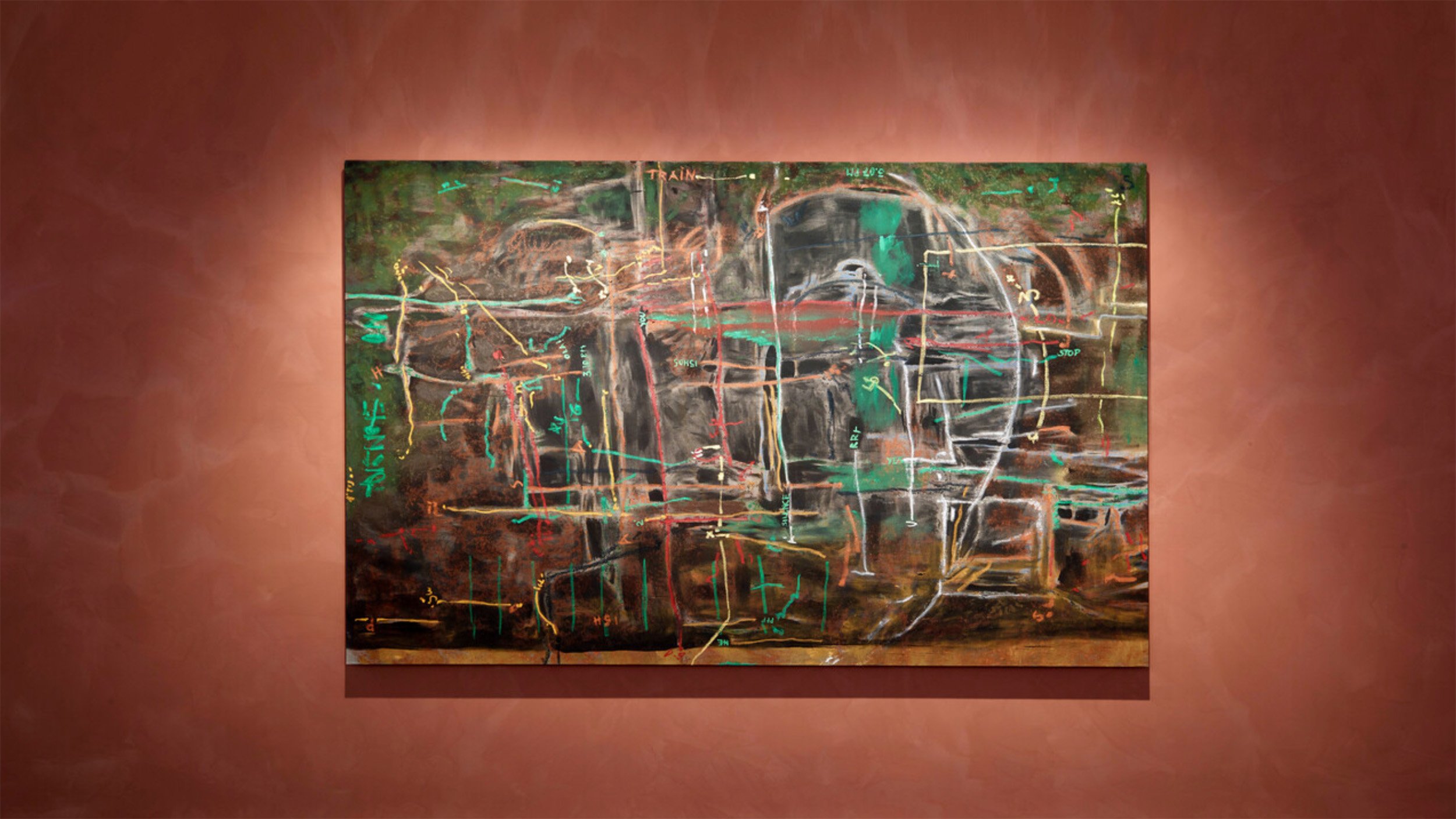
Angel Vergara, Les belles idées reçues - Bruxelles City acte 7, (2022)
Image © — @axelvervoordt_co
At Axel Vervoordt Gallery, where artistic practices are often considered through ideas of time, space and cultural exchange, Angel Vergara occupies a position that is deliberately difficult to contain. Born in Mieres, Spain, in 1958 and raised in Brussels, the artist has spent decades moving between painting, performance, drawing, film, video and installation. The breadth of those disciplines is not incidental. For Vergara, the boundaries between mediums are part of a larger question concerning the limits of art itself and the position an artist is able to assume within contemporary society
Founded by Boris Vervoordt in 2011, Axel Vervoordt Gallery extends the Vervoordt family's longstanding dialogue between East and West, antiquity and the present. Its principal space at Kanaal, the transformed industrial site near Antwerp, brings together artists connected to movements including Gutai and ZERO with contemporary figures such as El Anatsui and Kimsooja. Within this context, Vergara's work feels particularly at home: historically conscious but persistently engaged with the conditions through which images are produced and consumed
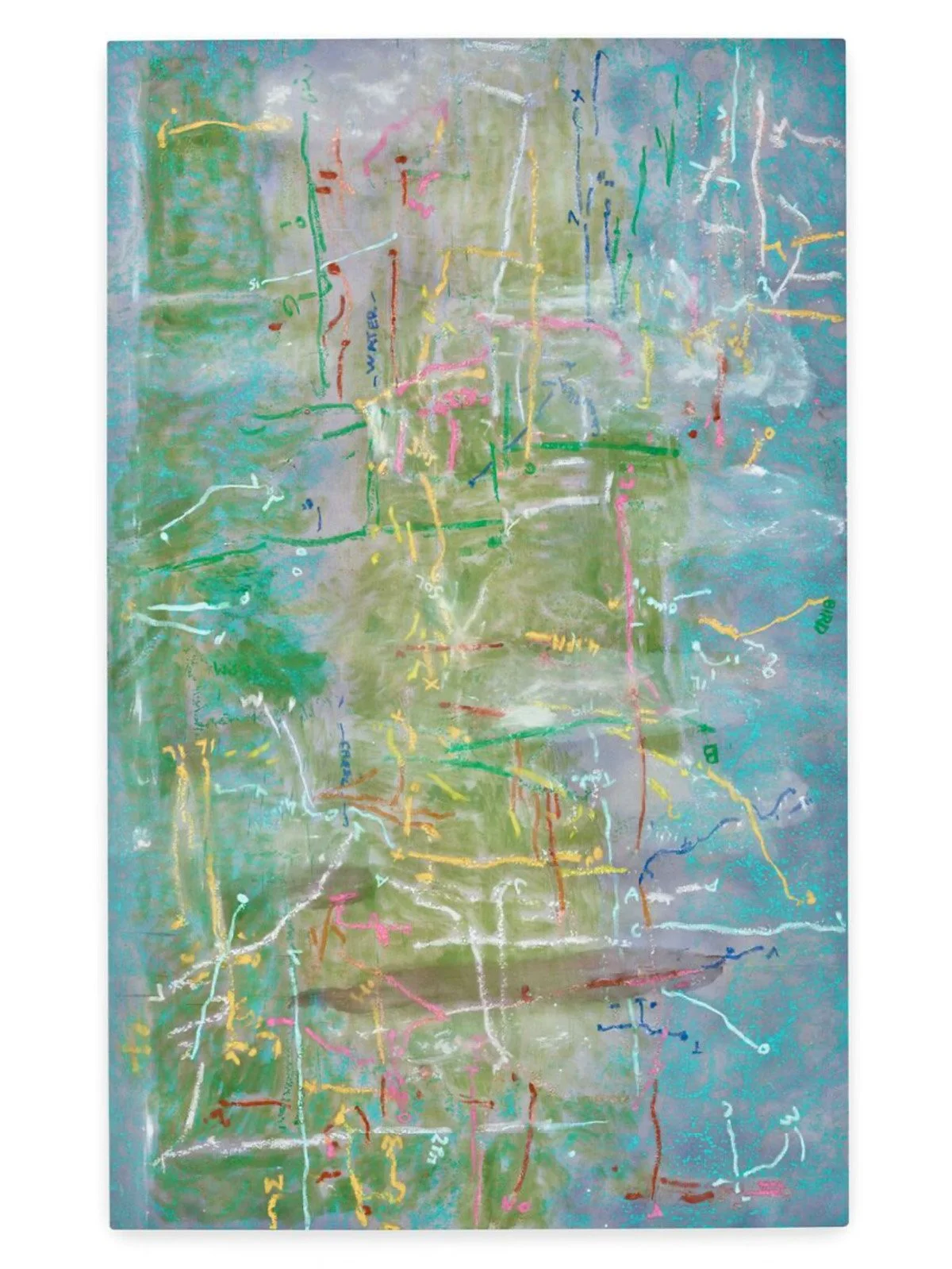
Angel Vergara, Les belles idées reçues - Bruxelles City acte 6, 22, (2022)
Image © — @axelvervoordt_co
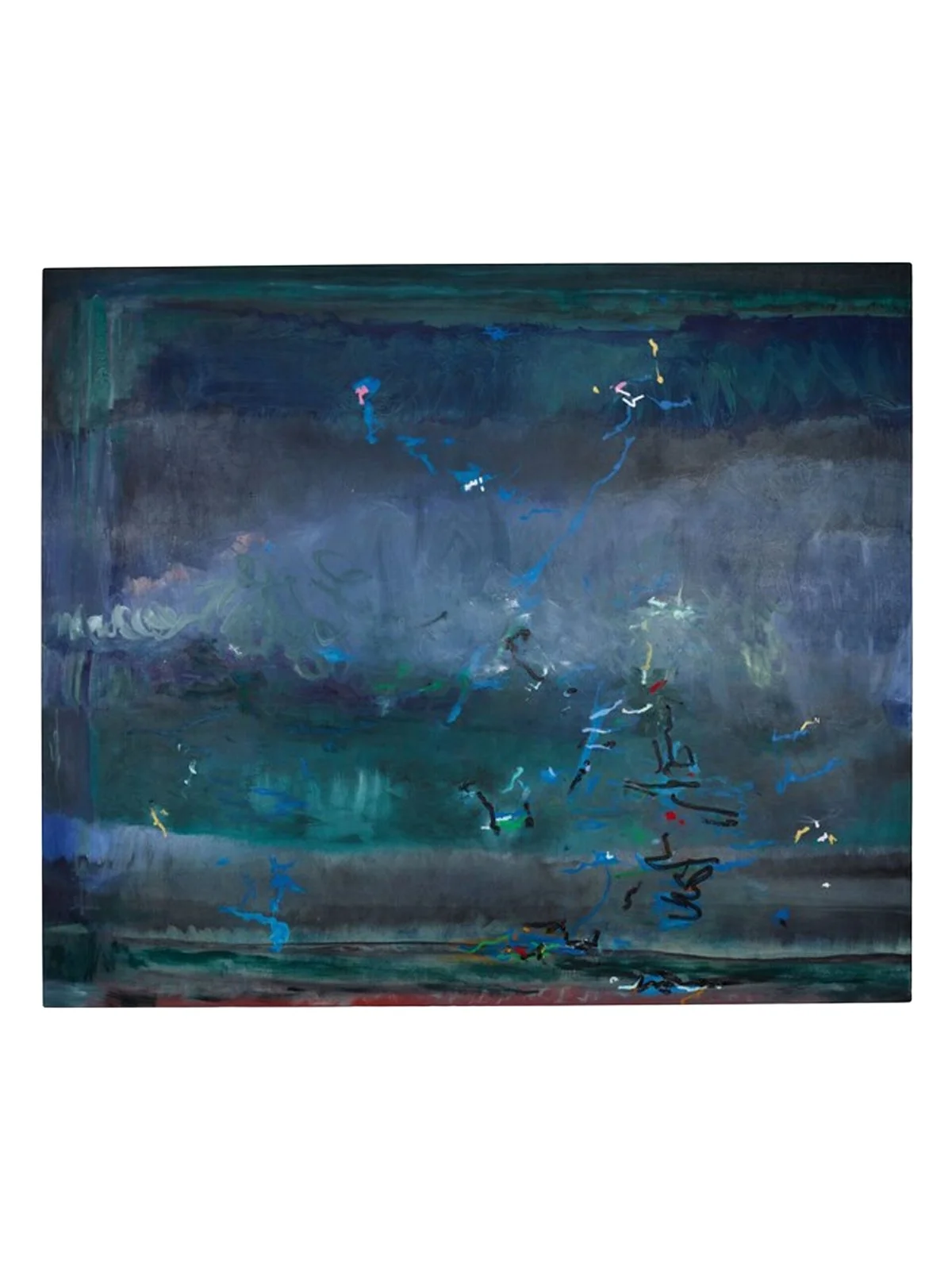
Angel Vergara, Chemin bois Senne acte 2, (2022)
Image © — @axelvervoordt_co
Vergara studied at the Académie Royale des Beaux-Arts and the École de Recherche Graphique in Brussels, the city where he continues to live and work. In 2011, he represented Belgium at the Venice Biennale, a significant moment in a career shaped by an ongoing exchange between art and lived experience. Rather than treating the studio as a protected territory, Vergara repeatedly carries artistic action into the social world, using performance and image-making to test where one ends and the other begins
Audiovisual material has long occupied a central place in his practice. Performance recordings, autonomous films and fragments of video installations become both works in themselves and material for further intervention. In more recent pieces, projected and moving images create the conditions for what might be understood as live painting. Vergara paints in rhythm with the flow of imagery on screen, allowing gesture to respond to a sequence that is continually changing before him
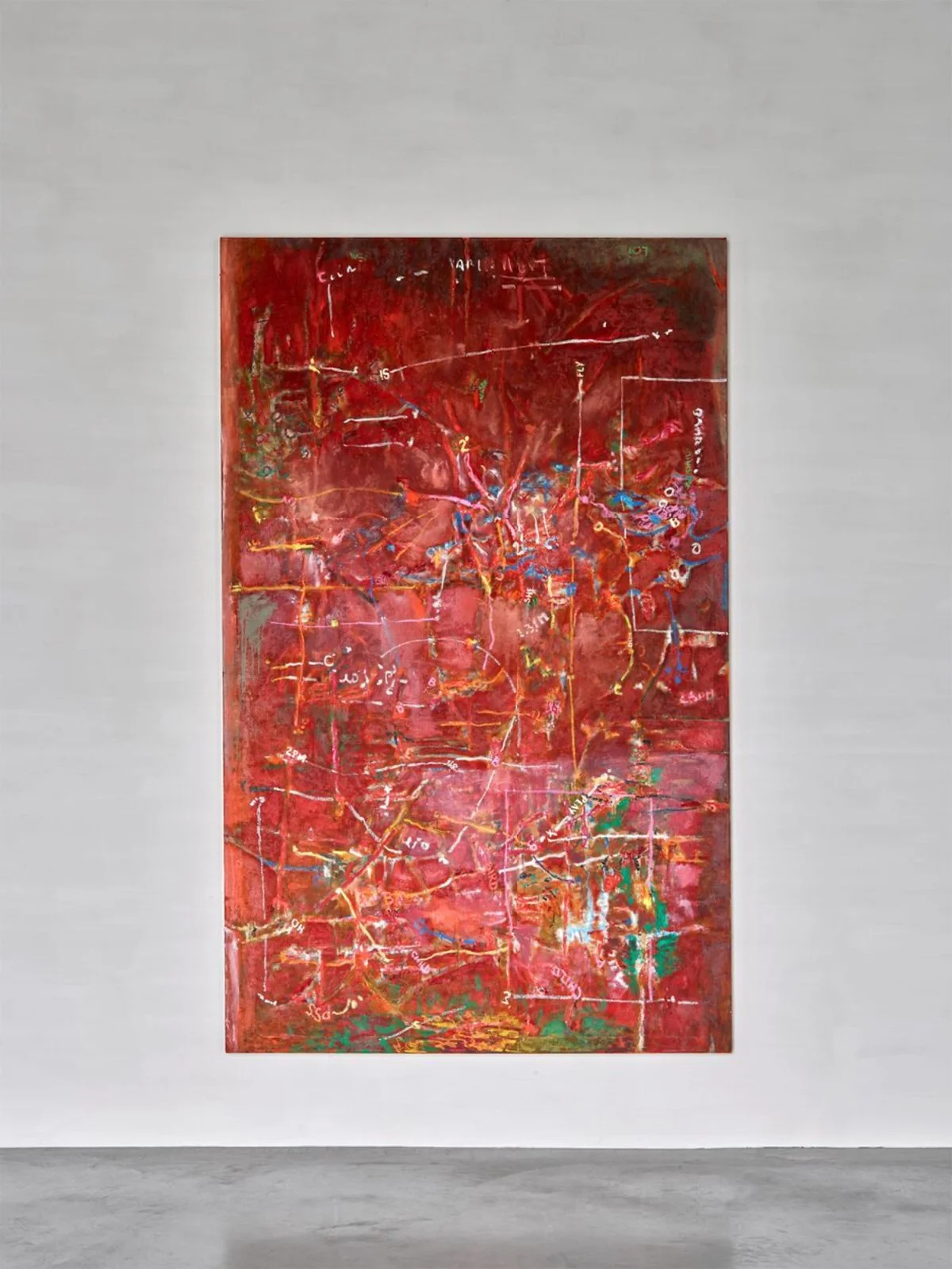
Angel Vergara, Les belles idées reçues - Bruxelles City acte 3, 38, (2022)
Image © — @axelvervoordt_co
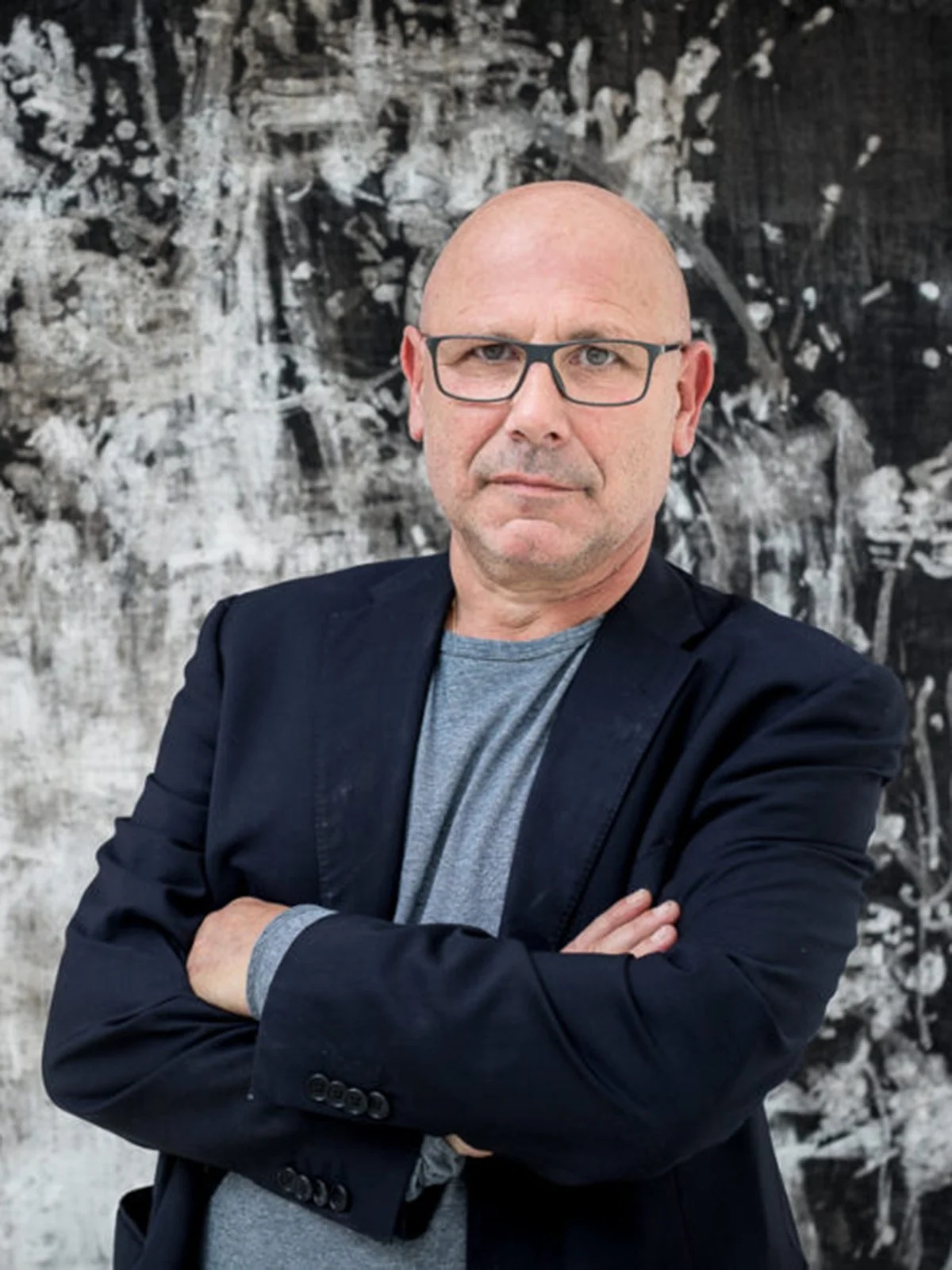
Angel Vergara portrait by Sebastian Schutyser
Image © — @sebastianschutyser
The result is a form of action painting translated into a mediated reality. Instead of confronting an empty canvas, Vergara often begins with an existing image, a stream of film or visual material already carrying cultural associations. Paint is applied through and against that image, interrupting its authority and briefly redirecting the viewer's attention. The painting is therefore never entirely autonomous; it develops in tension with another image and with the wider social context from which that image emerged
This fascination with the power of images runs throughout Vergara's work. He is interested not simply in what an image depicts, but in the structures surrounding it: who produces it, where it circulates and how its meaning changes as it enters public consciousness. Painting becomes one method of intervening in that system, an immediate physical gesture applied to the otherwise intangible flow of contemporary media
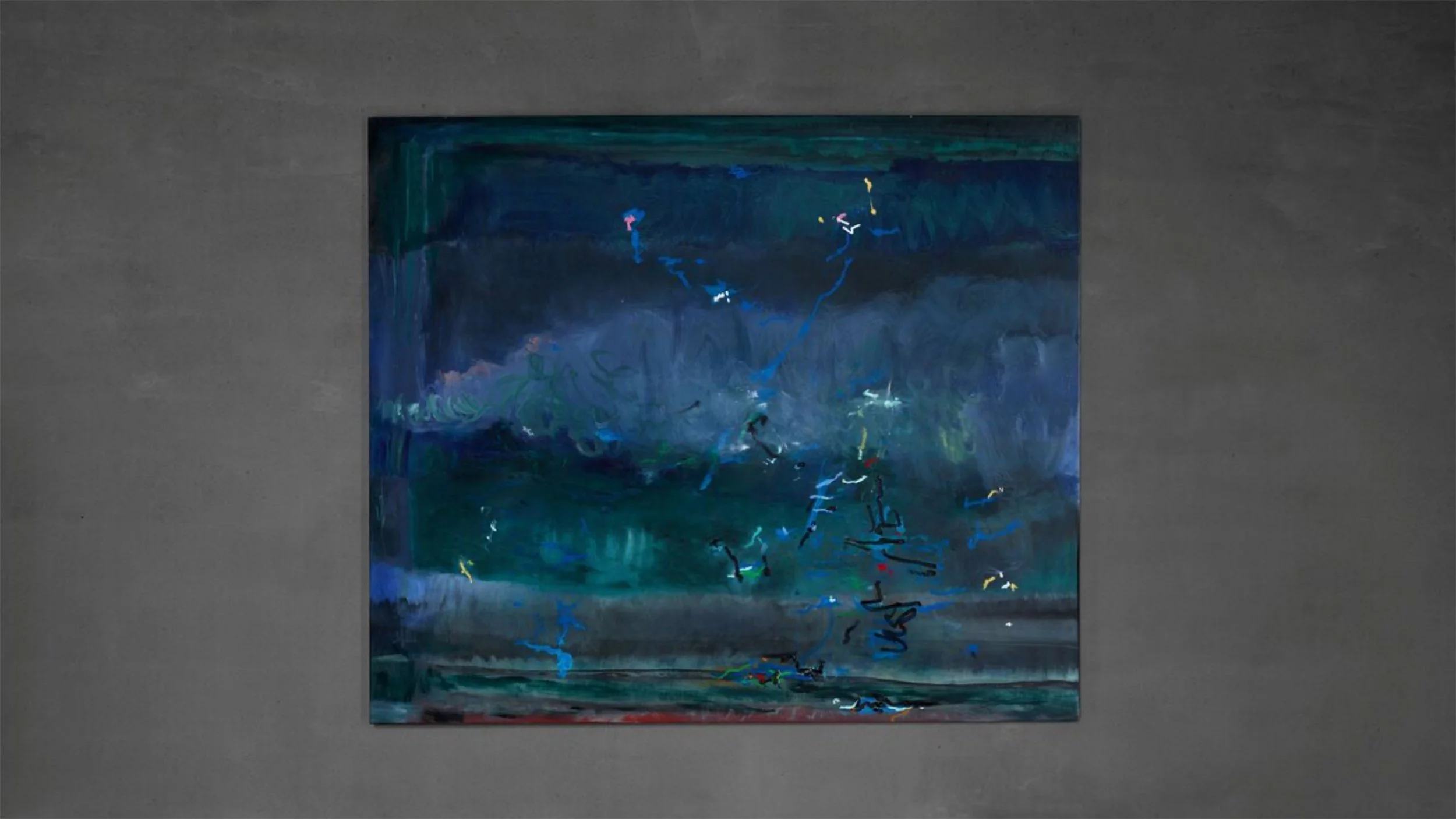
Angel Vergara, Chemin bois Senne acte 2, (2022)
Image © — @axelvervoordt_co
Yet Vergara's position as a painter remains intentionally unstable. When entering public or social environments, he frequently adopts other economic and social functions, using these roles to examine how the artist is perceived and what authority artistic action is given. His practice is profoundly contextual, but never impersonal. The hand, the gesture and the individual decision remain visible even when the work begins with appropriated imagery
It is this tension that gives Vergara's work its particular force. Images move, contexts change and social structures continually reframe what is seen, while paint retains the evidence of a momentary physical act. Through Axel Vervoordt Gallery, Angel Vergara's practice enters a wider conversation about time and perception, yet his central question remains resolutely contemporary: in a world increasingly constructed through images, what can the gesture of an artist still interrupt, reveal or change?
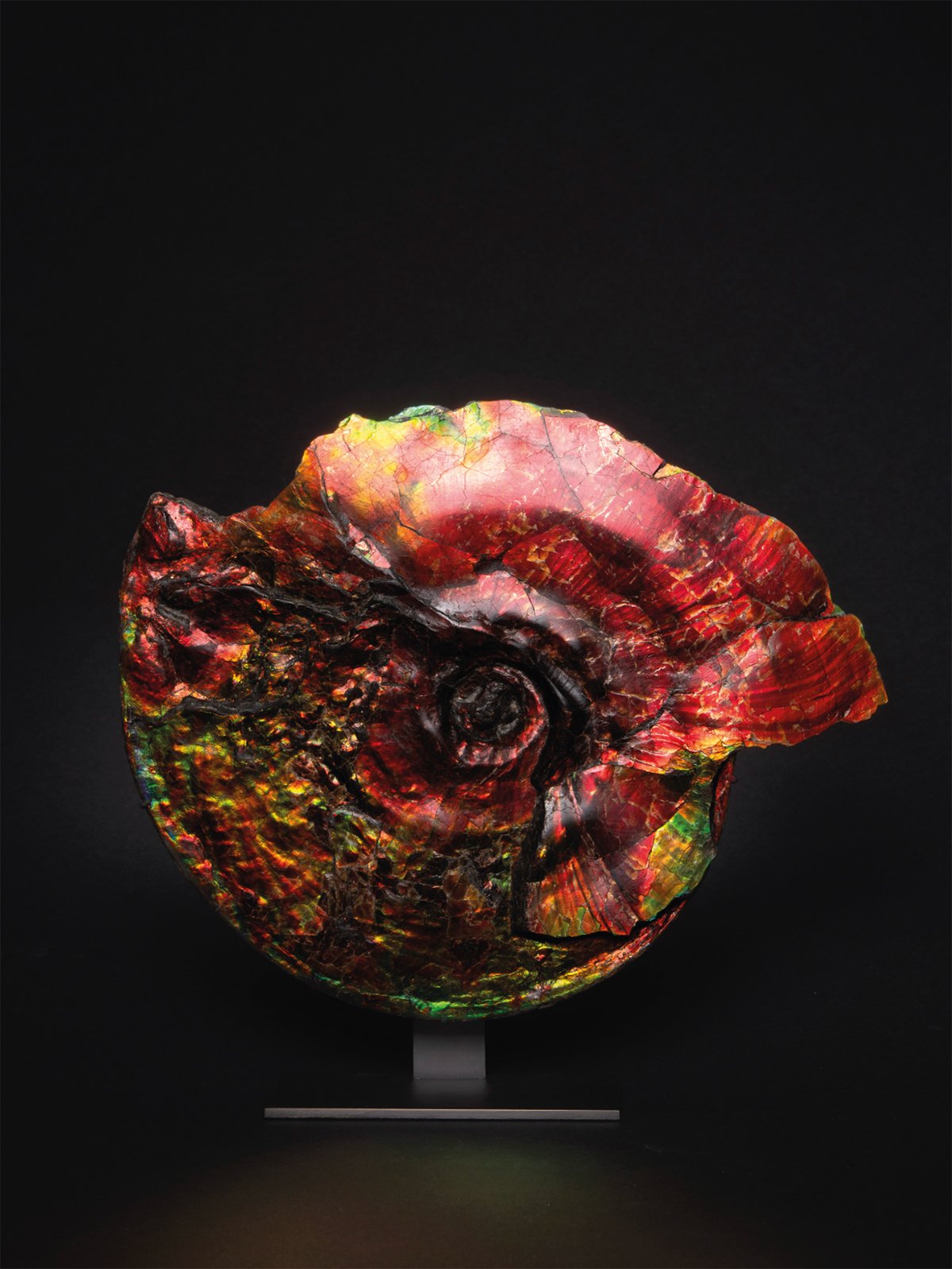
75-Million-Year-Old Ammonite Preserves an Extraordinary Natural Iridescence
—
Presented by London dealer ArtAncient, the fossilised marine shell from Alberta's Bearpaw Formation shifts from crimson and emerald to gold, violet and blue as light moves across its surface
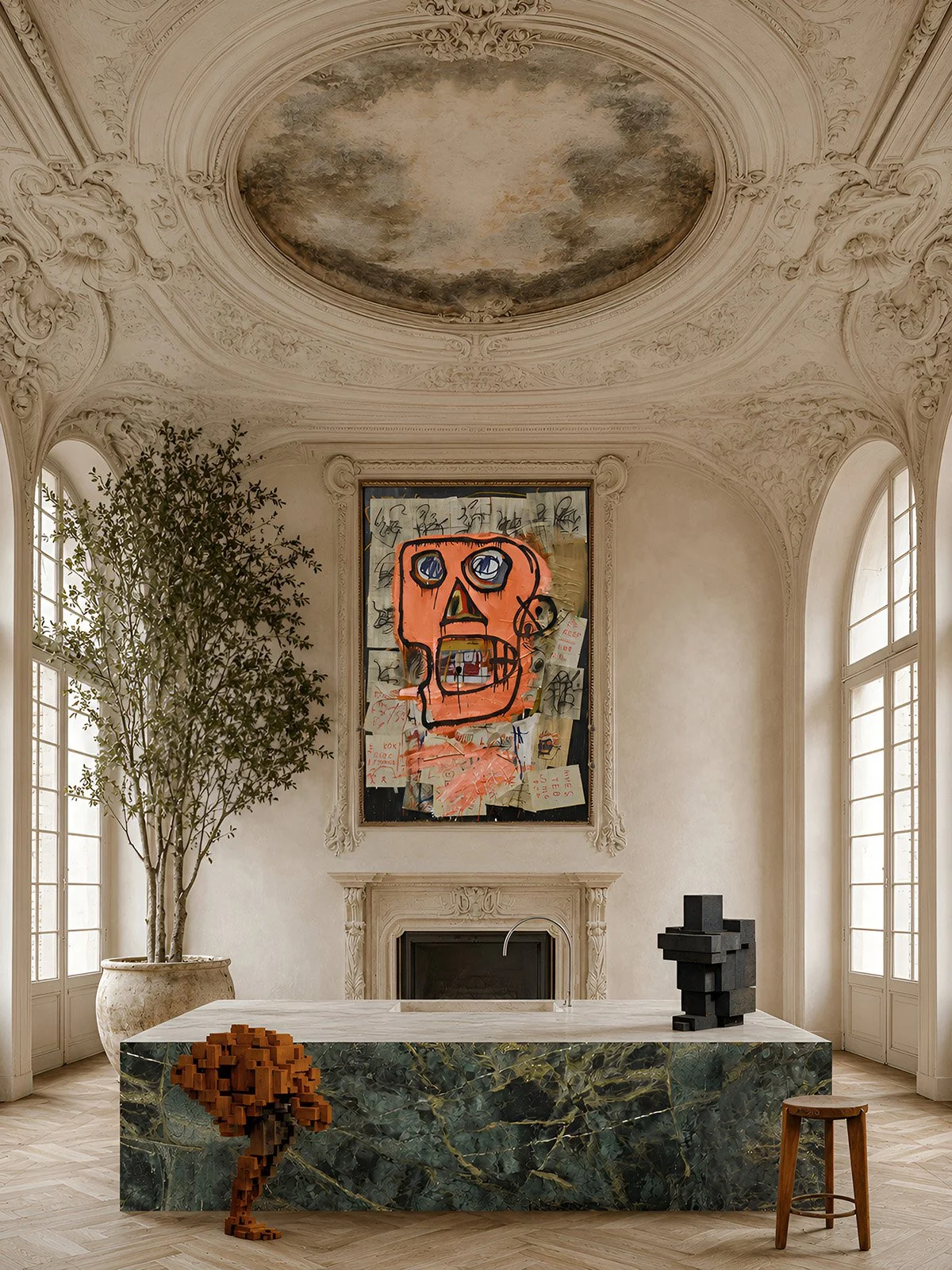
When the Room Becomes Part of the Collection
—
Works by Jean-Michel Basquiat, Antony Gormley, Thomas Houseago, Christopher Wool, Cy Twombly, Kazuo Shiraga and Mark Manders, together with Hellenistic and Roman antiquities, are contextually visualised by interior and furniture designer Brent Lee within interiors where chronology gives way to scale, material and spatial tension