

Vincenzo De Cotiis Foundation within Palazzo Giustinian Lolin
Image © — @olgasivel
FOUNDATION
Vincenzo De Cotiis Foundation through the lens of an Art Advisor
An art advisor’s iPhone photos trace the Vincenzo De Cotiis Foundation within Palazzo Giustinian Lolin, Venice
Vincenzo De Cotiis Foundation within Palazzo Giustinian Lolin
Image © — @olgasivel
Vincenzo De Cotiis Foundation within Palazzo Giustinian Lolin
Image © — @olgasivel
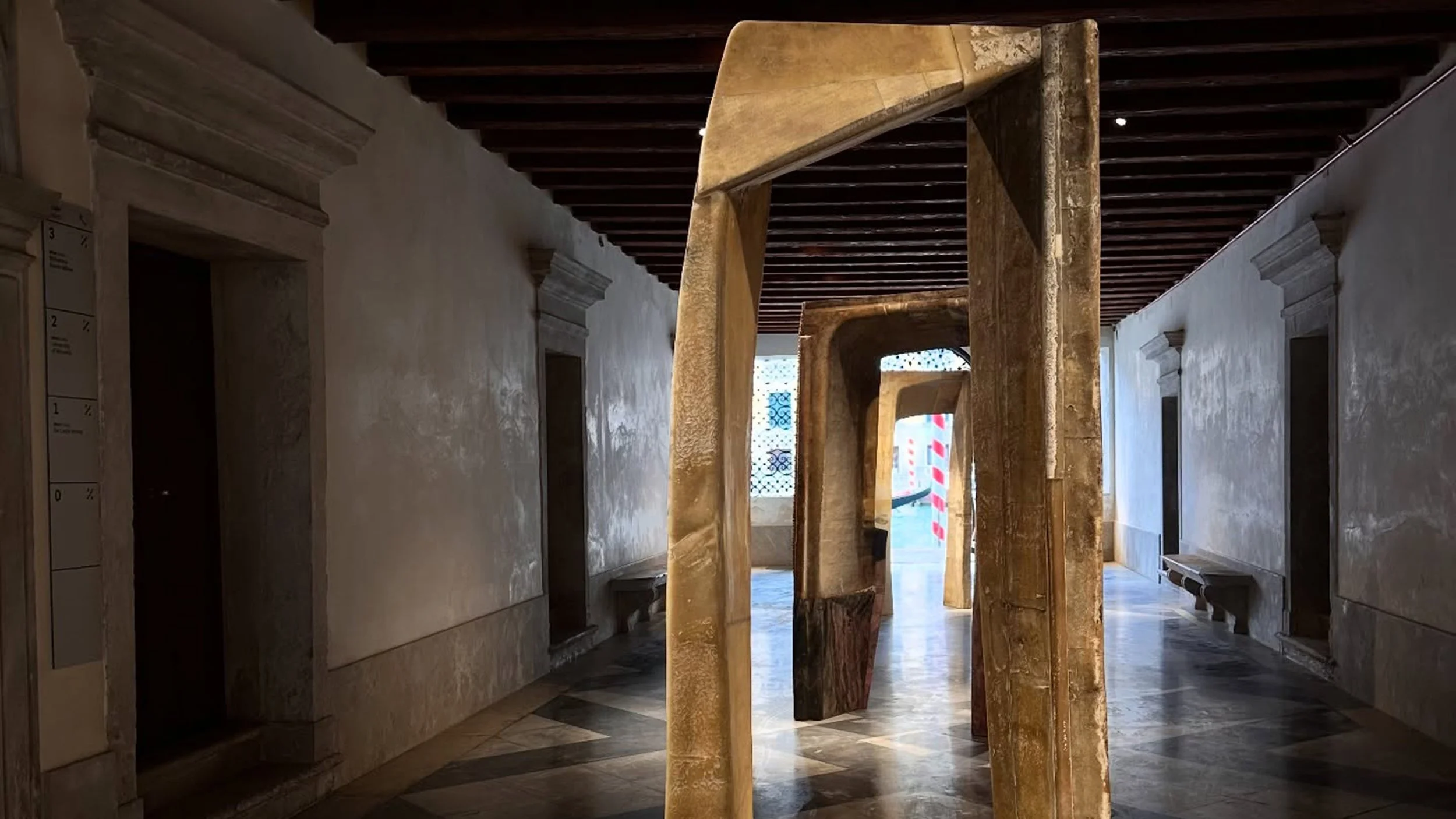
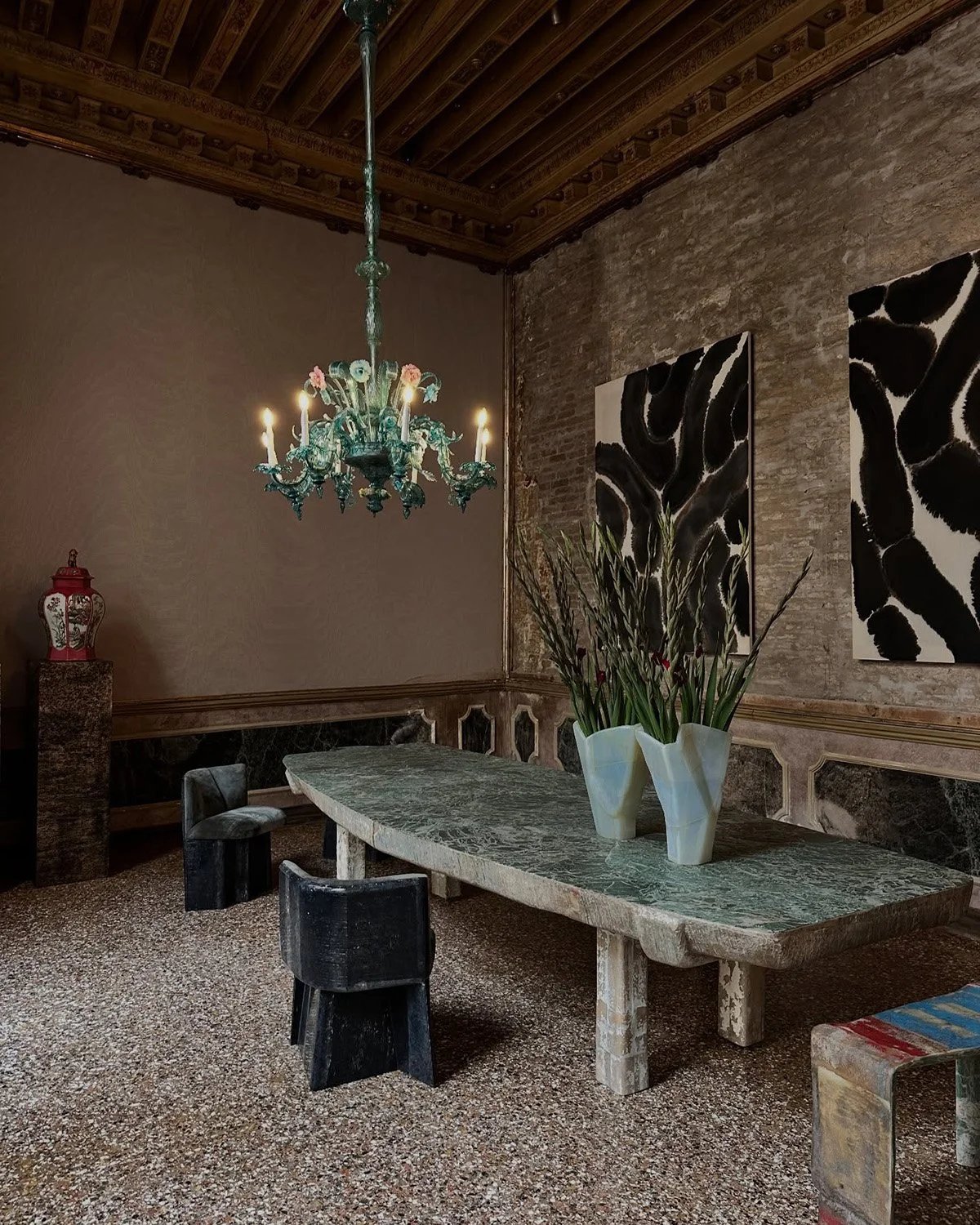
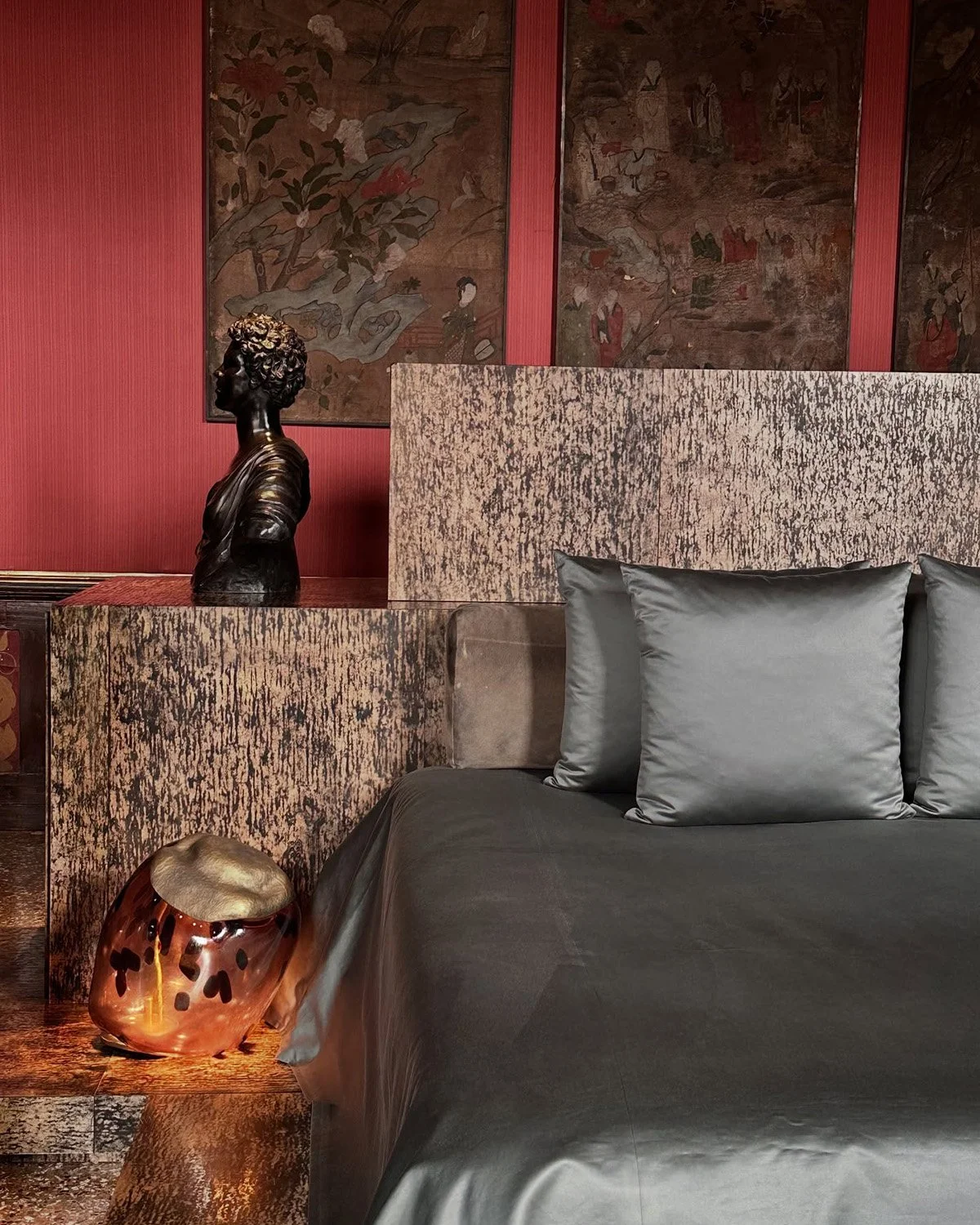
Some interiors announce themselves immediately. Others unfold room by room, detail by detail, through a slower accumulation of atmosphere. The Vincenzo De Cotiis Foundation, set within Palazzo Giustinian Lolin in Venice, belongs to the latter. In Olga Sivel’s photographs, the foundation is not reduced to a single defining view. It is revealed as a sequence of material encounters: a green stone table beneath a vivid Venetian chandelier, a translucent chair lit by the canal beyond, a corridor interrupted by sculptural bronze-toned forms, a bedroom held in deep red and shadow
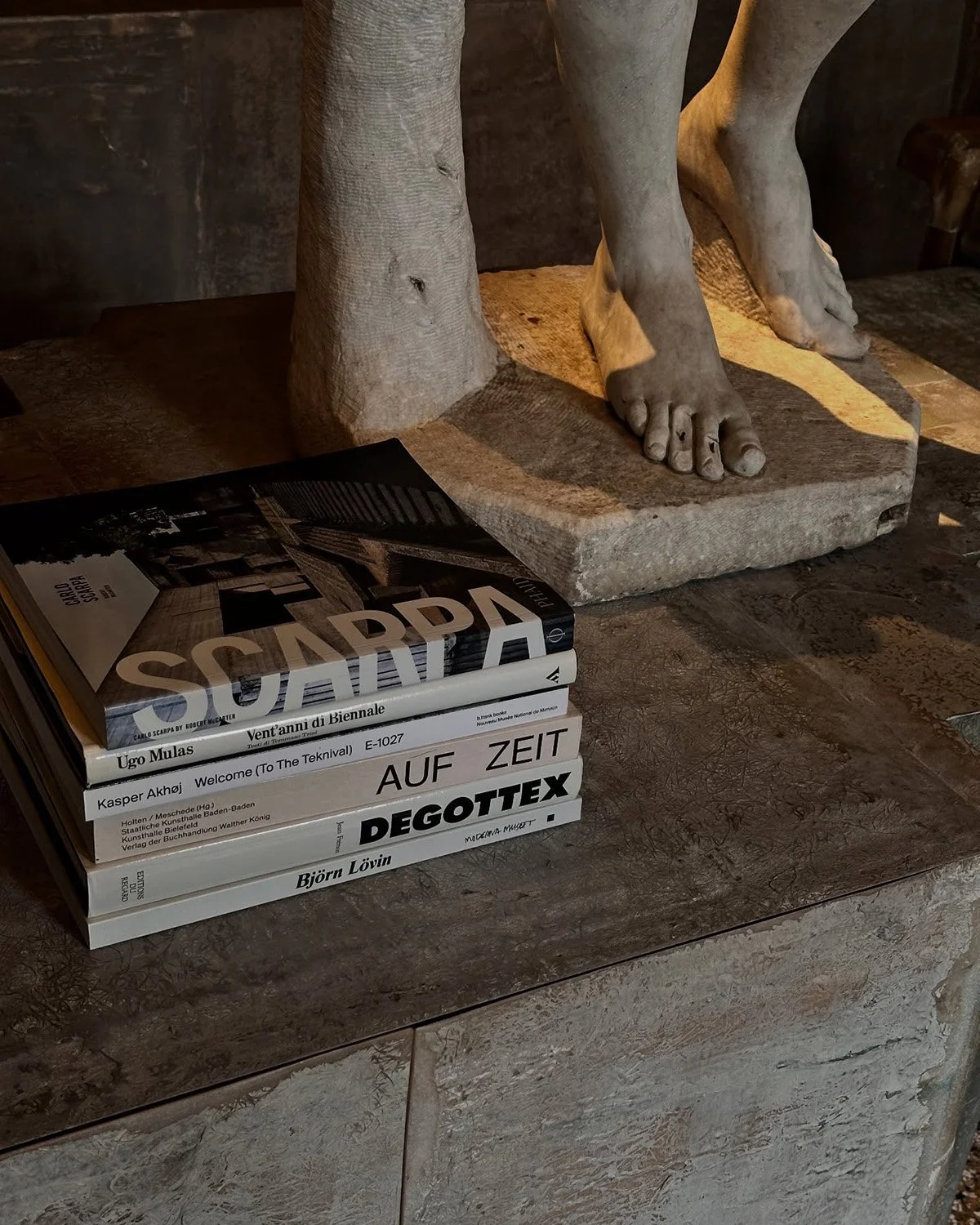
That mode of looking suits De Cotiis perfectly. His work has always occupied a space between architecture, collectible design, and sculpture, though what distinguishes it is not category but density. Materials carry emotional weight. Surfaces appear worked, oxidized, softened, or darkened by time. Forms are assertive, though never blunt. Even when isolated in a photograph, an object seems to hold the memory of the room around it
Vincenzo De Cotiis Foundation within Palazzo Giustinian Lolin
Image © — @olgasivel
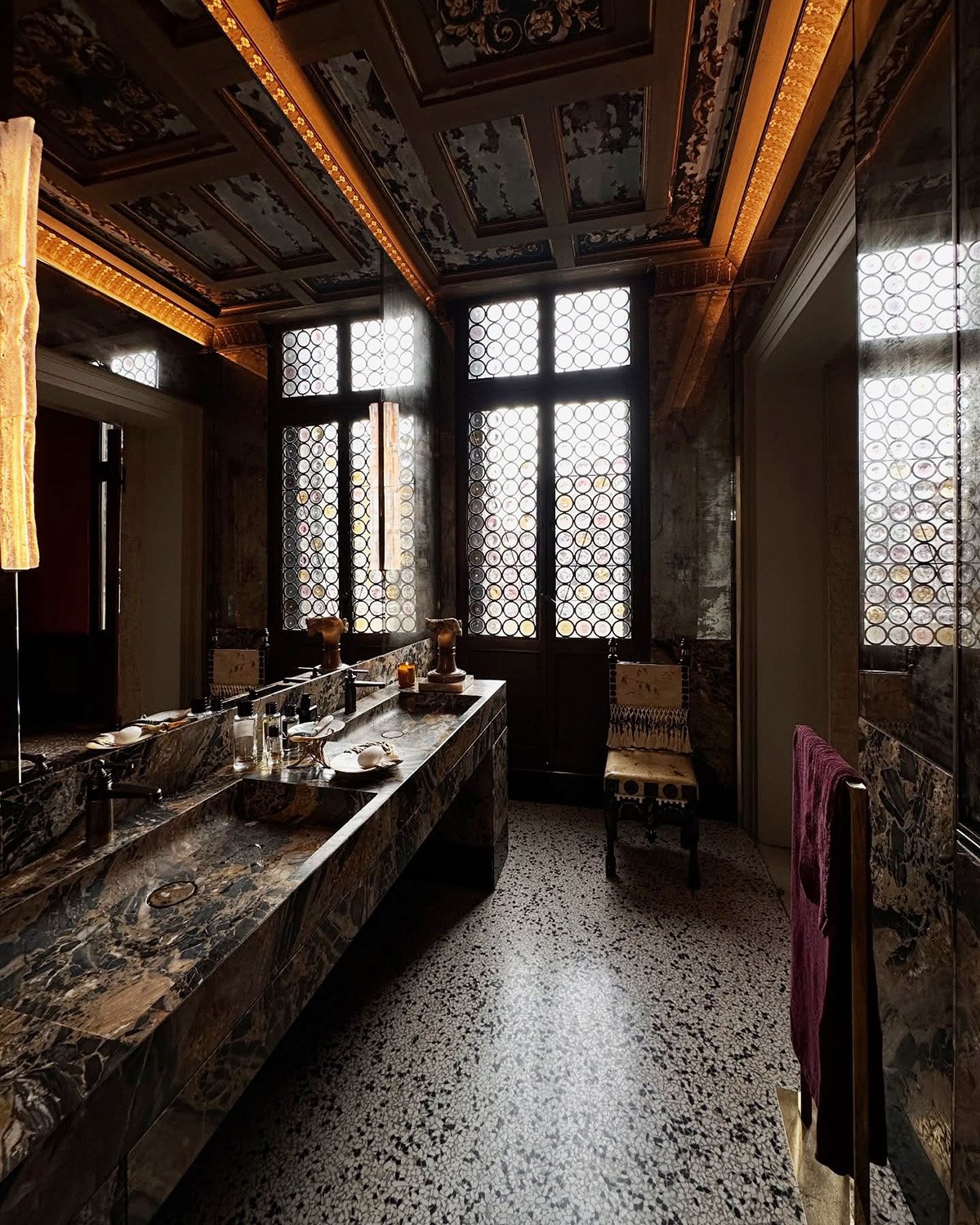
Vincenzo De Cotiis Foundation within Palazzo Giustinian Lolin
Image © — @olgasivel
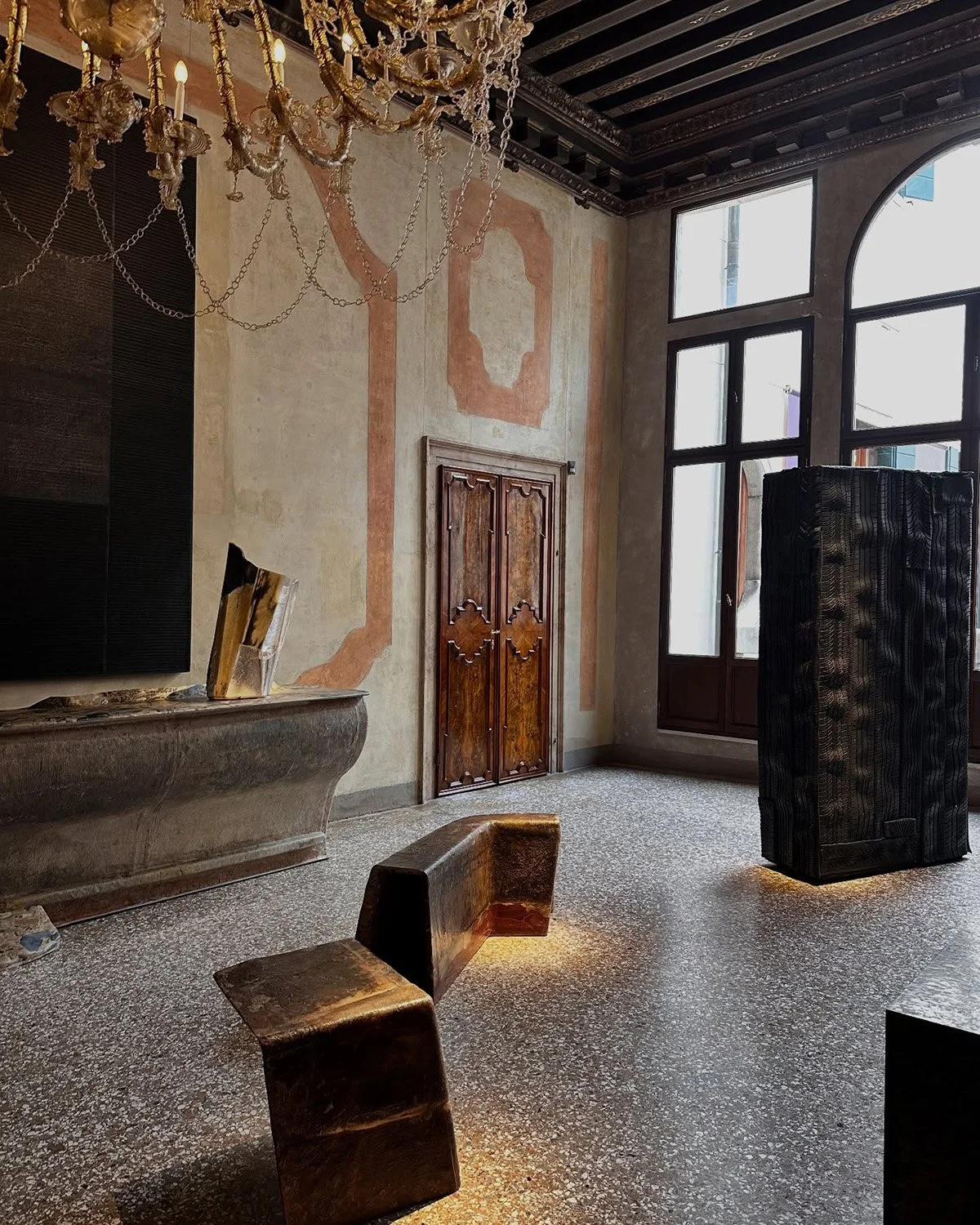
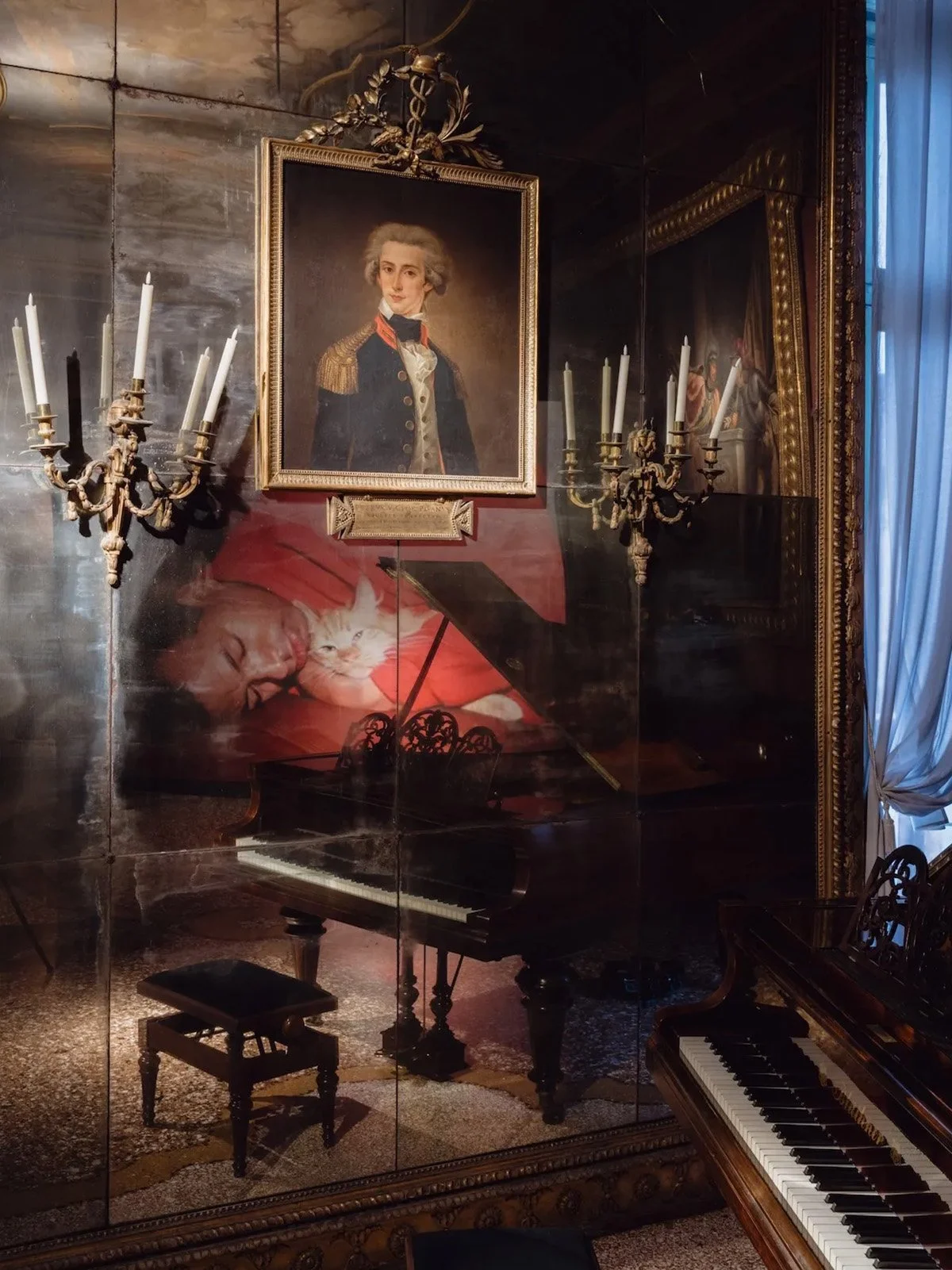
Within Palazzo Giustinian Lolin, that sensibility finds an especially resonant setting. These are not neutral interiors. Carved timber ceilings, terrazzo floors, large historical paintings, mirrored walls, and canal-facing windows all remain fully present. De Cotiis does not attempt to silence that history. Instead, he places his own language into direct contact with it. The effect is not one of contrast alone, but of compression, as though historical ornament, architectural wear, and contemporary material force have been drawn into closer alignment
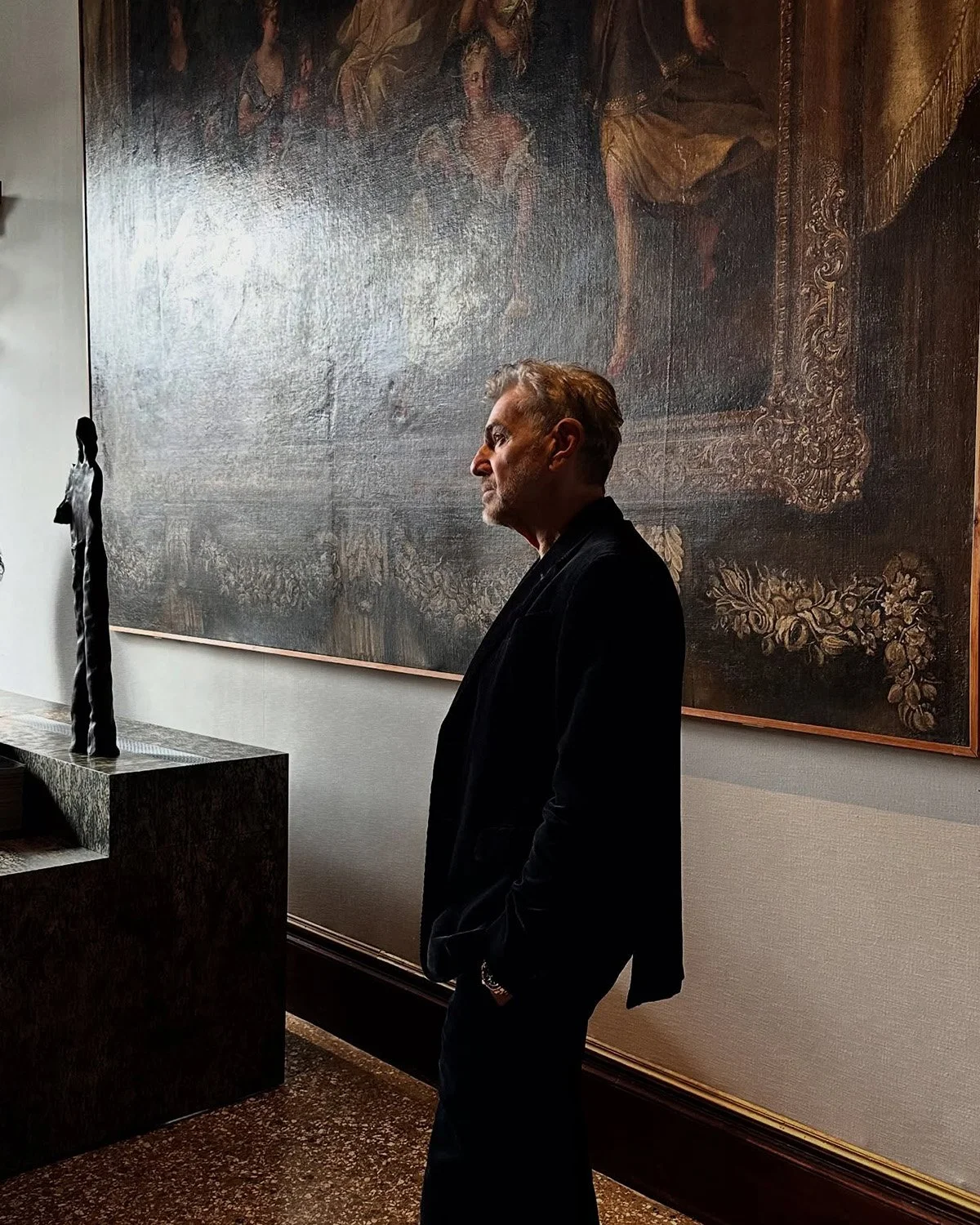
Sivel’s images capture that alignment with unusual clarity. A dining room, anchored by a monumental green table and dark chairs, feels neither staged nor over-explained. The room carries its own gravity. Elsewhere, De Cotiis himself appears in profile before an enormous painting, his presence momentarily becoming part of the same composition of shadow, scale, and patina. A compact chair with a mottled, almost painterly finish is photographed against an ornate backdrop, allowing the object’s strange authority to register without spectacle
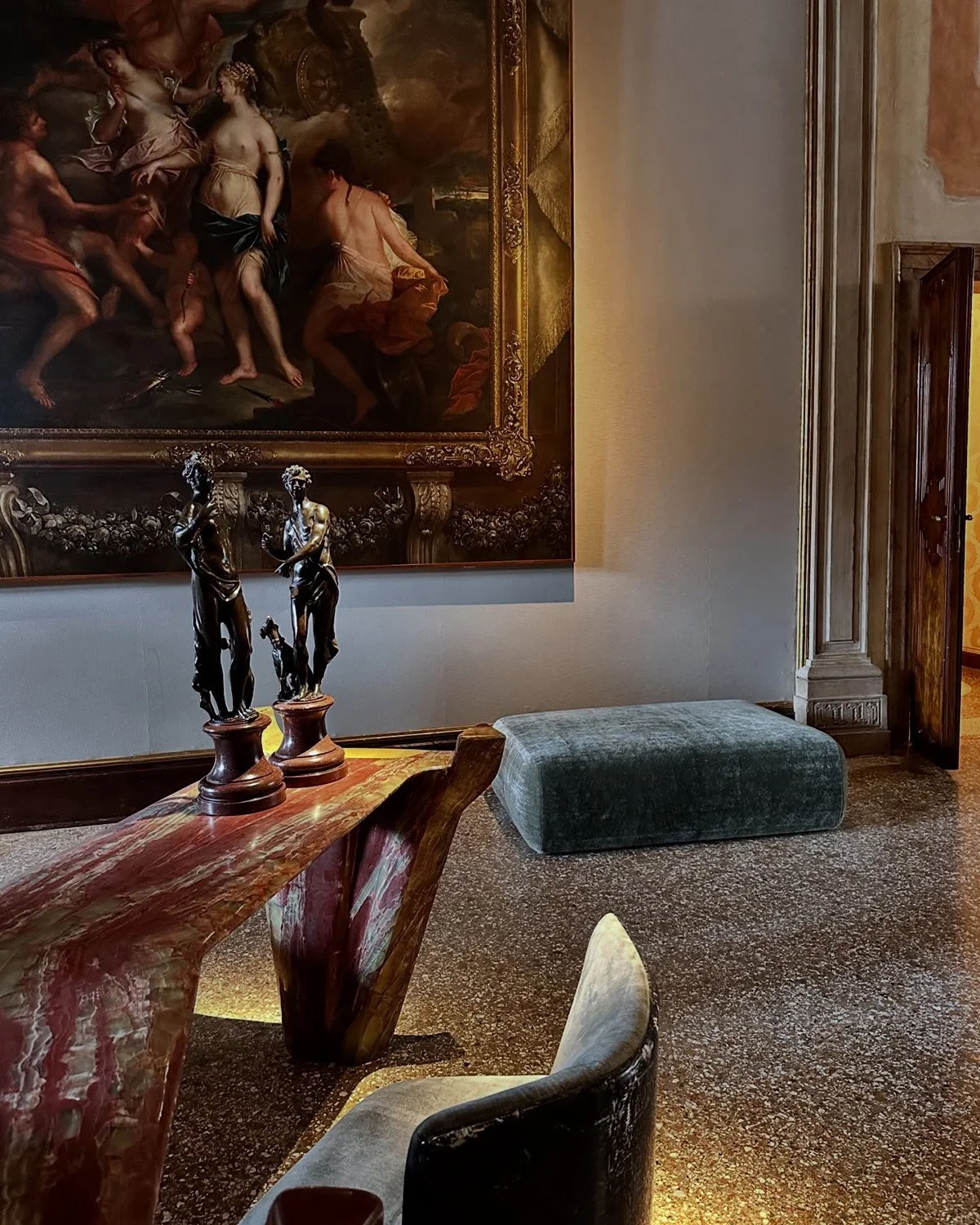
Vincenzo De Cotiis Foundation within Palazzo Giustinian Lolin
Image © — @olgasivel
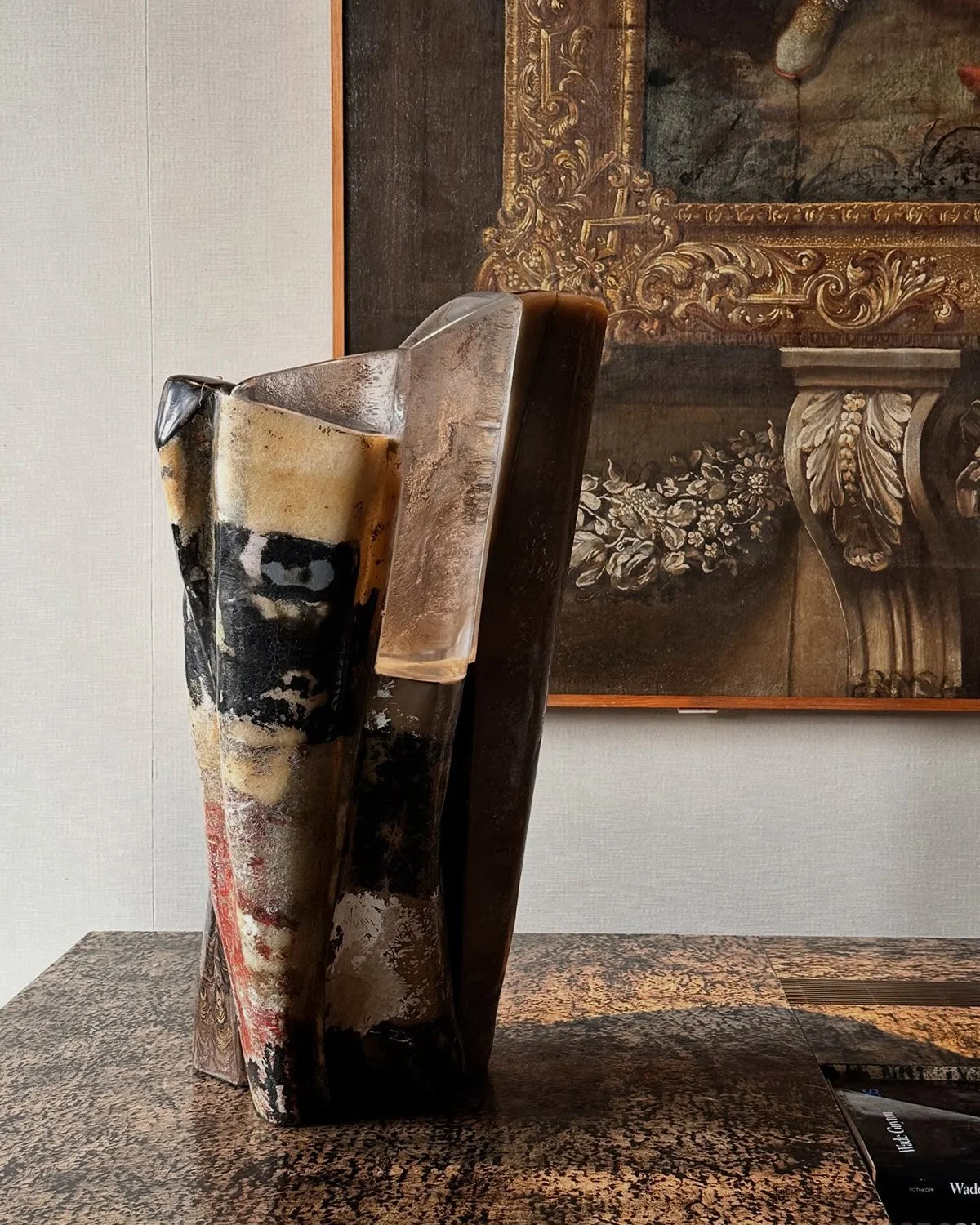
Vincenzo De Cotiis Foundation within Palazzo Giustinian Lolin
Image © — @olgasivel
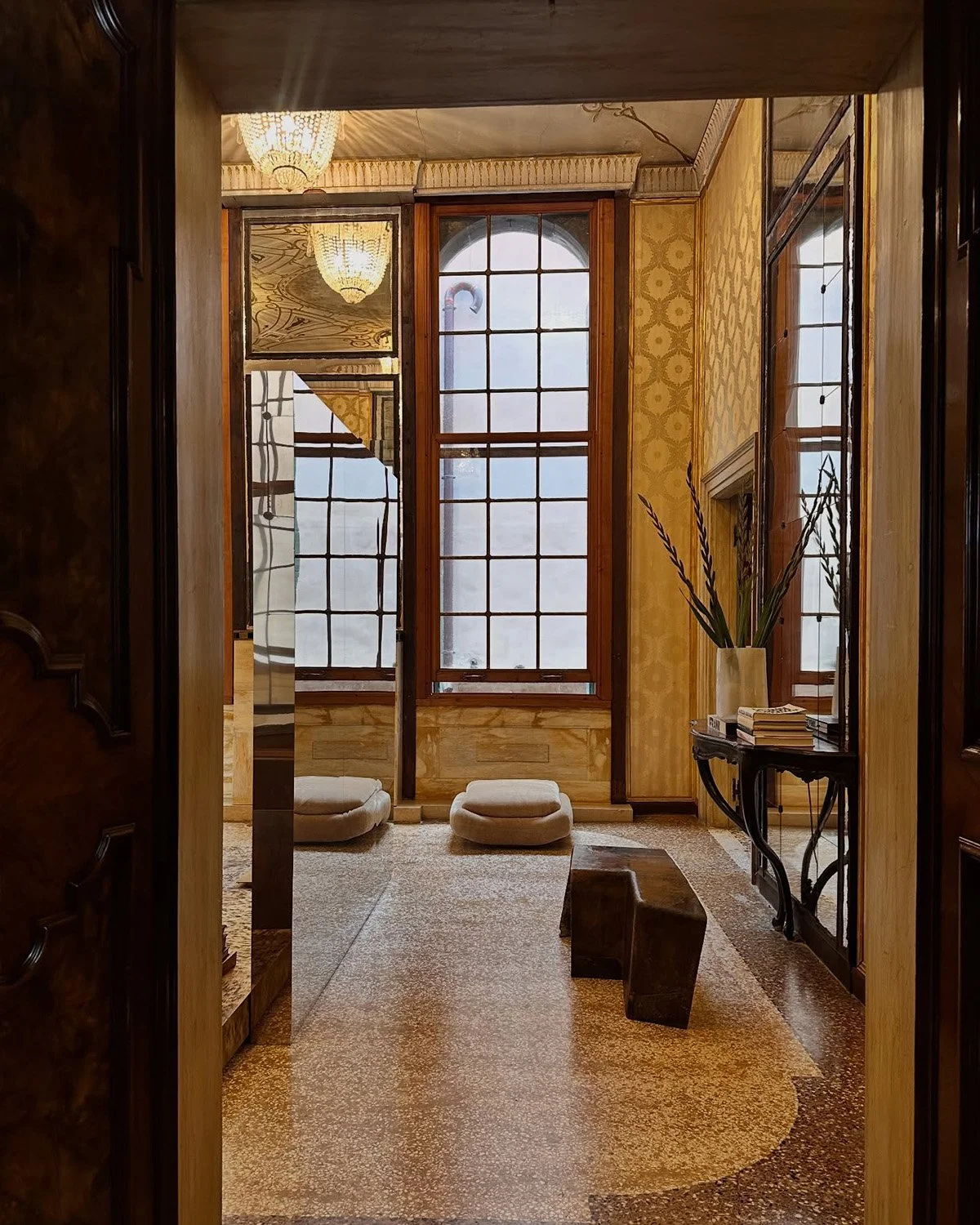
What emerges throughout is a sense of total environment. Furniture is never merely placed. It is absorbed into the architecture, the light, and the visual memory of the palazzo itself. A translucent amber-toned piece near an open window does not just occupy the sill; it catches the canal light and turns it into material. A reflective table sharpens the floor beneath it. A bed set against historic panels and rich red walls feels less like a display than an interior composed through tension, softness against hardness, saturation against restraint
Even the more intimate rooms hold that same level of control. The bathroom, lined in heavily figured stone beneath illuminated ceilings and patterned glazing, feels as carefully resolved as the larger reception spaces. Nothing is casual, yet nothing feels sterile. That balance is crucial. De Cotiis understands that refinement alone is never enough. What gives these interiors their charge is the presence of friction: polished against distressed, translucent against opaque, historical grandeur against contemporary mass
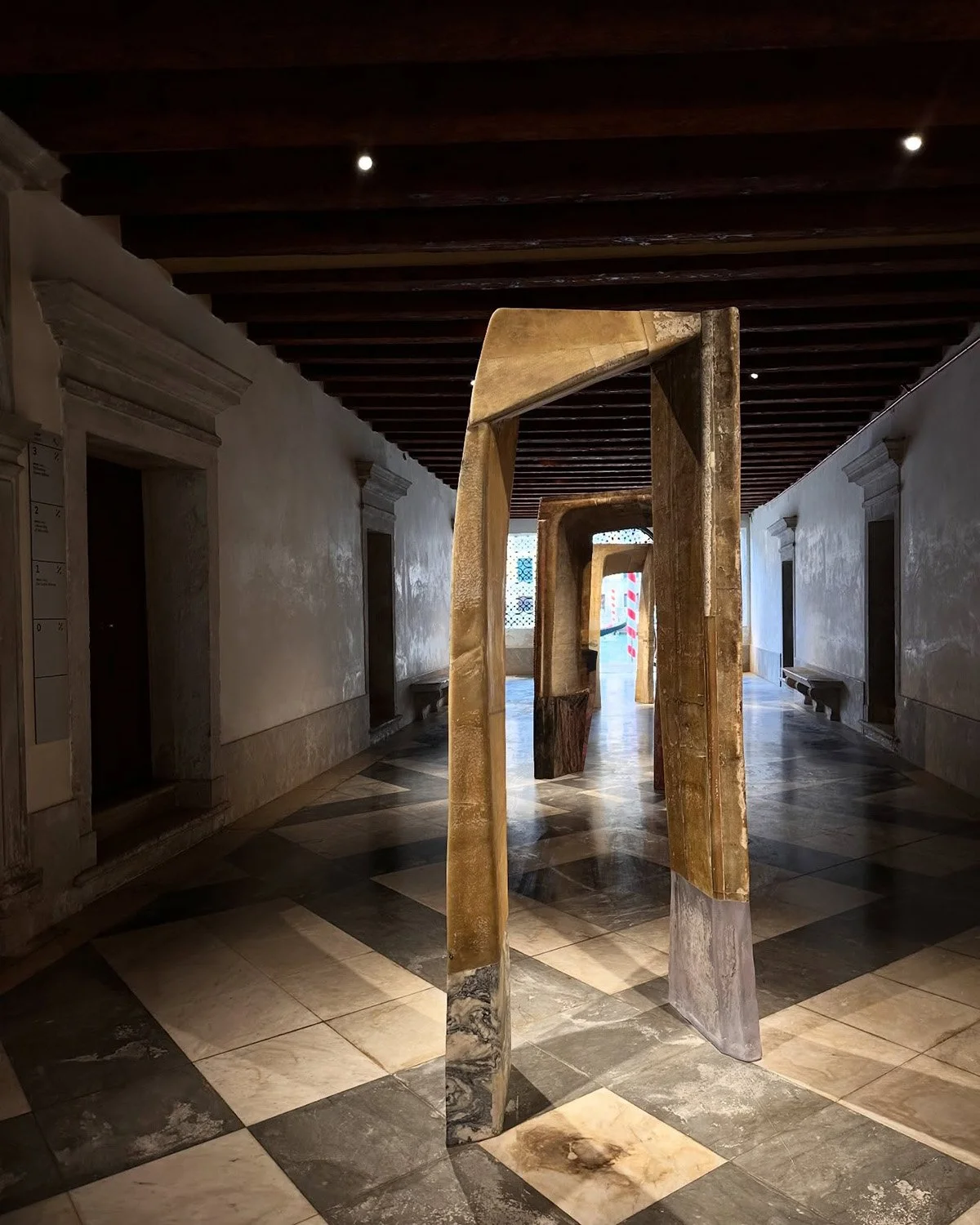
Vincenzo De Cotiis Foundation within Palazzo Giustinian Lolin
Image © — @olgasivel
Vincenzo De Cotiis Foundation within Palazzo Giustinian Lolin
Image © — @olgasivel
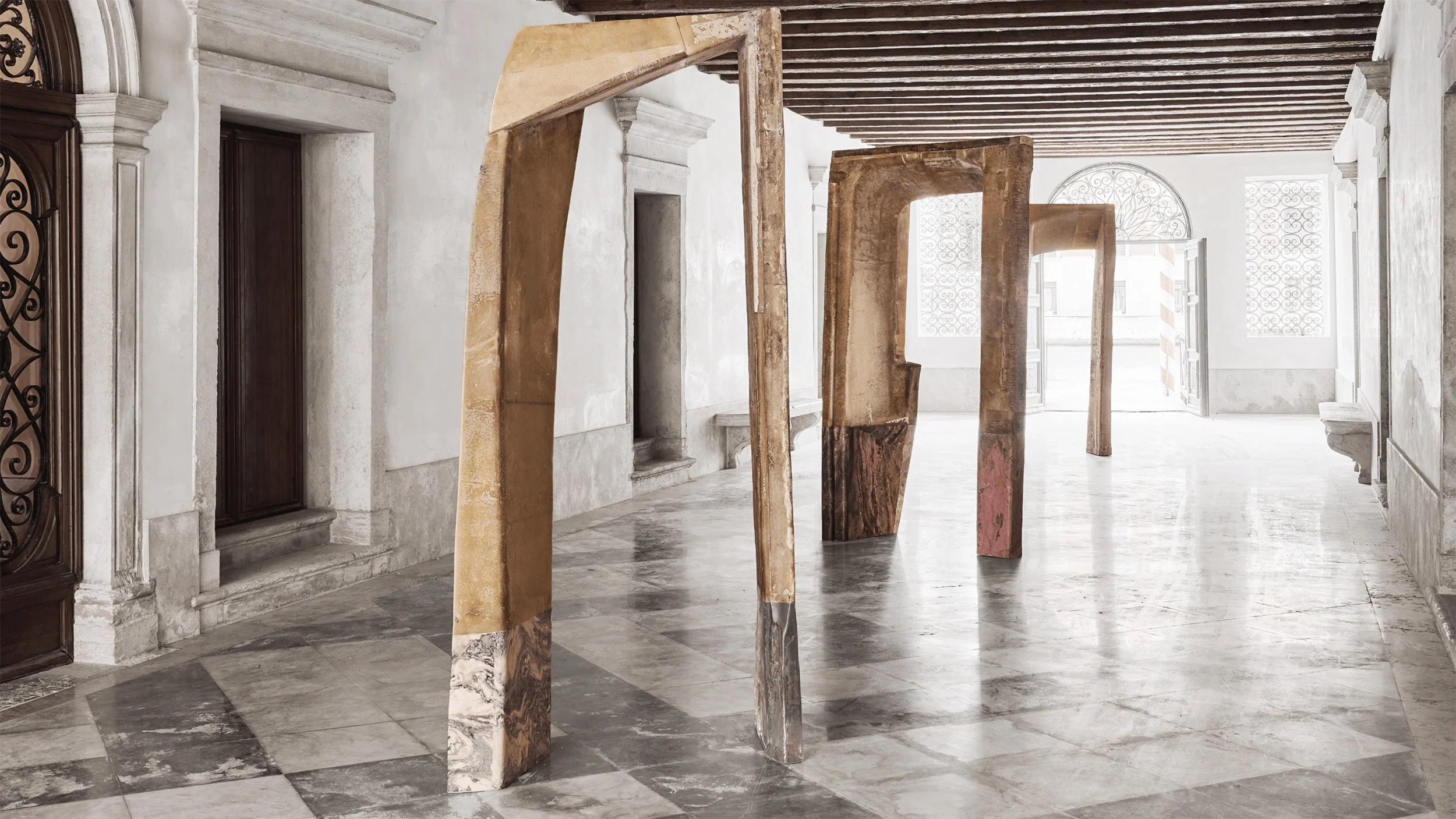
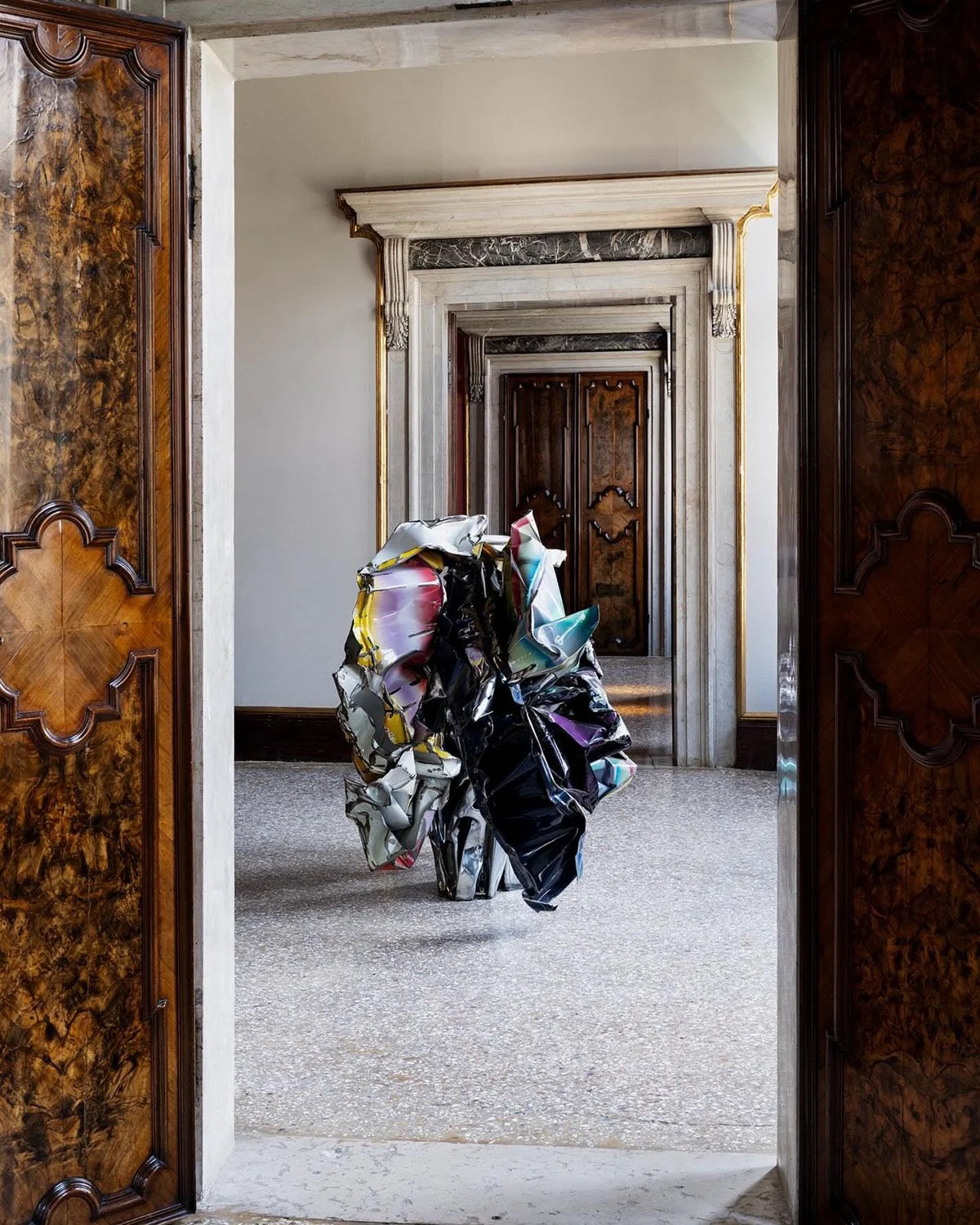
One of the strongest images shows a sculptural intervention standing within a long corridor, its upright forms cutting through the quiet of the palazzo with measured force. It is a distilled expression of the foundation as a whole. De Cotiis neither imitates the building nor defers to it. He allows architecture, object, and atmosphere to intensify one another. The rooms do not become backgrounds, and the works do not become intrusions. Each sharpens the next
That is perhaps what Olga Sivel’s photographs understand best. They do not flatten the foundation into documentation. They allow it to remain experiential, glimpsed through thresholds, held in shadow, interrupted by reflection, or caught in passing light from the canal. The result feels immediate and convincing. Rather than a polished survey, these images offer something closer to lived proximity
Through Sivel’s lens, the Vincenzo De Cotiis Foundation appears as a world built on sustained material intelligence and emotional control. Within Palazzo Giustinian Lolin, De Cotiis’s interiors and objects do not compete with history. They enter into it, adding another layer of depth, weight, and atmosphere to rooms that already carry centuries
Vincenzo De Cotiis Foundation within Palazzo Giustinian Lolin
Image © — @olgasivel
Vincenzo De Cotiis Foundation within Palazzo Giustinian Lolin
Image © — @olgasivel
Through Sivel’s lens, the Vincenzo De Cotiis Foundation appears as a world built on sustained material intelligence and emotional control. Within Palazzo Giustinian Lolin, De Cotiis’s interiors and objects do not compete with history. They enter into it, adding another layer of depth, weight, and atmosphere to rooms that already carry centuries
Vincenzo De Cotiis Reframes Minimalism Inside a Venetian Palace
—
At Palazzo Giustinian Lolin, Minimal Legends pairs works by Judd, Andre, Flavin, LeWitt, Martin, Rothko, Serra, and Stella with De Cotiis’ contemporary language of material, memory, and transformation
Dries Van Noten Makes Beauty an Act of Protest in Venice
—
The Belgian designer’s new foundation opens at Palazzo Pisani Moretta with an exhibition devoted to craftsmanship, contradiction and the difficult pursuit of beauty