

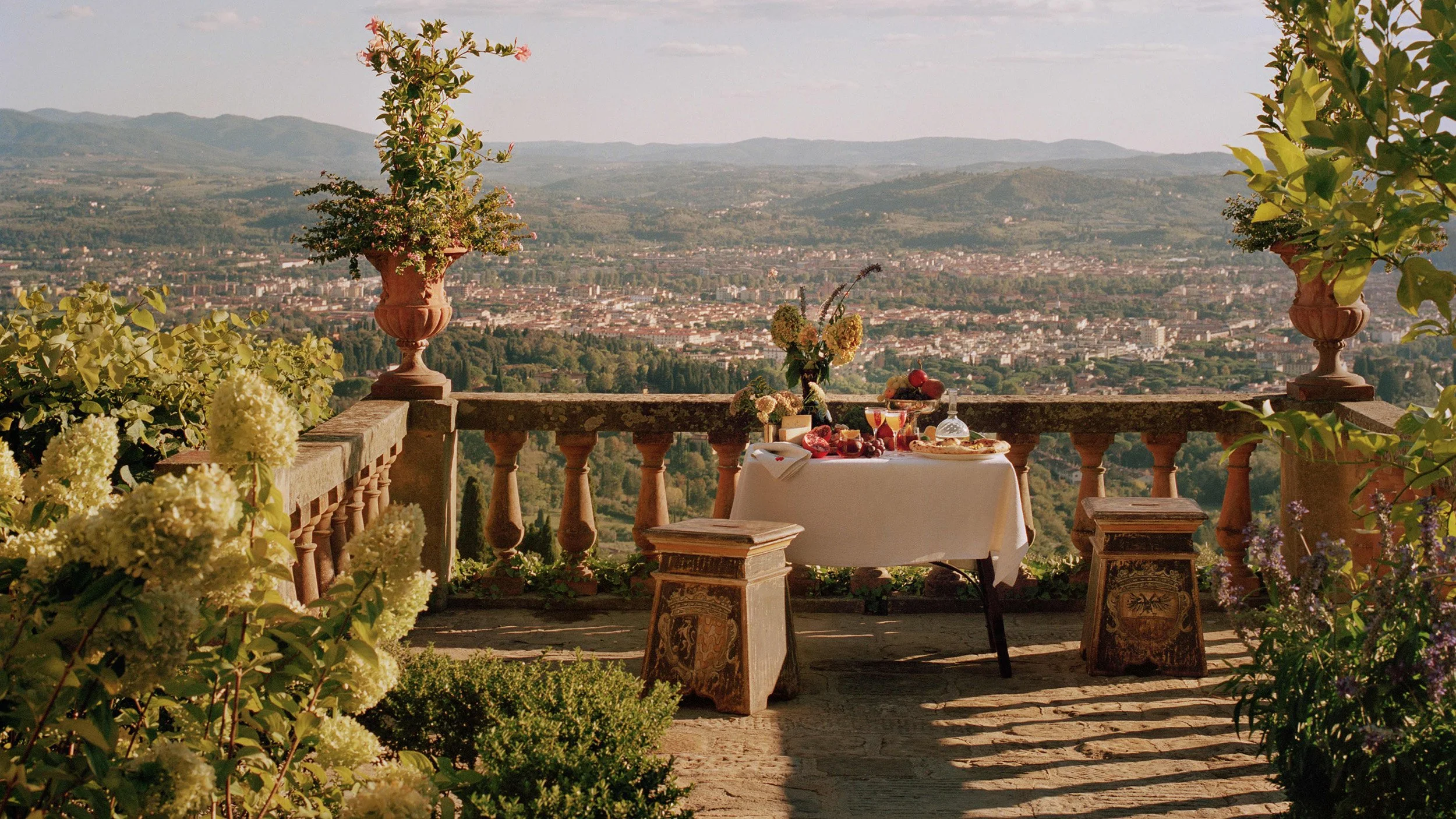
Villa San Michele
Image © — @francoishalard & @belmondvillasanmichele
HOTEL
Villa San Michele Through the Lens of François Halard
The French photographer turns his attention to a 15th-century Florentine monastery, capturing an architecture suspended between Renaissance history, human presence and the Tuscan landscape
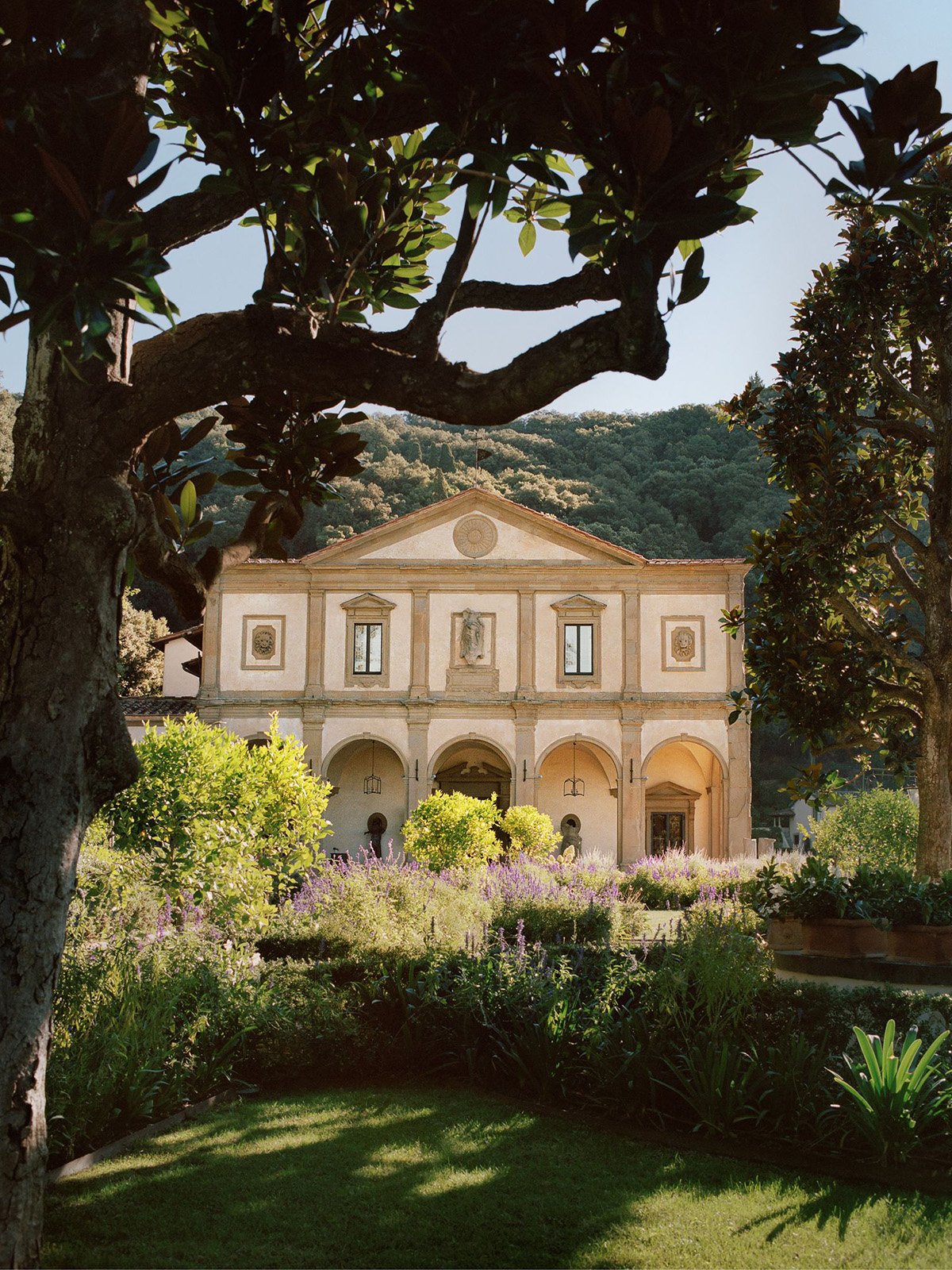
Gardens of Villa San Michele
Image © — @francoishalard & @belmondvillasanmichele
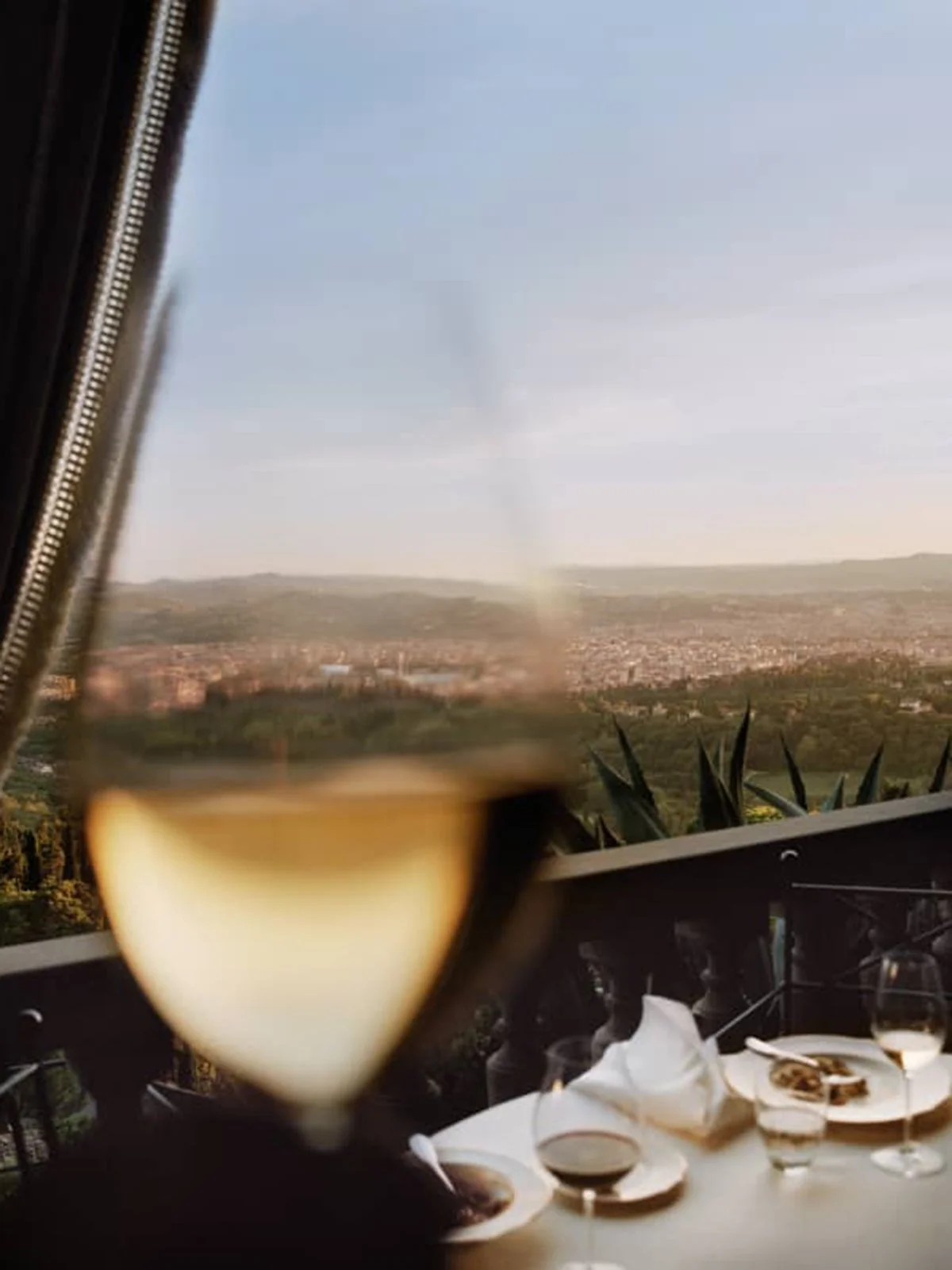
Dining at Villa San Michele
Image © — @francoishalard & @belmondvillasanmichele
High in the hills above Florence, Villa San Michele occupies a position that already seems designed for observation. The former Franciscan monastery looks across the city from Fiesole, its Renaissance architecture surrounded by woodland, terraced gardens and the shifting Tuscan light. In the photographs of François Halard, however, the celebrated villa becomes less a historic monument to be recorded and more a collection of fragments, impressions and quiet evidence of the lives that have passed through it
Halard has built a career around this sensitivity to place. His photographs rarely separate architecture from the people, objects and histories that give it meaning. Portraits of Cy Twombly and Richard Avedon possess an unusual familiarity, while his studies of Louise Bourgeois' sculptural work reveal an interest in the physical and emotional qualities of an artist's environment. At Villa Noailles in Hyères, even the rigorous geometry of early modernism is complicated by surfaces, shadows and signs of deterioration. His images do not attempt to correct the imperfections of a building. More often, those imperfections are precisely where his attention settles
Villa San Michele is particularly suited to this way of seeing. Originally constructed as a monastery for Franciscan friars in the early 15th century, the complex remains layered with evidence of its religious and architectural history. Frescoes survive across its walls, while stone passages, cloisters and historic rooms preserve a sense of the building's former life. The celebrated façade, traditionally associated with the school of Michelangelo, gives the villa an almost palatial presence, yet the architecture behind it retains the intimacy and measured proportions of a monastic retreat
Halard begins at this threshold. The façade is photographed beneath an intensely saturated Florentine sky, its pale architectural surface framed by blue with an almost theatrical clarity. Nearby, weathered stone walls enclose gardens established over centuries, their softened edges revealing the slow effects of climate and time. Rather than treating these marks as damage, Halard allows them to become part of the architectural portrait, recording a building whose history remains visible on its surfaces
Pictures by François Halard
Image © — @francoishalard & @belmondvillasanmichele
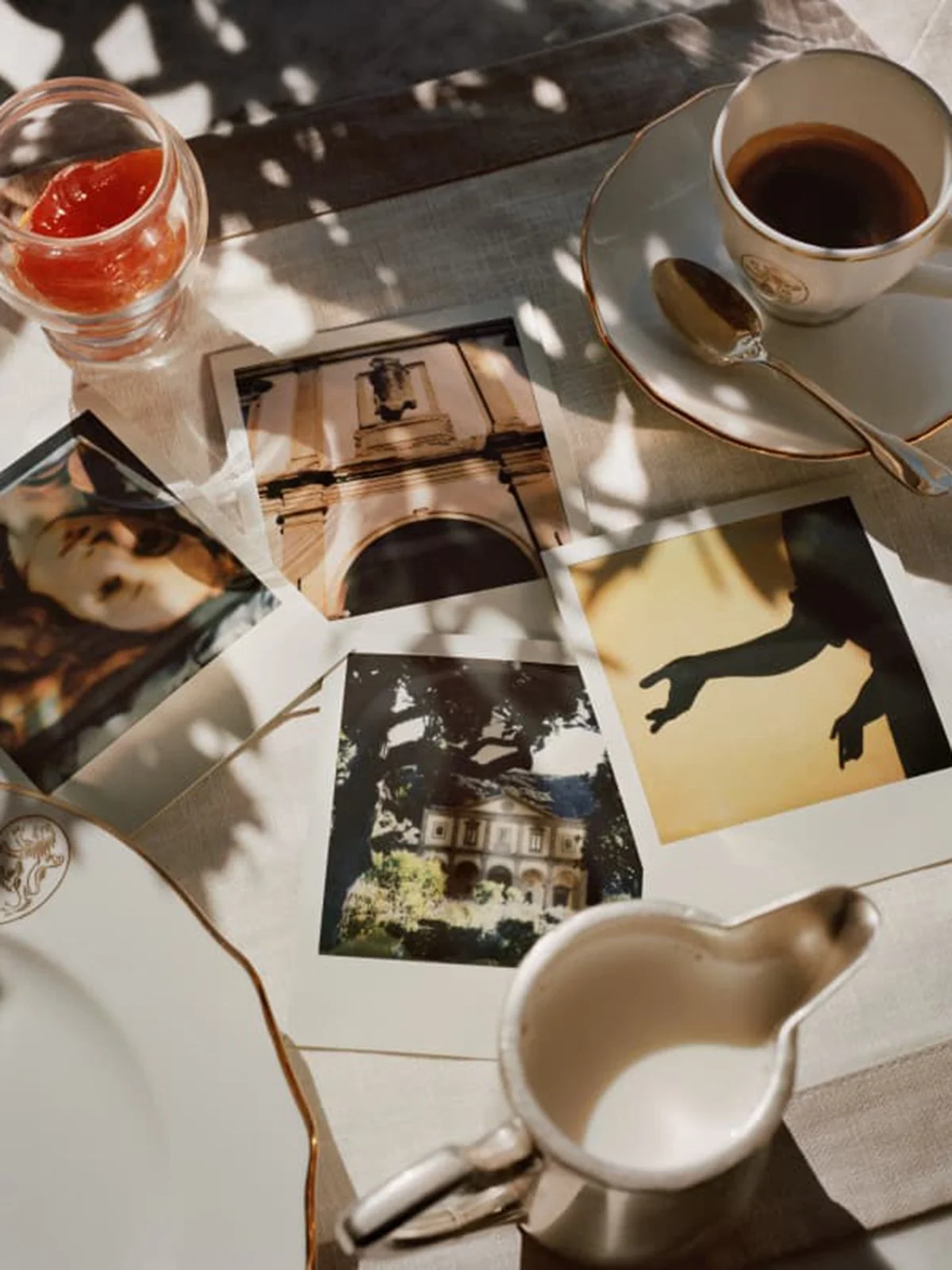
Breakfast dining at Villa San Michele
Image © — @francoishalard & @belmondvillasanmichele
Within the villa, his attention shifts continuously between the monumental and the almost incidental. Light moves across walls and historic rooms, producing deep shadows that conceal as much as they reveal. A pair of hands in motion becomes as significant as a fresco or architectural opening, while scattered Polaroids suggest the presence of people who may no longer be in the room. The hotel is photographed not as an immaculate composition but as a place temporarily occupied, left, returned to and remembered
This interest in the relationship between historical architecture and contemporary life has appeared repeatedly throughout Halard's work. In his Louis Vuitton Fashion Eye volume devoted to Greece, fragments of ancient architecture sit beside scenes of present-day life, collapsing the perceived distance between antiquity and the ordinary. His book 56 Days in Arles, created from Polaroids taken during the spring lockdown of 2020 at his hôtel particulier in southern France, similarly turns domestic space into an archive of time, light and personal observation
At Villa San Michele, these concerns find an architectural setting already constructed from multiple historical lives. The building's transformation from Franciscan monastery to cultural destination has never entirely erased its earlier identity. Halard's photographs heighten this ambiguity. A room may appear contemporary through the presence of a table or casually placed object, yet the surrounding stone and painted surfaces immediately return the image to another century. Past and present are not presented as opposing conditions but as elements occupying the same frame
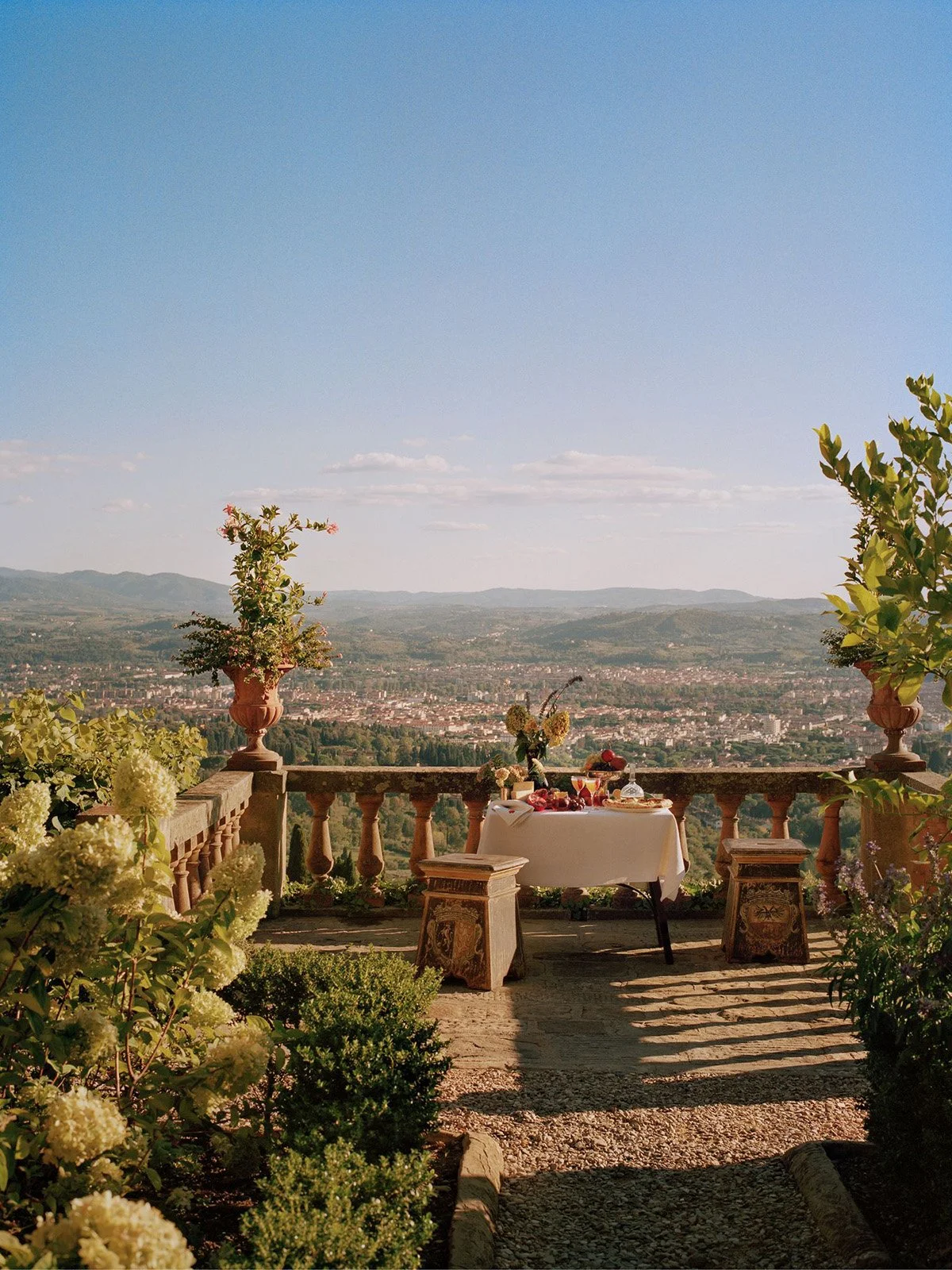
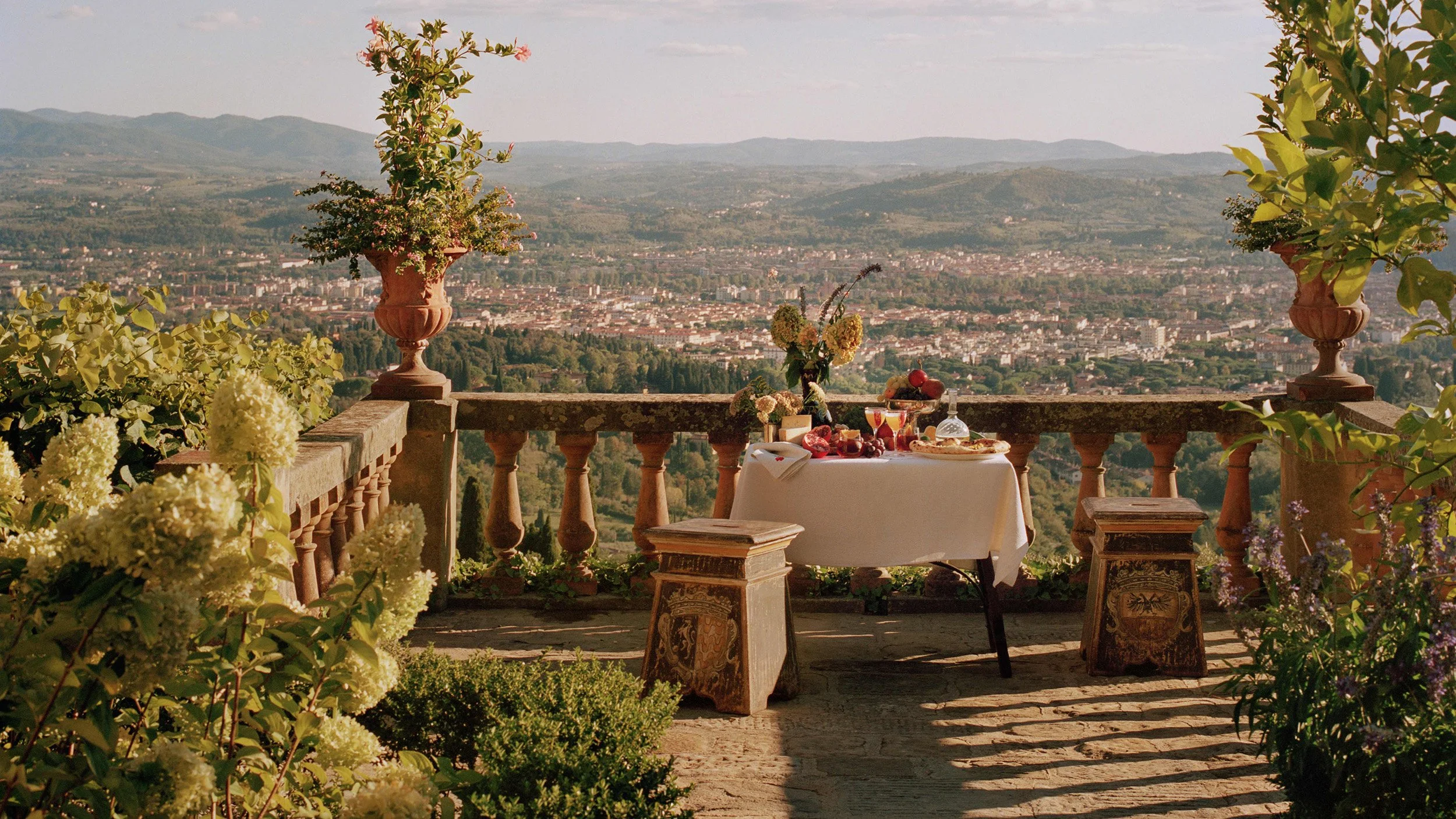
From the terrace of La Loggia, the villa's restaurant overlooking Florence, Halard photographs an empty dining table. The absence of guests becomes the subject. Chairs remain positioned around the table and the setting appears prepared for an encounter that has either just ended or is about to begin. Against the expansive landscape beyond, the image turns a hospitality space into something more intimate, suggesting the accumulated conversations and private histories that architecture quietly absorbs
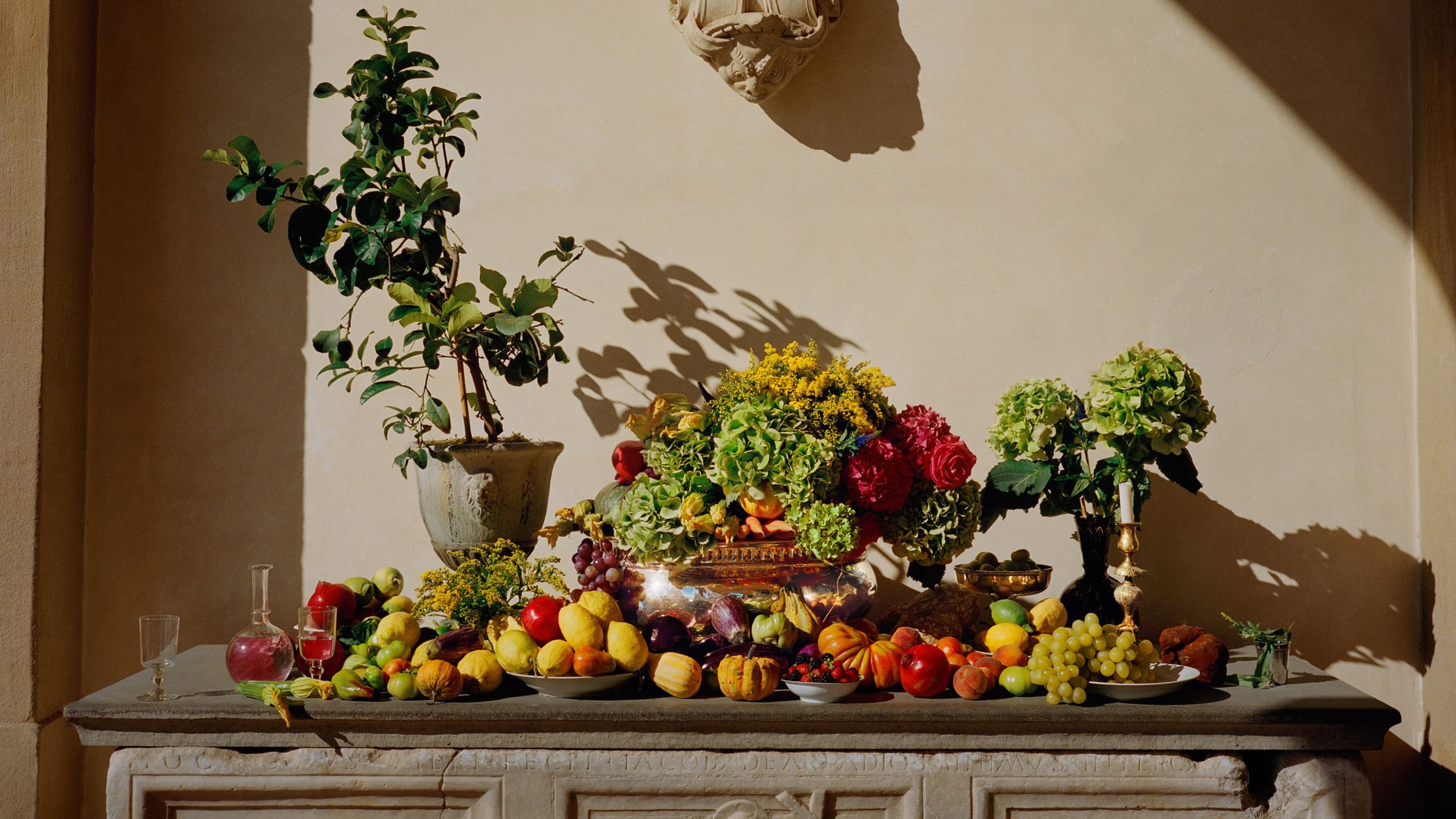
Fruit platter
Image © — @francoishalard & @belmondvillasanmichele
The villa's relationship with the surrounding landscape is equally important. Carved into the Fiesole hillside, Villa San Michele is connected visually and culturally to Florence below while maintaining the separation of a retreat. The nearby woodlands are associated with Leonardo da Vinci's early experiments with flight, adding another layer to a landscape already dense with Renaissance history. From the terraces and gardens, the city appears at a distance, allowing the villa to exist between cultural proximity and physical isolation
As the Tuscan light changes throughout the day, the stone architecture assumes different characters. Strong daylight defines the severity of masonry and Renaissance detail, while the late afternoon sun softens the building into warmer tones. Gardens, terraces and historic interiors become part of the same sequence of spaces, unified less by decoration than by the constant presence of light and landscape
Halard's photographs resist the conventional language of architectural documentation. There is no attempt to systematically explain the villa or provide a complete visual inventory of its rooms. Instead, he reconstructs the place through selected fragments: the erosion of a wall, a darkened interior, a hand, a photograph left in the sun or a dining table waiting above Florence. Together, these images create an impression of architecture as something continually rewritten by those who encounter it
Villa San Michele has existed for more than six centuries, passing from religious seclusion into a new life as a destination for travellers. Through François Halard's lens, its architecture is neither frozen in its Renaissance past nor entirely defined by its present use. It remains suspended somewhere between the two, a Florentine landmark where stone, memory and human presence continue to accumulate above the city
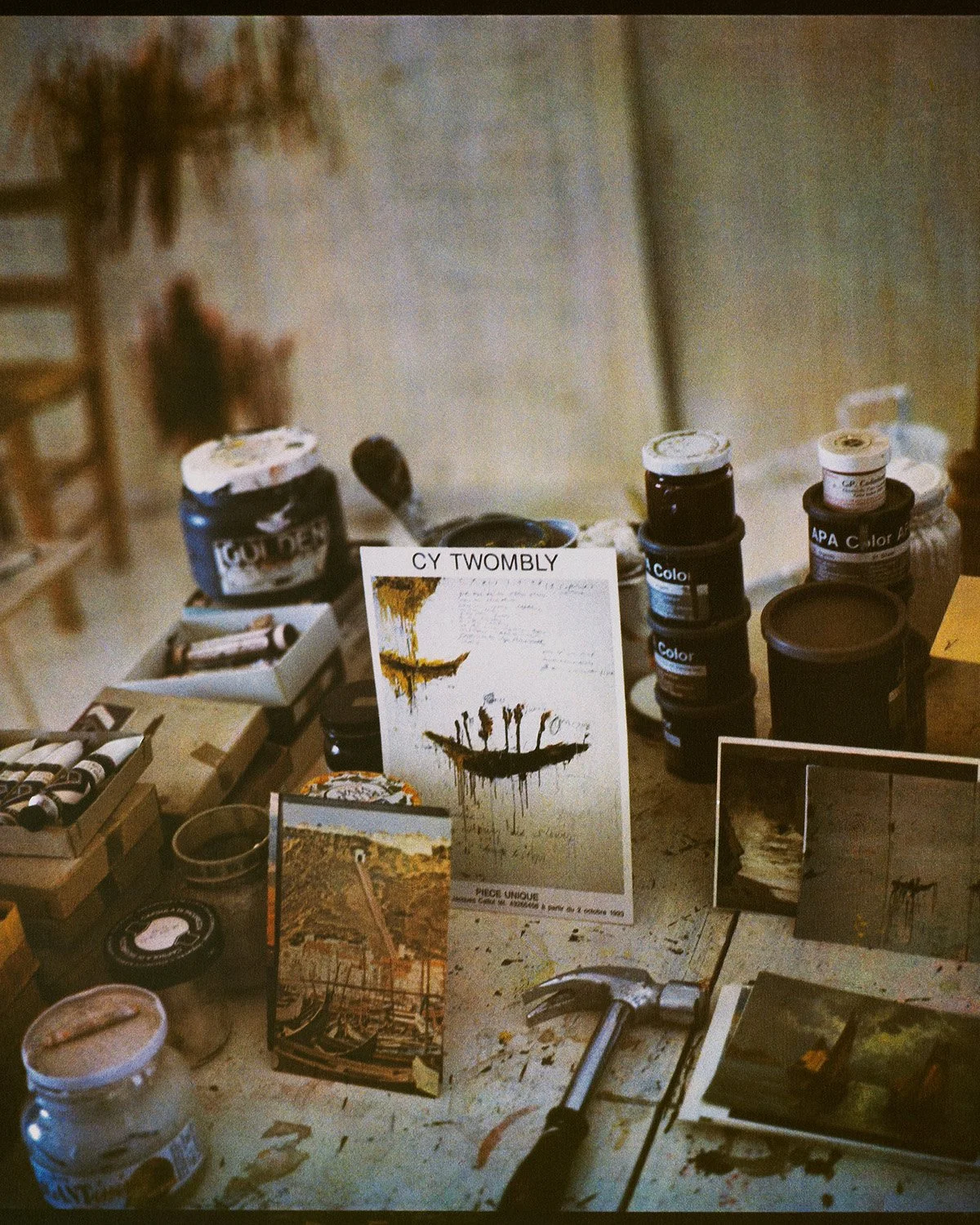
François Halard’s Life Among Houses, Studios and Singular Spaces
—
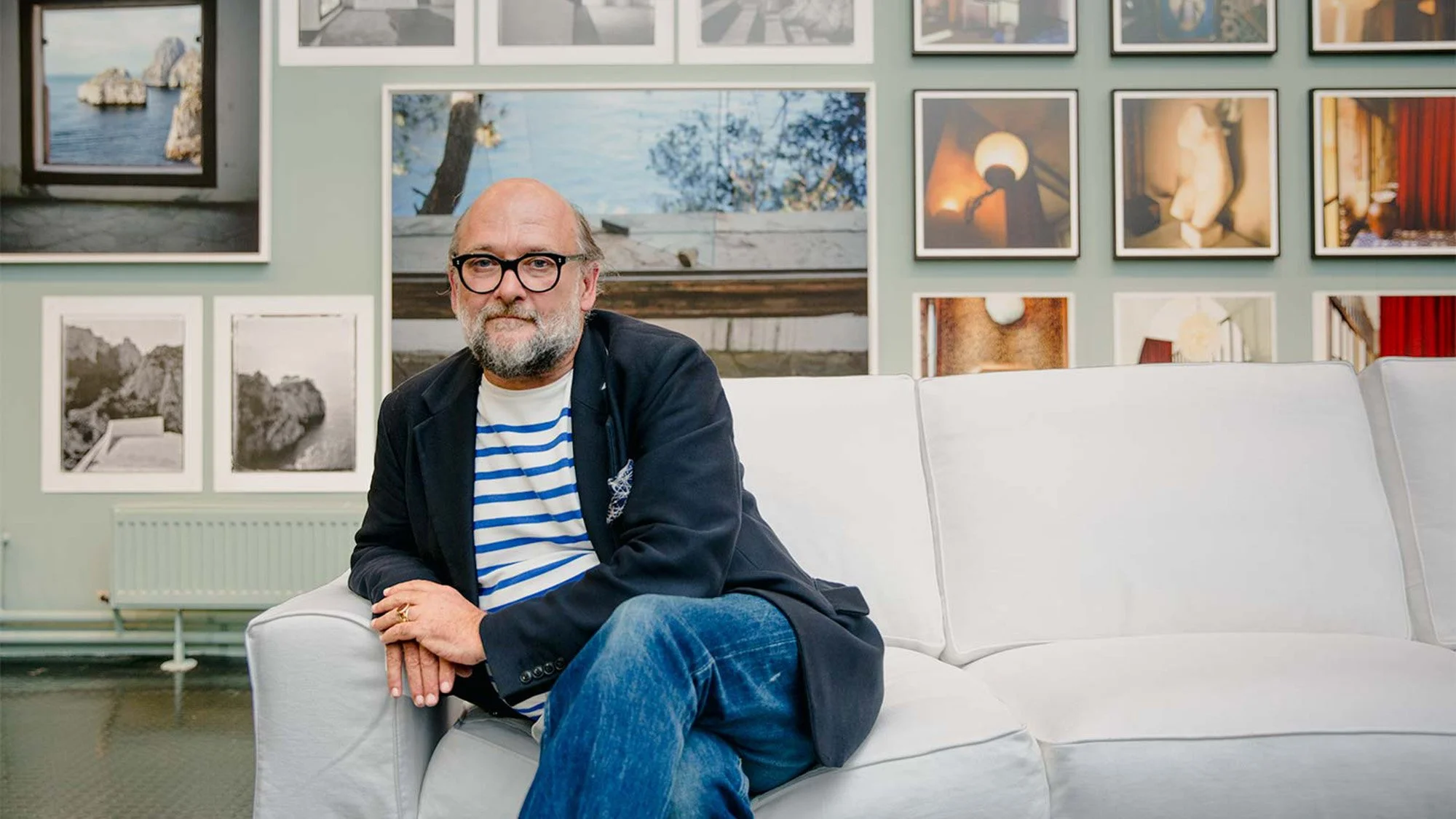
Between his Greenwich Village apartment and an 18th-century hôtel particulier in the South of France, the photographer has spent more than three decades moving through the private worlds of artists, architects and collectors, from Cy Twombly and Louise Bourgeois to Casa Malaparte and La Maison de Verre
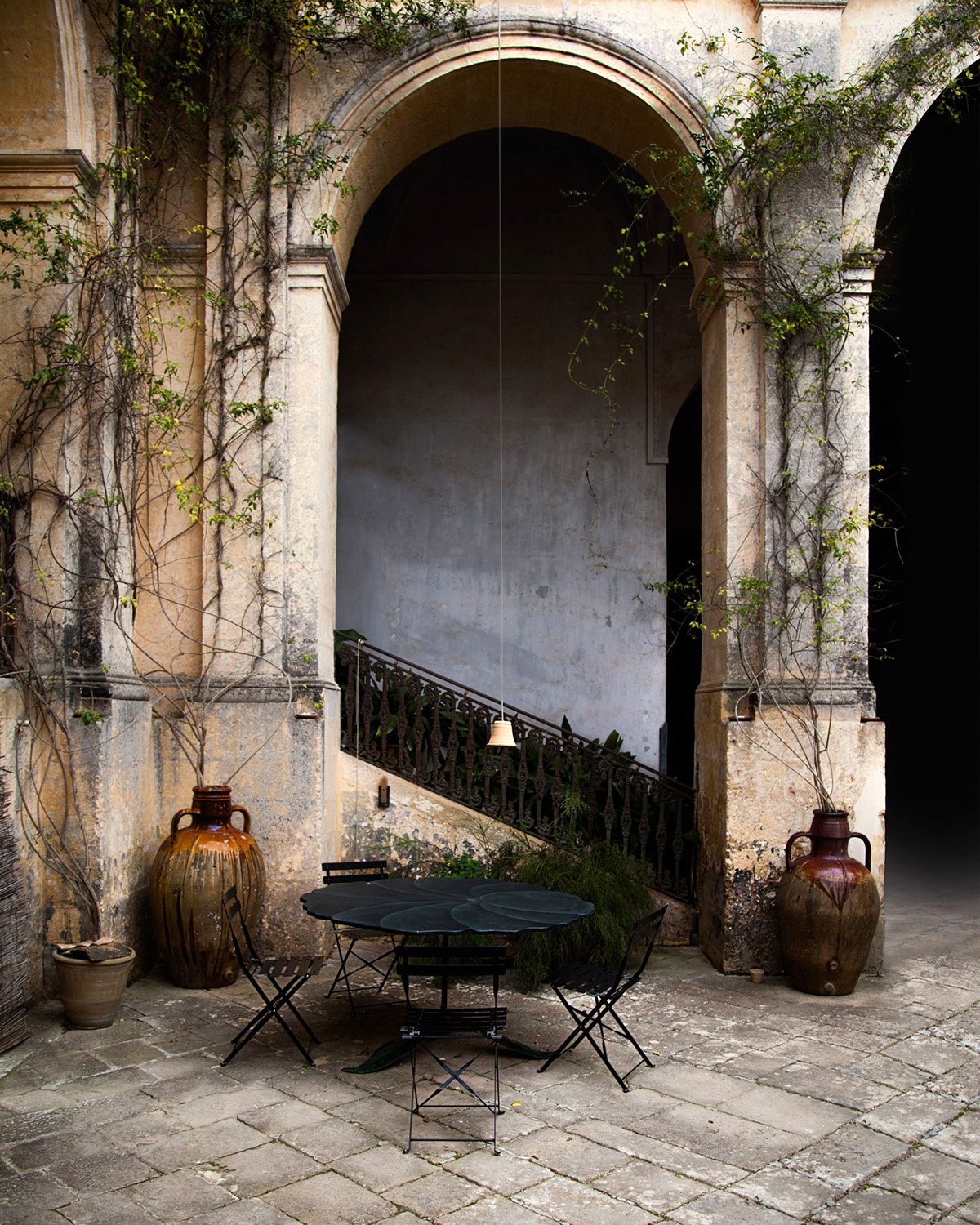
Inside the Puglian Palazzo Where 19th-Century Grandeur Meets Contemporary Art
—
At Palazzo Daniele, a former aristocratic residence in Salento has been stripped back with radical restraint, revealing frescoed ceilings, mosaic floors and a new life shaped by artists, collectors and slow Italian hospitality