

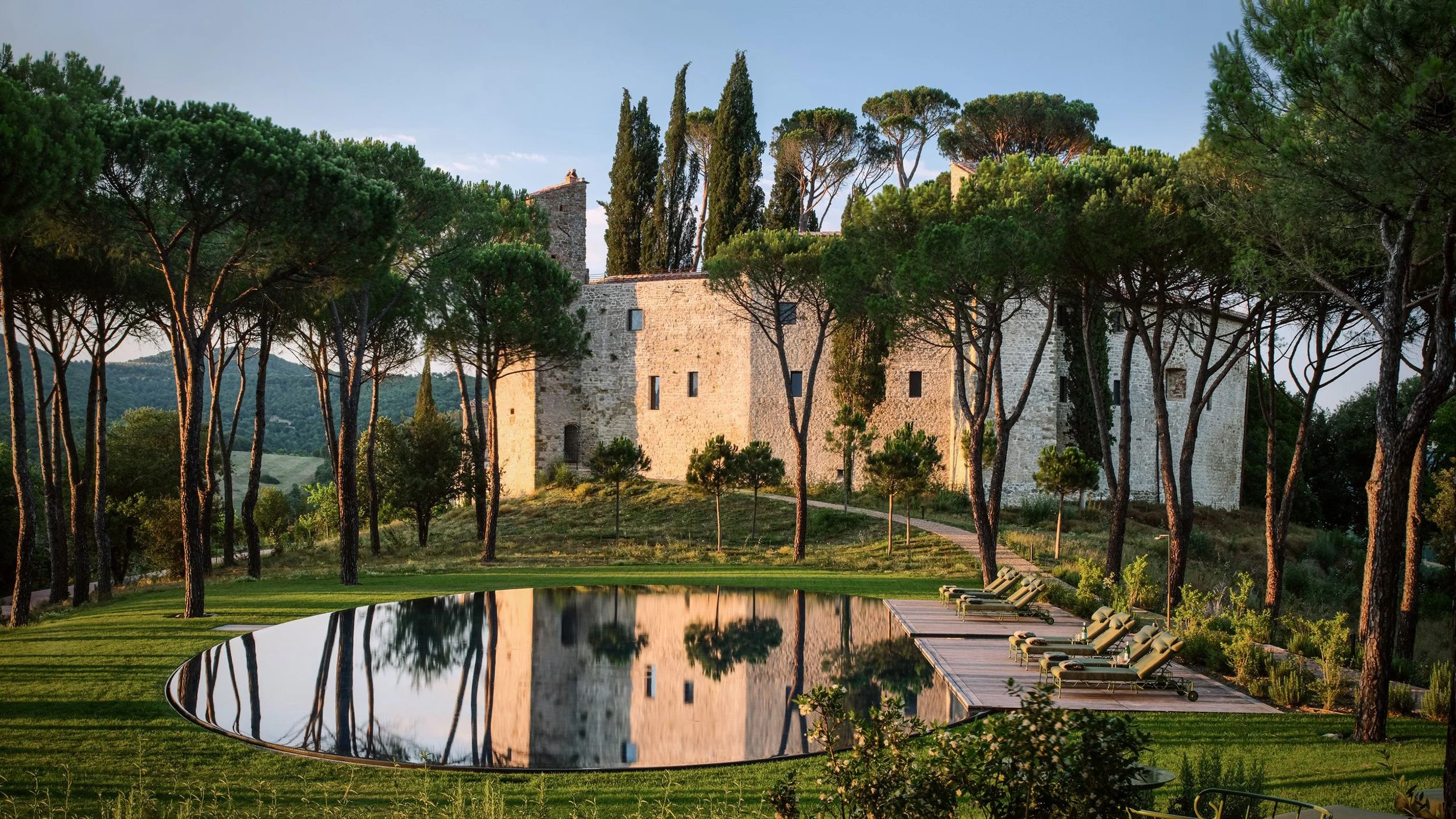
Castello di Reschio
Image © — @reschio
HOTEL
Reschio Revives an 11th-Century Estate on the Tuscany-Umbria Border
Across 3,700 acres of forest, farmland and restored stone buildings, Count Benedikt Bolza has transformed a near-ruined castle into a hotel shaped by architecture, craft and the landscape around it
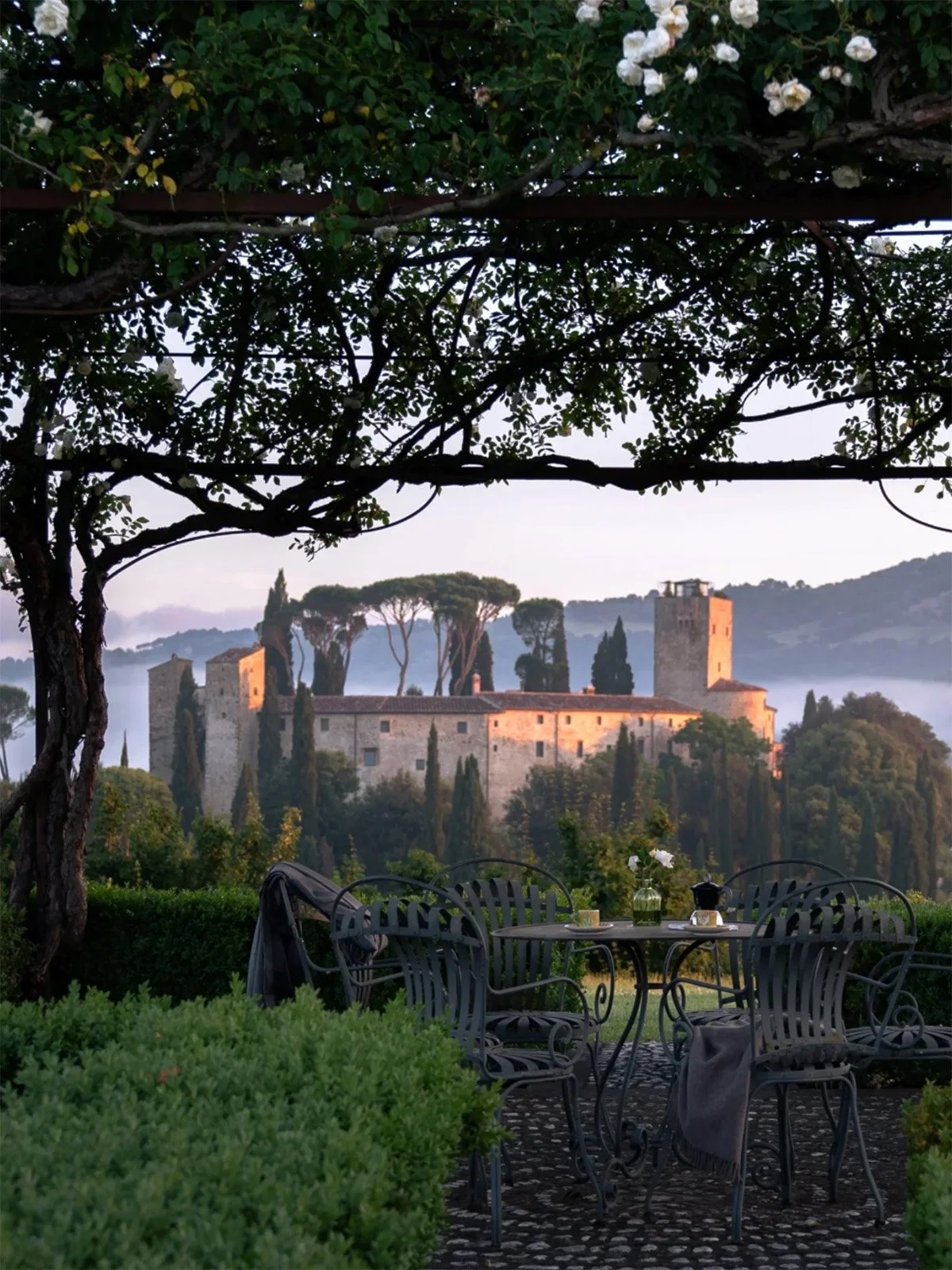
Iron garden seating overlooking Castello di Reschio
Image © — @reschio
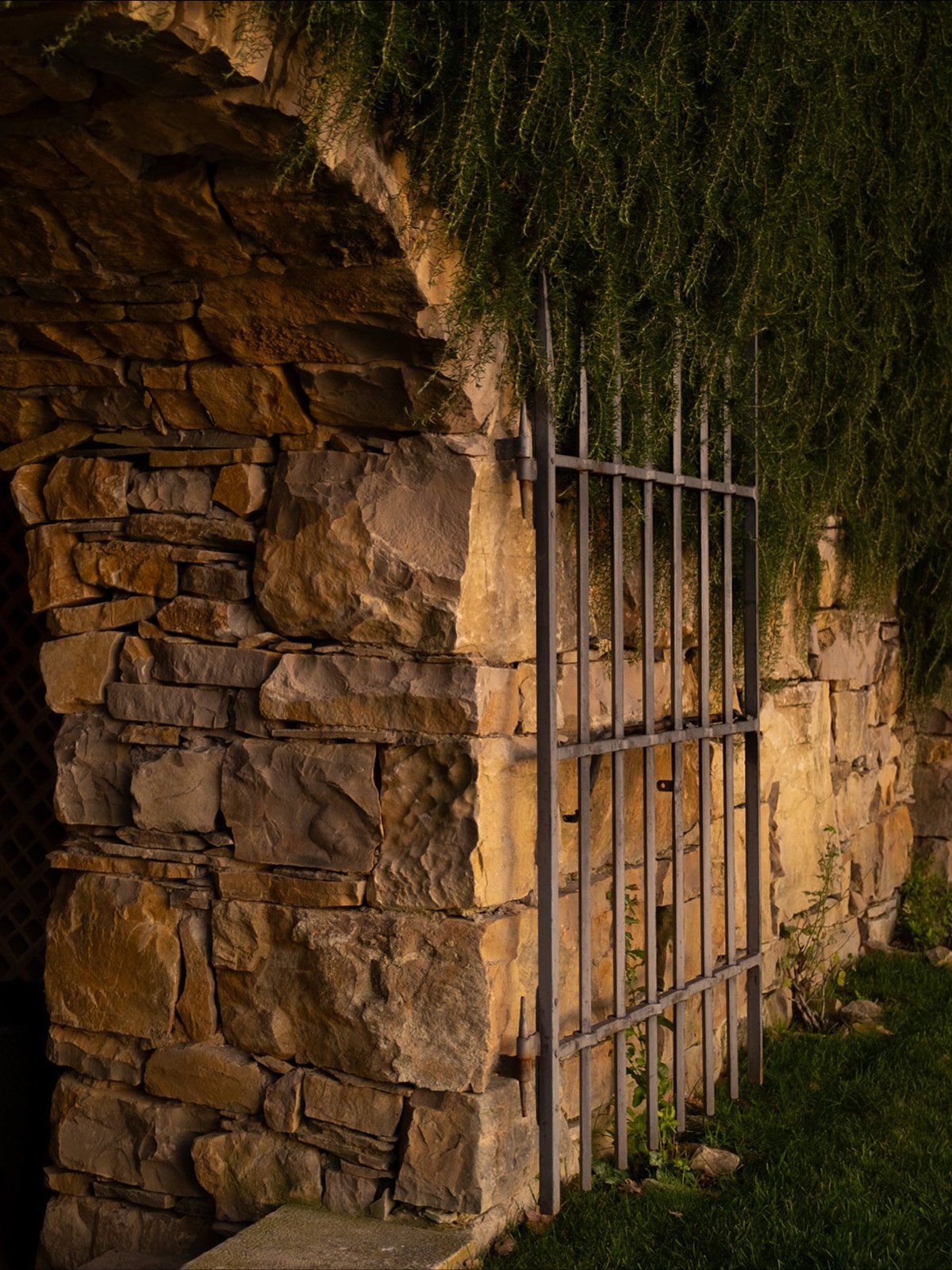
Stone archway
Image © — @reschio
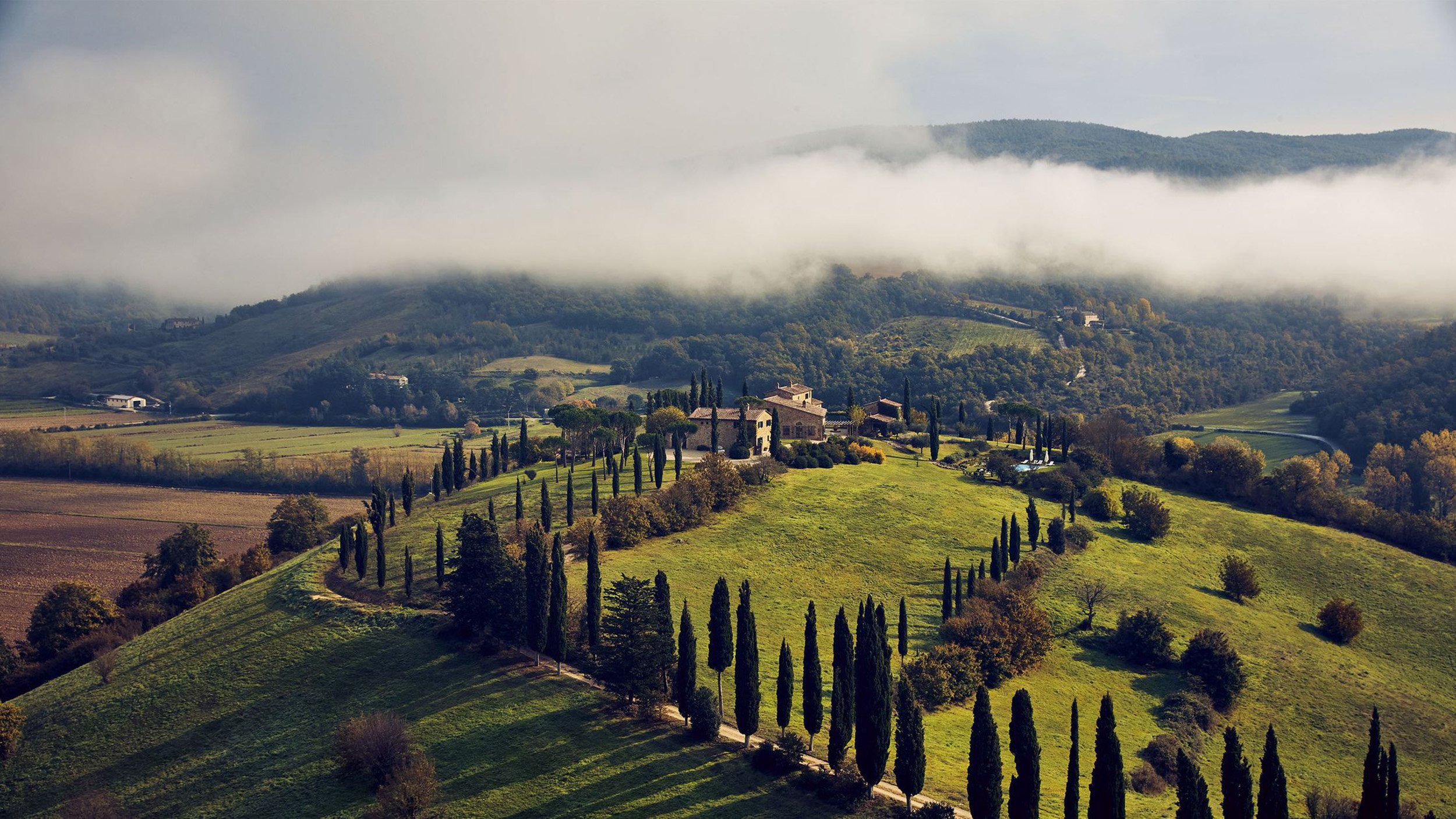
On a hilltop between Tuscany and Umbria, Castello di Reschio looks across 3,700 acres of oak and chestnut forest, cypress avenues, olive groves and cultivated fields. The 11th-century castle has stood here for roughly a thousand years, its position shaped by the long political history of a territory once contested by papal states and grand duchies. Today, the landscape appears remarkably serene, but Reschio's current life is the result of a far more recent and deliberate act of recovery
By the time the Bolza family acquired the estate in the 1990s, much of it had returned to semi-wilderness. The castle was close to ruin and around 50 farmhouses and agricultural buildings lay across the property in varying states of decay. Over the following three decades, the estate was gradually restored, with Count Benedikt Bolza and his wife, Donna Nencia Corsini, overseeing a process that treats land, architecture, animals and agriculture as connected parts of the same ecosystem
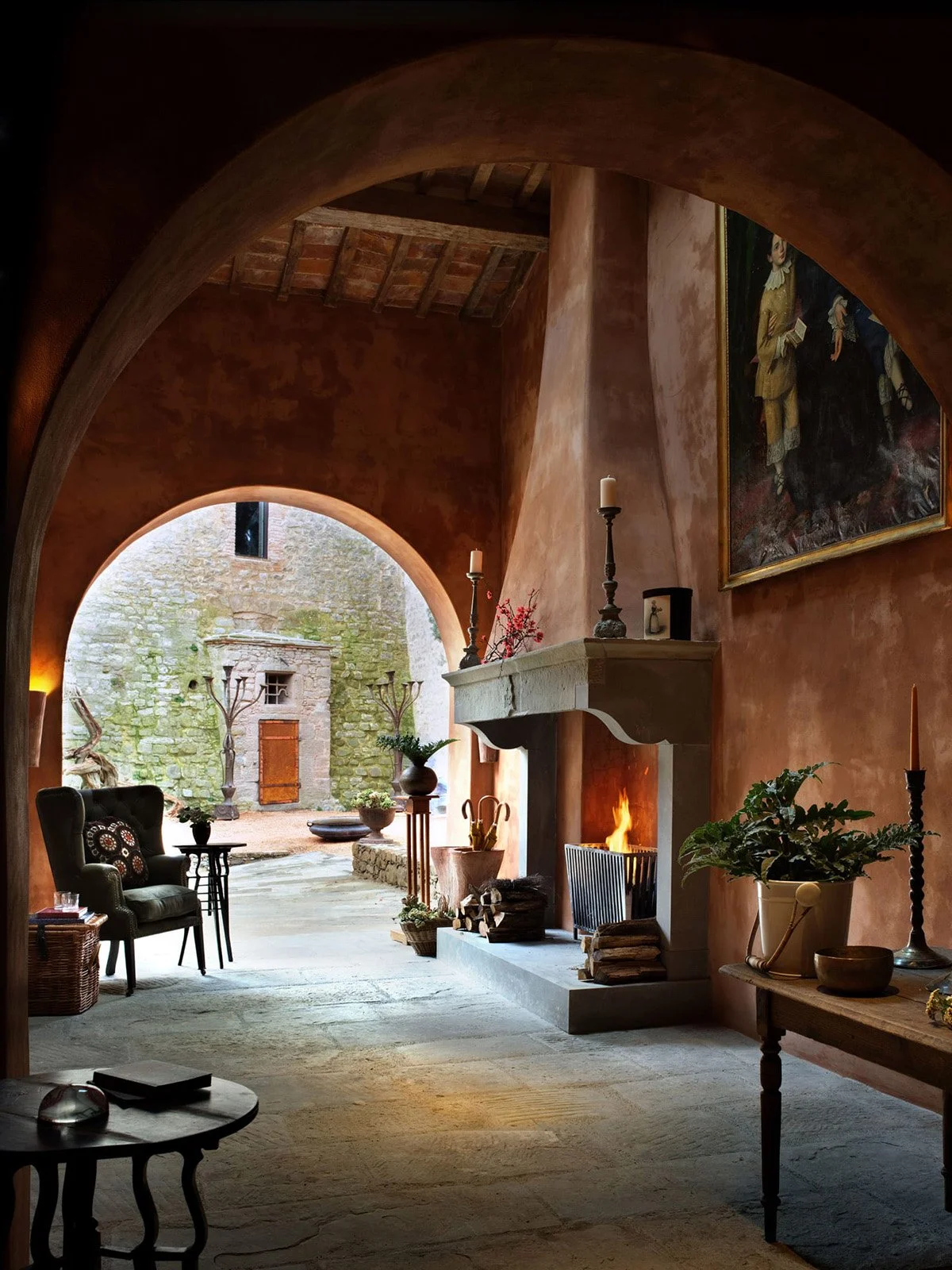
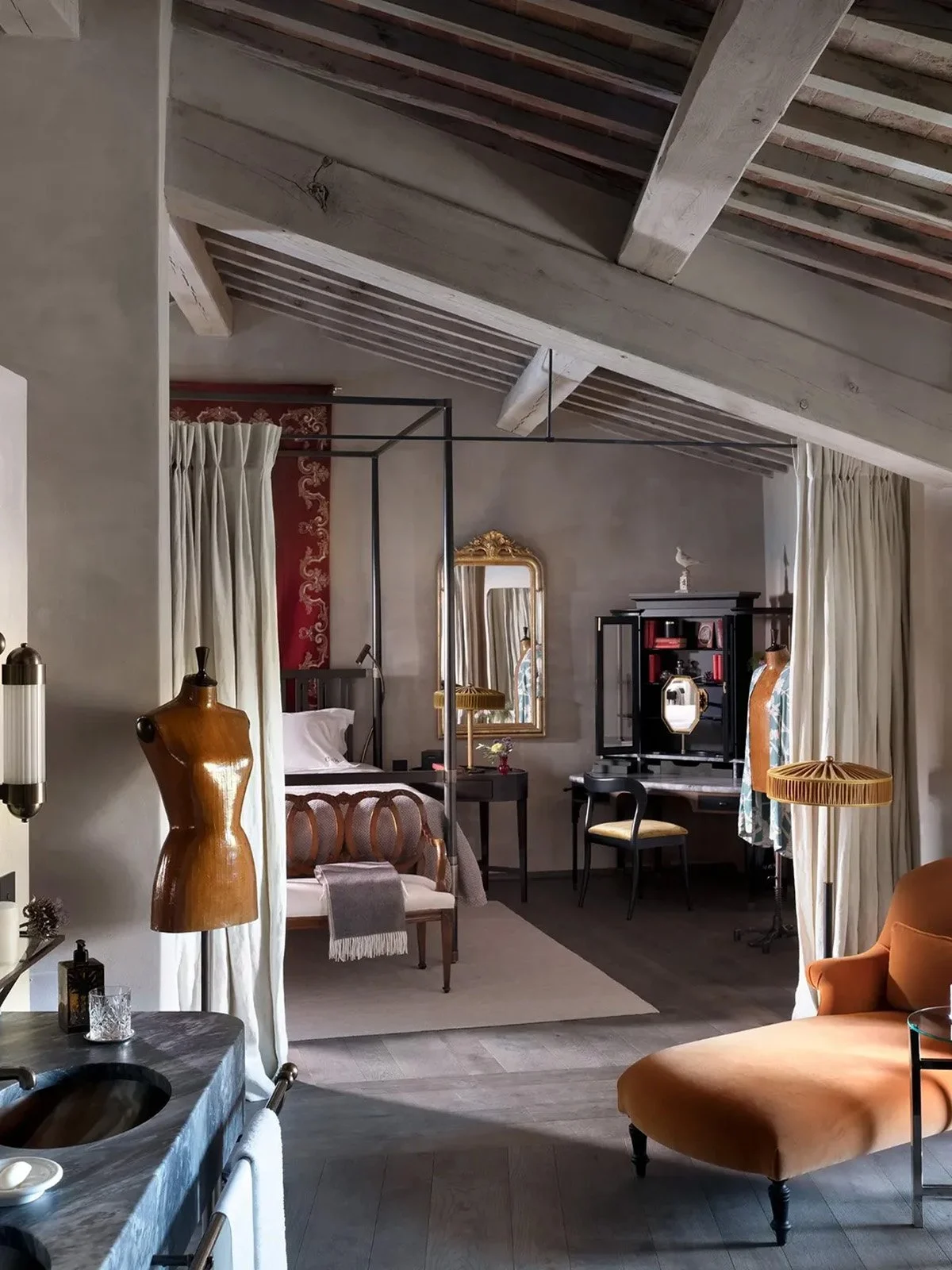
The castle's conversion into a hotel is one chapter in that wider story. Its 36 rooms are arranged around a central courtyard, their forms dictated by the irregular geometry of the medieval building. Some rise vertically towards the ramparts, others extend beneath lower ceilings or turn through unexpected angles. In one room, an original olive press was considered too beautiful to remove and remains in place as part of the interior
Benedikt Bolza has designed almost every fixture and piece of furniture throughout the hotel, with much of it made in the estate's own workshop under the BB for Reschio name. Slender metal profiles, angular lines and crisp silhouettes sit against rough stone, terracotta, timber, velvet and linen. The contrast gives the interiors a distinctly contemporary clarity without separating them from the architecture they occupy
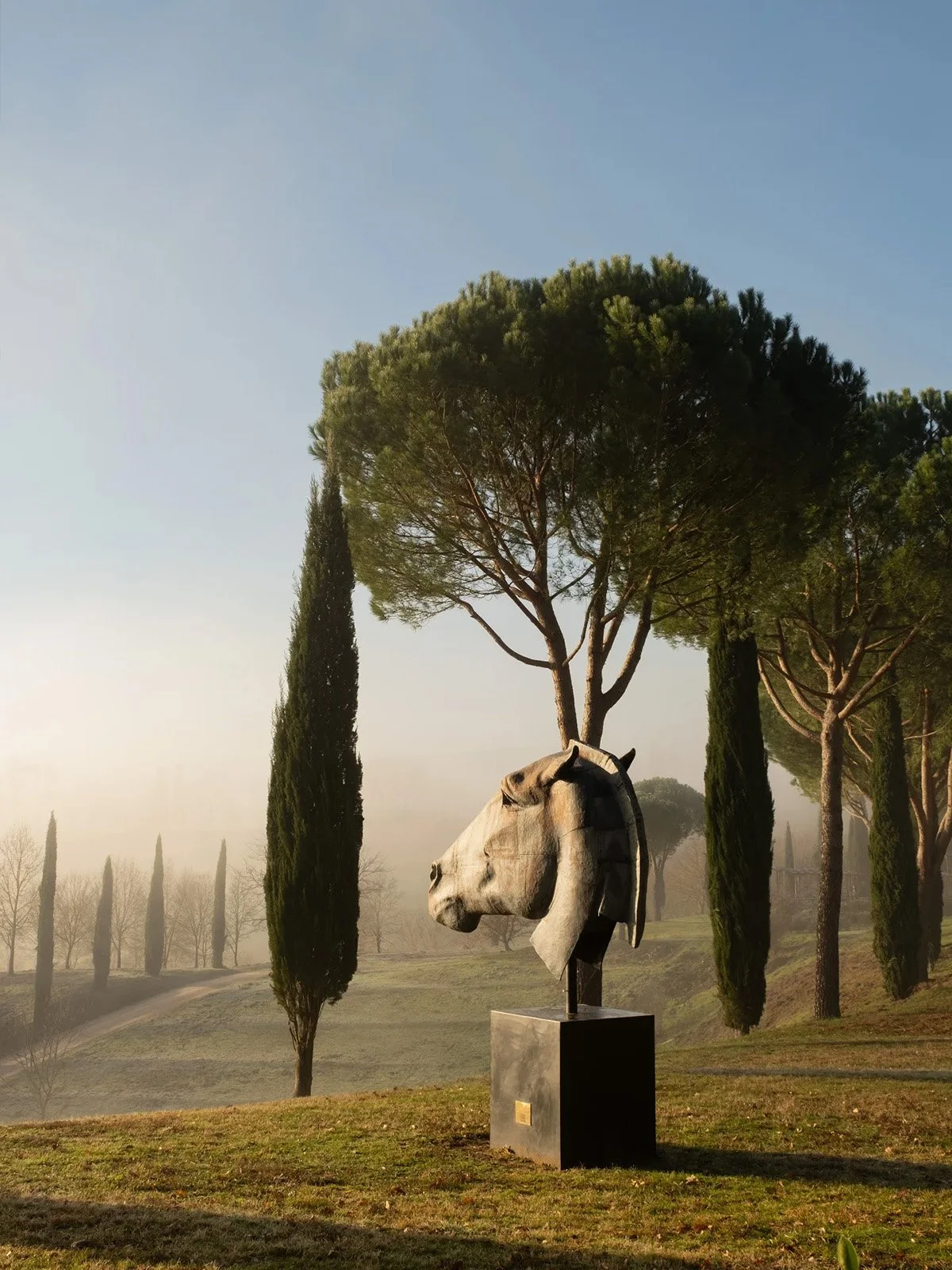
Nic Fiddian Green horse sculpture
Image © — Hugo Burnand @reschio
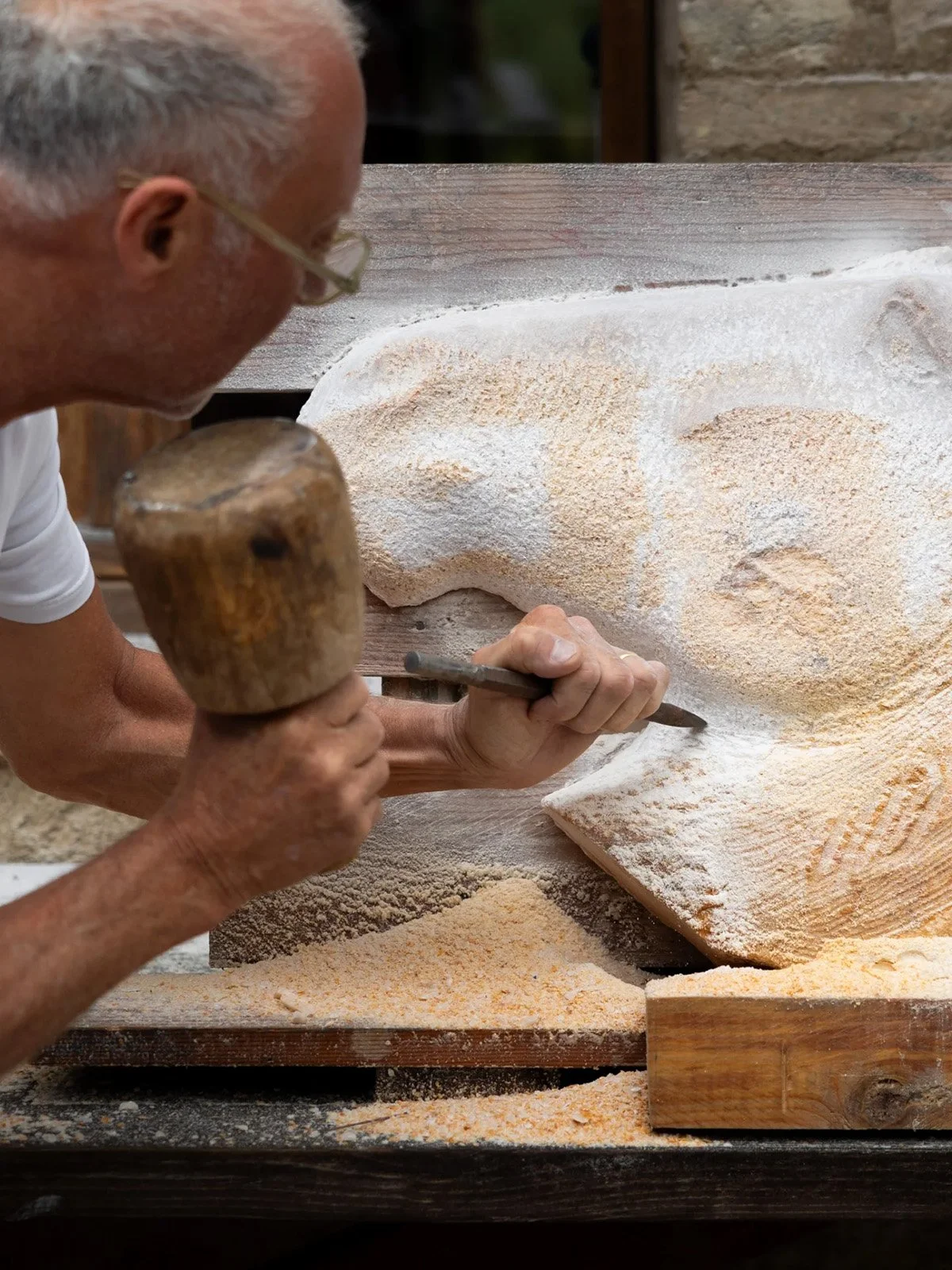
Nic Fiddian Green sculpting stone by hand
Image © — Hugo Burnand @reschio
That same direct relationship with the estate extends to food. Al Castello, within the castle, and Alle Scuderie, housed in converted stables lower on the hill, serve seasonal menus built largely around Umbrian traditions and ingredients produced locally. The farm-to-table description is unusually literal here: even some of the tables were made on the estate
Beneath the Palm Court, a series of stone cellars has been transformed into the spa. A pool, hammam, sauna and treatment rooms occupy the subterranean spaces, where carefully introduced natural light softens rooms that might otherwise have remained almost entirely dark. The effect is architectural rather than decorative, allowing the mass and age of the castle to remain the dominant experience
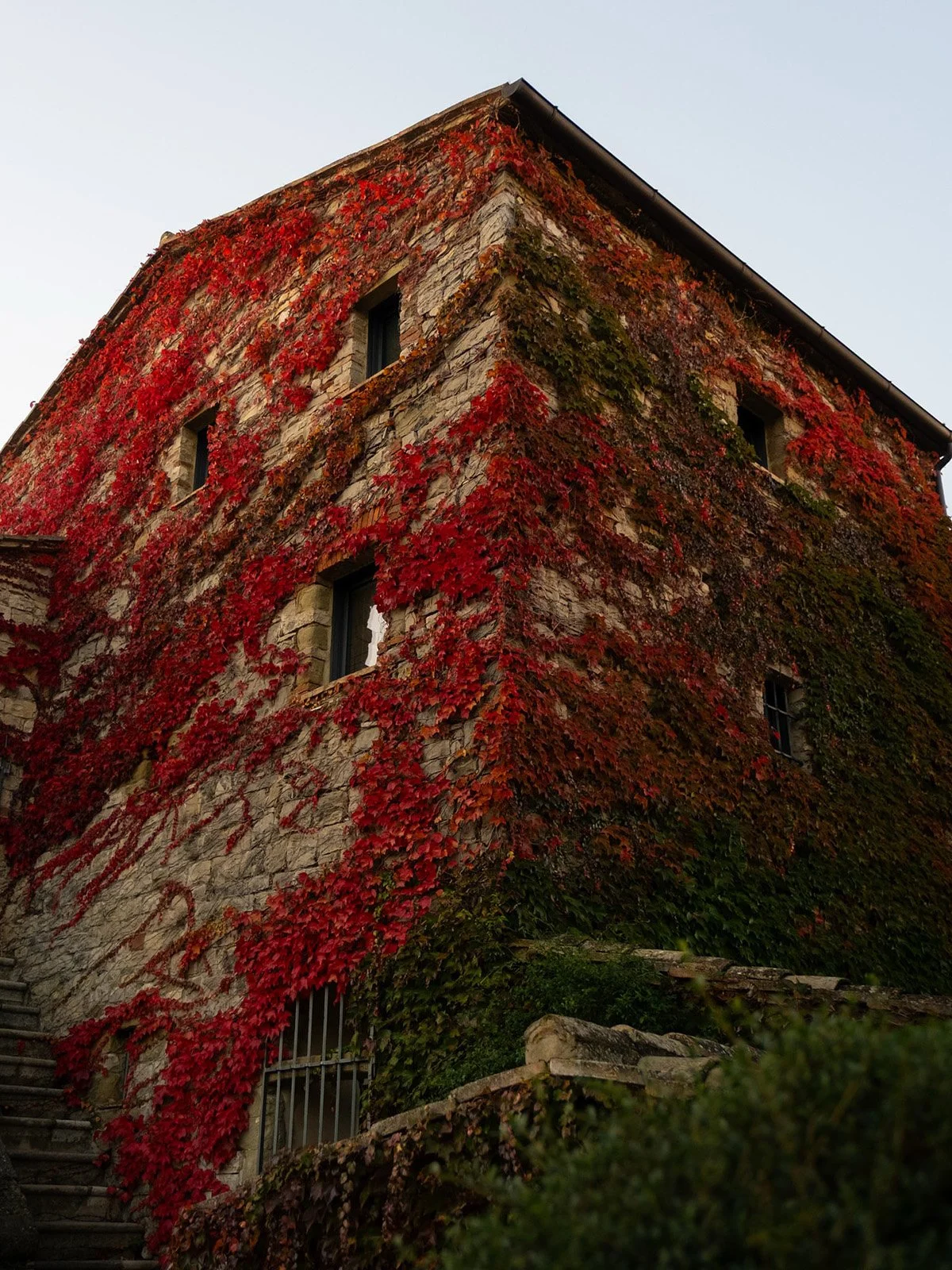
Flame red leaves wrap around a former watchtower at Reschio rental house
Image © — @reschio
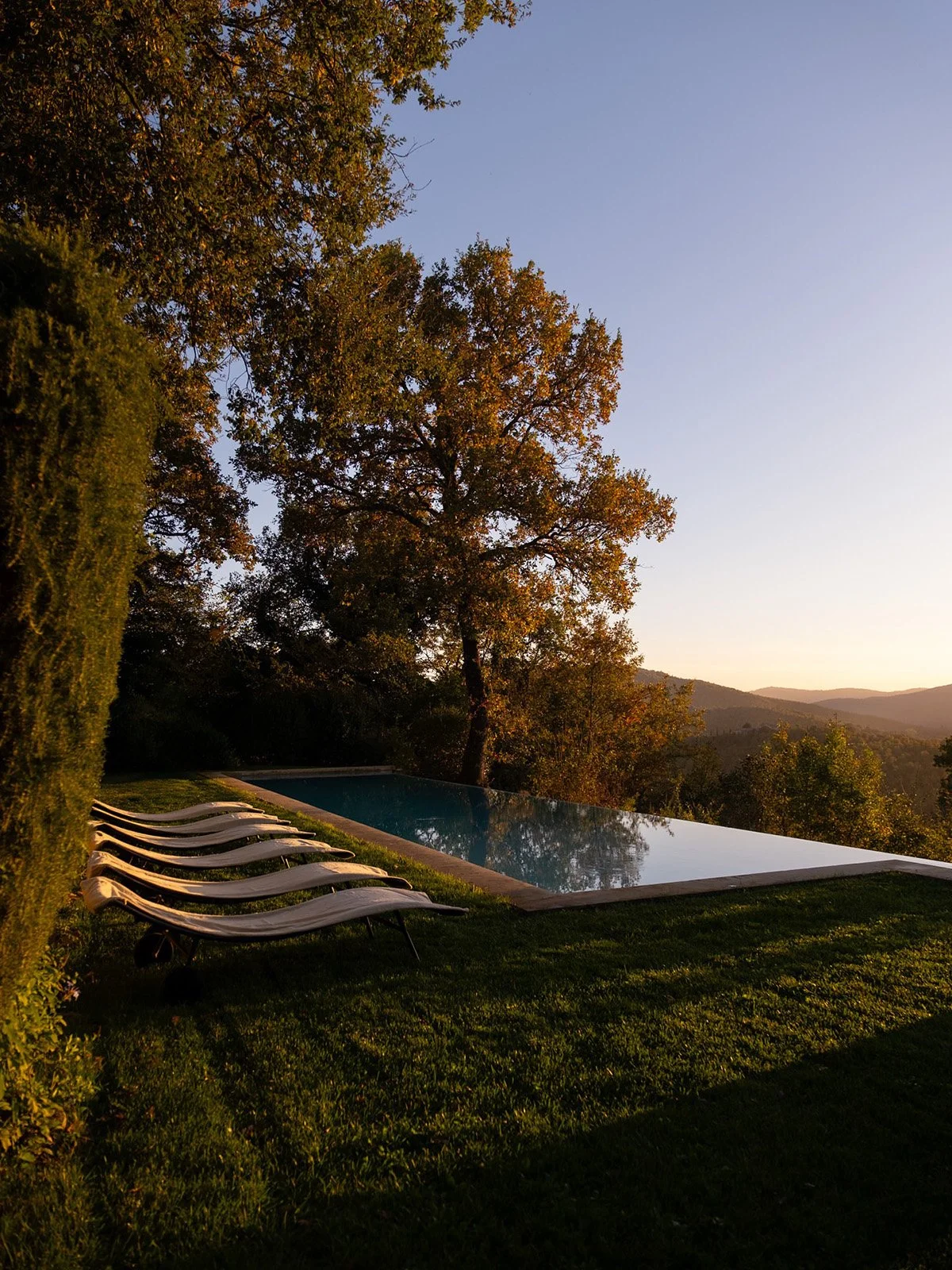
Infinity pool and sweeping lounge chairs
Image © — @reschio
Beyond the walls, Reschio continues through forests, fields and water. Guests can hike, cycle, swim, forage or hunt for truffles, but horses occupy a particularly important place within the estate. Reschio is a noted breeding and training ground for Andalusian horses, with extensive equestrian facilities and stables that form a significant part of daily life
The appeal of Castello di Reschio is easy to describe as fairytale, but its deeper interest lies in the opposite direction. This is not architecture removed from reality; it is the result of three decades spent rebuilding a damaged estate piece by piece. The castle, farmhouses, workshops, horses and cultivated land now operate together again, giving Reschio the rare sense of a historic property restored not simply to be admired, but to function as a world of its own
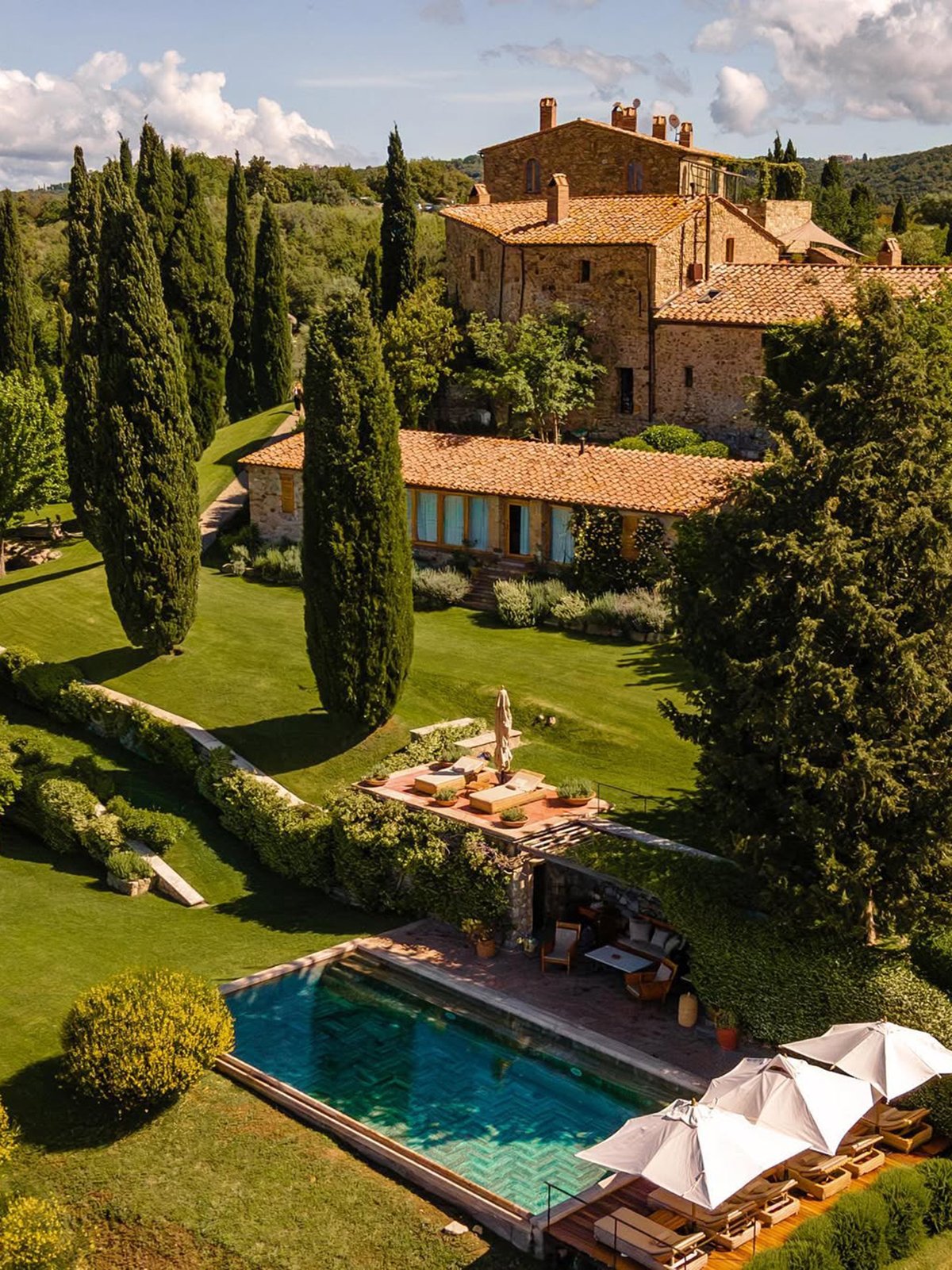
Castello di Vicarello Preserves Eight Centuries of Tuscan Life
—
In the hills between Rome and Florence, a 12th-century castle has been transformed into a deeply personal hotel shaped by family, landscape and the rhythms of rural Tuscany
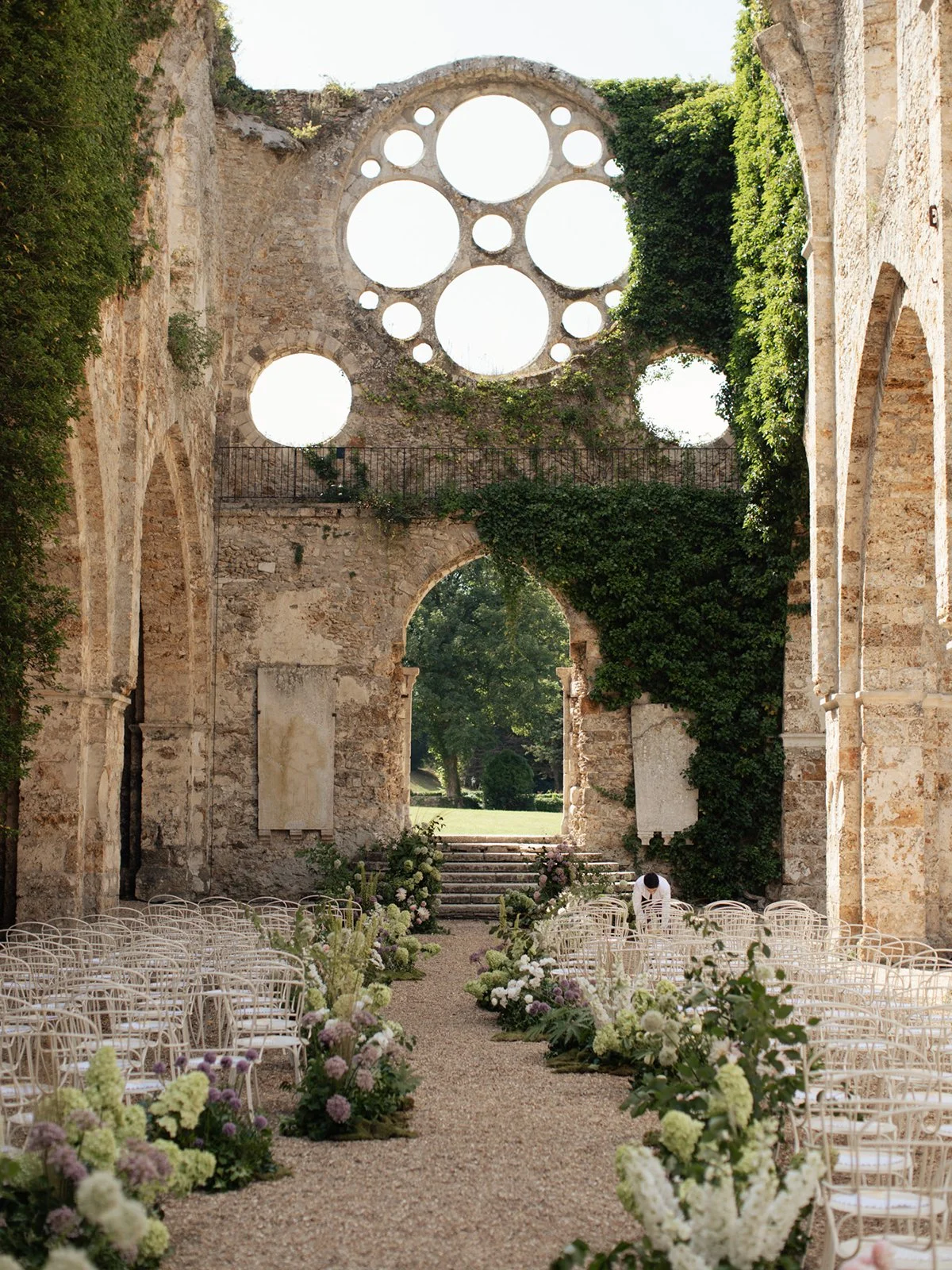
Abbaye des Vaux-de-Cernay Begins a New Chapter Outside Paris
—
Forty-five minutes from the capital, the restored Cistercian abbey has been transformed by Paris Society into an expansive country-house hotel shaped by monastic history, Rothschild ambition and the surrounding forest