

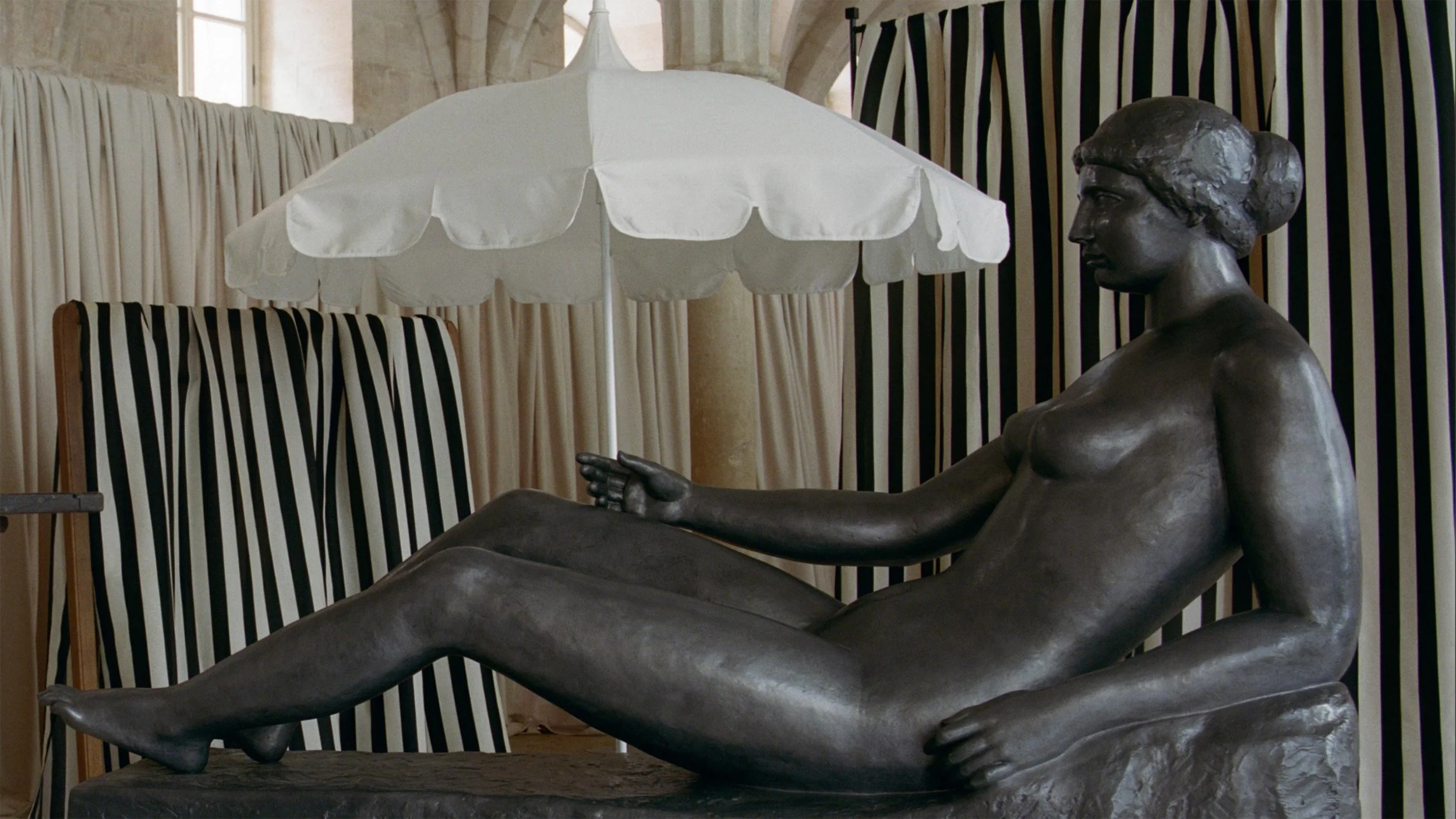
Image © — @jacquemus @galerie.chenel @galerie.dinavierny
ART
Provençal Dialogue with Antiquity
Galerie Dina Vierny, Galerie Chenel, and Simon Porte Jacquemus bring antiquity, Maillol, and the Provençal imagination into quiet conversation
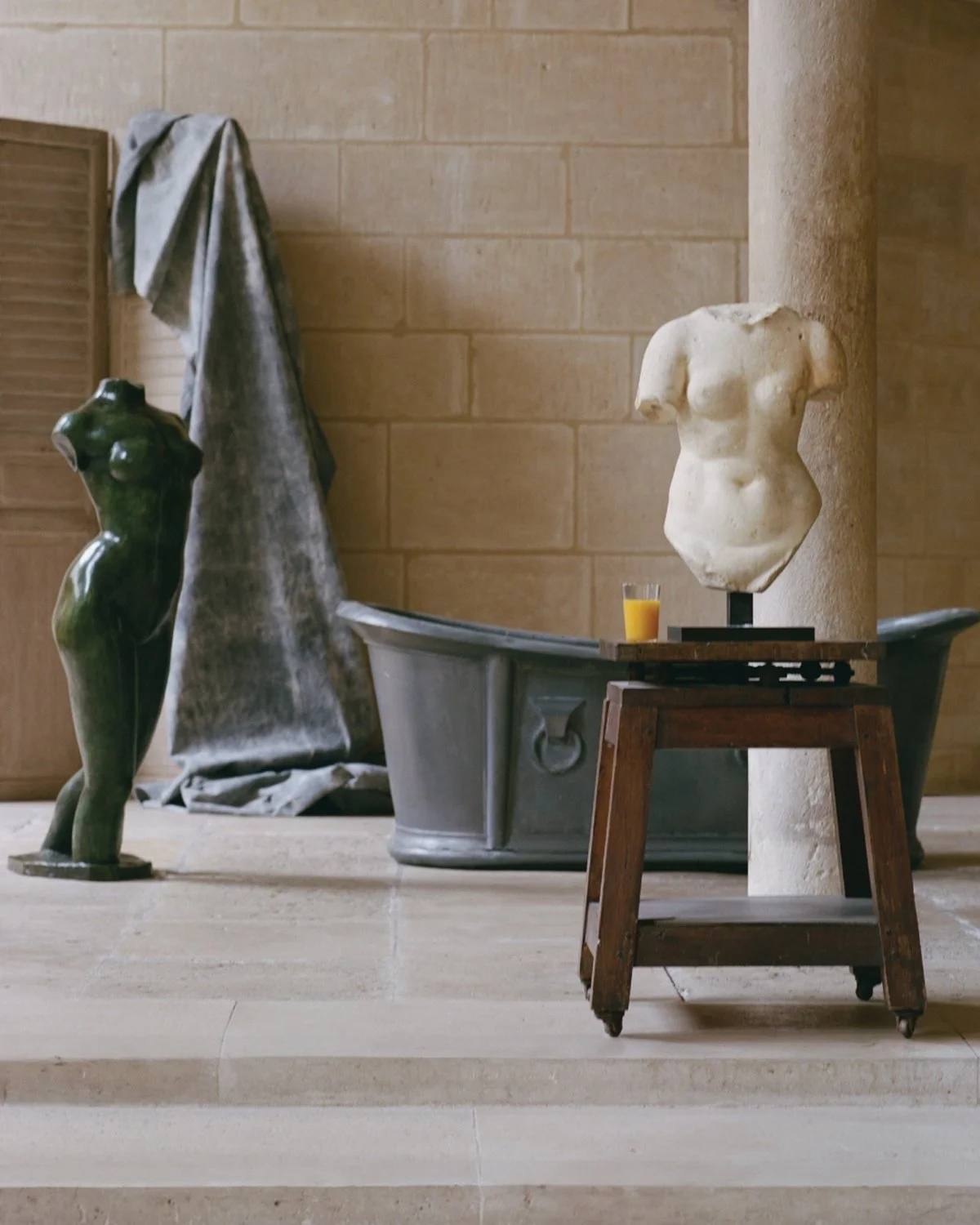
Image © — @jacquemus @galerie.chenel @galerie.dinavierny
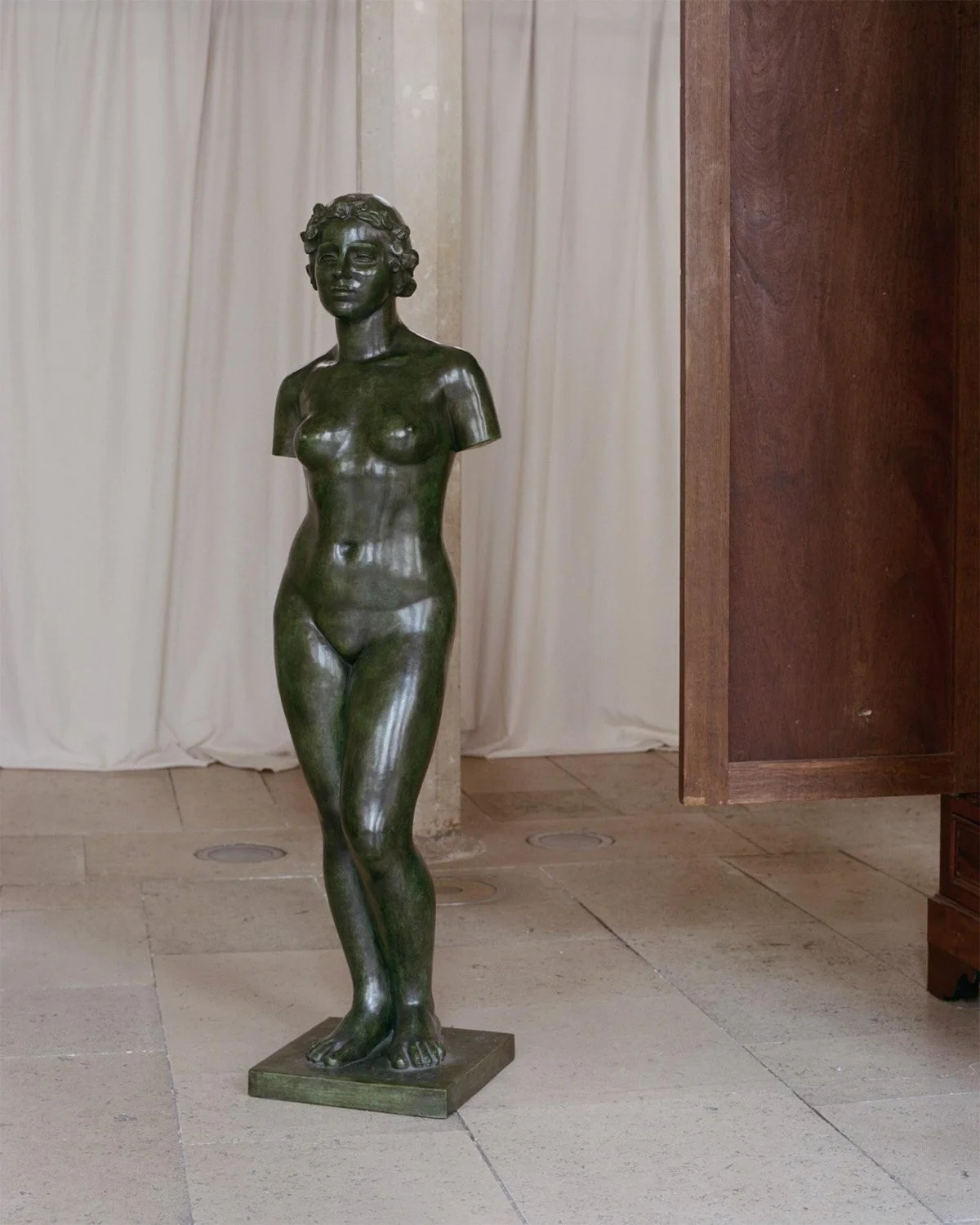
Image © — @jacquemus @galerie.chenel @galerie.dinavierny
In Provence, antiquity rarely feels distant. It appears in the pale weight of stone, in the ruins that still punctuate the landscape, in the hard winter light that seems to clarify every surface it touches. It is this atmosphere that gives Mythes, presented by Galerie Dina Vierny, Galerie Chenel, and Simon Porte Jacquemus, its particular force. The exhibition is not staged as a scholarly reconstruction of the ancient world, but as a meditation on how the antique continues to live through form, material, and memory
Set within the vaulted austerity of the Couvent des Bernardins, Mythes brings together Roman antiquities from Galerie Chenel, sculptures connected to the world of Aristide Maillol, and contemporary gestures by Simon Porte Jacquemus. The result is not a conventional display of historical objects, but a sequence of encounters. Marble, bronze, fabric, and flowers are placed in relation to one another with a sense of quiet theatricality, allowing each piece to appear less as an isolated artwork than as part of a longer Mediterranean language
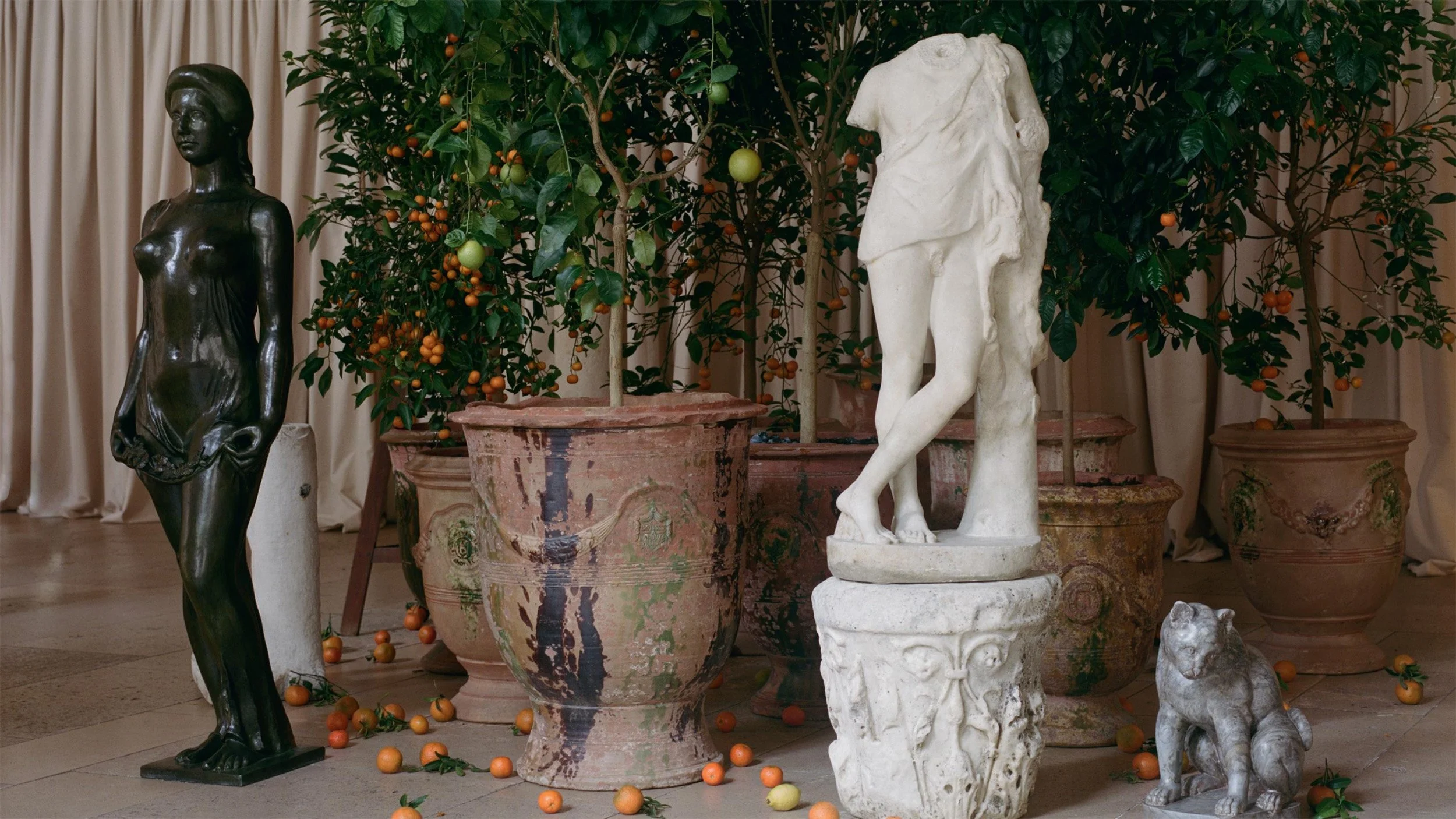
Image © — @jacquemus @galerie.chenel @galerie.dinavierny
The exhibition’s strength lies in its refusal to treat antiquity as a fixed ideal. The ancient fragments are not polished into silence. Their worn surfaces, softened edges, deposits, breaks, and repairs remain visible, allowing time itself to become part of the composition. Galerie Chenel’s antiquities bring with them the authority of survival, but also the intimacy of use, touch, weather, and transformation. They feel less like relics than presences
This is where Maillol becomes central. His sculpture has often been placed near classicism, but Mythes makes clear that his relationship to antiquity was more instinctive than academic. His figures are not decorative quotations from Greece or Rome. They are dense, still, bodily forms, closer to archaic sculpture than to eighteenth-century neoclassical refinement. In Maillol, the human body becomes architectural without losing its warmth. Mass, curve, gravity, and sensual restraint are held in careful balance
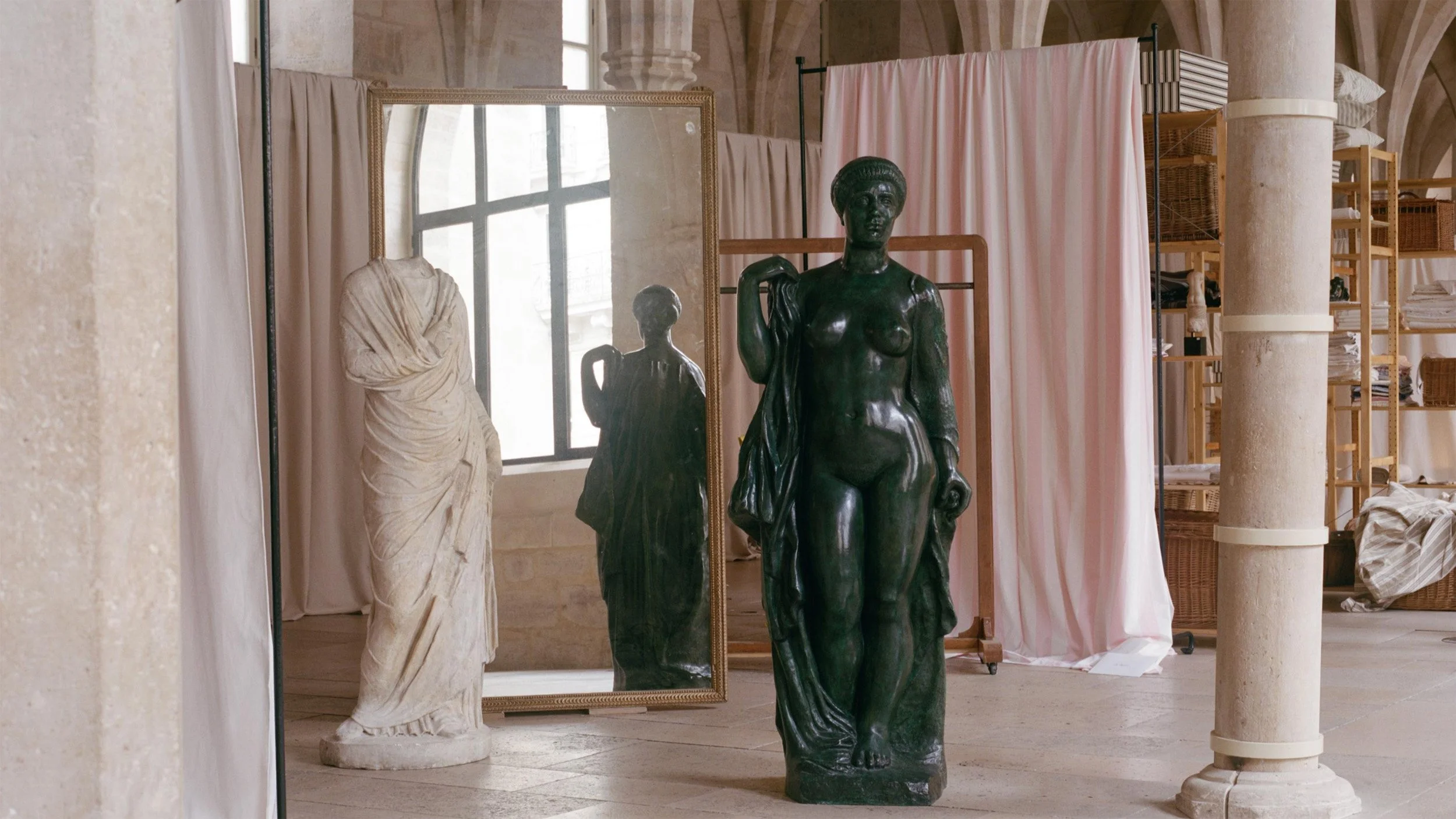
Image © — @jacquemus @galerie.chenel @galerie.dinavierny
Jacquemus enters this world with a similar respect for the physical and emotional charge of objects. His contribution does not modernize antiquity in any obvious way. Instead, it draws out its domestic, ritual, and poetic dimensions. Flowers placed in ancient vessels, draped forms, bronze details, and soft interventions create moments where the antique leaves the pedestal and returns to life. The gesture is subtle, but important: history is not merely preserved here; it is made inhabitable
What gives Mythes its atmosphere is this sense of continuity. Provence is not used as a picturesque setting, but as the exhibition’s underlying subject. Its Roman inheritance, its mineral landscapes, its cultivated myths of light, heat, and stone, all move through the installation. The exhibition understands that the South of France has always held antiquity differently from the museum: not as a remote civilization, but as something folded into streets, houses, gardens, churches, and daily life
There is also a strong painterly current running beneath the exhibition. Hubert Robert’s visions of Roman ruins and Provençal monuments come to mind, not because Mythes imitates them, but because it shares their belief that ruins can be both historical and imaginative. A fragment of marble may be an archaeological object, but it can also be a threshold into another atmosphere. A broken body can still carry the fullness of a vanished world
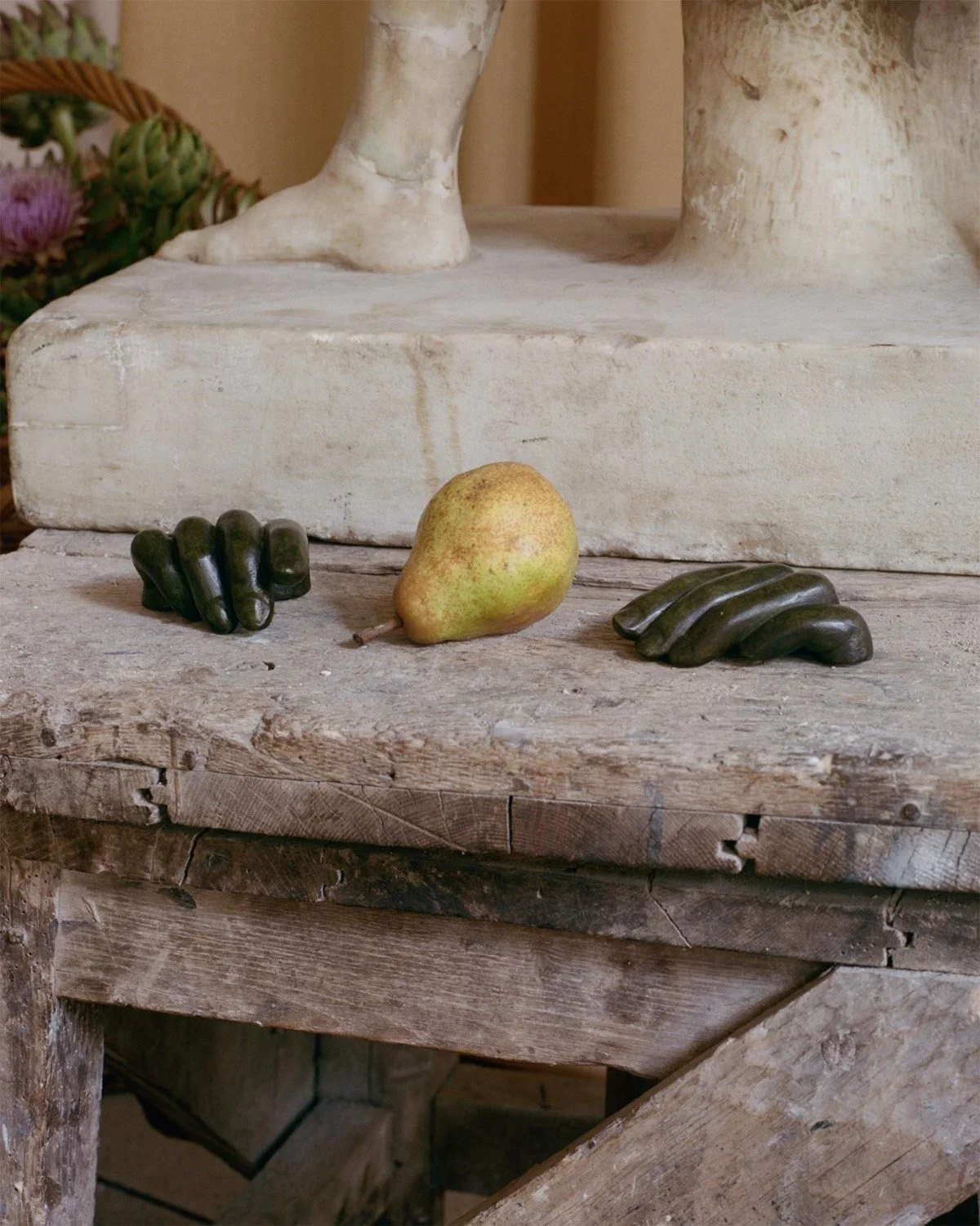
Image © — @jacquemus @galerie.chenel @galerie.dinavierny
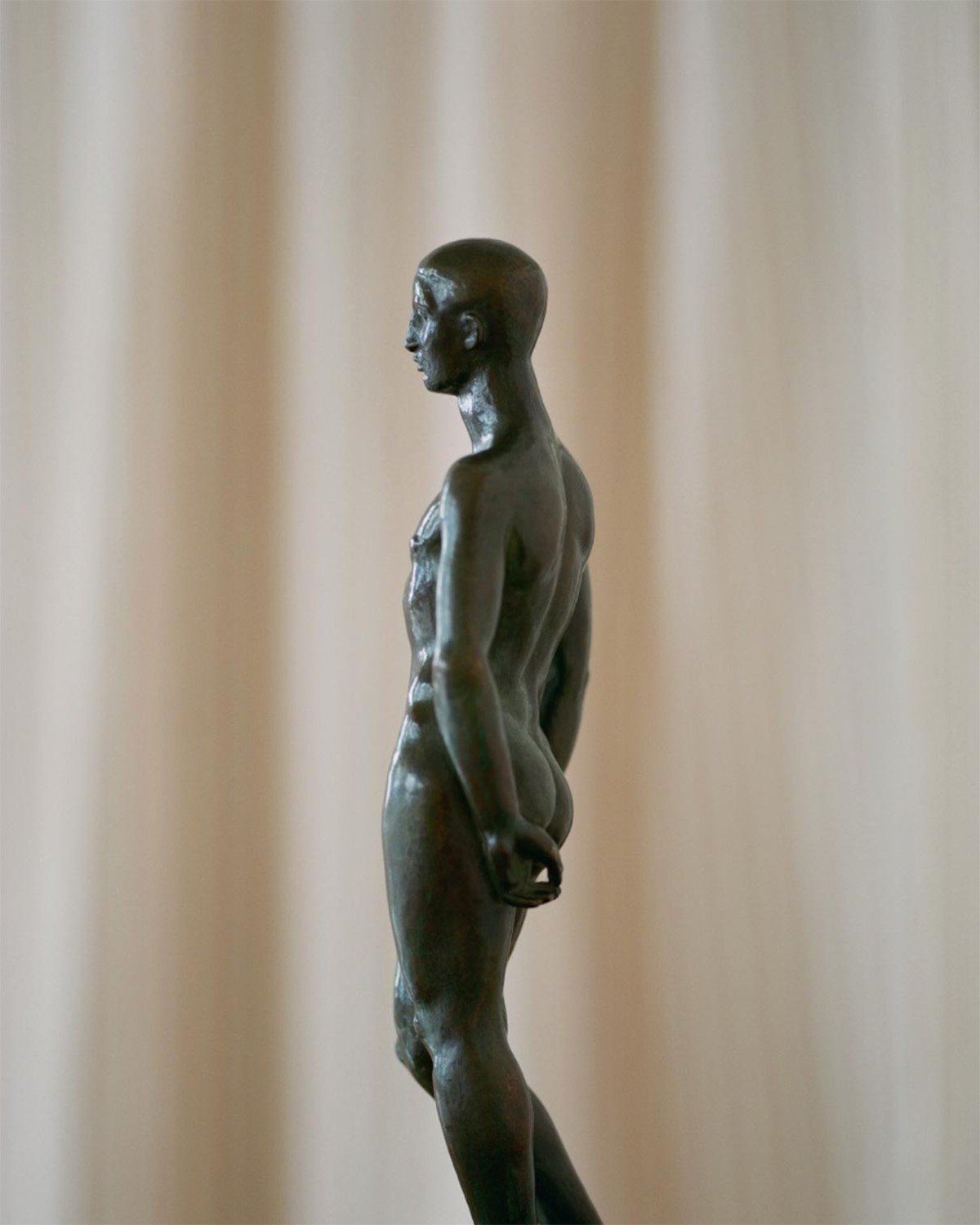
Image © — @jacquemus @galerie.chenel @galerie.dinavierny
The installation is most convincing when it allows these correspondences to remain unresolved. A Maillol figure beside an antique fragment does not explain the fragment. A Jacquemus gesture does not decorate the ancient object. Instead, the works draw attention to one another’s shared qualities: stillness, tactility, proportion, and the strange persistence of beauty after time has done its work
In this way, Mythes avoids nostalgia. It does not ask the viewer to mourn the ancient world or to worship it from a distance. It suggests something more alive: that antiquity survives through reappearances, through material intelligence, through the hands of those who know how to place old forms in new light. The past is not restored into perfection. It is allowed to breathe through alteration
For Galerie Dina Vierny, Galerie Chenel, and Simon Porte Jacquemus, Mythes becomes more than an exhibition about antiquity. It is a study of how forms endure, how regions remember, and how beauty can pass from ruin to body, from sculpture to garment, from stone to flower. In the stillness of the Couvent des Bernardins, Provence appears not as a backdrop, but as a living archive, where the ancient and the contemporary continue to recognise one another
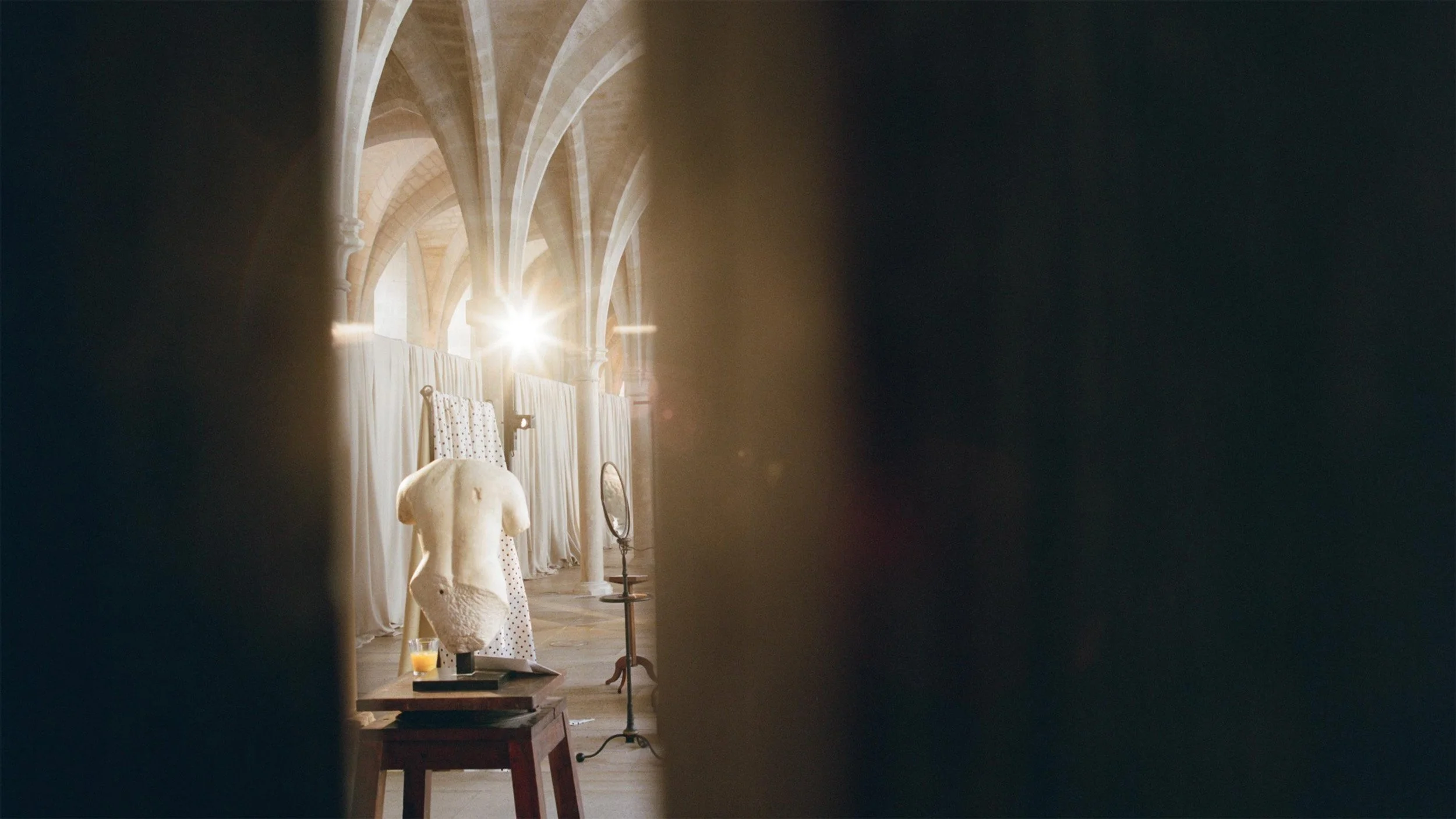
Image © — @jacquemus @galerie.chenel @galerie.dinavierny
Galerie Chenel
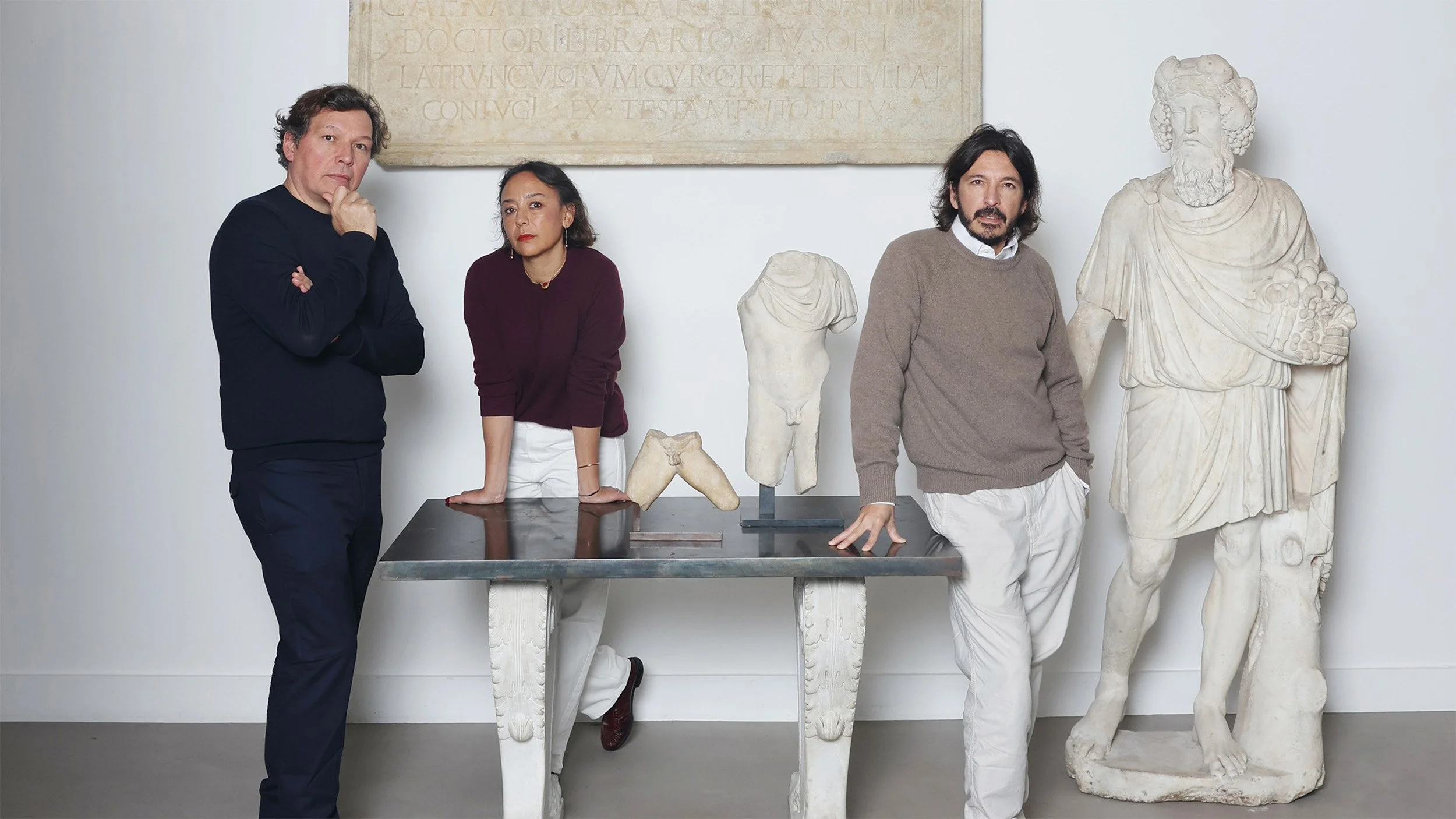
Image © — Stephanie Füssenich
Galerie Chenel
Gallery Chenel is a family business that is driven by a passion for sculpture. It specializes in archaeological objects, with particular emphasis on Roman arts
Established in Paris in 1999, the gallery has grown over the years and it has settled on Quai Voltaire, opposite the Louvre Museum, where it has fitted a modern exhibition space, a shrine for antique pieces
Galerie Dina Vierny
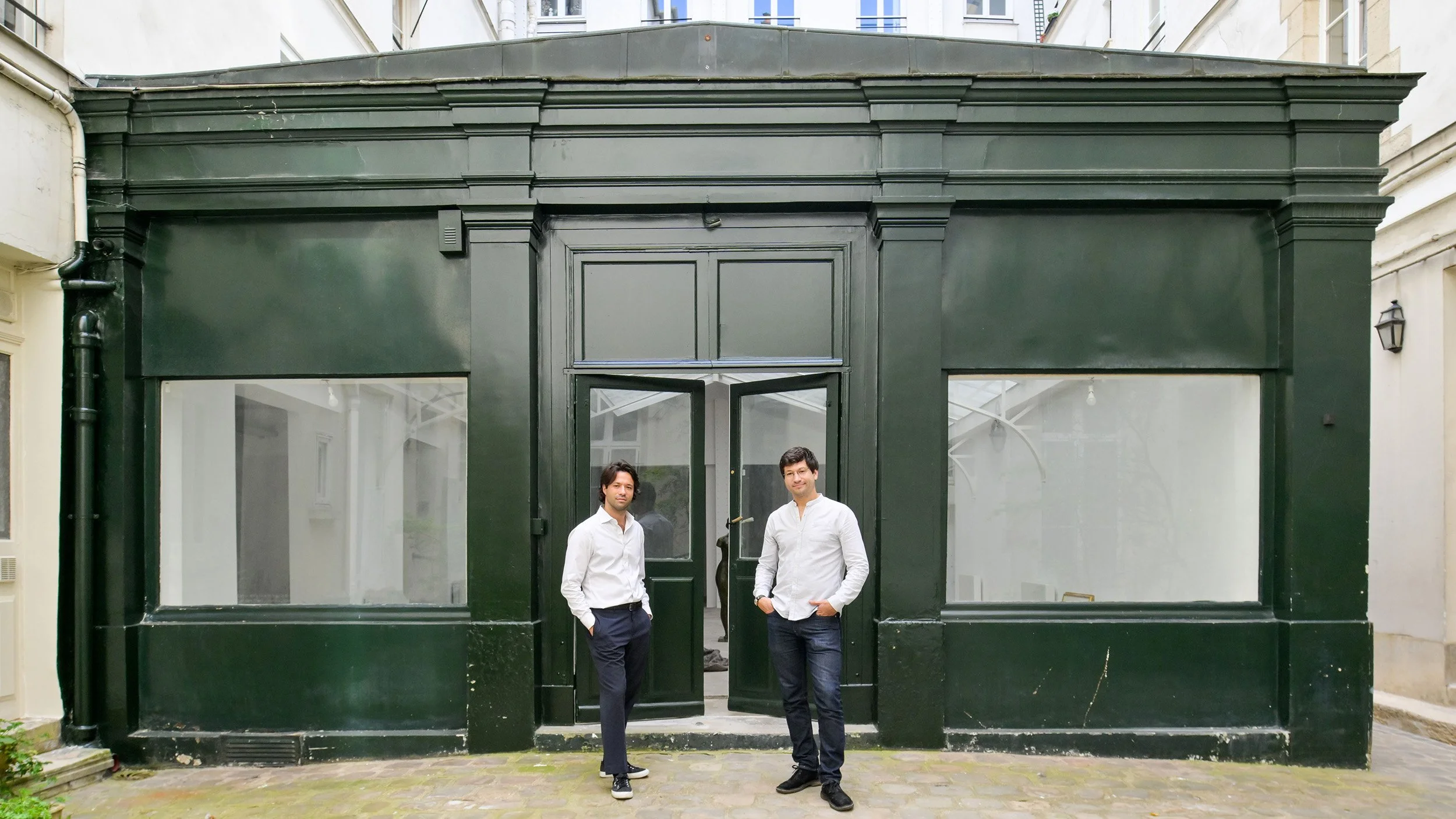
Image © — @julio.piatti
Galerie Dina Vierny
On the advice of Matisse and Jeanne Bucher, Dina Vierny, Maillol’s last model, decided to open a gallery in 1947. She moved to 36 rue Jacob, a former « bougnat » transformed into a wooden case by Auguste Perret
The gallery became famous in Paris thanks to a first Maillol exhibition, and then asserted itself with exhibitions of Rodin, Henri Laurens, Matisse… Dina Vierny met Serge Poliakoff and organized his first important exhibition in 1951. This was followed by exhibitions of the Vollard suite of Picasso, Kandinsky, Pougny, Dufy, Doucet, Charchoune, Gilioli, Couturier or Zitman. The gallery owner then became enamored with the modern primitives and exhibited Bauchant, Bombois, Eve, Desnos, Racoff, Rimbert, Séraphine de Senlis and Vivin. In the early 70s, she travels to the Soviet Union where she discovers Kabakov, Boulatov, Yankilevsky and Oscar Rabin. She smuggled their works out of Russia and organized the famous exhibition Russian Avant-Garde – Moscow 73