

Group exhibition, Human Traces: Presence, Absence, and Material Memory
Image © — @axelvervoordt_co
ART & OBJECTS
Human Traces: Presence, Absence, and Material Memory
April 11th — August 29th, 2026
Axel Vervoordt Gallery brings together Ida Barbarigo, William Turnbull, El Anatsui, and Bosco Sodi in a meditation on material, memory, and the transformation of the ordinary into the sacred
Group exhibition, Human Traces: Presence, Absence, and Material Memory
Image © — @axelvervoordt_co
Group exhibition, Human Traces: Presence, Absence, and Material Memory
Image © — @axelvervoordt_co
The human figure is never entirely absent from this exhibition. It appears through residue, proportion, gesture, and force; through the spaces left behind by the body rather than the body itself. Bringing together works by Ida Barbarigo, William Turnbull, El Anatsui, and Bosco Sodi, the exhibition considers how artists from vastly different cultural and historical positions have transformed matter into a vessel for presence
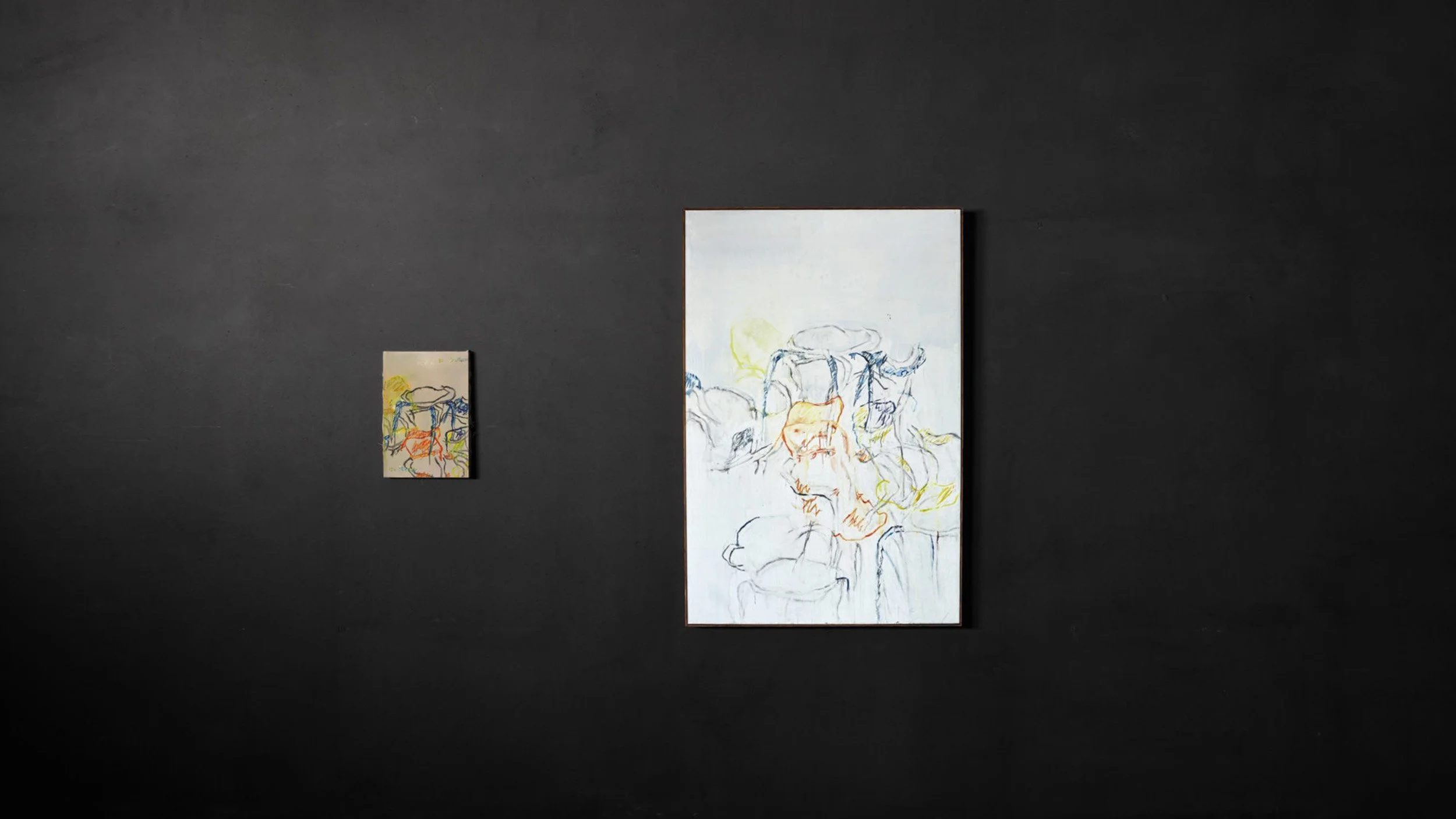
For Venetian artist Ida Barbarigo, the most familiar domestic forms became charged with psychological intensity. Chairs and tables, repeated and distorted within atmospheric fields of abstraction, are never simply furniture. They become signs of waiting, solitude, and memory. In her paintings, the room is less a place than a state of mind, where objects seem to hold the tension of those who have just left, or those who may never return
Group exhibition, Human Traces: Presence, Absence, and Material Memory
Image © — @axelvervoordt_co
Group exhibition, Human Traces: Presence, Absence, and Material Memory
Image © — @axelvervoordt_co
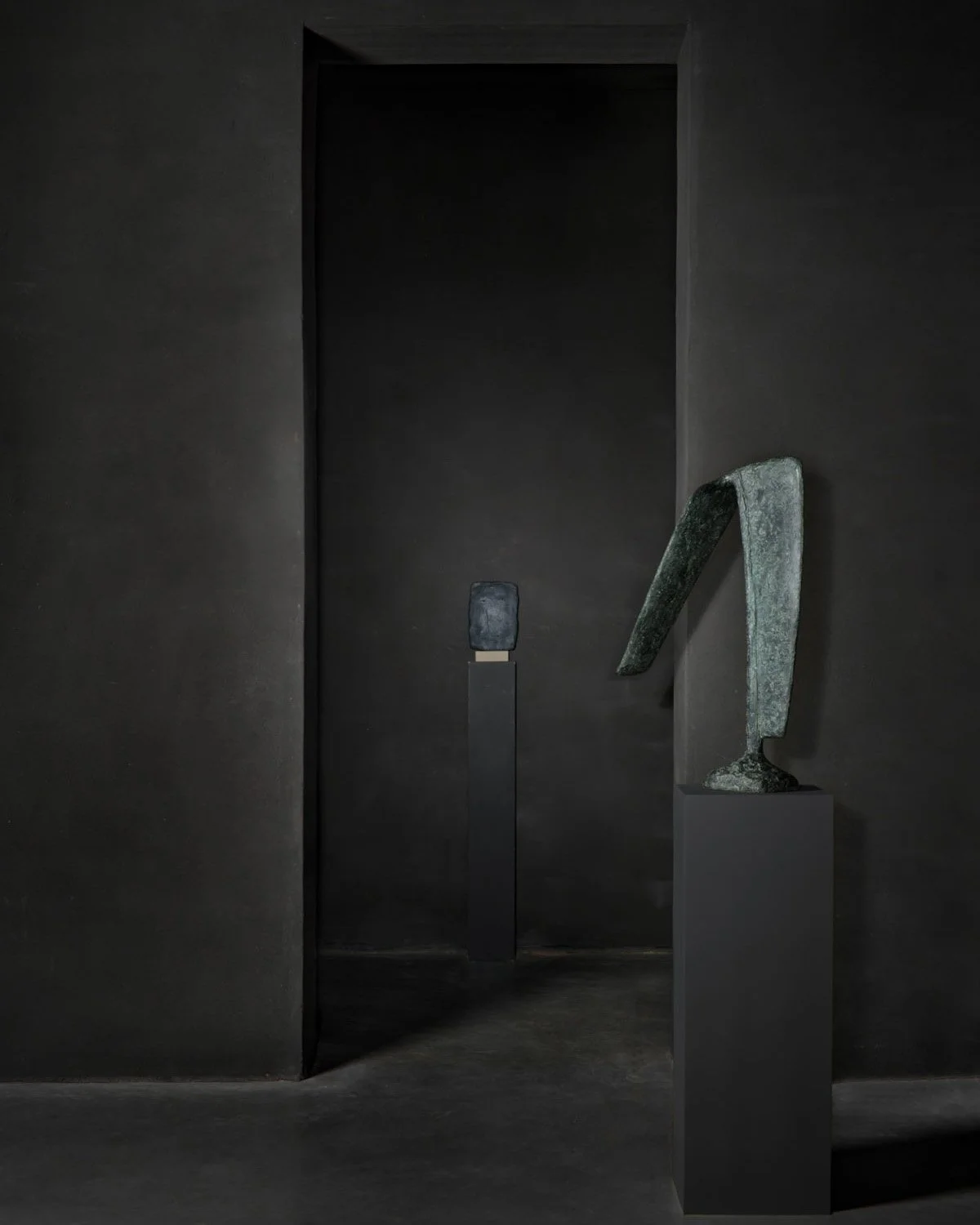
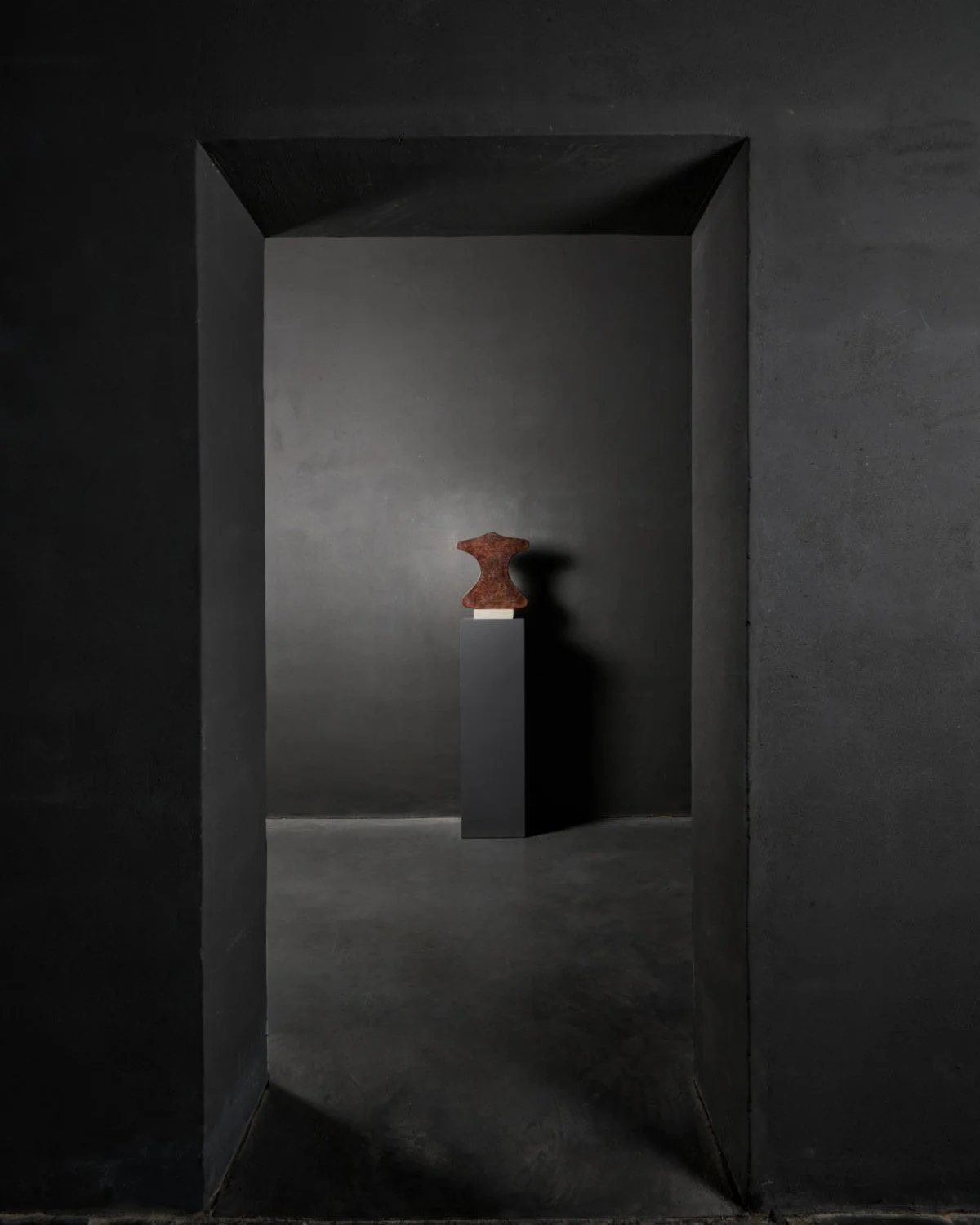
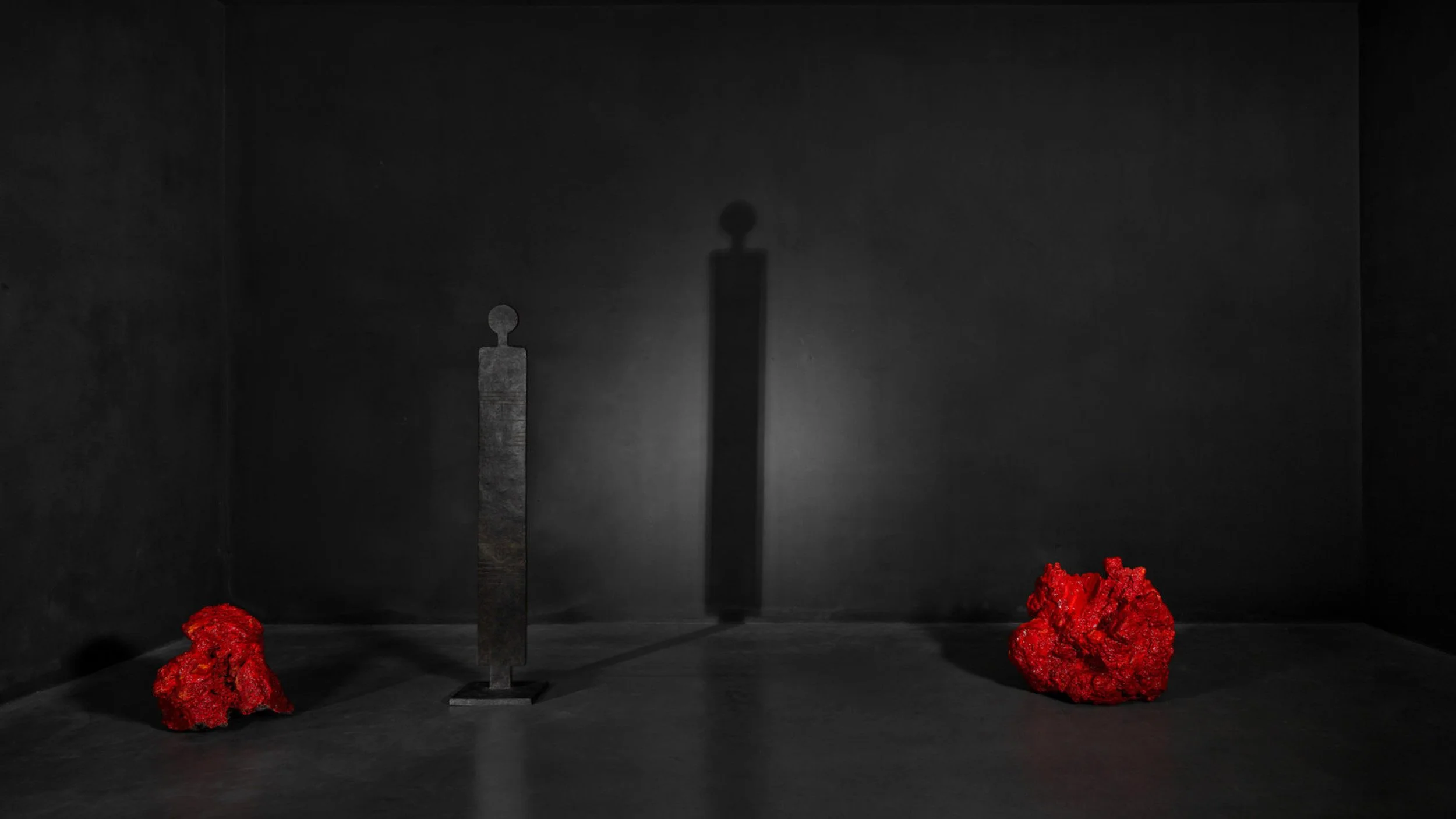
William Turnbull approached form through a different but equally elemental language. Moving between abstraction and archetype, his sculptures feel at once ancient and modern, as though they belong to both prehistory and the present moment. Horses, female figures, blades, and ritual forms are reduced to their most essential structures. Nothing is overly described. Instead, Turnbull’s works possess the stillness of objects that have survived time, carrying with them the memory of human belief, movement, and ceremony
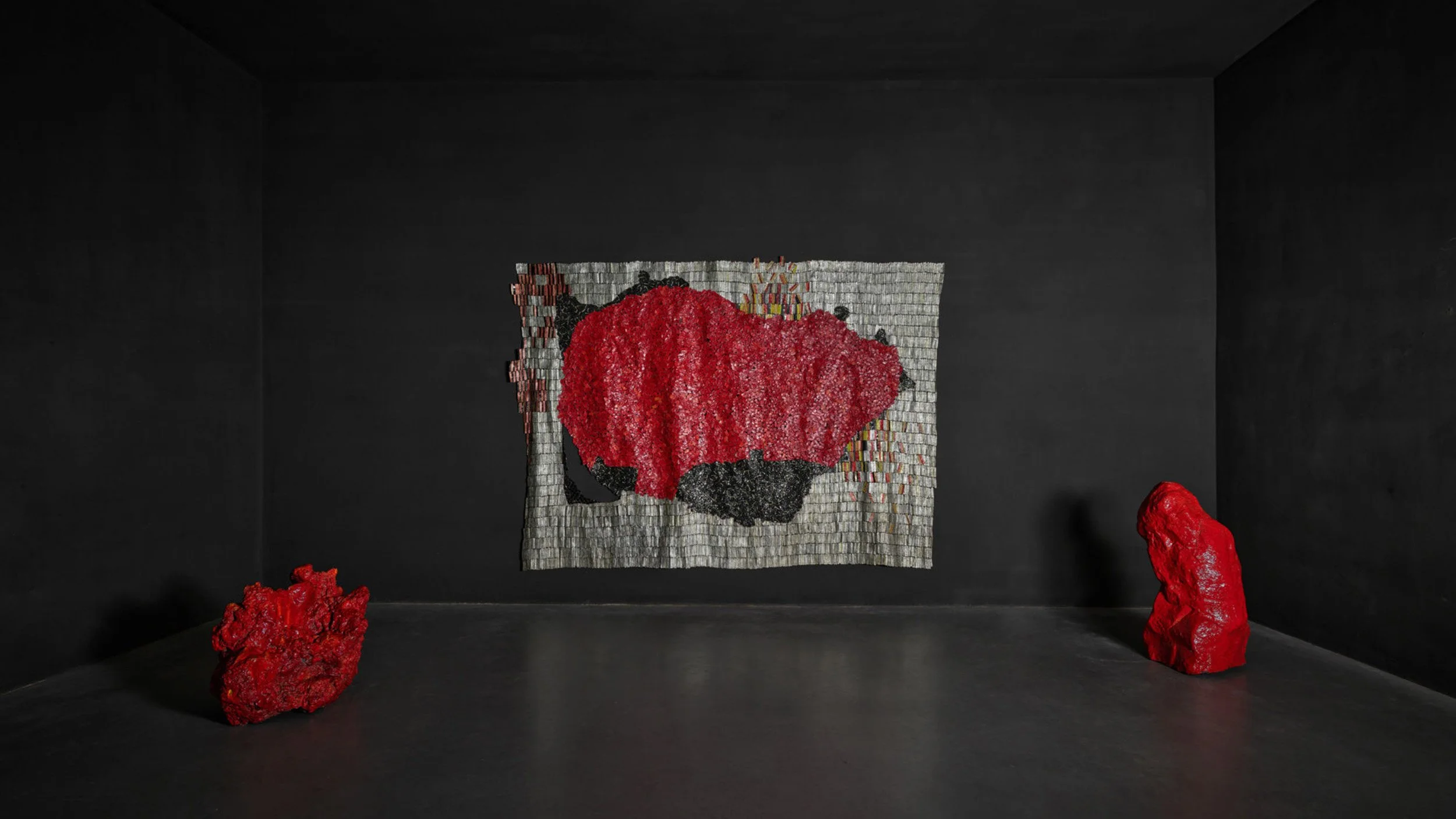
El Anatsui, one of the most influential artists of his generation, expands this sense of transformation through material and scale. His tapestry-like sculptures, made from recycled bottle caps joined into vast abstract fields of colour, line, and movement, turn the remnants of postcolonial economies into something luminous and alive. What begins as discarded matter becomes a surface of extraordinary complexity: part textile, part sculpture, part historical record. In Anatsui’s work, material is never neutral. It carries trade, consumption, memory, and renewal
Group exhibition, Human Traces: Presence, Absence, and Material Memory
Image © — @axelvervoordt_co
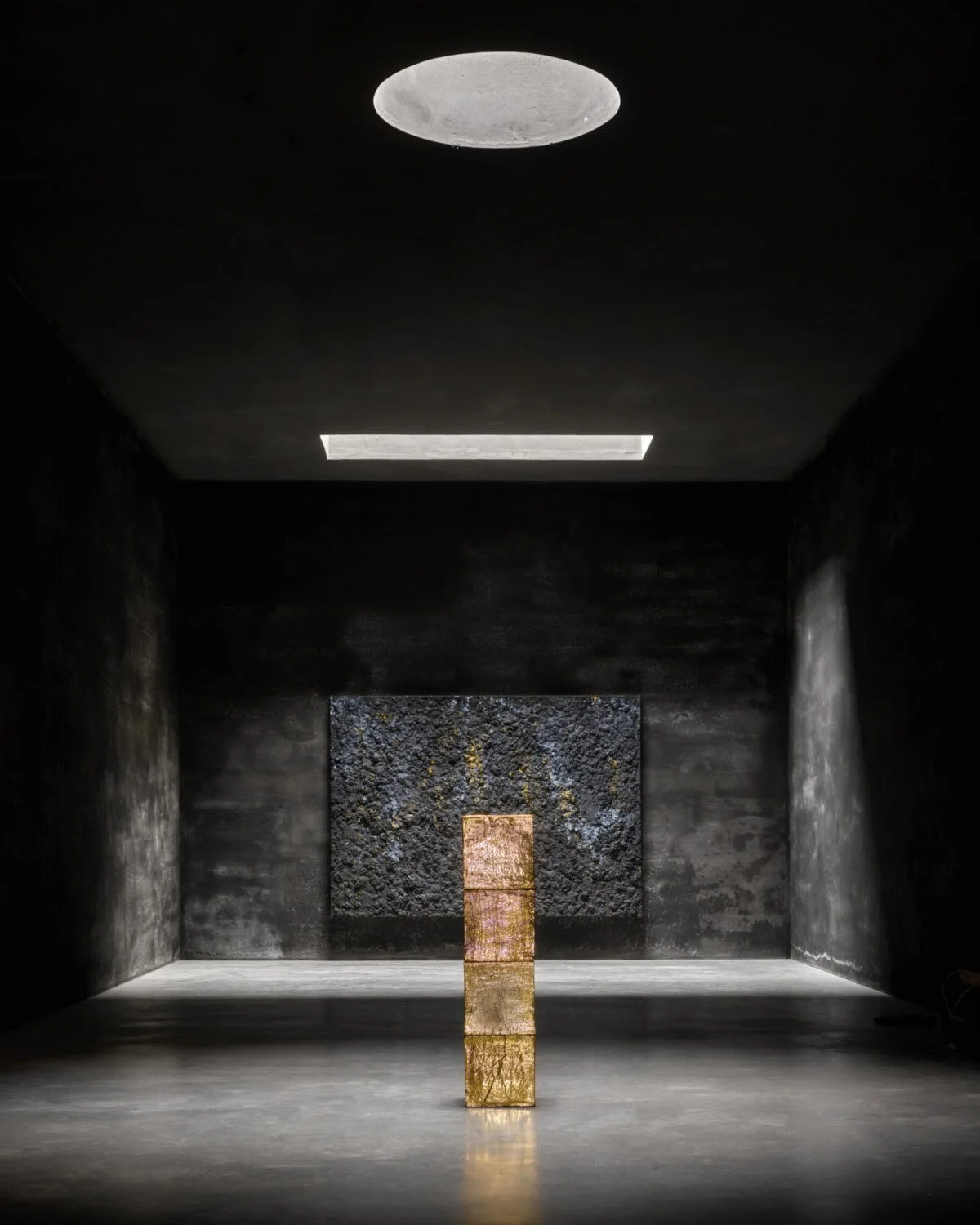
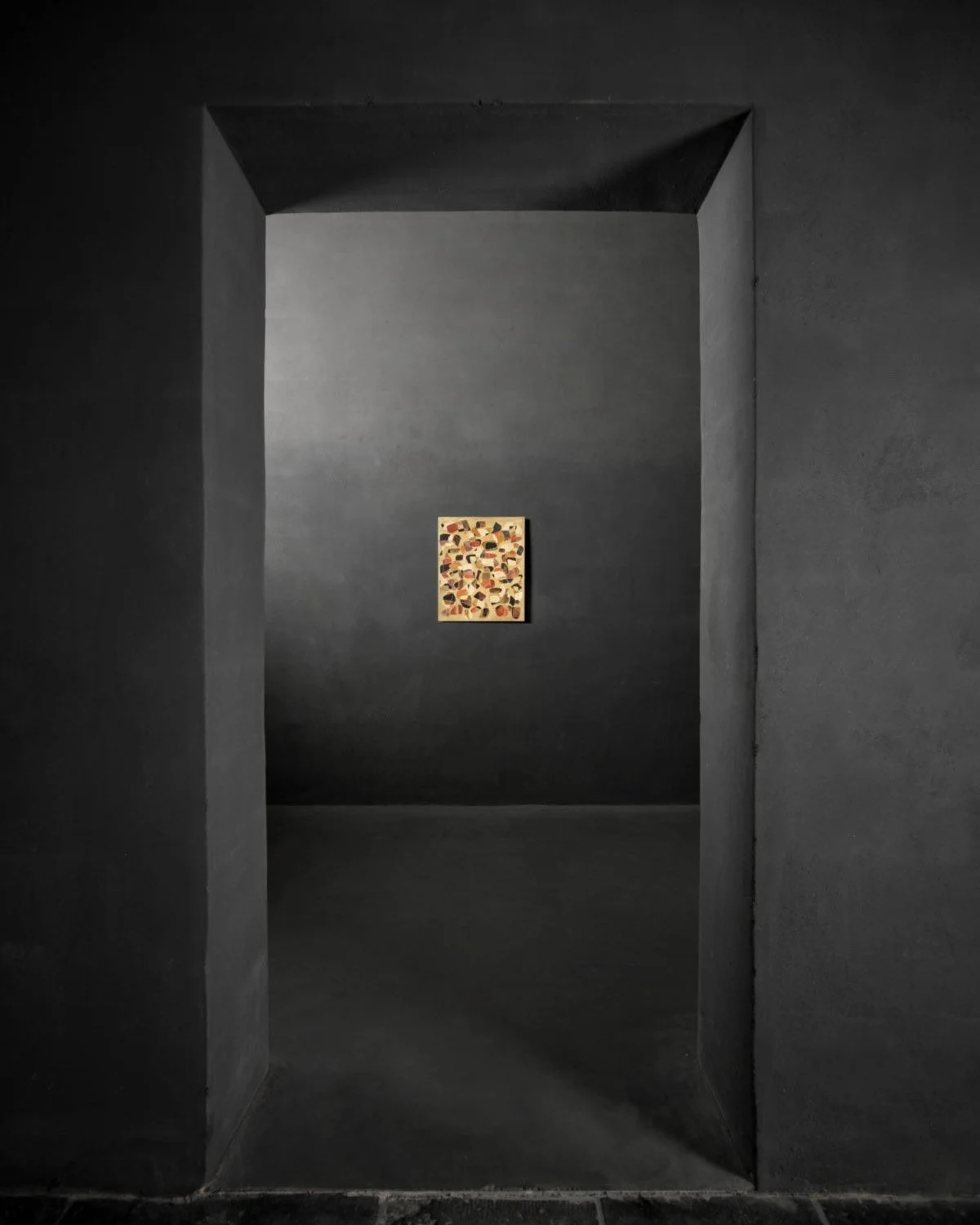
For Bosco Sodi, material is pushed toward an almost geological intensity. His cracked, thickly worked paintings appear eroded, burned, and weathered, as though shaped by time as much as by the hand. In his gilded terracotta cubes, earth is elevated into an alchemical landmark, its rough matter transformed into something sacred and precious. His vivid red enamelled rocks continue this gesture, dignifying irregularity and imperfection until matter itself begins to feel ceremonial
Group exhibition, Human Traces: Presence, Absence, and Material Memory
Image © — @axelvervoordt_co
Together, these artists move beyond representation. They do not simply depict the human condition; they reveal its traces. Through space, form, repetition, fracture, weight, and surface, they show how absence can become presence, and how ordinary materials can be charged with spiritual and psychological force. What connects them is not a shared style, but a shared transformation: the passage from object to symbol, from matter to memory, from the everyday to the sacred
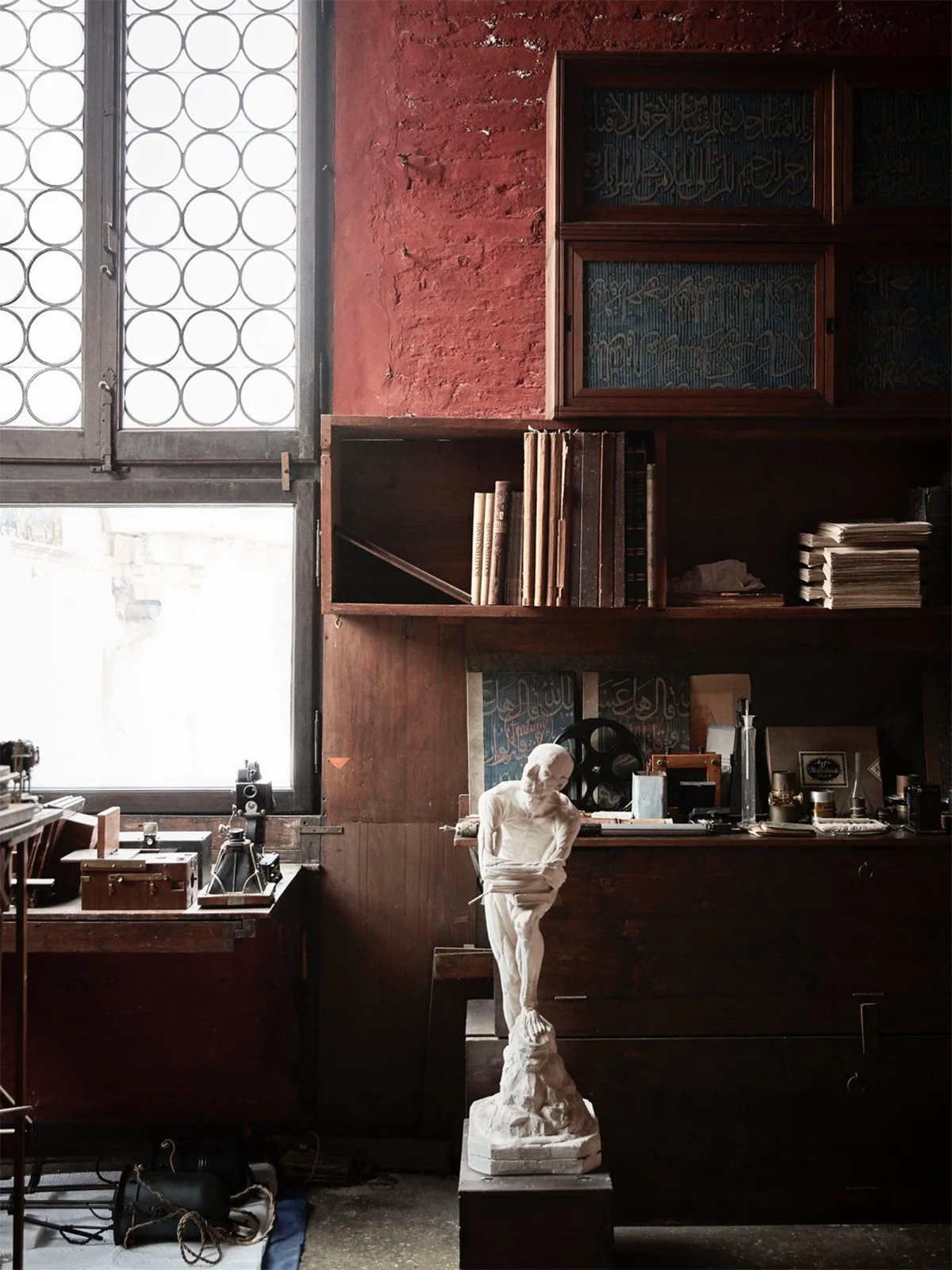
Looking Back at Intuition, Axel Vervoordt’s Defining Palazzo Fortuny Exhibition
—
Curated with Daniela Ferretti for the 2017 Venice Biennale, the exhibition now reads as one of Vervoordt’s clearest statements on art, perception and the knowledge that arrives before language
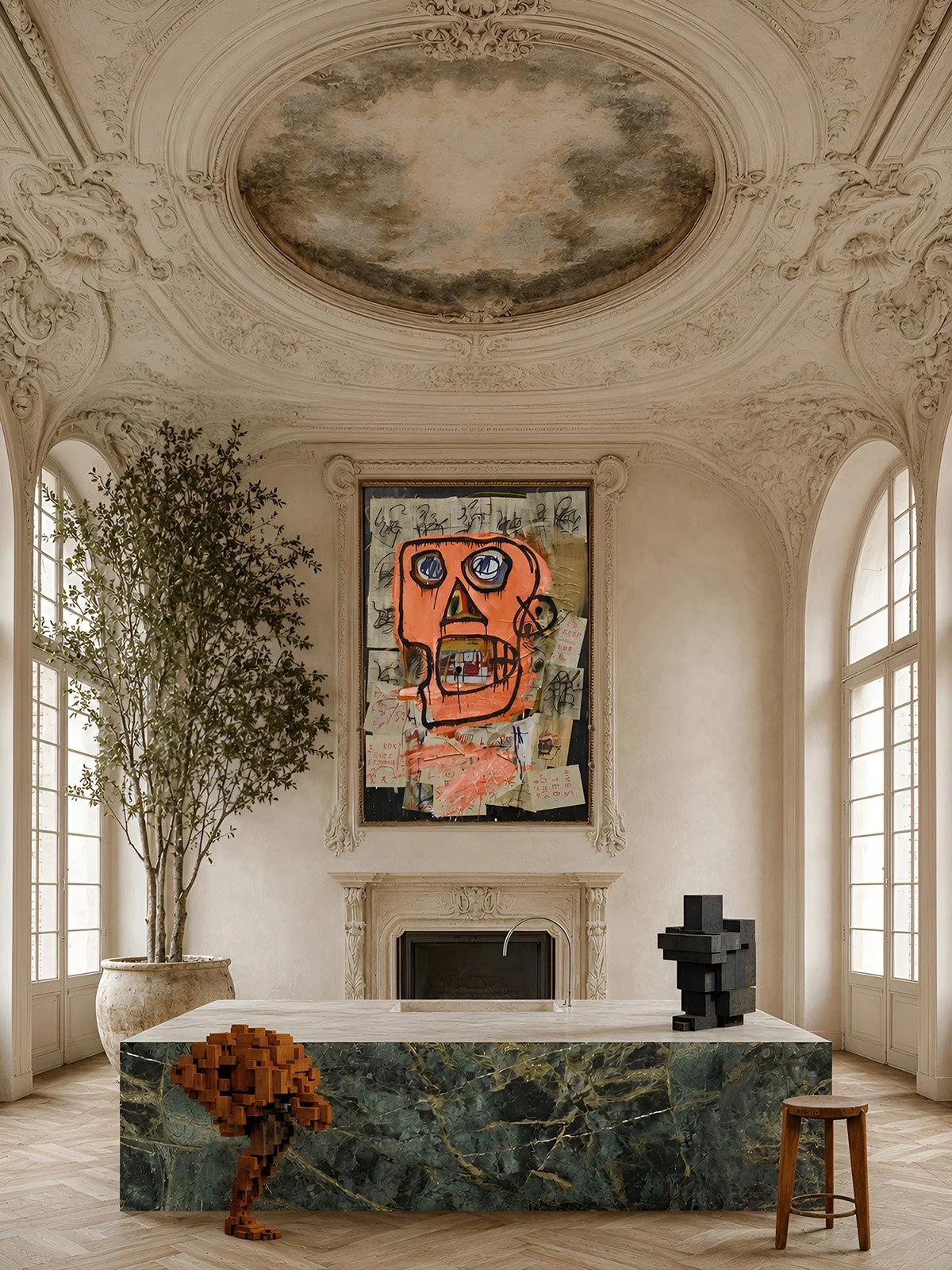
When the Room Becomes Part of the Collection
—
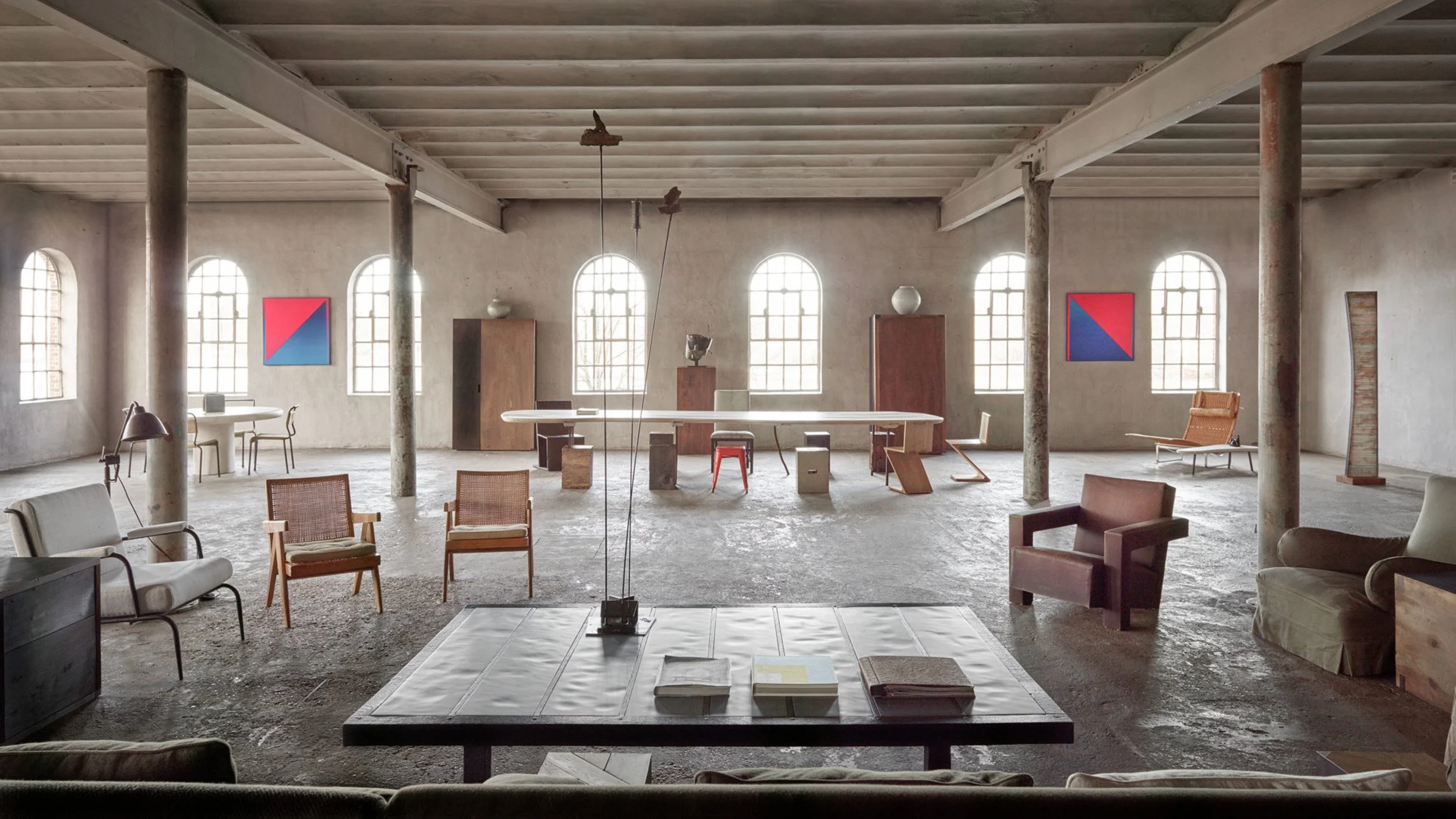
Works by Jean-Michel Basquiat, Antony Gormley, Thomas Houseago, Christopher Wool, Cy Twombly, Kazuo Shiraga and Mark Manders, together with Hellenistic and Roman antiquities, are contextually visualised by interior and furniture designer Brent Lee within interiors where chronology gives way to scale, material and spatial tension