

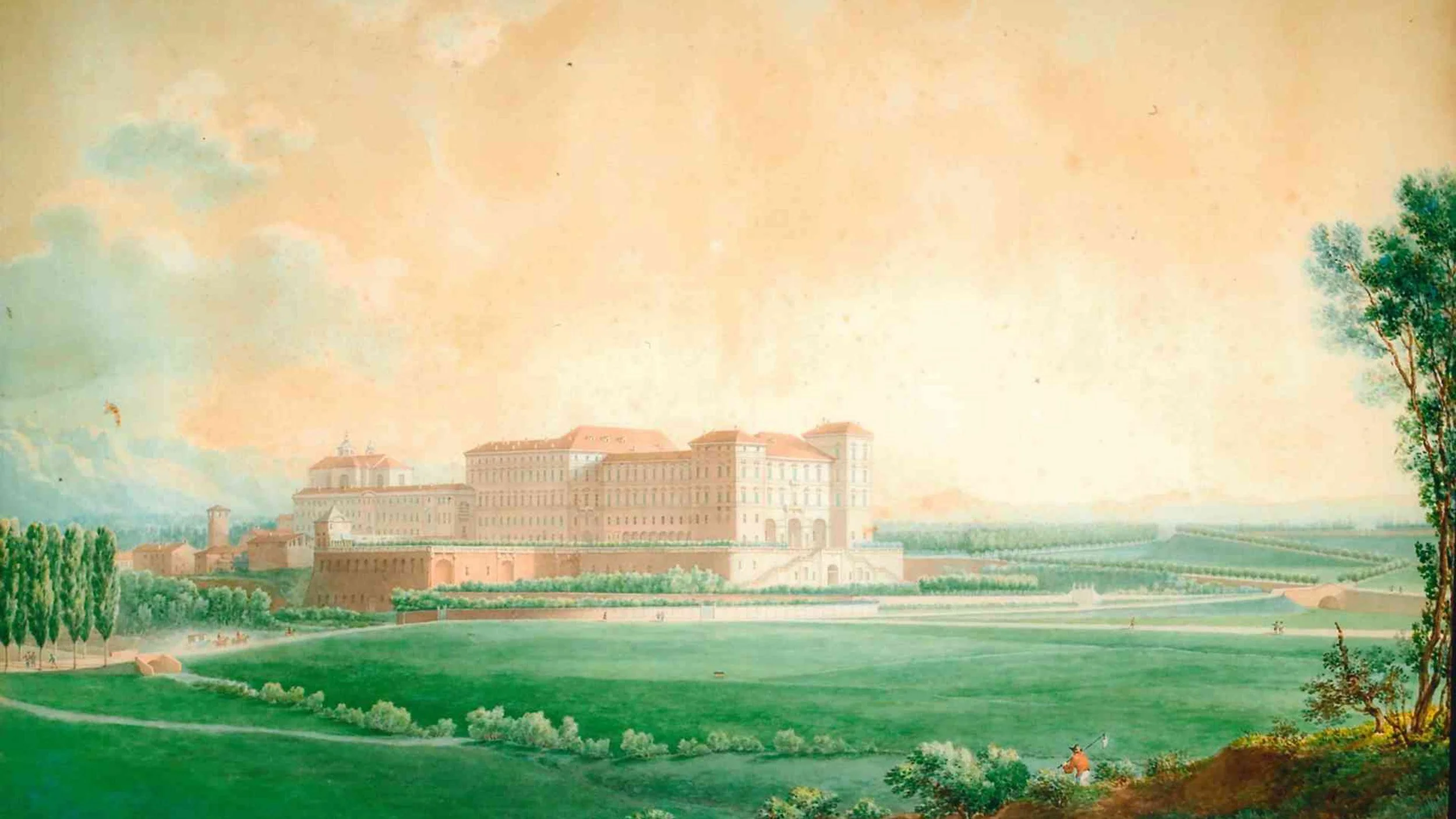
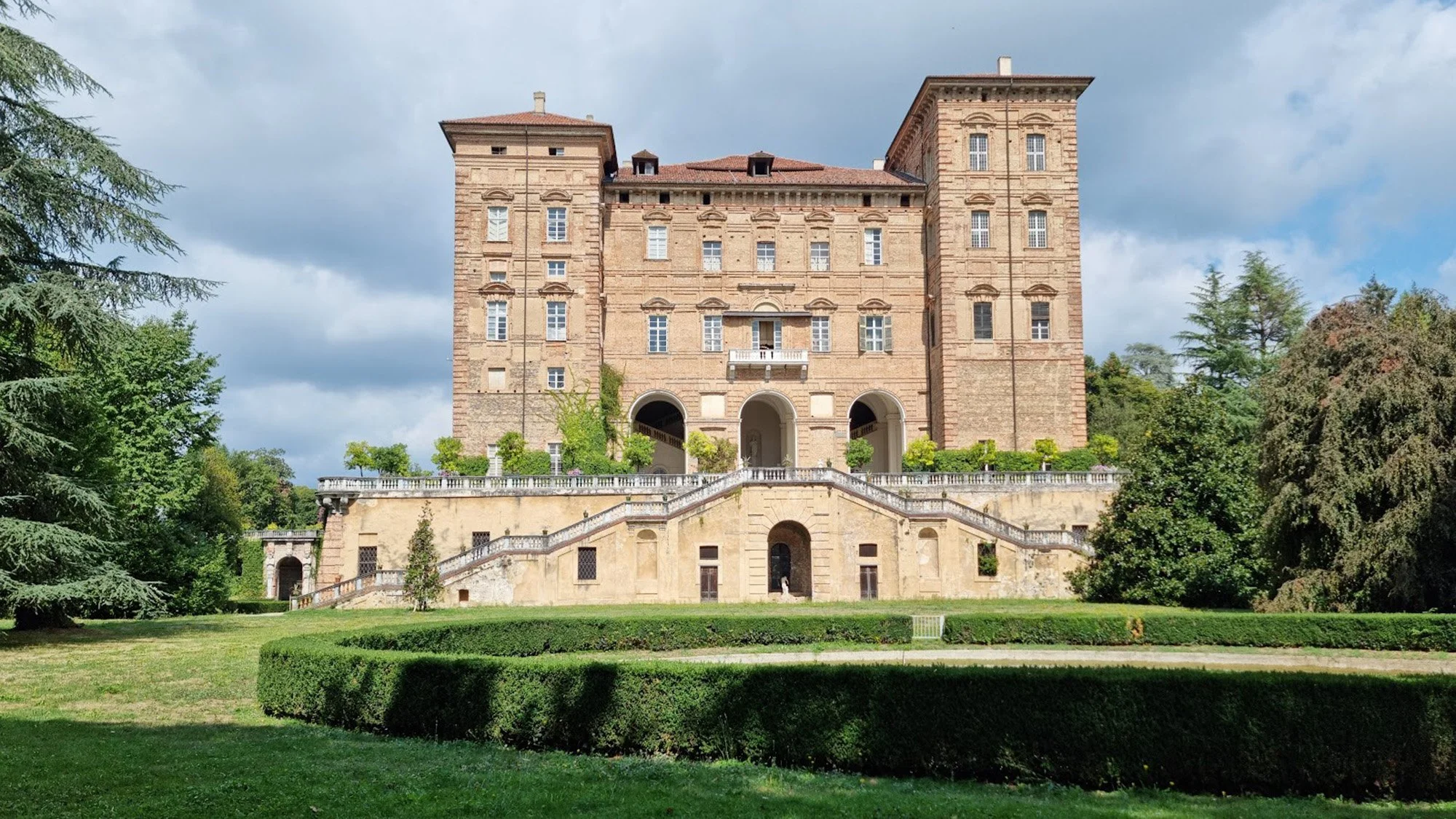
Giuseppe Pietro Bagetti, “View of the Ducal Castle of Agliè from the southwest side,” second quarter of the 19th century
Image © — @ilgiornaledellarte
MUSEUM
Castello Ducale di Agliè, the Faded Savoy Residence Where History Still Clings to the Walls
North of Turin, a 300-room castle preserves seven centuries of noble life through frescoed rooms, worn stone floors, painted doors, romantic gardens, and the quiet drama of interiors left almost exactly where time placed them
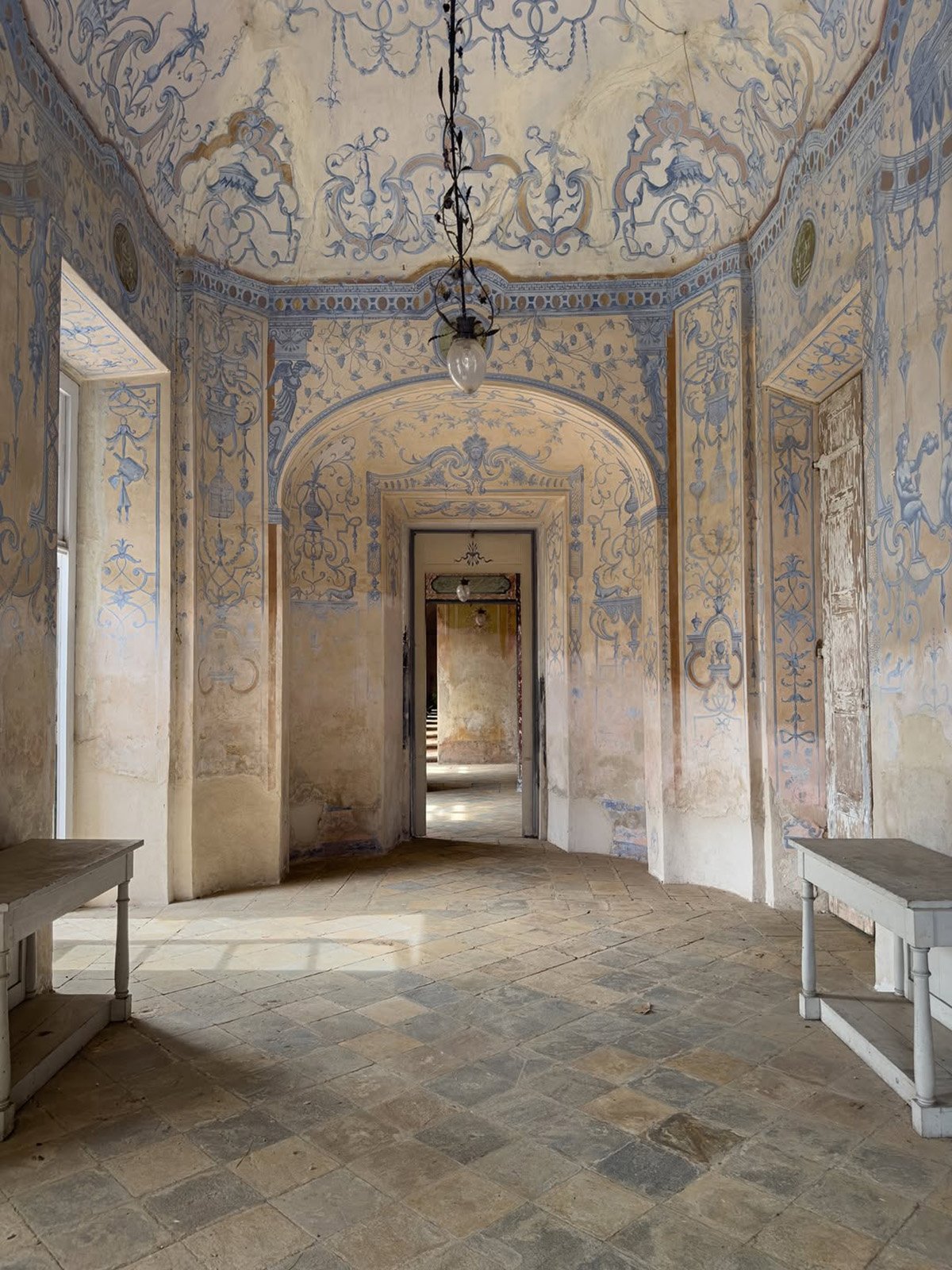
Image © — @lorenzocapirola
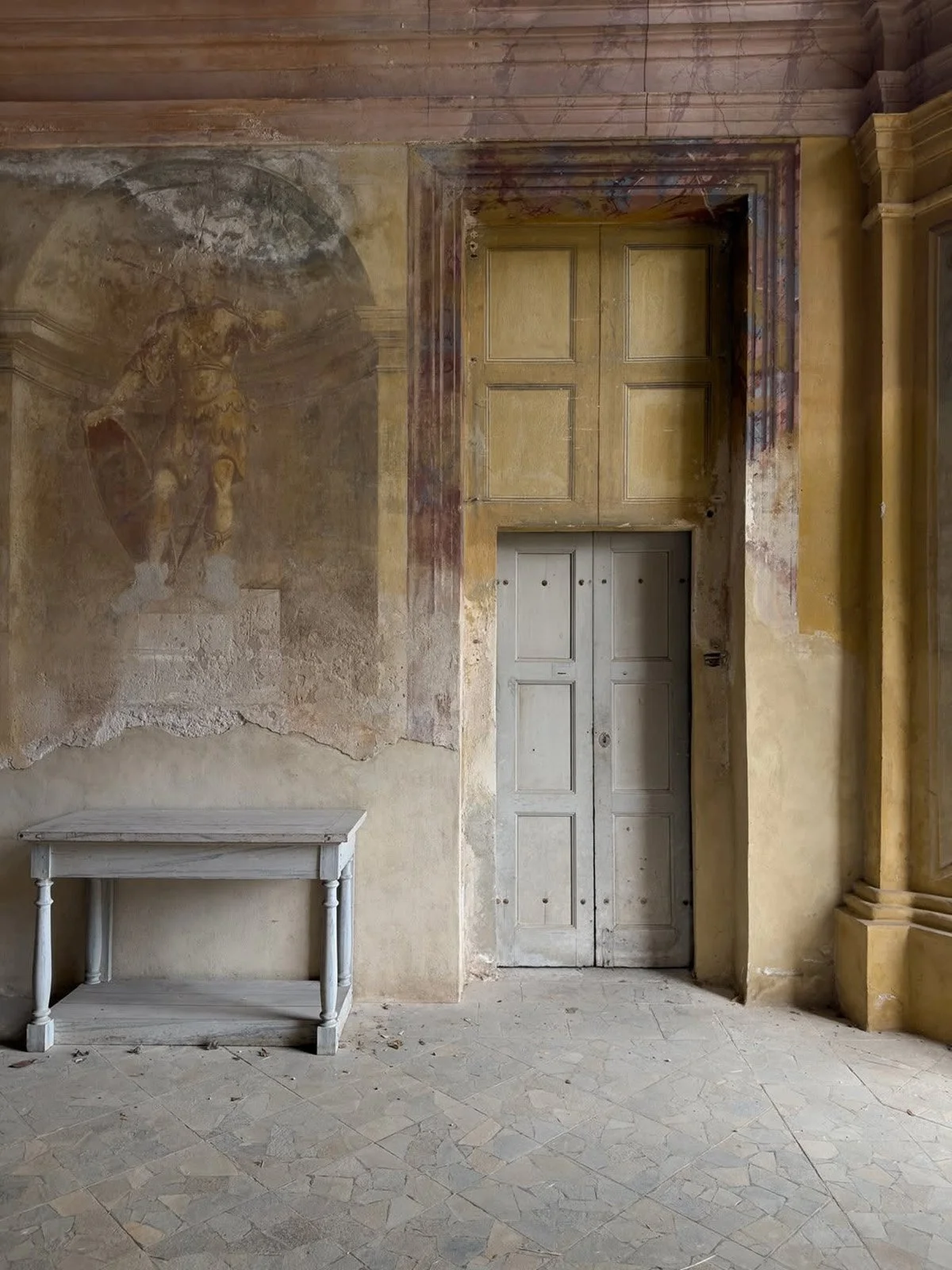
Image © — @lorenzocapirola
There are castles that announce themselves through polish, and then there is Castello Ducale di Agliè, where grandeur survives in a quieter, more affecting form. North of Turin, in the Canavese countryside of Piedmont, the former Savoy residence unfolds less like a restored monument than an architectural memory palace: room after room of worn stone floors, faded frescoes, painted doors, shadowed thresholds, and decorative fragments still holding the atmosphere of a noble house
Its history reaches back to the 12th century, when a medieval fortress stood on the site. The castle’s present identity began to take shape under Count Filippo San Martino d’Agliè, a powerful court figure associated with Christine of France, who transformed the old structure into a grand residence. From this period comes one of Agliè’s most important interiors, the Hall of Honour, frescoed by Giovanni Paolo Recchi and his workshop with scenes celebrating Arduino d’Ivrea, the first king of Italy and the figure through whom the San Martino family traced its lineage
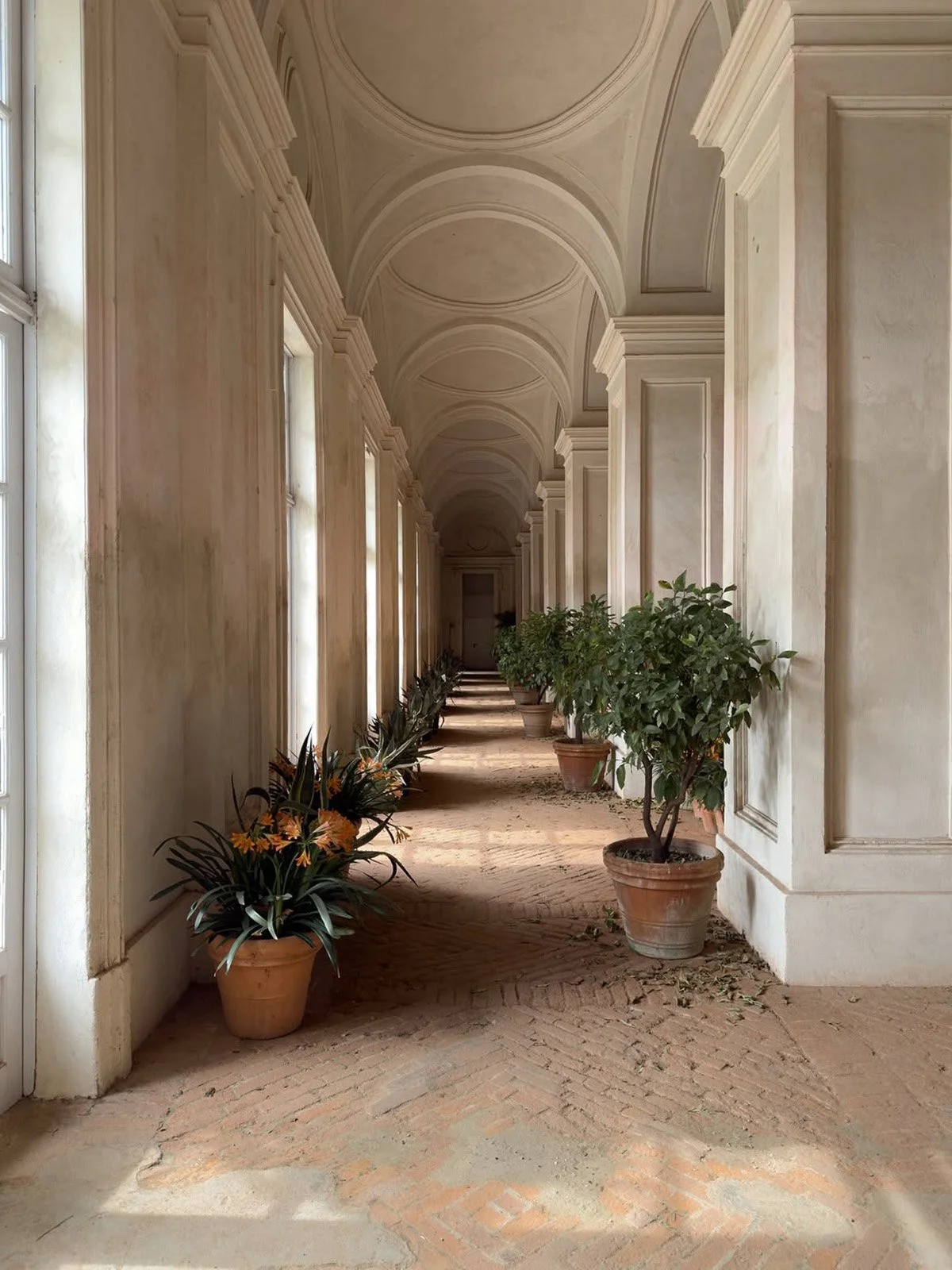
Image © — @lorenzocapirola
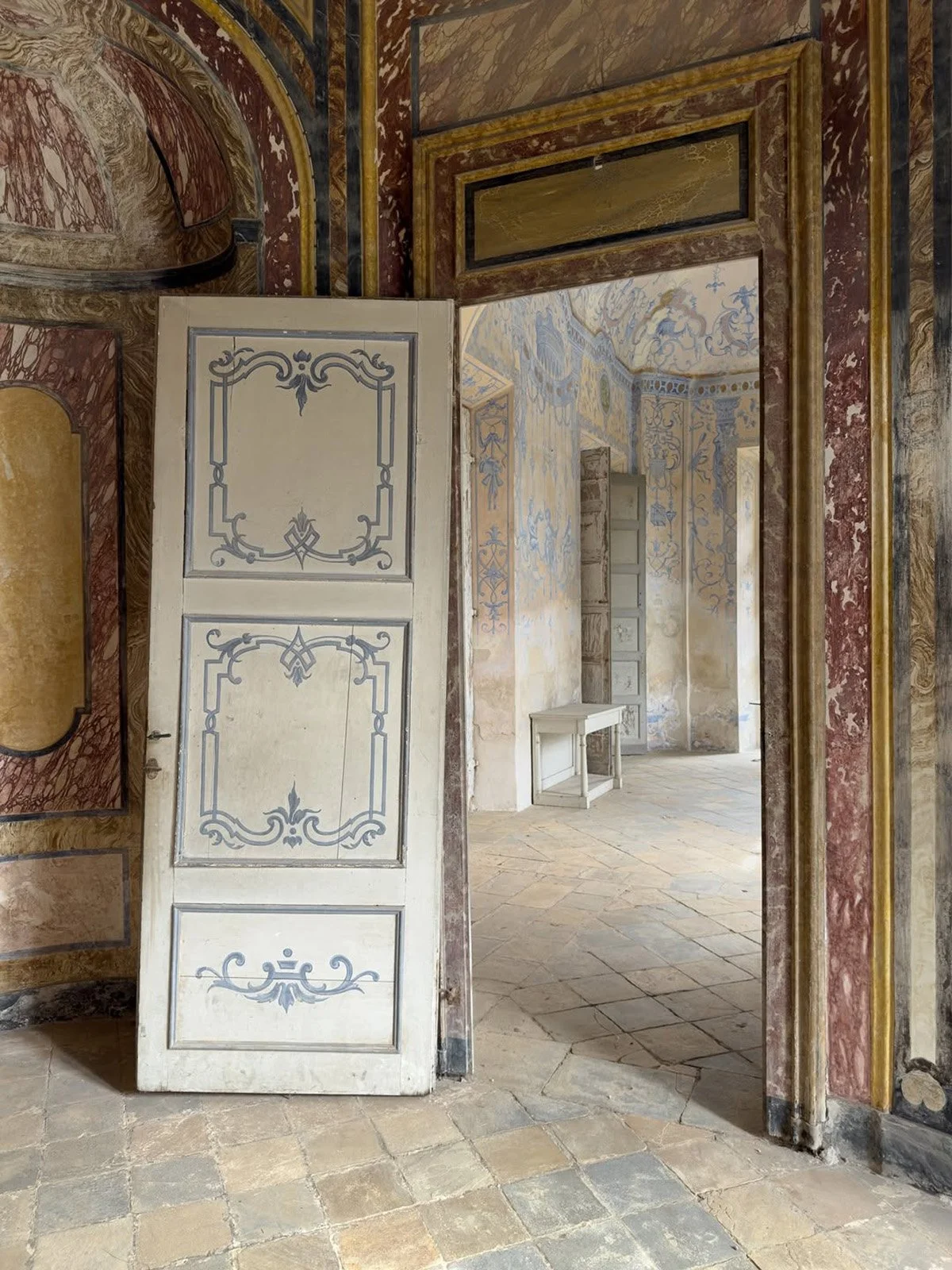
Image © — @lorenzocapirola
In 1764, the castle entered the world of the House of Savoy when Carlo Emanuele III acquired it for his son Benedetto Maurizio, Duke of Chiablese. What followed was not simply a renovation, but a reordering of the entire estate. Architect Ignazio Birago di Borgaro redesigned the complex, connected it more deliberately to the village, and created the two-storey covered gallery linking the castle to the parish church. Even now, the architecture feels composed as a sequence of passage, procession, and pause: one doorway opening onto another, painted rooms glimpsed through marbleised frames, corridors stretching into muted light
The photographs reveal the castle at its most compelling. Not as a palace sealed in perfection, but as a place where time has become part of the decoration. Blue ornamental frescoes drift across cream plaster walls. Marbleised door surrounds remain half-bright, half-eroded. Panelled doors carry painted borders like traces of old ceremony. In one room, an almost ghostly figure survives on the wall, softened by age and weather. In another, pale stone flooring cuts across the room in irregular geometry, scuffed and powdered by years of passage. The effect is not ruin. It is survival
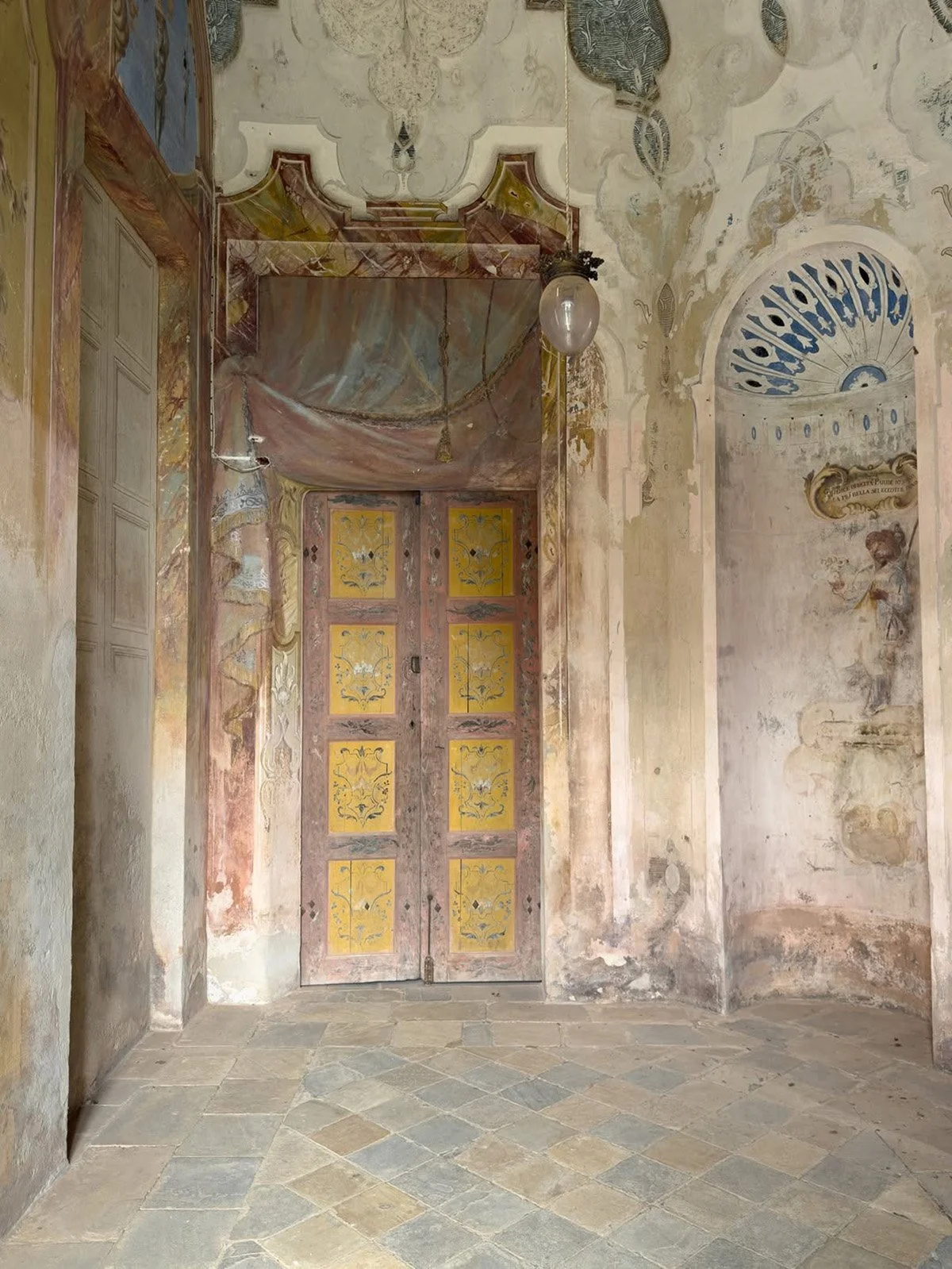
Image © — @lorenzocapirola
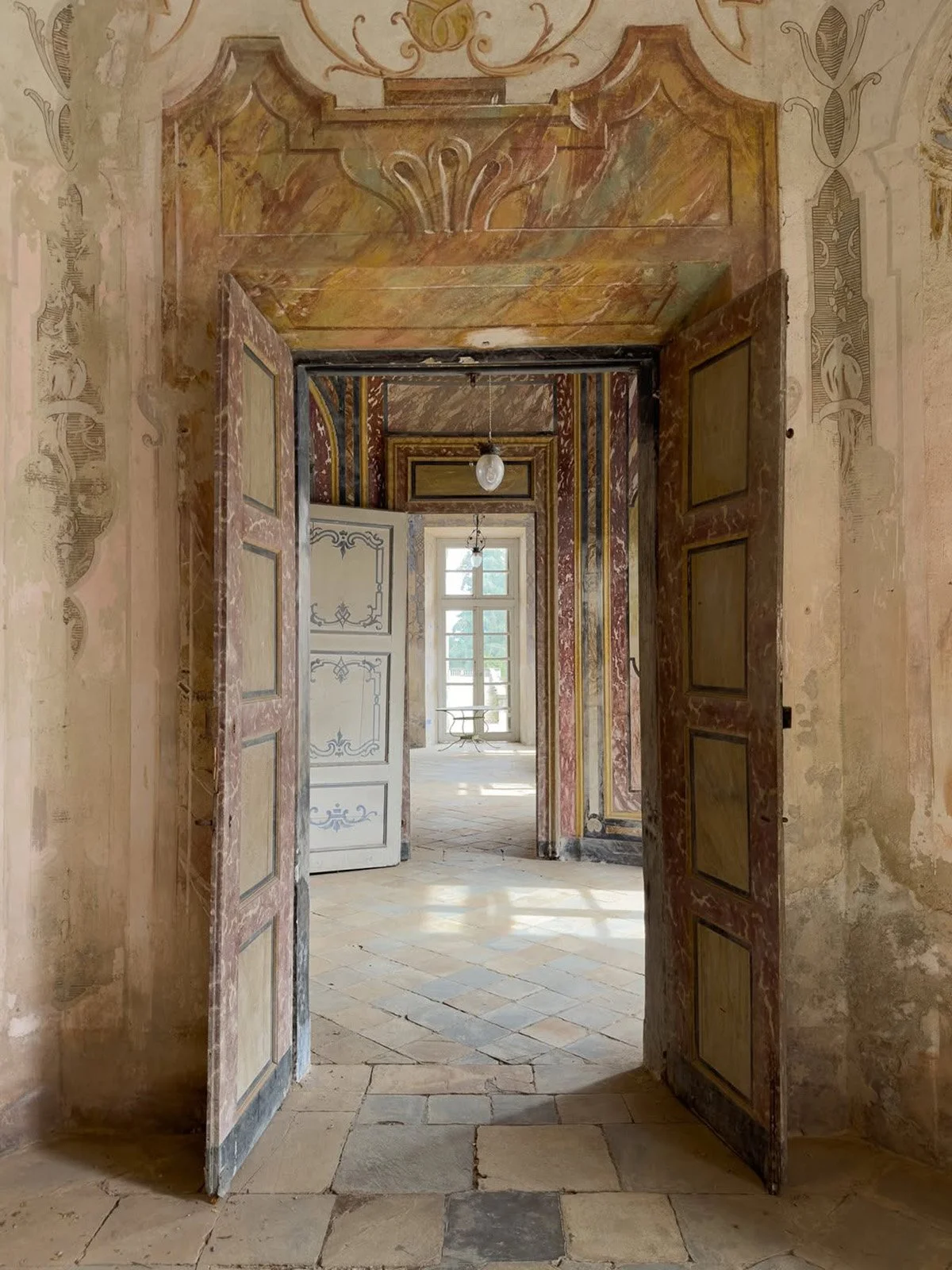
Image © — @lorenzocapirola
Agliè’s scale is immense. With more than 300 rooms, the castle contains ceremonial halls, apartments, galleries, service spaces, collections, and garden-facing rooms accumulated across generations. Its holdings have included archaeological relics, oriental objects, ornithological material, and furnishings that speak to the collecting habits of the Savoy court. But in this visual telling, the true collection is architectural: thresholds, plaster, fresco, stone, timber, glass, dust, and light
The landscape was equally shaped by power and taste. In the 18th century, Michel Benard, director of the Royal Gardens, brought French formality to the grounds, including axial planning and water features. Later, between 1838 and 1840, Xavier Kurten reshaped parts of the park according to the romantic English landscape fashion, softening order into atmosphere. That shift is still felt in the planted corridors and green passages, where architecture and foliage begin to merge. A long vaulted gallery overtaken by ivy feels almost cinematic, as if the garden has entered the house and decided to remain
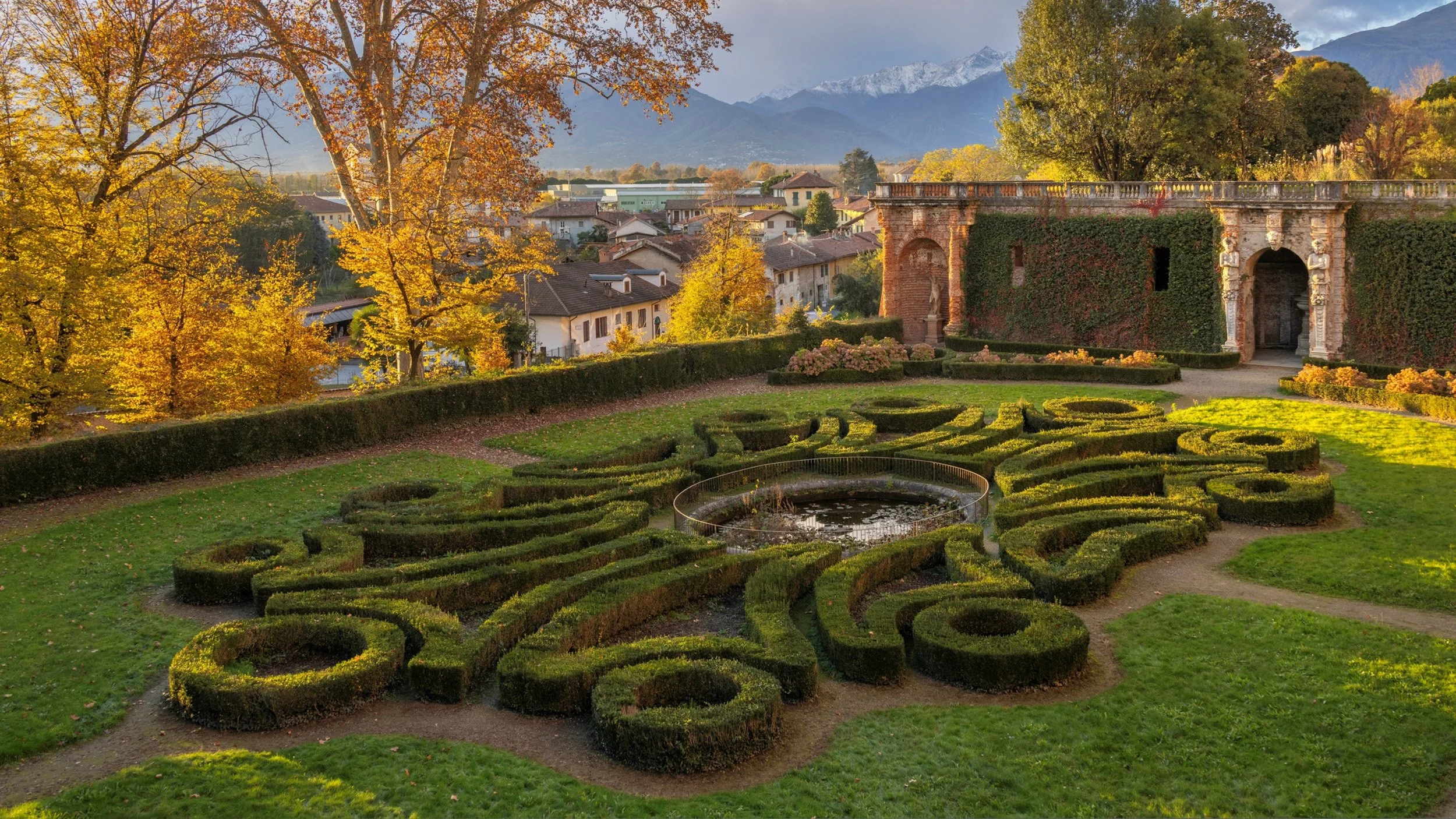
Image © — @abbonamentomuseipiemonte
After the Napoleonic period, when the castle was used as a shelter, Agliè returned to the House of Savoy in 1823. King Carlo Felice and Queen Maria Cristina of Bourbon commissioned further modernisation, enriching the interiors and collections. The queen’s interest in antiquity gave the castle one of its more scholarly dimensions, particularly through the archaeological material associated with the Tuscolana Room
Later, the residence passed through the Savoy-Genoa branch. Duke Tomaso’s diplomatic travels to Asia added ethnographic and oriental objects to the collections, while during the First World War his wife, Isabella of Bavaria, converted thirteen rooms in the oldest part of the castle into a small hospital for convalescing officers. In 1939, the residence was sold to the Italian State and later became a museum, preserving its structure, furnishings, and layered interiors
What makes Castello Ducale di Agliè so arresting today is not simply its noble provenance, or its Savoy history, or even its extraordinary scale. It is the way those things remain visible through atmosphere rather than spectacle. The castle does not feel frozen. It feels suspended. Its rooms hold the evidence of courtly ambition, private retreat, collecting, war, abandonment, restoration, and memory. In the frescoed walls and worn floors, Agliè offers something more powerful than splendour alone: the rare sensation of history still breathing through the architecture
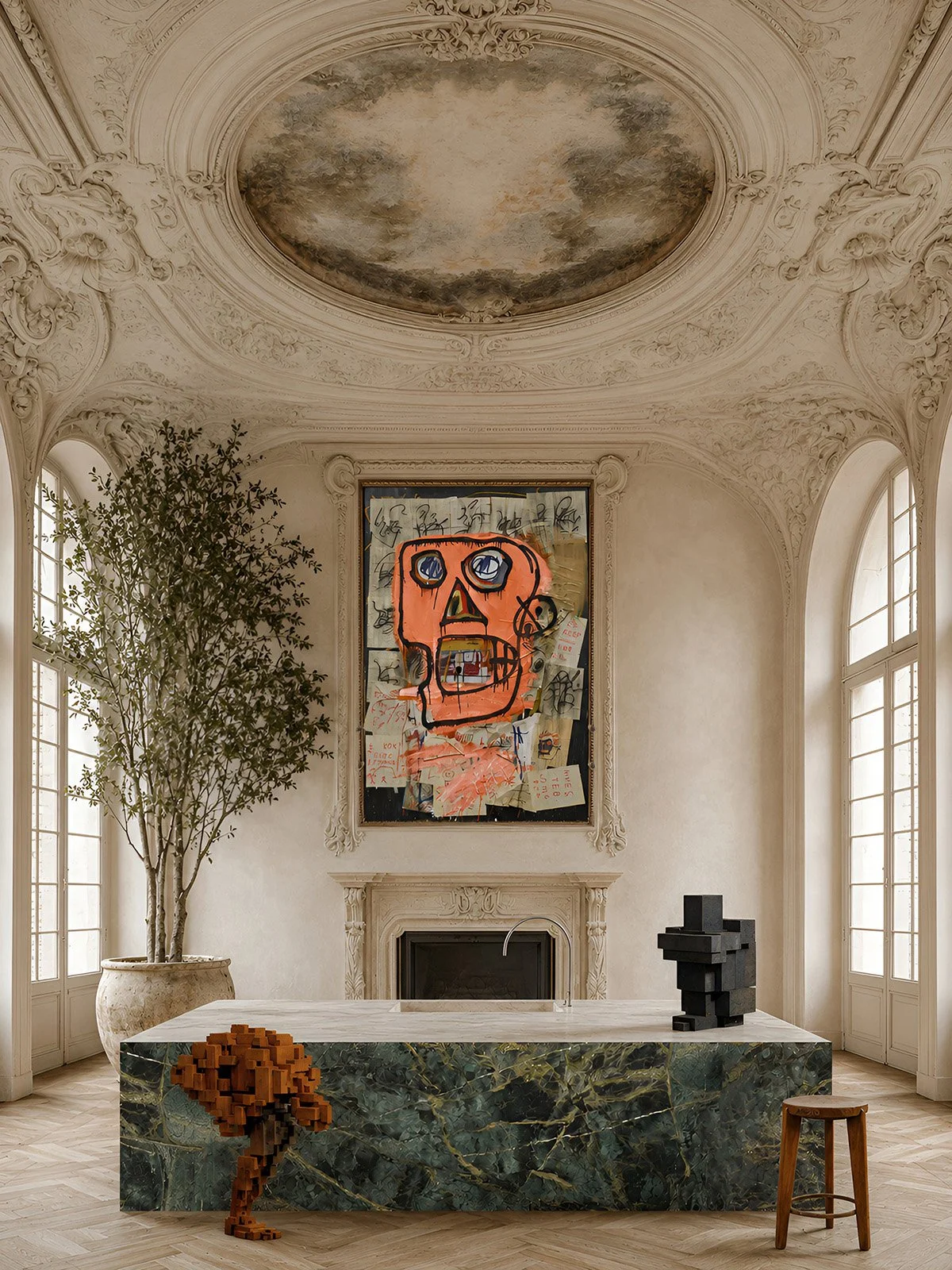
When the Room Becomes Part of the Collection
—
Works by Jean-Michel Basquiat, Antony Gormley, Thomas Houseago, Christopher Wool, Cy Twombly, Kazuo Shiraga and Mark Manders, together with Hellenistic and Roman antiquities, are contextually visualised by interior and furniture designer Brent Lee within interiors where chronology gives way to scale, material and spatial tension
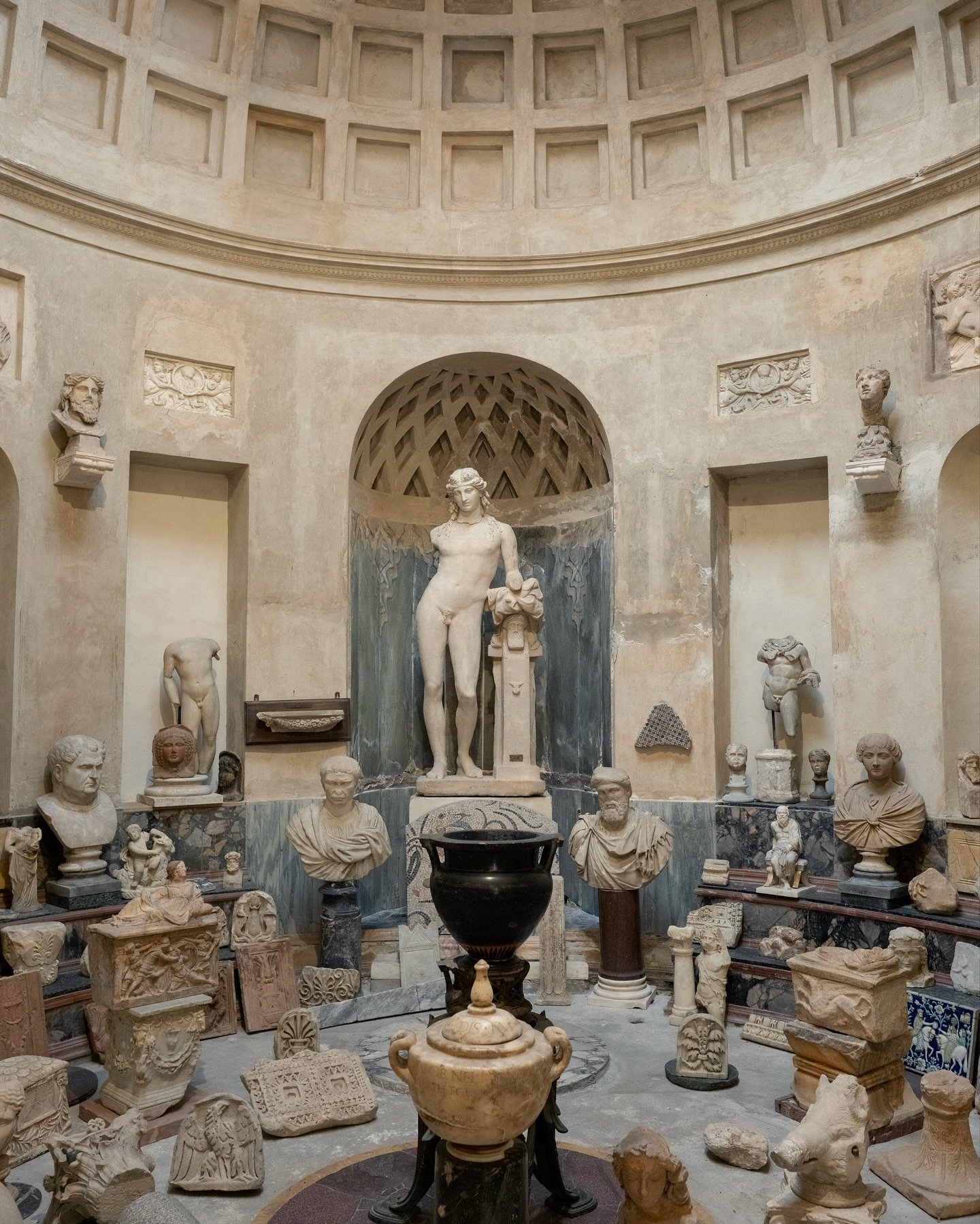
Casa Museo Lodovico Pogliaghi — the Artist’s World Above Varese
—
At the Sacro Monte di Varese, the Milanese artist’s former home and atelier gathers art, archaeology, architecture, and the monumental plaster model for Milan Cathedral’s central door