

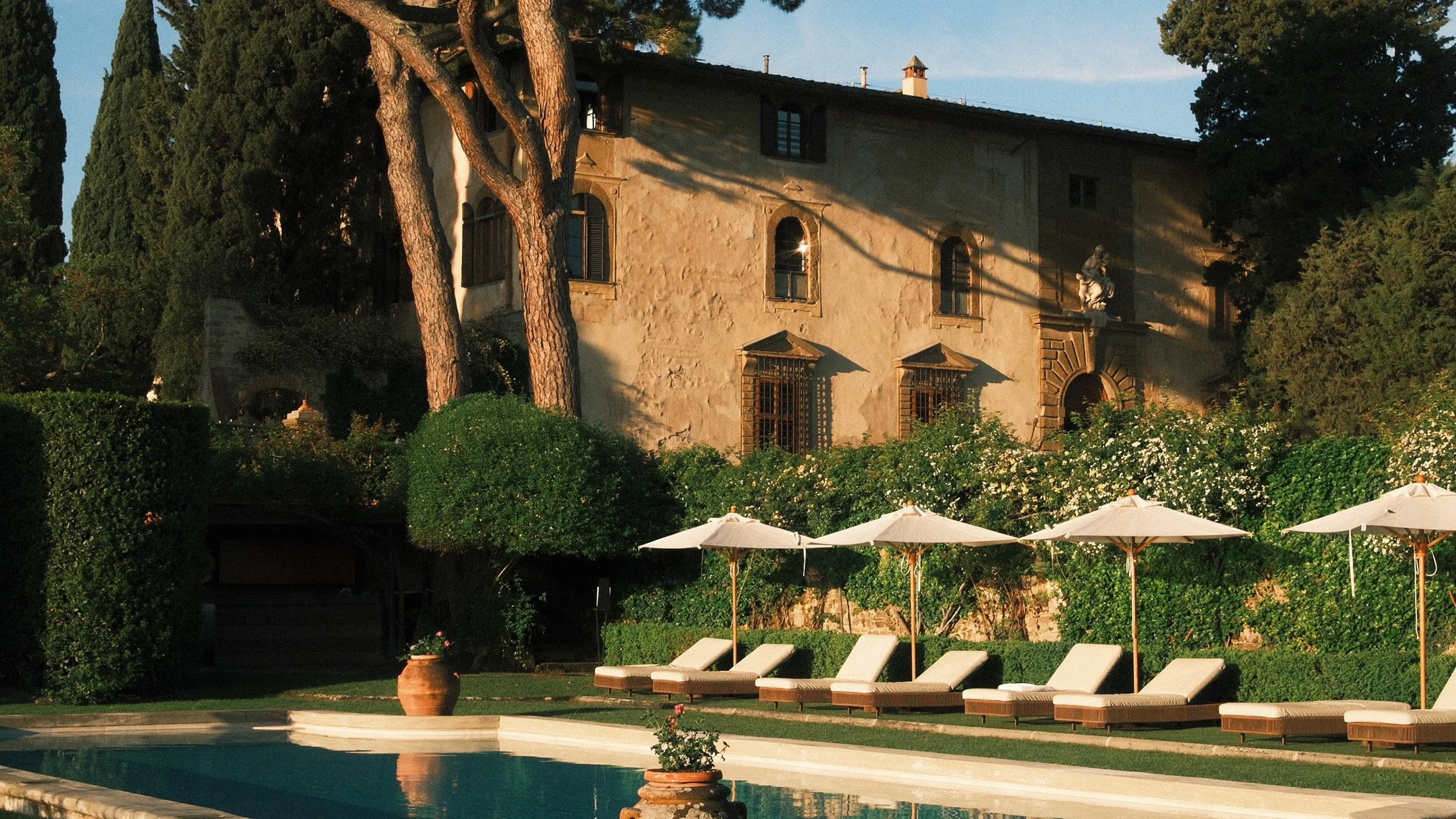
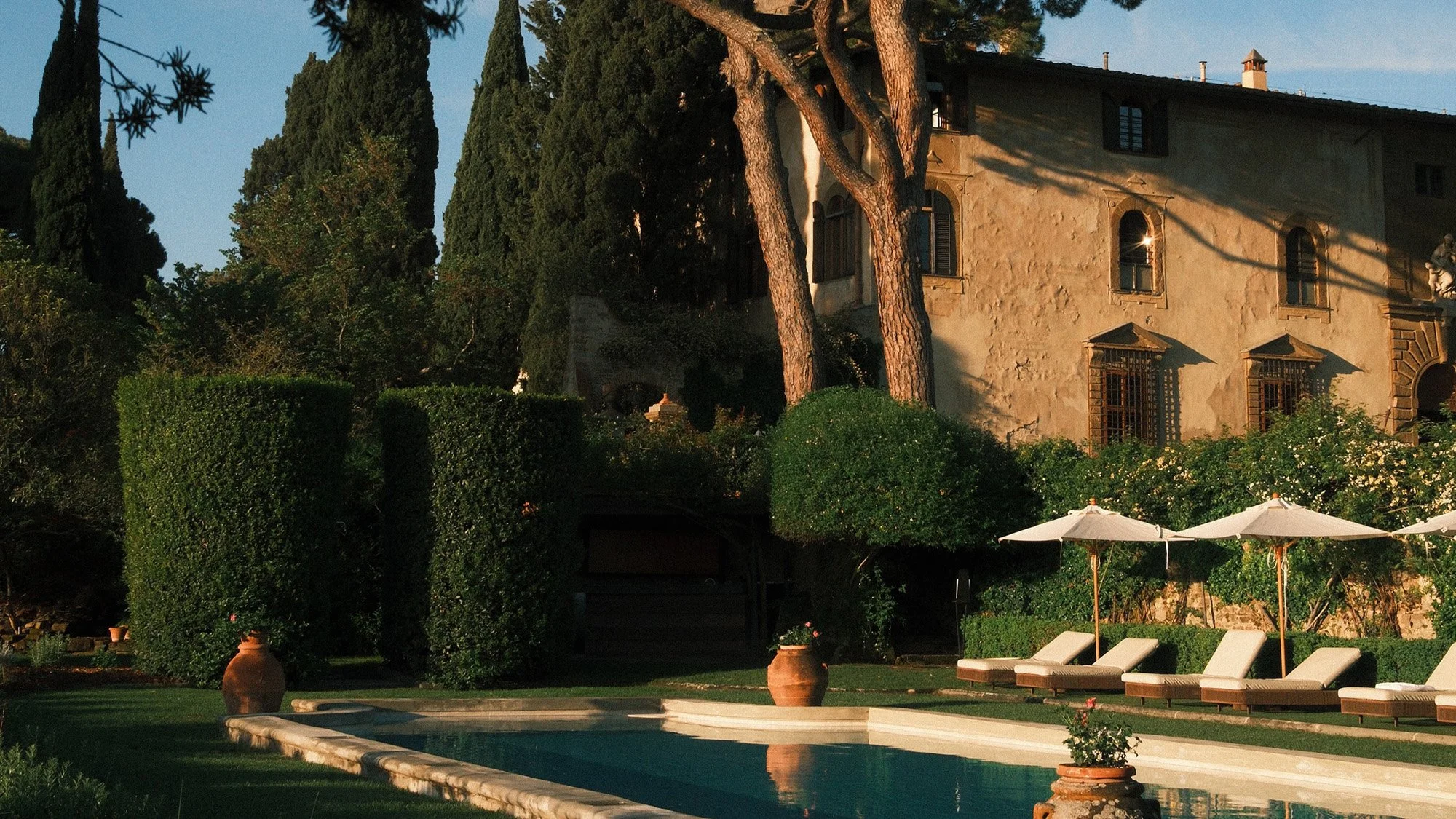
Poolside at Hotel Torre Di Bellosguardo
Image © — @kyleecampbell
HOTEL
A View Across Florence, Seven Centuries in the Making
High above the Oltrarno, a medieval tower and Renaissance villa preserve the atmosphere of a private Florentine residence among orchards, olive groves and cypress-lined gardens
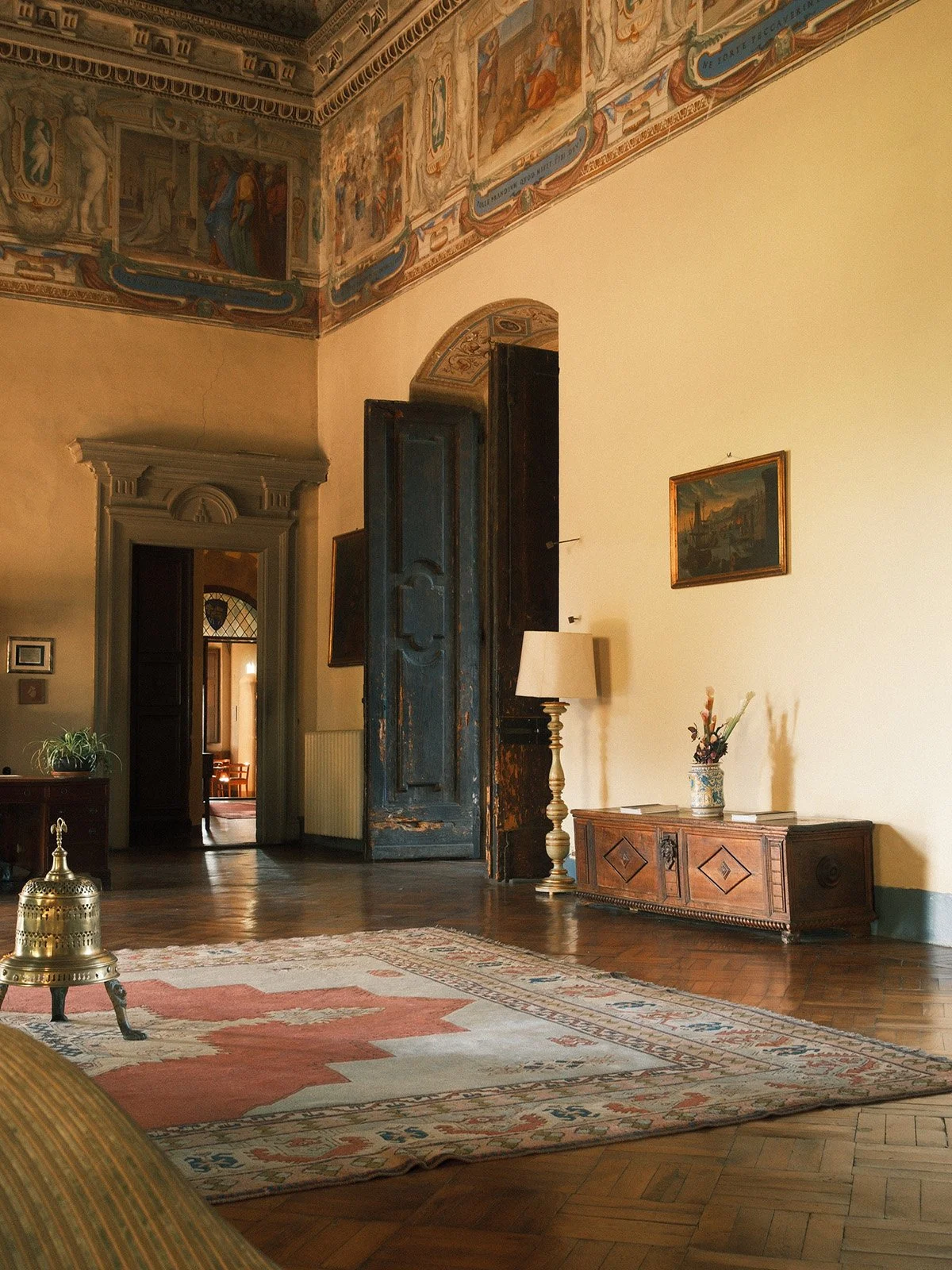
15th-century frescoes possibly by Bernardino Poccetti
Image © — @kyleecampbell
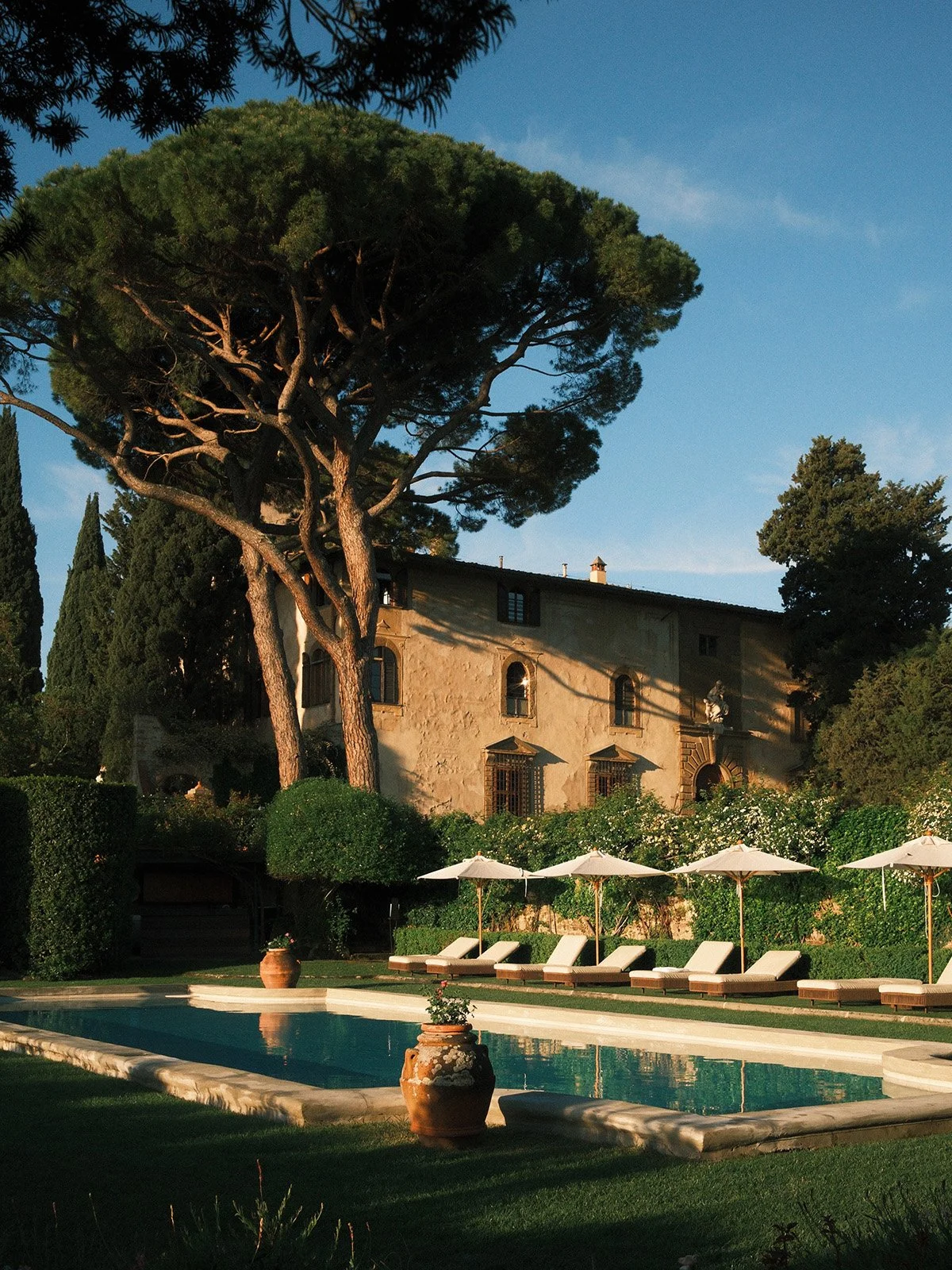
Textured pots and manicured landscaped gardens at Hotel Torre Di Bellosguardo
Image © — @kyleecampbell
There may be more celebrated viewpoints in Florence, but few possess the composure of Bellosguardo. From this quiet hill southwest of the historic centre, the city appears almost complete: Brunelleschi’s dome rising above terracotta roofs, the campaniles and towers gathered around it, and the Tuscan landscape extending towards the horizon. The centre of Florence is only ten minutes away by car, yet at Hotel Torre di Bellosguardo, the city feels suspended at a distance
The oldest part of the residence is its 13th-century tower, once held by the poet Guido Cavalcanti, a close friend and contemporary of Dante Alighieri. Originally conceived as a hunting lodge and family home, it was enlarged from 1583 by the Roti Michelozzi family into a more substantial Renaissance villa. The transformation brought artists of considerable standing: Bernardino Poccetti decorated the entrance hall with frescoes devoted to the theme of Charity, while the Flemish-born sculptor Pietro Francavilla created the figure of Charity that remains above the entrance portal
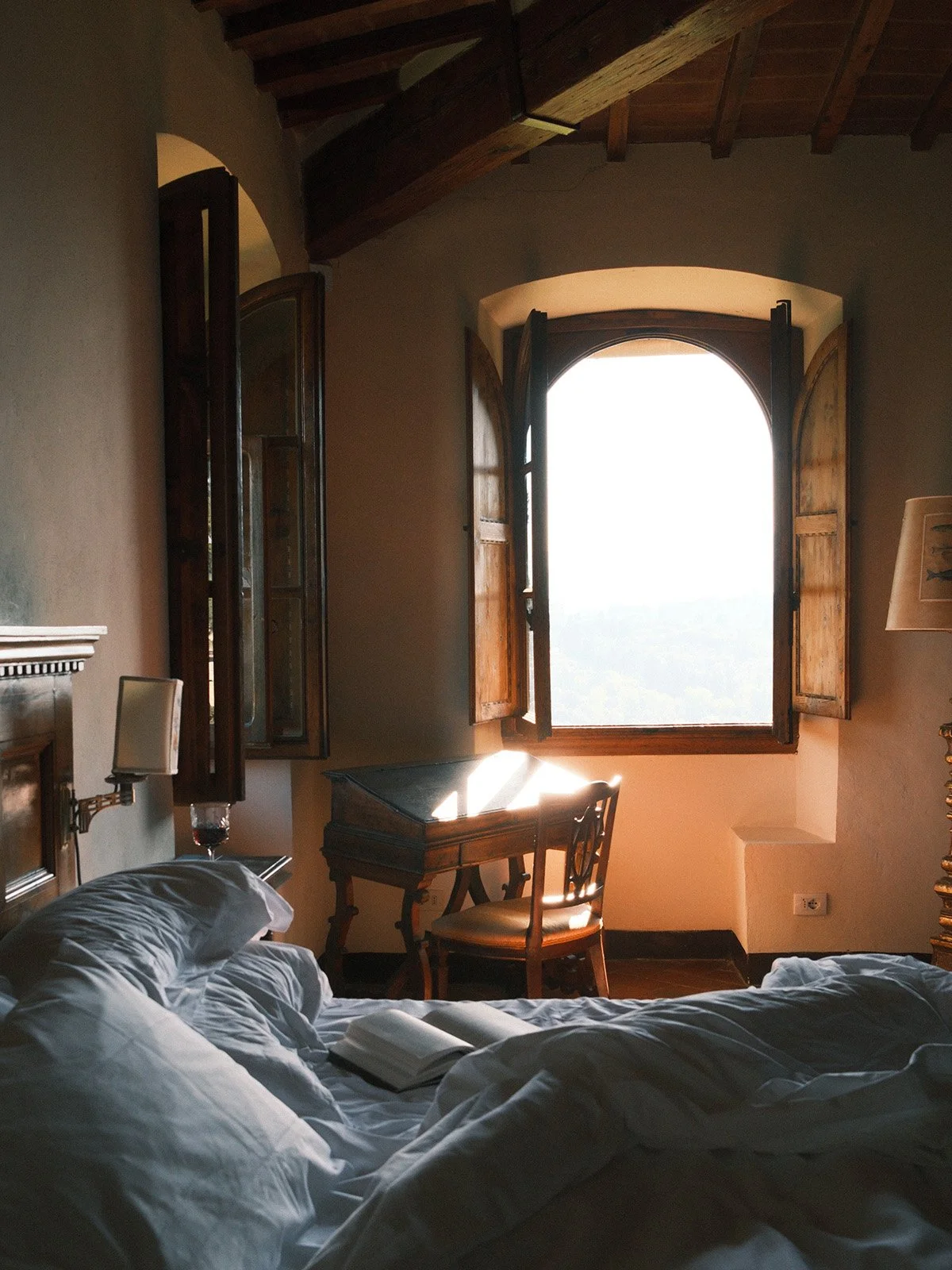
Writing desk by the window
Image © — @kyleecampbell
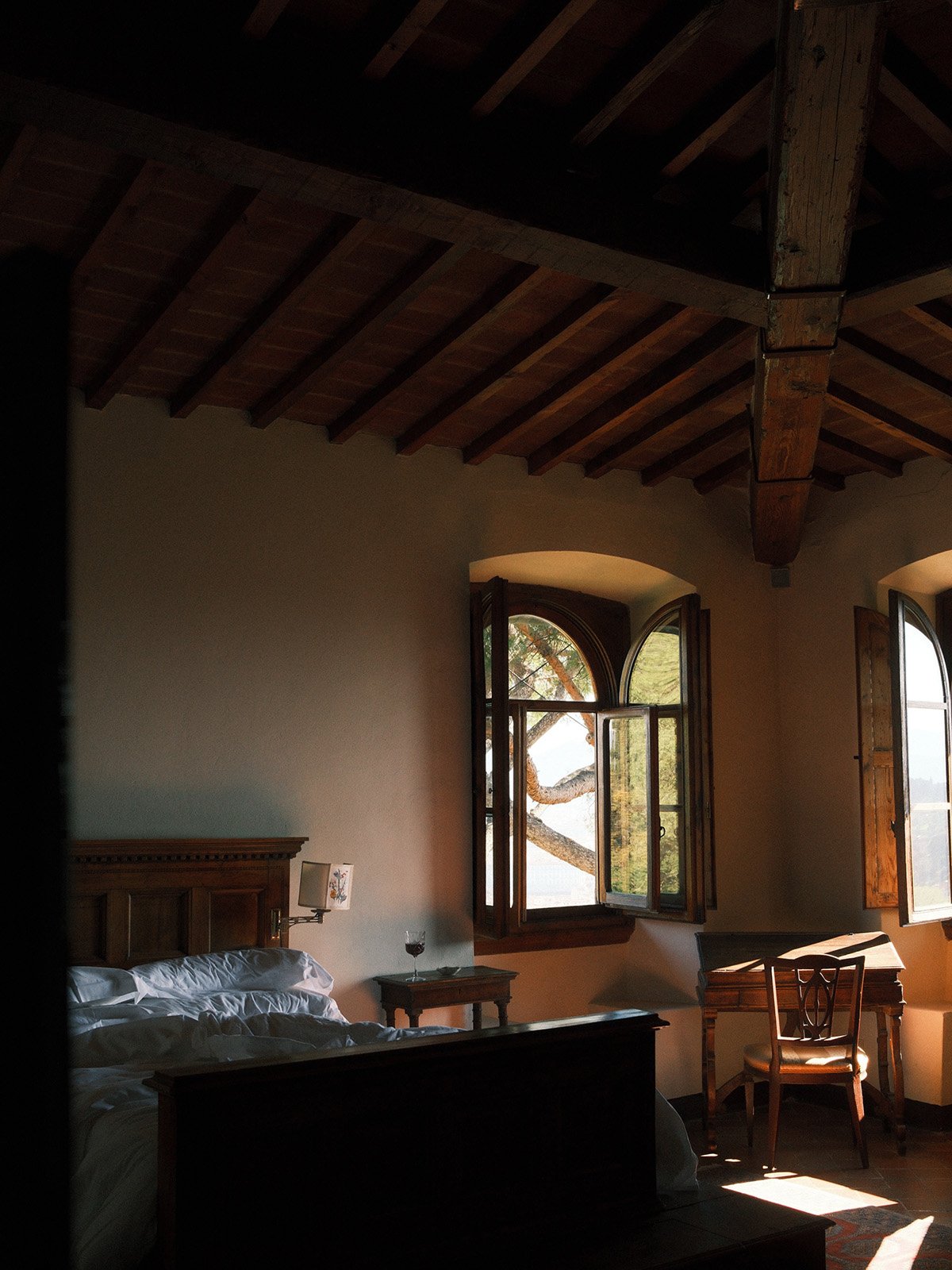
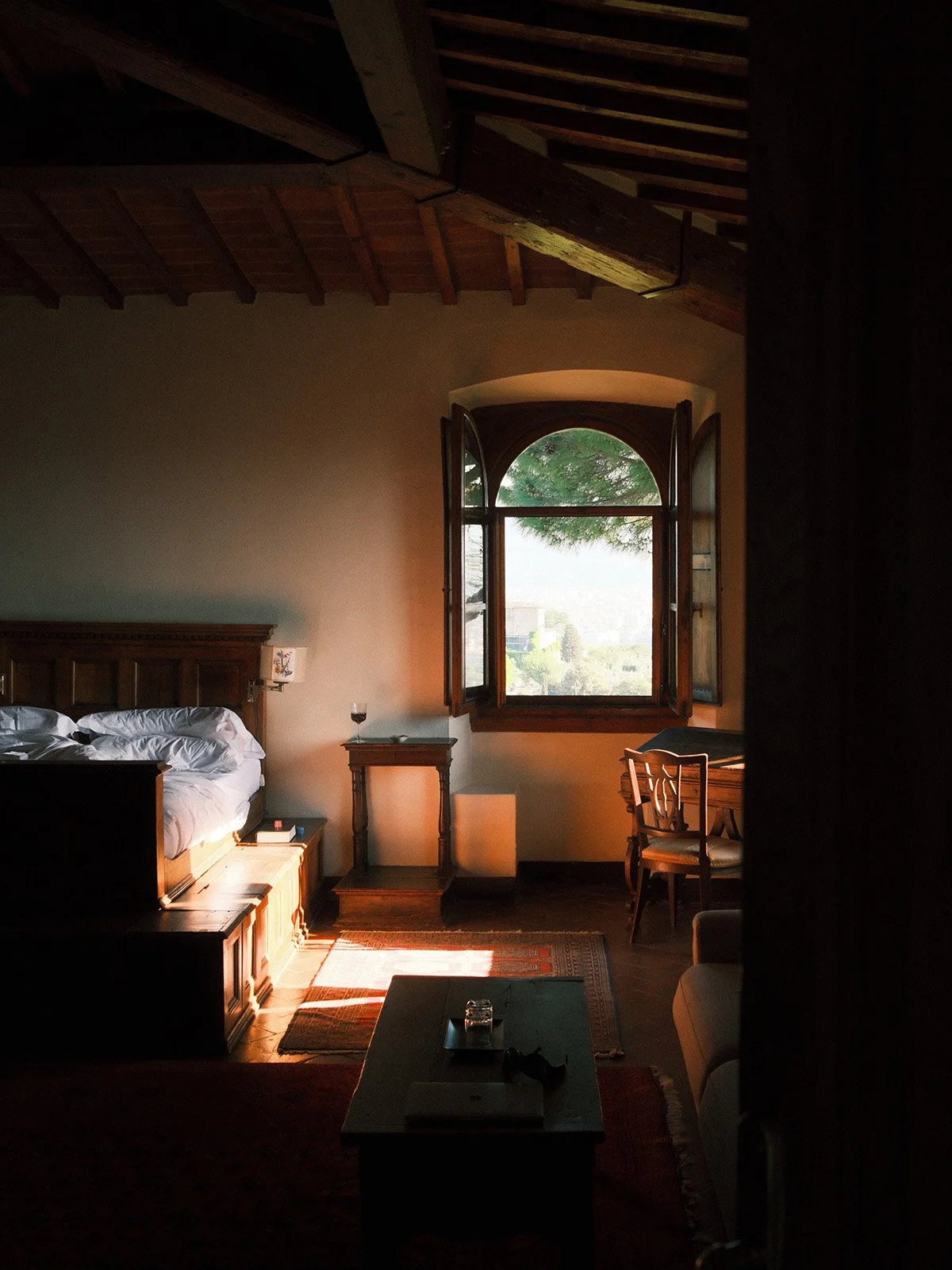
Bedroom breeze with red wine on the side table
Image © — @kyleecampbell
The house continued to accumulate cultural history. Ugo Foscolo stayed at Bellosguardo while developing Le Grazie, his unfinished poem inspired by the classical Graces. During the 1920s and 1930s, Baroness Marion von Hornstein-Franchetti established the villa as a salon for writers, intellectuals and members of European society. Its present identity as a hotel emerged much later, following centuries as a private residence
Still independently operated and inhabited by its owners, Torre di Bellosguardo retains the irregularity and intimacy of a family home. Sixteen rooms and suites unfold through the villa and tower, each individually furnished with inherited antiques, canopied beds, painted ceilings and traditional Florentine textiles. Some rooms preserve sections of original fresco decoration; others occupy vaulted chambers or open towards the gardens and distant hills of Arcetri. There is no imposed decorative scheme. Furniture, paintings and objects appear to have arrived gradually, passed through successive generations instead of selected for a coordinated hotel interior
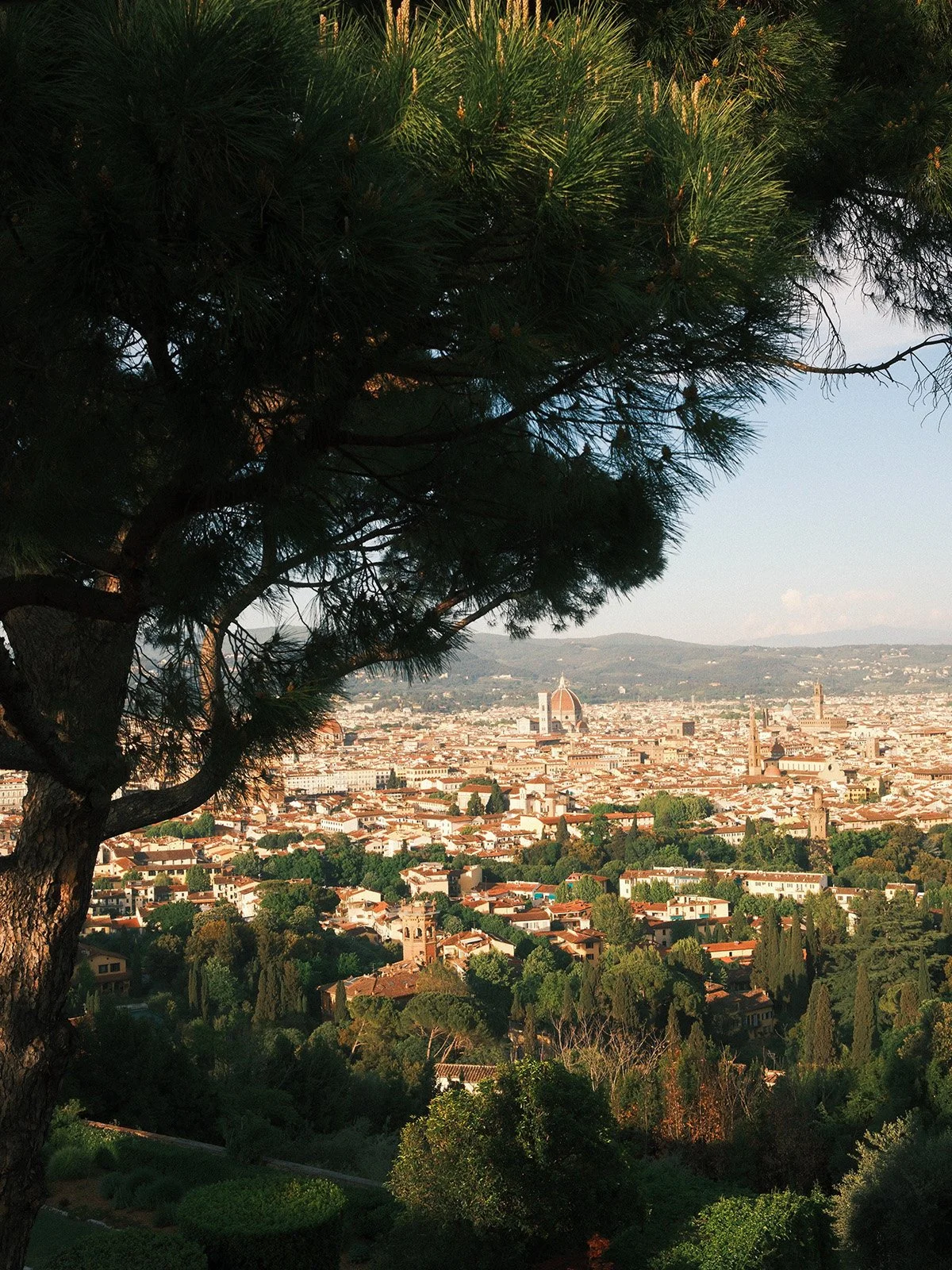
Views across Florence
Image © — @kyleecampbell
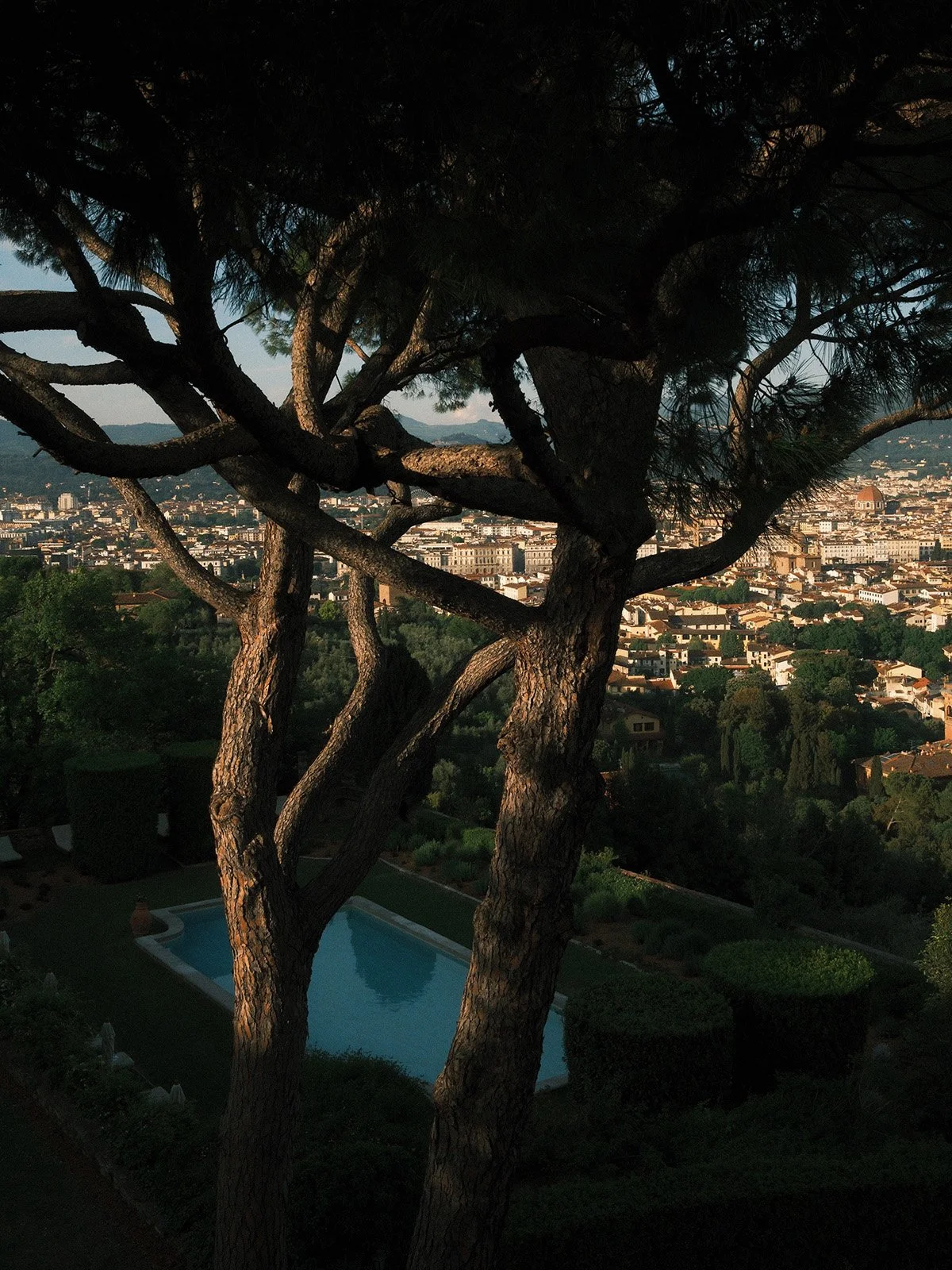
Pool on the hill
Image © — @kyleecampbell
The same continuity extends outdoors. Cypress trees line the approach, while rose beds, vineyards, olive groves and fruit orchards descend through the grounds. An organic kitchen garden supplies produce for breakfast and light meals, and a swimming pool occupies a terrace overlooking the Florentine skyline. Donkeys, hens, ducks and a pony remain part of the small estate, reinforcing the sense that the property continues to function as a lived-in country house
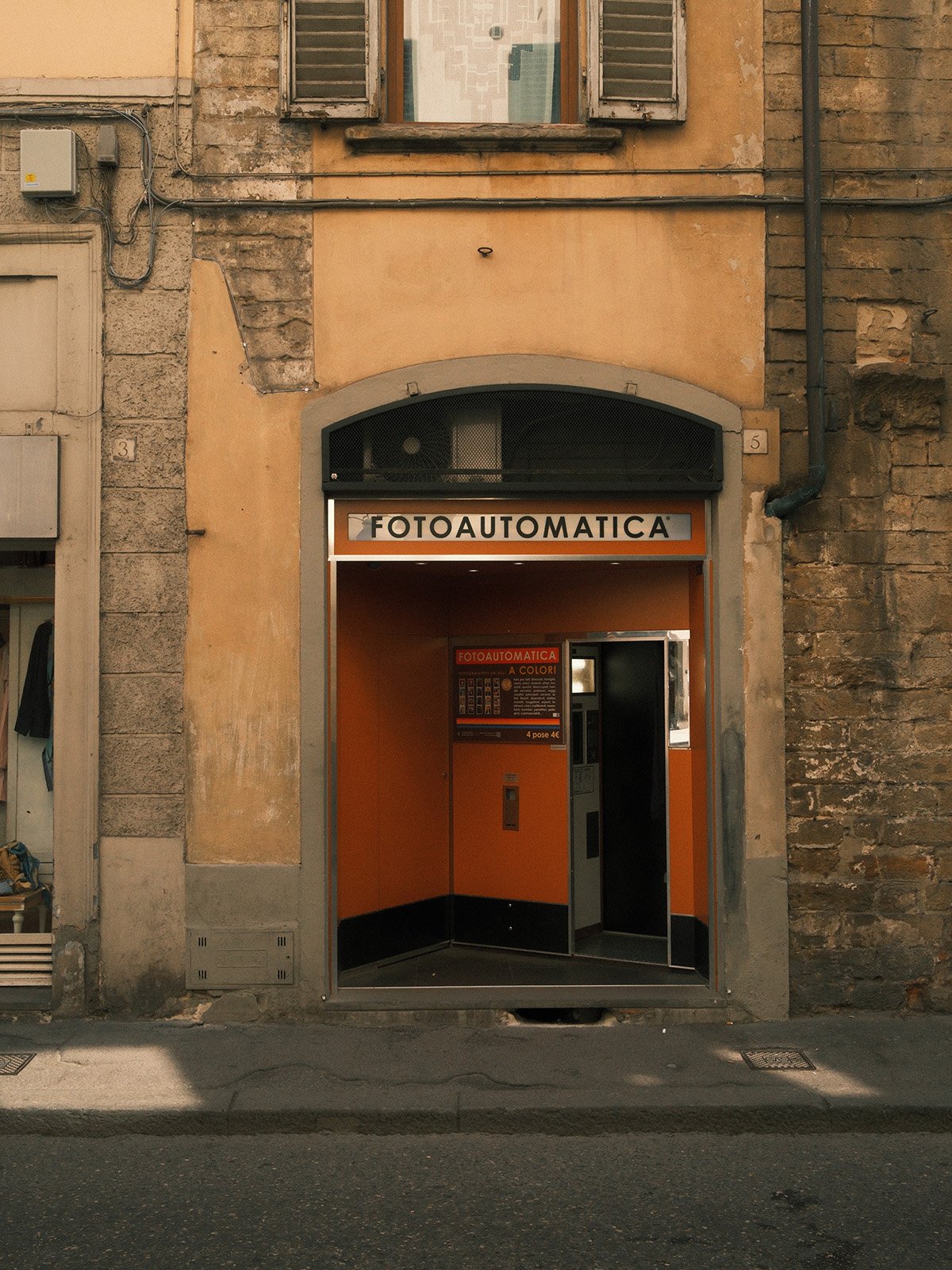
Vintage Fotoautomatica photo booth located in Florence
Image © — @kyleecampbell
Garden views
Image © — @kyleecampbell
Luxury at Bellosguardo is measured through space, silence and access to a remarkable historical setting. There is no corporate polish and little appetite for spectacle. The experience is instead defined by generous rooms, old furniture, garden air and the privilege of observing Florence from a house that has watched over it for more than seven centuries
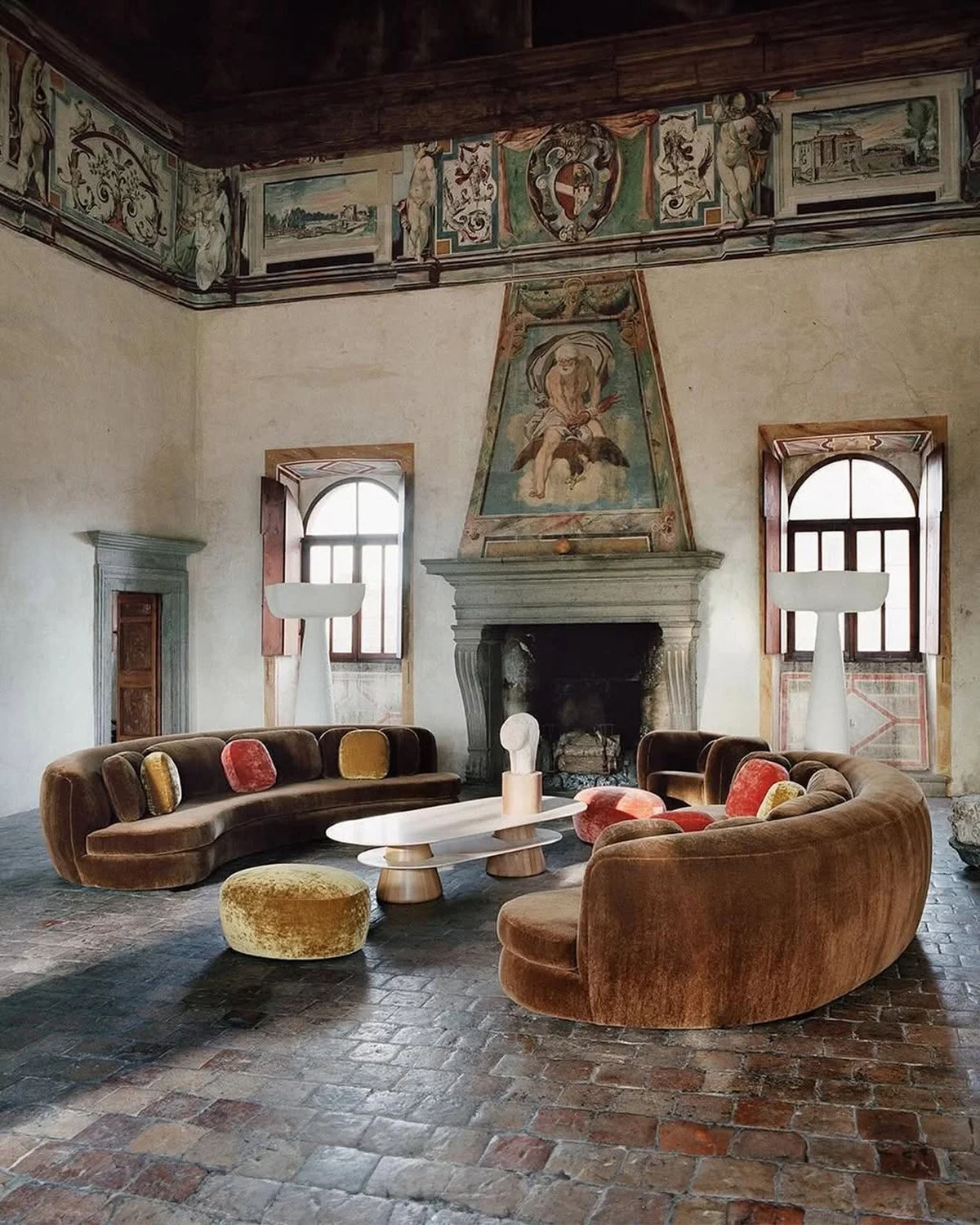
At Castello di Montecalvello, Pierre Augustin Rose Finds a Softer Language of Stone and Velvet
—
Inside an 11th-century castle once restored by Balthus, the French design house adapts its contemporary forms to the weight, texture and silence of the Italian countryside
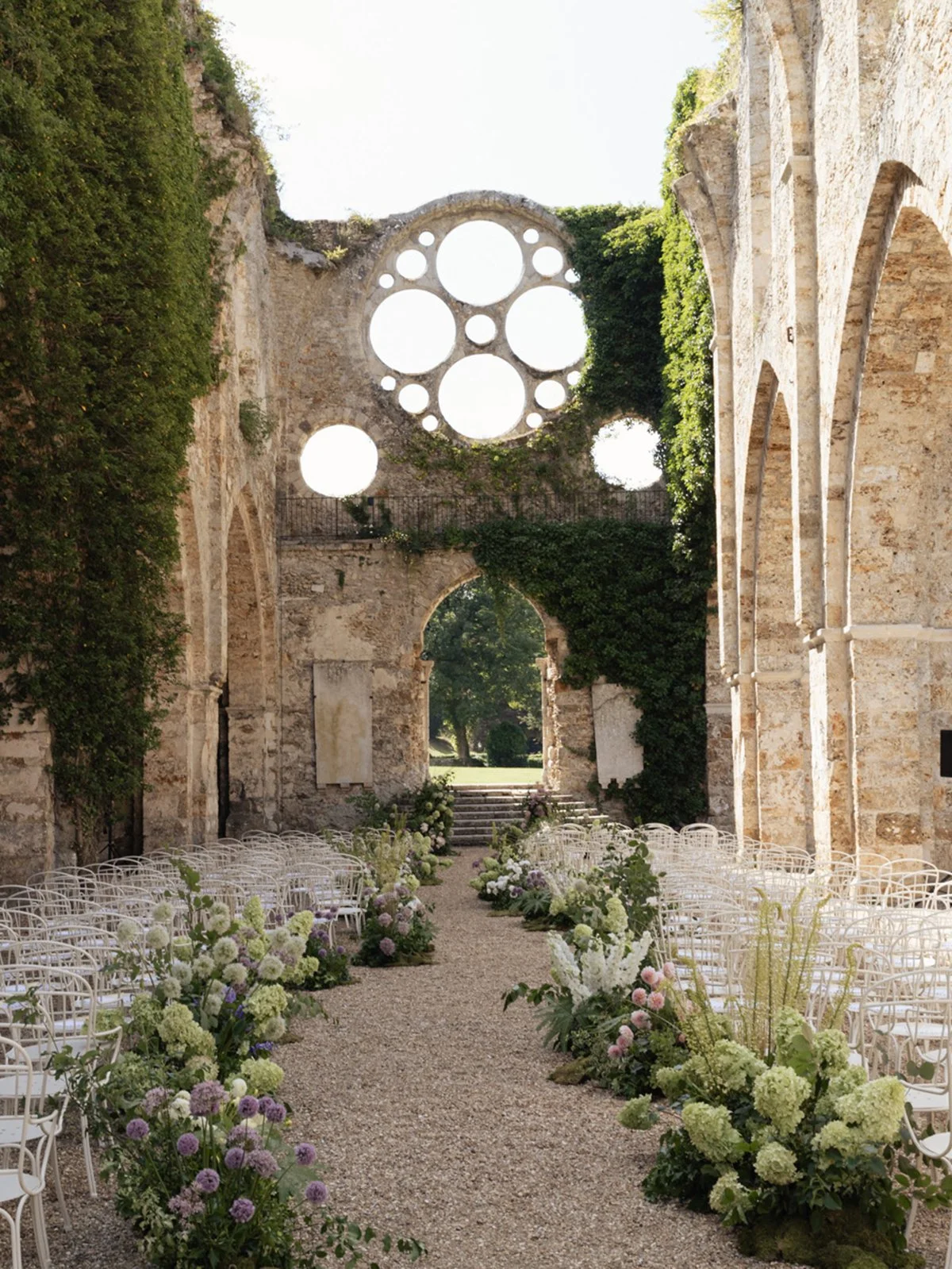
Abbaye des Vaux-de-Cernay Begins a New Chapter Outside Paris
—
Forty-five minutes from the capital, the restored Cistercian abbey has been transformed by Paris Society into an expansive country-house hotel shaped by monastic history, Rothschild ambition and the surrounding forest